


 Speedy Index










Speedy Index is one of the best-known services for getting new pages and backlinks crawled and indexed by Google faster. You send a list of URLs, a mobile Googlebot visits them, and you pay per indexed link. Many SEOs like that model, since there is no subscription and the tokens for links that never get indexed come back. But there are good reasons to look at alternatives. Its main site is in Russian, with an English version on a separate subdomain. Billing runs on tokens, so the cost of a batch is harder to predict than a flat monthly plan. And its Trustpilot page has no reviews yet, so there is little public feedback to read before you buy.
Before you choose a replacement, decide what you need from it. Some tools only push URLs to Google, others only check whether pages are indexed, and a few cover the SEO work around indexing too. Compare the pricing model (per indexed link, per credit or a monthly plan), whether the tool covers backlinks as well as your own pages, whether you need an API to automate submissions, and whether it reports the result for each URL. No tool can guarantee that Google indexes a page, because Google makes the final call. Below, we check each tool on its own website and say where it falls short. If you want the basics first, read how pages enter Google's index.
Top 10 Speedy Index Alternatives in 2027
1.  Sorank

Sorank is an SEO and GEO platform that covers most of the work around a site: keyword research, SEO articles, site audits, AI visibility tracking and backlink acquisition, all in one dashboard. It does not submit single URLs to Google, so it does not replace Speedy Index for that job. Where it touches indexing is IndexNow: each article Sorank publishes is sent to Bing, Yandex and the other IndexNow engines. Google does not use IndexNow, so for Google you still need Search Console.
It suits teams that want content, links and AI visibility on one account, rather than a team that only needs bulk URL submission. The main sign-up is a 3-day free trial, and a free Chrome extension gives an SEO and GEO audit of any page you open. If your only goal is getting 5000 backlinks into Google, a dedicated indexer will do that more directly.
2.  Rapid URL Indexer
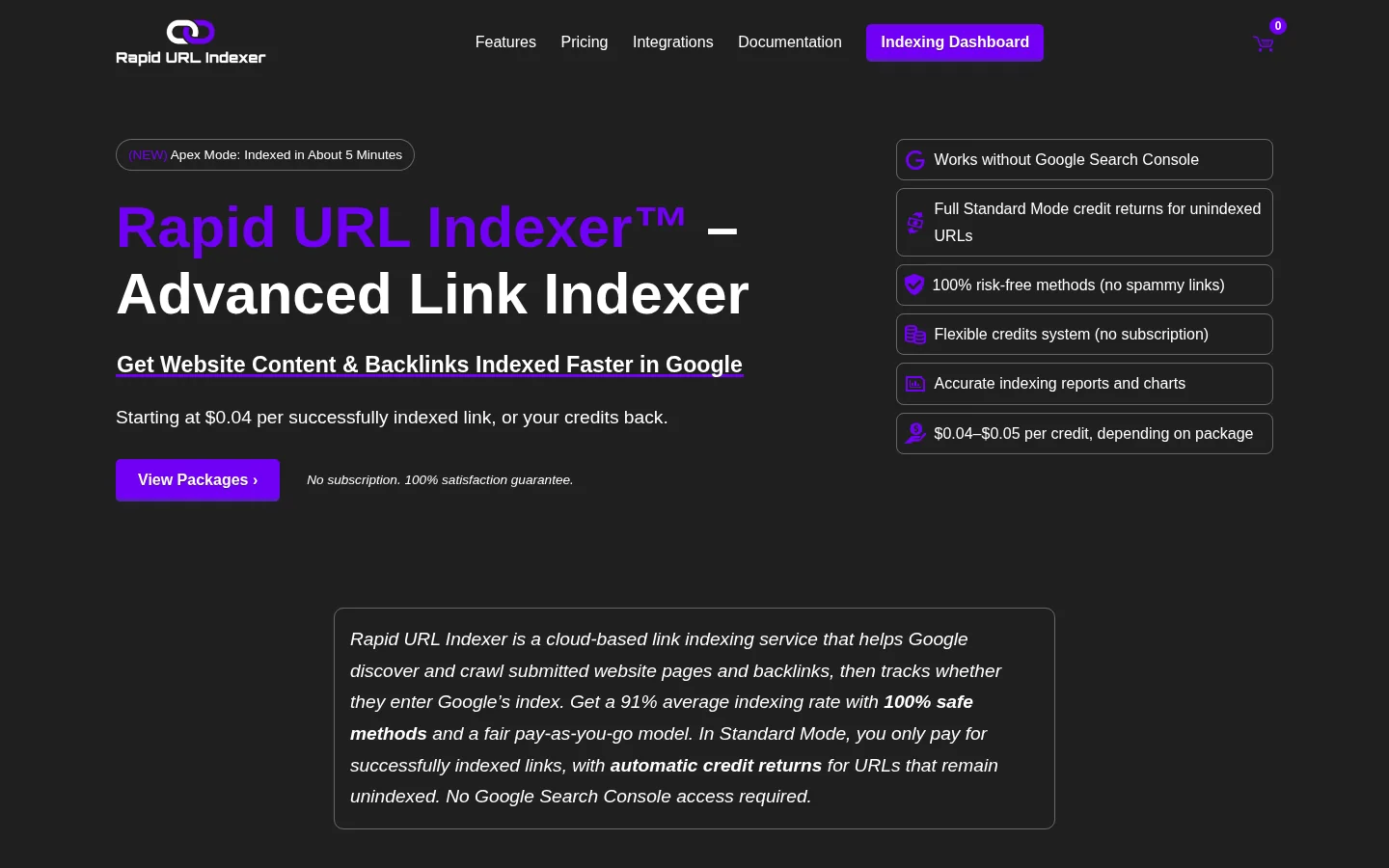
Rapid URL Indexer is a cloud service that sends indexing signals for your pages and backlinks, then tracks whether they enter Google's index. It does not need Search Console access, which makes it useful for links on sites you do not own. The page names site owners, SEO professionals and agencies as its audience. It is the closest match to Speedy Index in how it works, and it bills in a similar way: pay-as-you-go credit packs with no monthly subscription.
The public starting price is $0.04 per successfully indexed link. In Standard Mode you pay only for links that get indexed, and the credits for unindexed URLs come back. For comparison, the Start pack of Speedy Index works out to about $0.10 per indexed link (5000 tokens at 100 tokens per link is 50 links for $5), and its Standart pack to about $0.04. Since these terms come from the vendor, test a batch of 50 to 100 URLs first and check the results in Google yourself.
3.  IndexMyURL
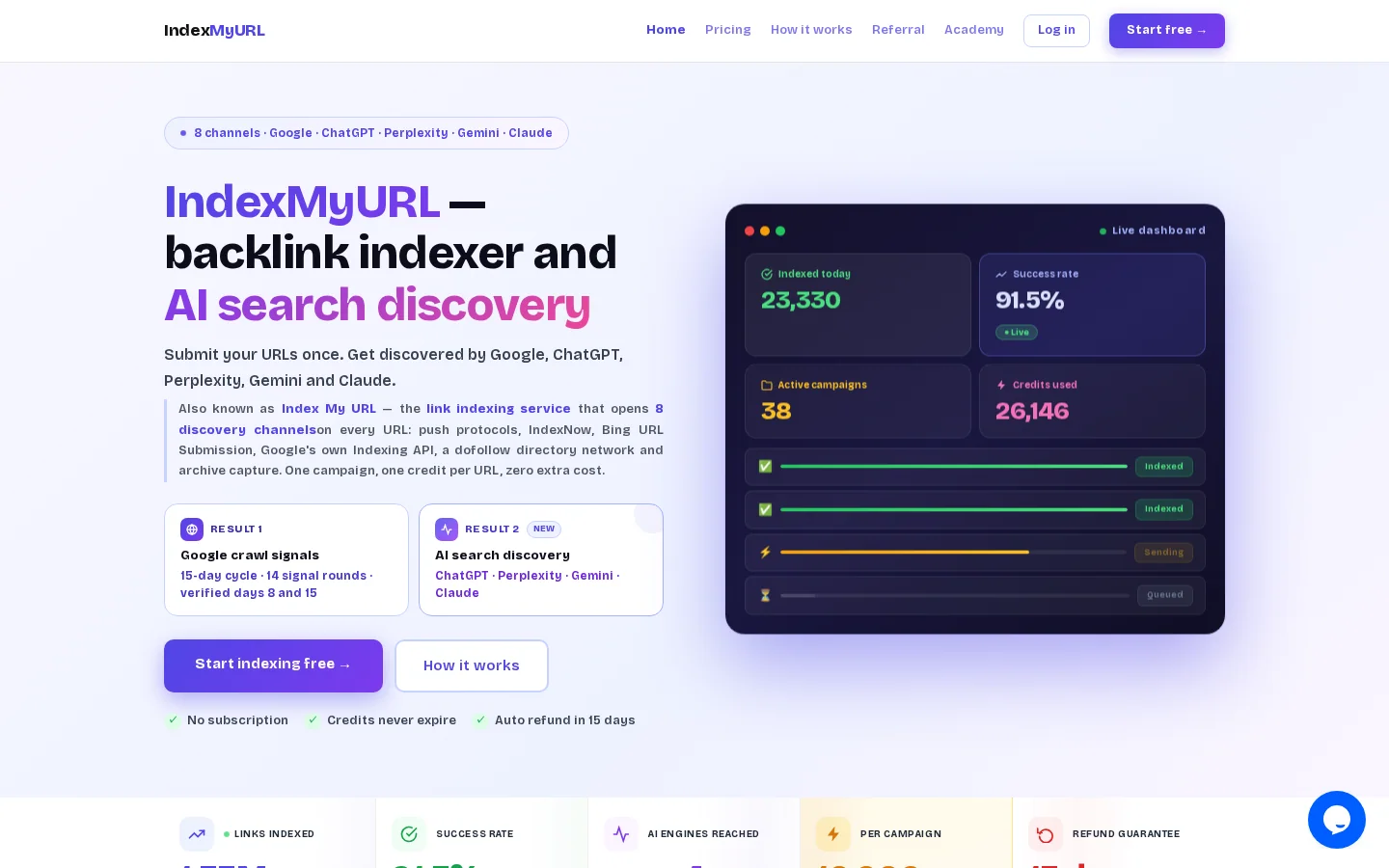
IndexMyURL submits URLs to search engines and AI engines, including backlinks, new content and citations. Each campaign runs on a 15-day cycle with 14 signal rounds. It checks indexing on days 8 and 15, and it refunds the credit if Google or Bing has not indexed the URL by day 15. You can import up to 10000 URLs per campaign from a CSV file, a sitemap or an RSS feed. It is aimed at freelancers, link builders and agencies that run link campaigns.
Pricing is by one-time payment, and the page shows no monthly plan. The Freelancer plan is $15 for 800 credits, and the SEO Pro plan is $39 for 2500 credits. The page also offers 10 free credits to start, with no card needed. Its claims about AI engines come from the vendor, so test them on a few URLs before you rely on them. Speedy Index also covers Yandex, while IndexMyURL's page focuses on Google, Bing and AI engines.
4.  NitroIndexer
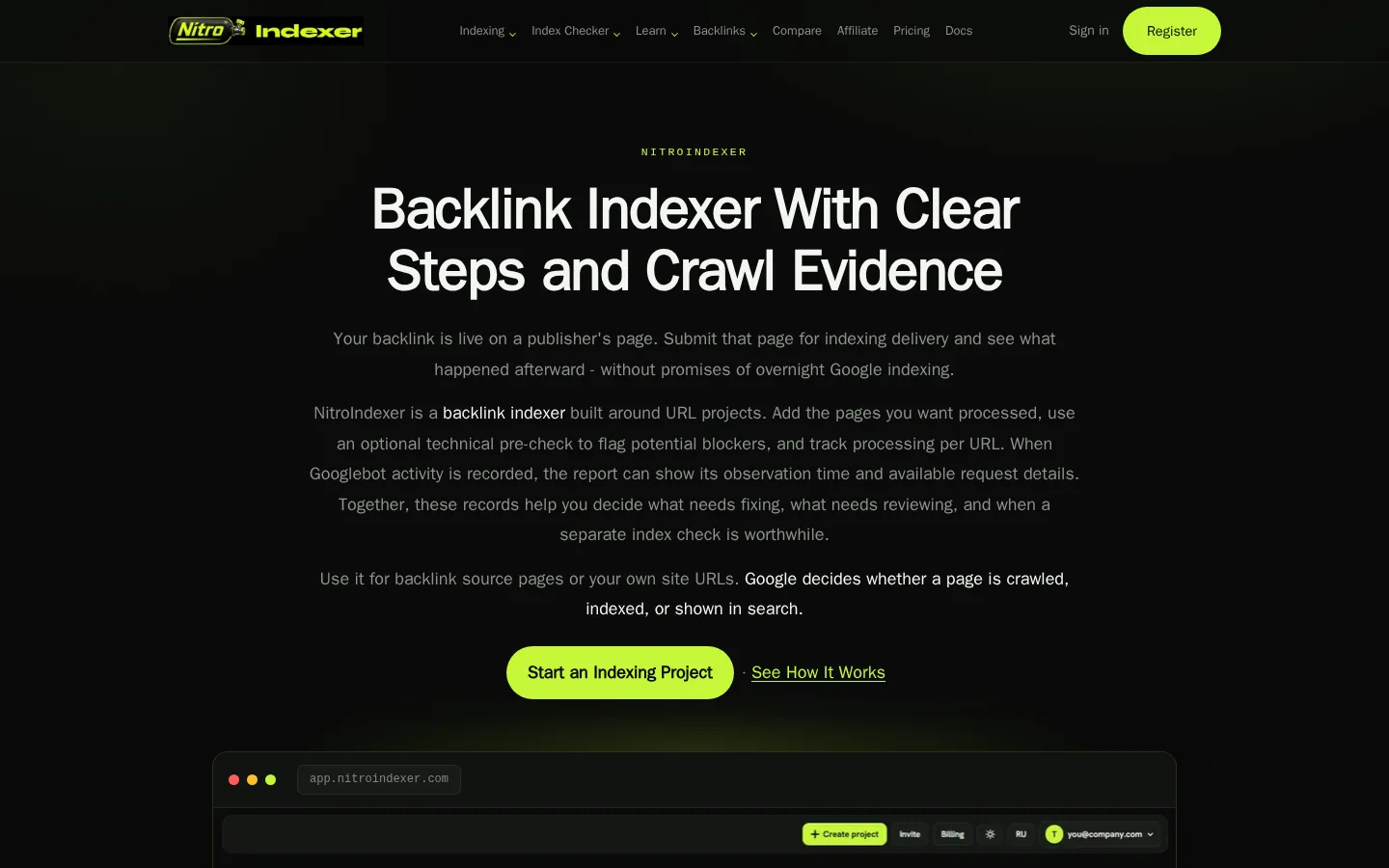
NitroIndexer organizes backlink and URL indexing as projects. You submit the pages that hold your backlinks, or your own URLs, and an optional technical pre-check looks for access problems, robots rules, noindex tags, response codes and canonical issues before anything is sent. Each URL's status is tracked, and when Googlebot activity is recorded, the report shows a UTC timestamp. The page says plainly that Google decides whether a page is crawled, indexed or shown in search, so it does not promise indexing.
The homepage does not show prices. It refers to a token quote and a pricing page, so you need that quote before you can compare costs with Speedy Index. A separate Google Index Checker is sold as its own token workflow. The pre-check is useful on its own: if a page has a noindex tag or a broken canonical, no indexing service will help until you fix it.
5.  IndexRusher
IndexRusher says it gets websites indexed by Google, Bing, ChatGPT, X and other search engines. Its pages focus on your own website's pages and URLs, and the homepage does not describe backlink indexing. If links on other sites are your main need, ask the vendor before you buy. Its early-adopter offers are tied to a beta.
Pricing is the hard part to read. The page shows a one-time lifetime price beside a '/year' label, along with struck-through figures, and it does not clearly say which price is current. Before you pay, read the checkout page and confirm the amount you will actually be charged. If the offer really is one-time, it can cost less than credit packs for steady work.
6.  indexaction
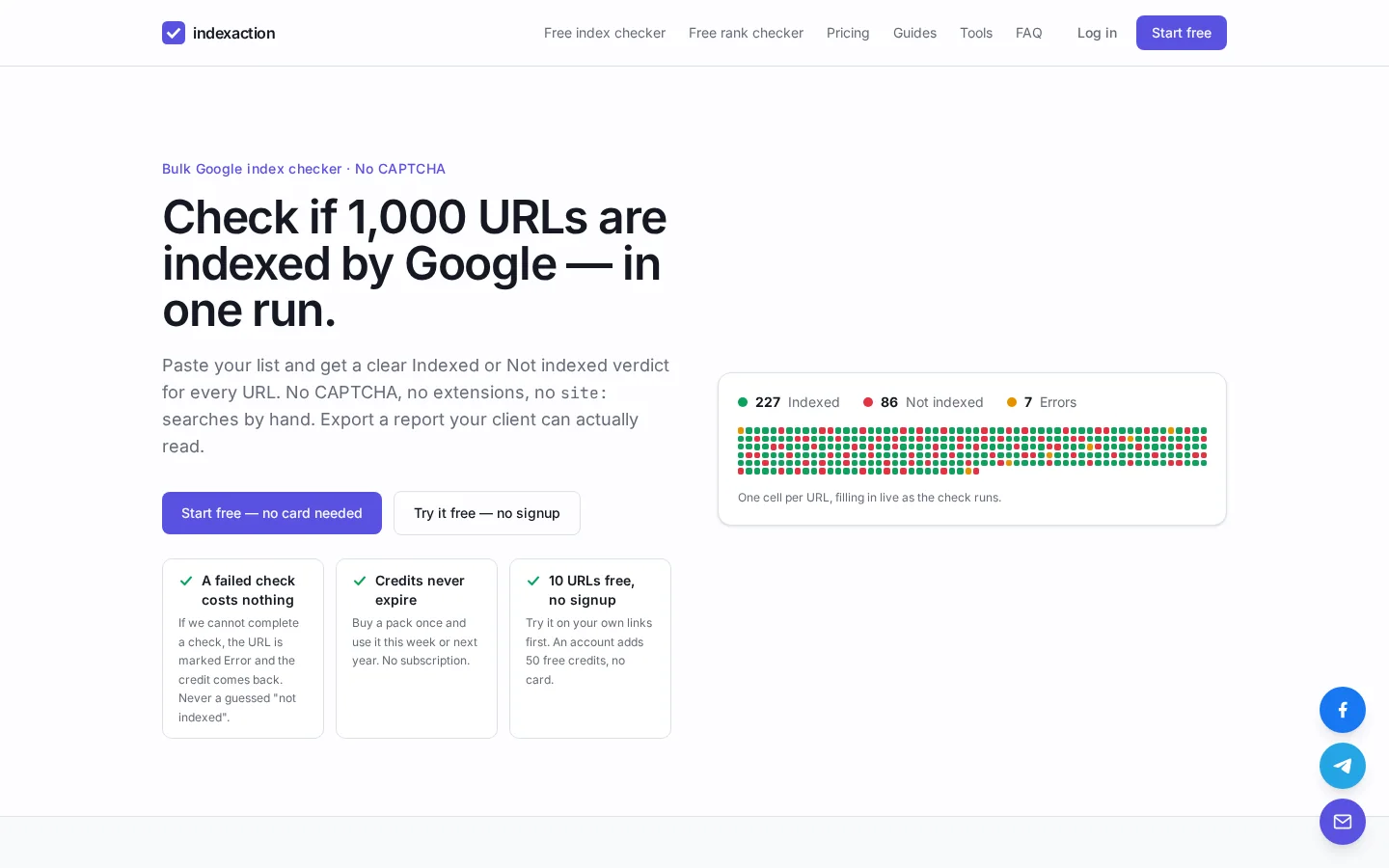
indexaction is a bulk Google index checker. You paste up to 1000 URLs per run and get an 'Indexed' or 'Not indexed' verdict for each one. It works on any domain, including guest posts and directory listings you do not own, and it also tracks keyword rankings. It does not send pages to Google, so it does not replace Speedy Index for submission. Its role is verification.
The page lists one-time credit packs with no subscription: Lite is $5 for 1500 credits, Starter is $10 for 5000, Growth is $39 for 25000 and Agency is $149 for 100000. Credits never expire. A good workflow is to check first, then submit only the URLs that are missing, so your indexing spend goes to the pages that need it.
7.  Google Search Console
Google Search Console is Google's own free tool for site owners. Its URL Inspection tool shows what Google knows about a specific page. After you fix a problem, you can run a live test and click Request indexing. Each property has a daily limit on inspection requests, so it suits a set of important pages rather than thousands of links. It only works for sites you have verified, so it cannot index backlinks on other people's sites.
Search Console is the only tool on this list that reports what Google itself has in its index, which makes it the reference point for the others. Most sites should use it next to any paid indexer, not instead of one. Our guide on checking and fixing pages that are not indexed explains the reports step by step.
8.  Yandex Webmaster
Yandex Webmaster is Yandex's service for site owners. It puts the main indexing indicators for your site in one interface, so you can see which pages are collected and find the causes of problems. It also has a query monitoring feature that shows which search terms your site appears for in Yandex results. The page states that all its tools and features are free once you add your site and verify that you own it.
It is the natural choice for sites with an audience in Russia or nearby markets, where Yandex matters. It does not cover Google, so pair it with Google Search Console if you need both. Speedy Index also offers Yandex indexing, but Yandex Webmaster is the free way to see the status of your own pages.
9.  Netpeak Checker
Netpeak Checker is a Windows desktop tool for bulk SEO analysis. It runs on-page checks on many domains at once, scrapes search results and connects to about 25 external SEO services. It is a research tool, not an indexing service, and its product page does not claim to submit pages to Google. It is on this list because people often compare it with Speedy Index, but expect a bulk checker, not an indexer.
Choose it if your work is checking many sites at once. Its homepage also lists Netpeak Spider, a crawler that checks over 100 technical SEO issues such as broken links, duplicate pages and broken redirects. That is useful for finding the pages that need fixing before you submit them.
10.  Ping-O-Matic
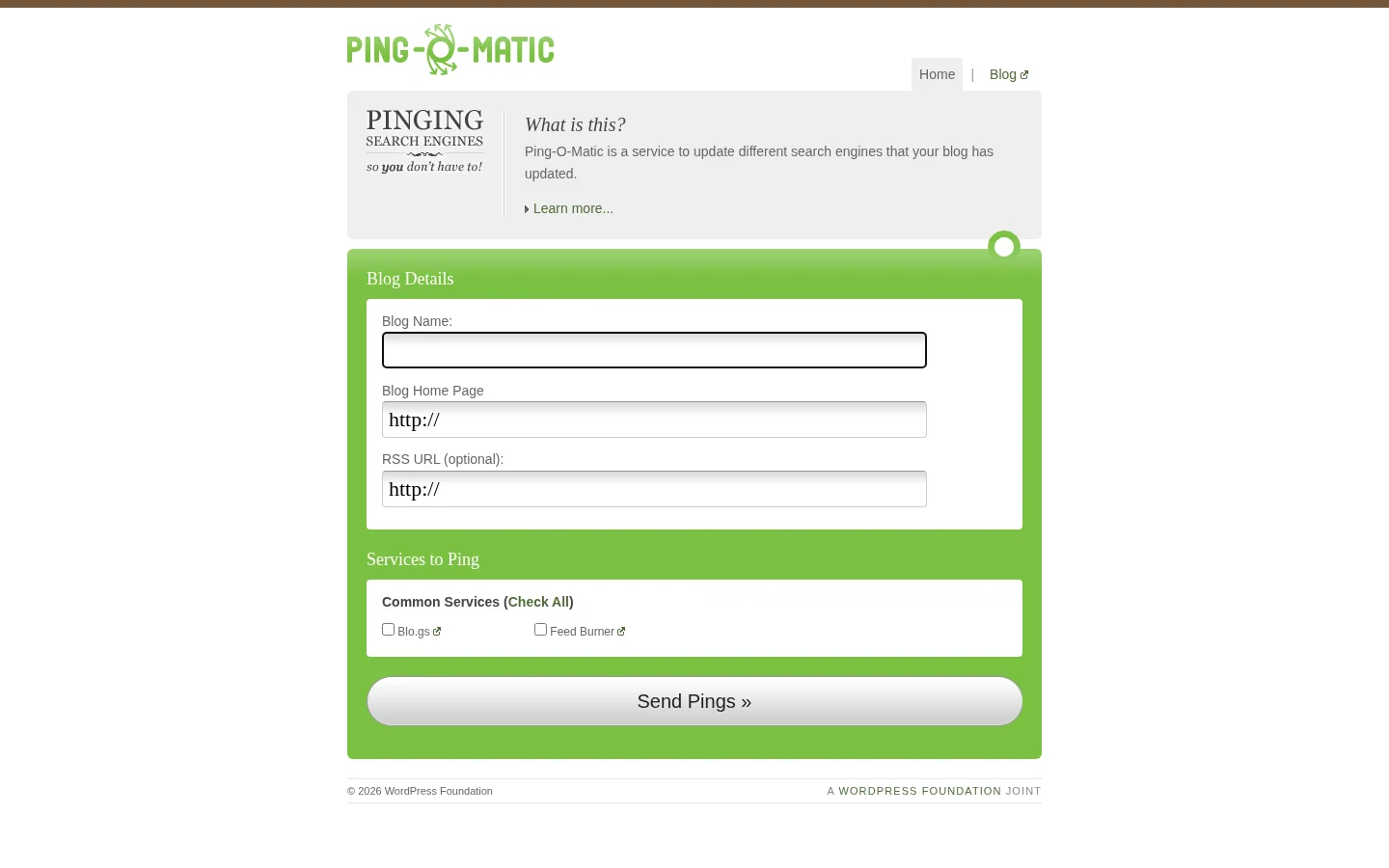
Ping-O-Matic is a ping service. It tells search engines and update services that your blog has changed, and the page lists Blo.gs and Feed Burner as common services. It does not submit individual URLs, does not check index status and does not promise that Google will crawl anything. It is the lightest tool on this list, and its job is a signal, not indexing.
Use it as a small add-on for a blog that already publishes a feed, not as a replacement for a paid indexer. The page does not state a price. For a more direct update signal to Bing and Yandex, look at the IndexNow protocol, covered in our IndexNow glossary entry.
How to Choose the Right Speedy Index Alternative
Start from the job, not the brand. If you need to push many new URLs or backlinks into Google, look at Rapid URL Indexer, IndexMyURL or NitroIndexer, and compare the price per indexed link. If you first need to know which pages are missing, check them with indexaction or Google Search Console. If Yandex matters, Yandex Webmaster is the free starting point. If your real need is a platform that covers SEO and AI visibility as well, Sorank is the wider option, with the understanding that it does not submit single URLs to Google.
| Tool | Best for | Entry price | Main strength |
|---|---|---|---|
| Sorank | SEO, content and AI visibility on one account | 3-day free trial | Covers the whole SEO and GEO loop |
| Rapid URL Indexer | Pages and backlinks sent to Google | From $0.04 per indexed link | Pay only for indexed links |
| IndexMyURL | Link campaigns and agencies | $15 one-time (Freelancer) | 15-day cycle with refund on unindexed URLs |
| NitroIndexer | Backlink projects with a pre-check | Not shown on homepage | Status tracked for each URL |
| IndexRusher | Sites indexed in Google, Bing and AI engines | Unclear, check checkout | Covers ChatGPT and X, per the vendor |
| indexaction | Checking which URLs are indexed | $5 one-time (Lite) | Bulk check of 1000 URLs per run |
| Google Search Console | Your own pages, with Google's own data | Free | Index status for each page |
| Yandex Webmaster | Your own pages in Yandex | Free | Indexing status in one interface |
| Netpeak Checker | Bulk SEO checks across many sites | Not stated | Many domains checked at once |
| Ping-O-Matic | Blog update pings | Not stated | Simple signal to search engines |
Prices are the hardest part to compare, because each tool uses its own unit. Speedy Index bills in tokens, with 100 tokens per indexed link. Rapid URL Indexer bills per indexed link, IndexMyURL and indexaction bill in credits, and NitroIndexer uses token quotes that depend on the project. Convert everything to one figure before you decide: the price of one indexed link, or one checked URL, for the volume you actually run each month. A cheap pack that expires or a low entry price with high per-link costs can end up more expensive than a larger pack with a fair rate.
Whatever you pick, start small. Send a batch of 50 to 100 URLs, wait the full period the tool states, and check the results in Google yourself. Keep your site submission basics in order too, since no tool can fix a page that has a noindex tag or a broken canonical.
Why Sorank Stands Out
Sorank stands out when you want one account for the whole SEO and GEO job: keyword research, SEO articles, audits, AI visibility tracking and backlinks. Its IndexNow step notifies Bing and Yandex about each new article, which overlaps with part of what Speedy Index does. For Google-only URL submission, a dedicated indexer is more direct, and Sorank does not replace it. Compare the two on the job you need done this month, not on the feature list.