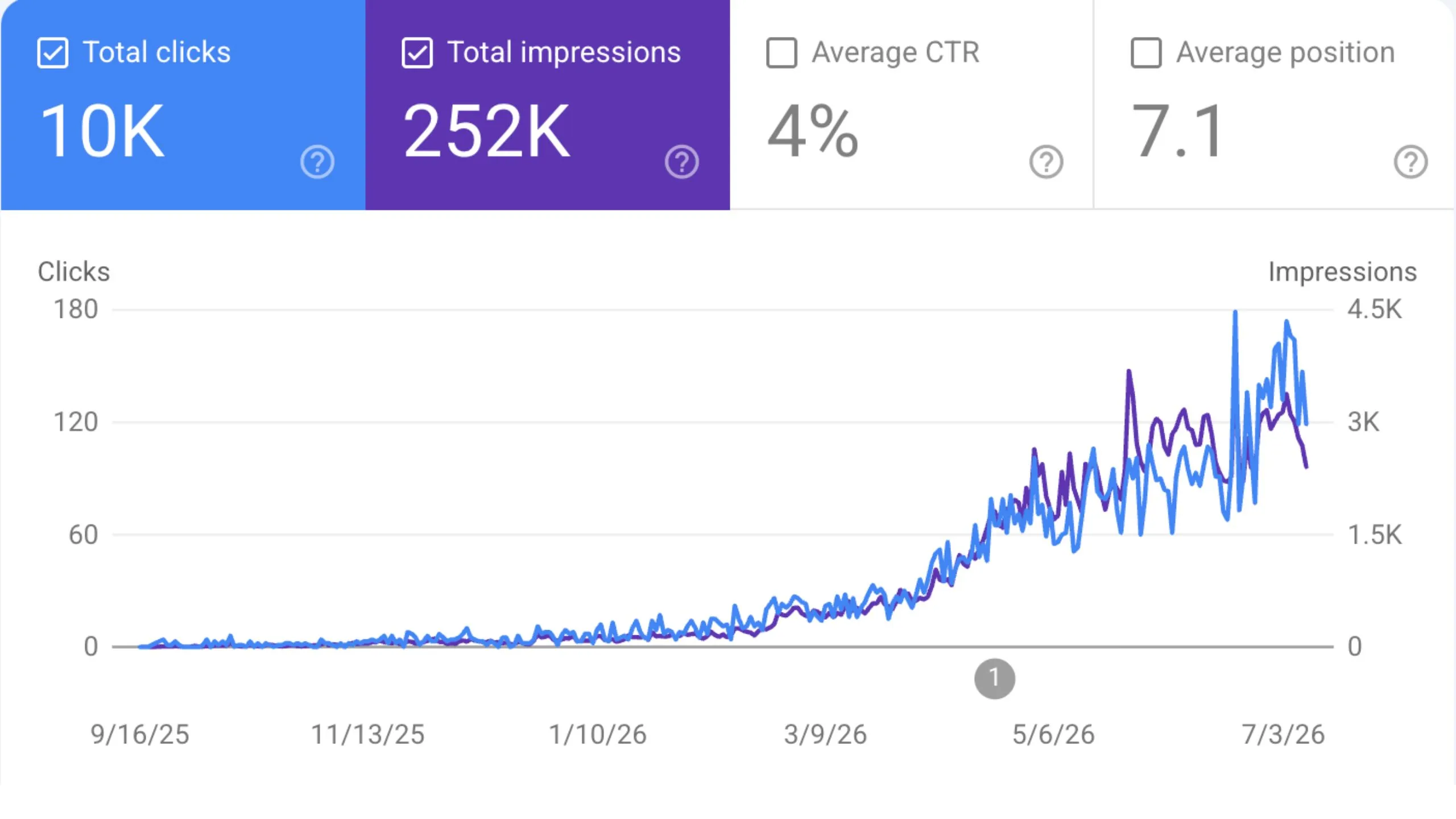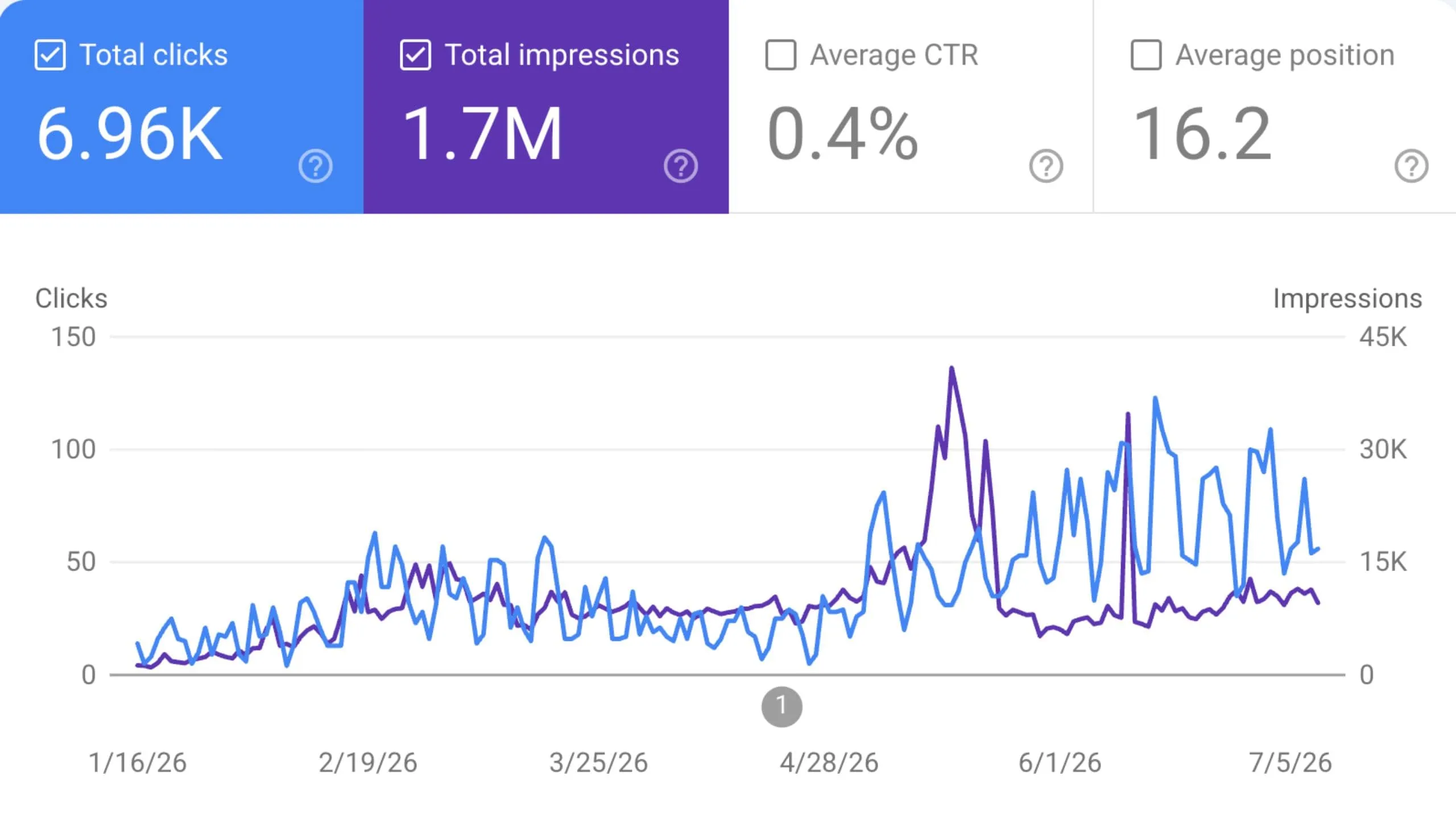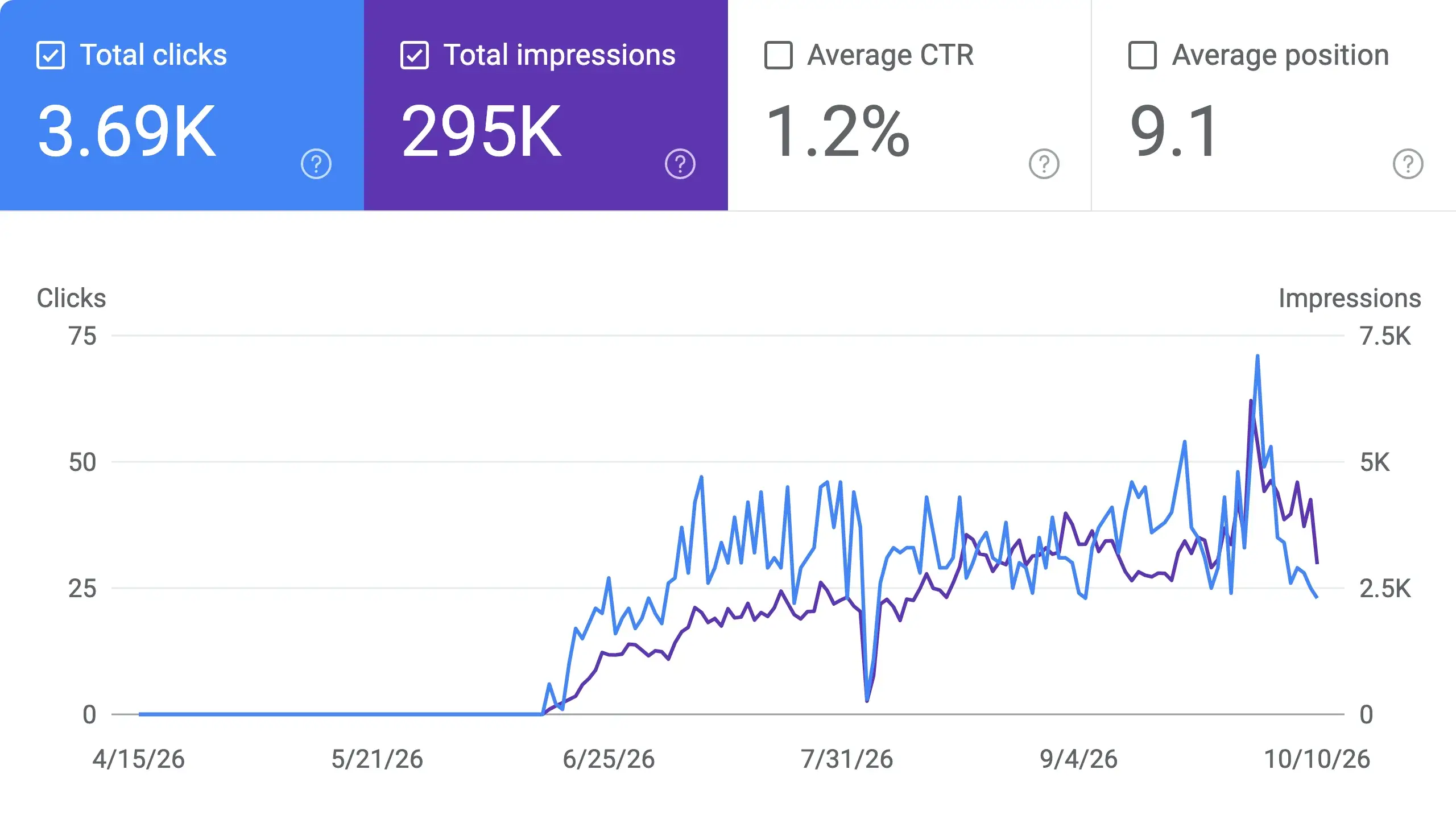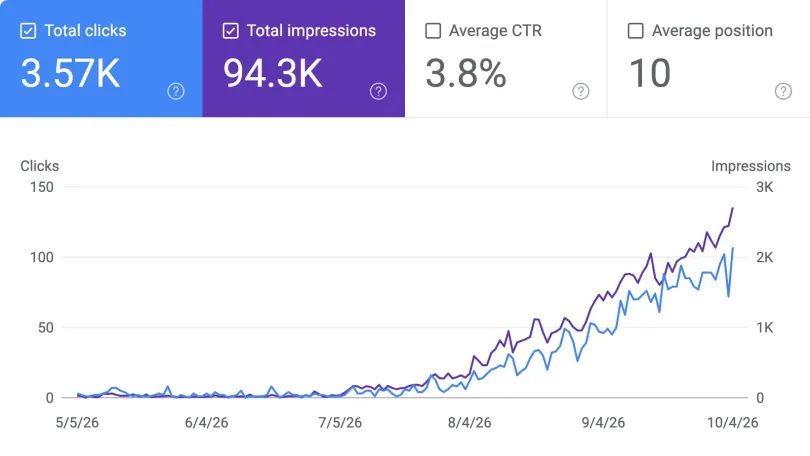











QuickCreator is a content platform that splits article production into six specialised AI agents. One reads your existing website, PDFs and internal notes to build a brand brief, another turns a keyword into a list of topics ranked by opportunity, a third studies the reader behind each topic, a fourth writes the draft, a fifth reviews it like an editor against Google's E-E-A-T criteria (Experience, Expertise, Authoritativeness, Trust), and the last one publishes it. You talk to these agents in plain language and approve each step.
The product targets solo founders, consultants and one-person marketing teams who want articles that rank on Google, get quoted by ChatGPT, Perplexity and Gemini, and still sound like the founder wrote them. Its homepage now presents it as an "AI content team" and an agentic marketing platform, with a hosted blog option for people who do not have a CMS yet. The main focus is the quality and voice of each article rather than volume.
What QuickCreator does
Every agent reads the same brand brief before it writes, so article number one and article number two hundred keep the same tone. The workflow stays under your control: topic, outline and draft can be edited at every stage, and nothing reaches your CMS until you click publish or set a schedule.
- Brand Positioning agent: scans your site to learn tone, sentence rhythm and recurring phrases, defines your ideal customer and stores your PDFs in a private knowledge base.
- Topic Strategy agent: pulls the live Google results, People Also Ask questions and the way ChatGPT, Perplexity and Gemini phrase answers for a seed keyword, then tags each topic by buyer journey stage.
- Market and customer research agent: builds a research brief on what the reader already knows, what confuses them and what they fear.
- Content Writer agent: drafts in your voice, self-grades the draft on E-E-A-T, rewrites weak sections and generates the SEO title, meta description, slug and internal links.
- Content Optimization agent: scores each section, explains low scores and proposes rewrites you can accept paragraph by paragraph.
- Publishing: one-click publishing to WordPress, Shopify and Strapi, HTML or Markdown export for other platforms, or a hosted blog on your own domain with free themes.
- Extras listed on the pricing page: image and chart generation, conversion widgets (CTAs, forms, popups), JSON-LD structured data, automatic llms.txt files, more than 30 languages and a Chrome and Edge extension.
- A library of free tools: backlink checker, keyword density checker, llms.txt and robots.txt generators, AI humanizer, title and meta description generators.
QuickCreator pricing in 2026
QuickCreator bills in US dollars, excluding taxes, with monthly credit allowances. Prices checked in October 2026:
- Personal: $29 per month, 1,500 credits, Brand Positioning and Writer agents, content quality analysis, one hosted blog with a custom domain.
- Professional: $129 per month, 6,000 credits, adds the Content Optimization and Customer Research agents, conversion widgets, a 1 GB knowledge base, 10 customer profiles, structured data, llms.txt and one extra team member.
- Plus: $249 per month, 12,000 credits, unlimited customer profiles, 3 GB of knowledge base, 3 hosted blogs and four extra team members.
- Enterprise: custom pricing with multiple workspaces, dedicated support and API access.
Writing one article uses 300 credits, one image 10 credits and one quality analysis 20 credits. The 7-day trial gives 600 credits, enough for about two articles. No annual price is shown on the pricing page, and plans can be cancelled at any time.
QuickCreator pros and cons
Pros
- Detailed brand voice modelling from your own site and documents.
- Section-by-section E-E-A-T scoring with explanations and proposed rewrites.
- Hosted blog on your own domain, useful if you have no CMS.
- Low entry price of $29 per month and a 7-day trial.
- Large set of free SEO and writing tools.
Cons
- No tracking of whether your brand appears in ChatGPT, Perplexity or Gemini answers.
- No backlink acquisition inside the product.
- About five articles per month on the Personal plan, and the optimization agent starts at $129.
- Direct publishing covers three CMS (WordPress, Shopify, Strapi); other platforms need an export.
- Each article is approved and published by hand or on a schedule you set.
The best QuickCreator alternatives
1. Sorank
Sorank is SEO and GEO software that runs on autopilot. It finds keywords, builds topic clusters, writes, illustrates and publishes articles on more than 10 CMS, including WordPress, Shopify and Webflow, with internal linking, anti-cannibalisation checks and fact checking. Where QuickCreator asks you to approve each article, Sorank keeps publishing on its own: Essential includes 20 articles per month, Pro 60 and Business 120. Every week, Sorank also asks ChatGPT, Claude and Gemini the questions your customers ask (25 prompts on Essential, 50 prompts with Perplexity and Grok on Pro, 150 on Business) and shows whether your brand is mentioned, which brands are cited instead and which sources the AI rely on.
Sorank adds what QuickCreator leaves out: a network of direct, one-way links between the sites of more than 5,000 Sorank users, run on credits (100 per month on Pro, 300 on Business), weekly monitoring of up to 5 competitors, query fan-out analysis and a unified dashboard with Search Console, Analytics and AI traffic. Plans cost $99, $249 and $499 per month, or $49, $129 and $249 per month billed annually, with a 3-day free trial and a 90-day money-back guarantee. See the pricing page, the MCP connector and the white label option for agencies.
2. Koala AI
Koala AI combines an SEO agent that plans from your Search Console data with a writer that drafts on-brand articles. It publishes to your CMS in one click.
3. Byword
Byword focuses on producing SEO articles at scale. It researches keywords, writes in your brand voice and publishes to WordPress, Webflow and several other CMS, which fits teams that need volume more than editing.
4. Machined
Machined generates researched, interlinked content clusters around a topic. Keyword research, writing with citations and internal linking are automated, with one-click publishing to WordPress.
5. Junia AI
Junia AI is an AI SEO writer that researches keywords, plans topical authority and publishes optimised content automatically.
6. Frase
Frase is a content platform that writes and optimises pages for Google and for citations in AI answers. It suits writers who want research briefs and optimisation scores while keeping editorial control.
How to choose between QuickCreator and Sorank
QuickCreator fits a solo founder or consultant who publishes about one article a week, cares most about voice and E-E-A-T quality, and wants to review every paragraph before it goes live. Its hosted blog is practical for someone starting from zero, and the $29 plan keeps the cost low while you test whether content brings leads.
Sorank fits a business that wants content to run without daily involvement and needs to measure results in the AI as well as on Google. If you need 20 to 120 articles per month, weekly prompt tracking in ChatGPT, Claude and Gemini, backlinks from a network of sites and competitor monitoring in one subscription, Sorank covers that scope. Results usually appear within 2 to 4 months. You can start with the free SEO tools or the Chrome extension to audit a page before you decide.