









Frase made its name with research-first content: it turns a keyword into a brief built from what top-ranking pages cover, then scores the draft as you write. In 2026 the product has grown into what Frase calls a content operating system for AI search, a loop that researches, writes, optimizes, publishes, monitors and fixes pages so they rank on Google and get cited by AI.
The tool targets content marketers, in-house SEO teams, agencies and enterprises. Its distinctive points are a single draft that carries both an SEO score and a GEO score, an autonomy setting that lets the agent publish on its own or keeps every page under review, and FraseCMS, a hosted blog included free with every plan. Frase also added an MCP server, a CLI and Frase Answers, a site widget that captures visitor questions.
What Frase does
Frase groups its features by stage of the content loop, from audit to fix.
- Site Auditor that scores each page for technical SEO, content quality and AI readiness and ranks fixes by impact.
- SEO research and briefs from the top results, with the questions searchers ask, plus a Content Opportunities list from search data and competitor gaps.
- Topic Clusters that map pillars and supporting content and turn each missing subtopic into a brief.
- Frase Agent that researches and drafts in your brand voice, programmatic SEO pages and content atomization for LinkedIn, X and newsletters.
- SEO and GEO content optimization with live scores and named fixes, in more than 70 languages.
- Publishing to WordPress, Webflow, Sanity and Wix, or to FraseCMS on a subdomain or your own domain, with structured data and llms.txt.
- AI Visibility tracking with daily prompts, share of voice and alerts across ChatGPT, Google AI, Perplexity, Claude and Gemini depending on the plan.
- Content Guard, which watches Google rankings and traffic decay, drafts the revision and republishes on approval.
- Backlink research on domains that link to competitors, with drafted outreach emails to send yourself.
- MCP server, CLI and API on every plan, plus free tools such as a GEO Score Checker and an AI Visibility Checker.
Frase pricing in 2027
Prices below were read on the Frase pricing page in October 2026, in US dollars. Yearly billing saves 20%. Every plan starts with a 7-day free trial.
- Starter: $49 per month, or $39 per month billed yearly. 1 seat, 1 site, 10 articles and 50 audit pages per month, AI Visibility on ChatGPT and Google AI with 50 prompts, Content Guard on 10 pages.
- Professional: $129 per month, or $103 per month billed yearly. 3 seats, 5 sites, 40 articles and 250 audit pages, Perplexity added, 200 prompts, content calendar, internal linking suggestions and AI crawler monitoring.
- Scale: $299 per month, or $239 per month billed yearly. 5 seats, 10 domains, 100 articles and 1,000 audit pages, Claude and Gemini added, 500 prompts, Content Guard on 300 pages and exportable client reports.
- Enterprise: custom pricing with white-label reports, a branded client portal, SSO and an SLA.
Extra seats cost $29 per month on Professional and Scale. FraseCMS hosting is free up to 100,000 page views per month, with Basic at $19 and Pro at $99 per month on top of a plan for more traffic and your own domain.
Frase pros and cons
Pros
- One draft scored for Google and AI answers at the same time.
- The agent can publish on its own when you switch it on, from the first plan.
- MCP server, CLI and API included on every plan.
- Free blog hosting with FraseCMS and four CMS integrations.
- Content Guard catches pages that slip and prepares the fix.
Cons
- Starter tracks AI visibility on ChatGPT and Google AI only; Claude and Gemini need Scale.
- Article volumes stay modest: 10 to 100 per month.
- Backlinks are limited to prospect research and drafted outreach.
- Many limits to follow: articles, audit pages, AI generations, prompts and API requests.
- White label and a client portal are reserved for Enterprise.
The best Frase alternatives
1.  Sorank
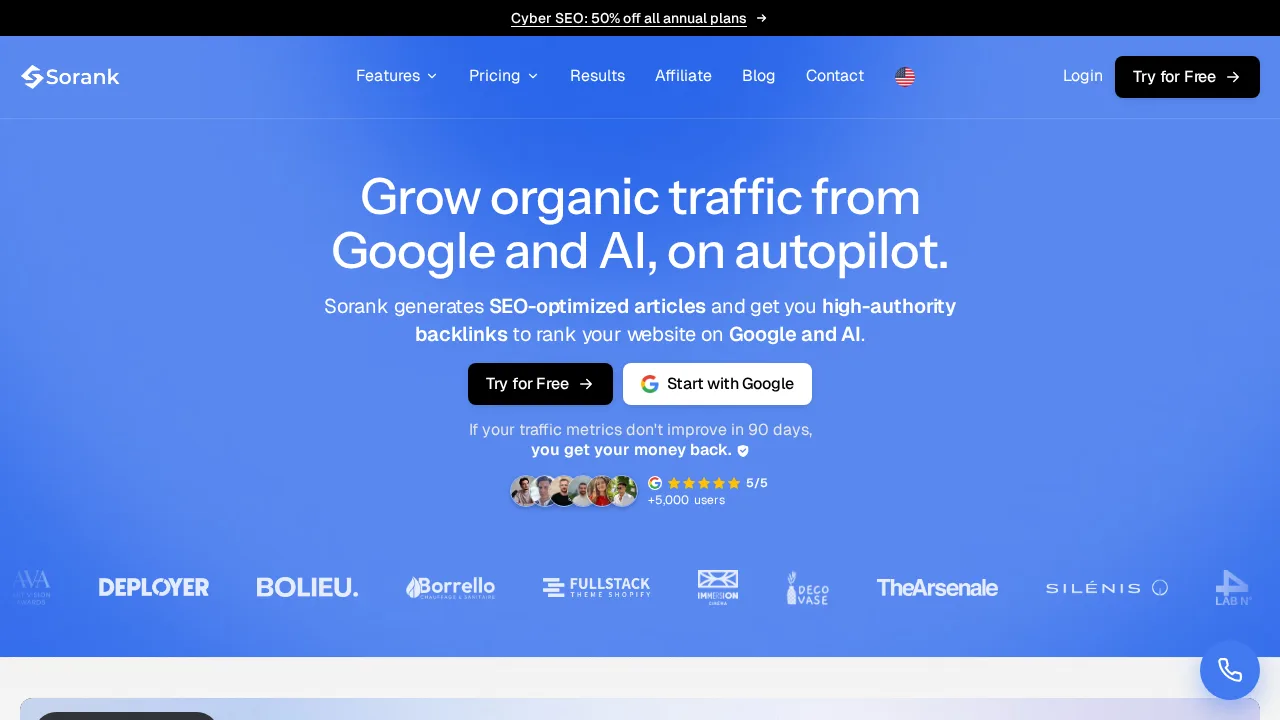
Sorank is SEO and GEO software on autopilot. Like Frase it covers research, topic clusters, writing and publishing, but its volumes are higher: it finds the keywords, builds the clusters, then writes, illustrates and publishes 20, 60 or 120 articles per month on your CMS (more than 10 platforms, including WordPress, Shopify and Webflow) with internal linking, anti-cannibalization and fact-checking. It draws on data from thousands of sites and hundreds of millions of keywords, with search intent, query fan-out, a GEO ranking of the domains AI cites and a weekly read of what up to 5 chosen competitors publish. A unified dashboard brings Search Console, Analytics and AI traffic together.
Each month Sorank asks AI your customers' questions (10 prompts on ChatGPT, Claude and Gemini with Essential, 20 prompts with Grok added on Pro, 50 on Business) and shows whether your brand is mentioned, which brands are cited instead and which sources AI uses. Backlinks come from direct, one-way links between the sites of more than 5,000 Sorank users, with credits (100 per month on Pro, 300 on Business). Plans are Essential at $99 per month, Pro at $249 and Business at $499, or $49, $129 and $249 per month billed yearly, with a 3-day free trial and a 90-day results-or-refund guarantee (see pricing). Agencies can use the white label, and the MCP connector lets you drive Sorank from Claude or ChatGPT.
2.  Surfer
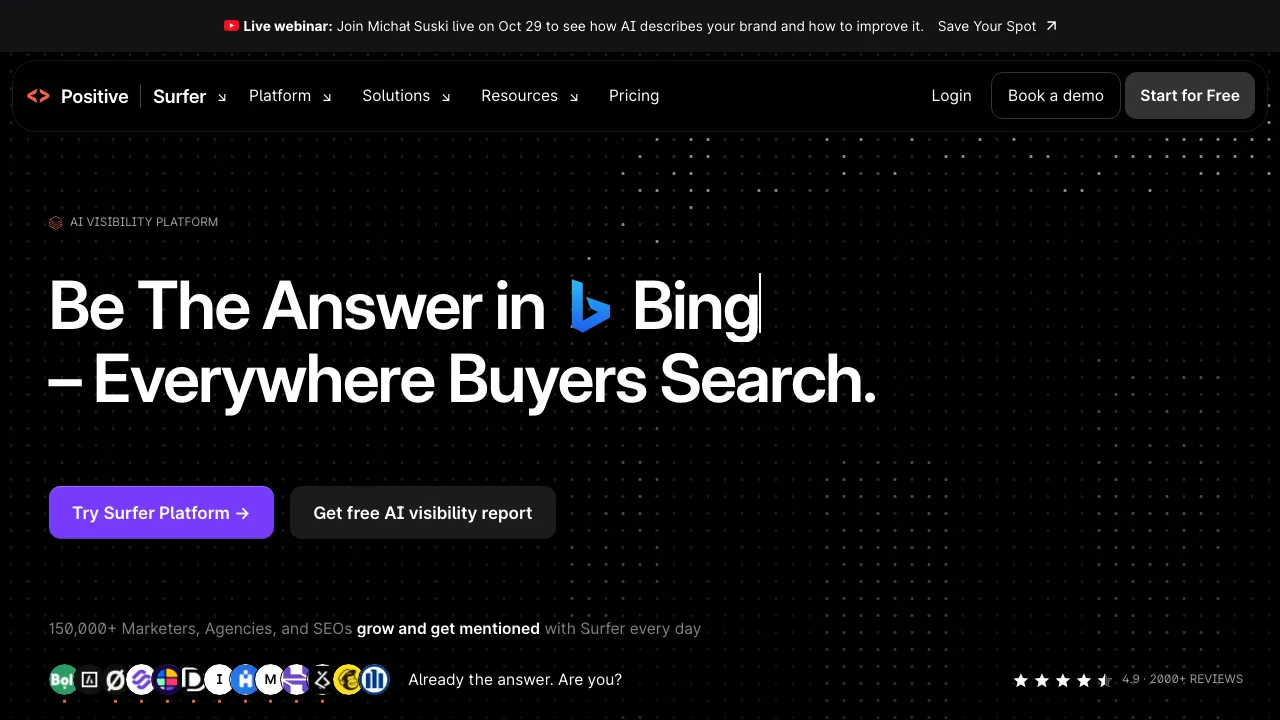
Surfer pairs a mature Content Editor with an AI Tracker, a Topical Map and content audits. It suits teams of writers who optimize every page by hand.
3.  Clearscope
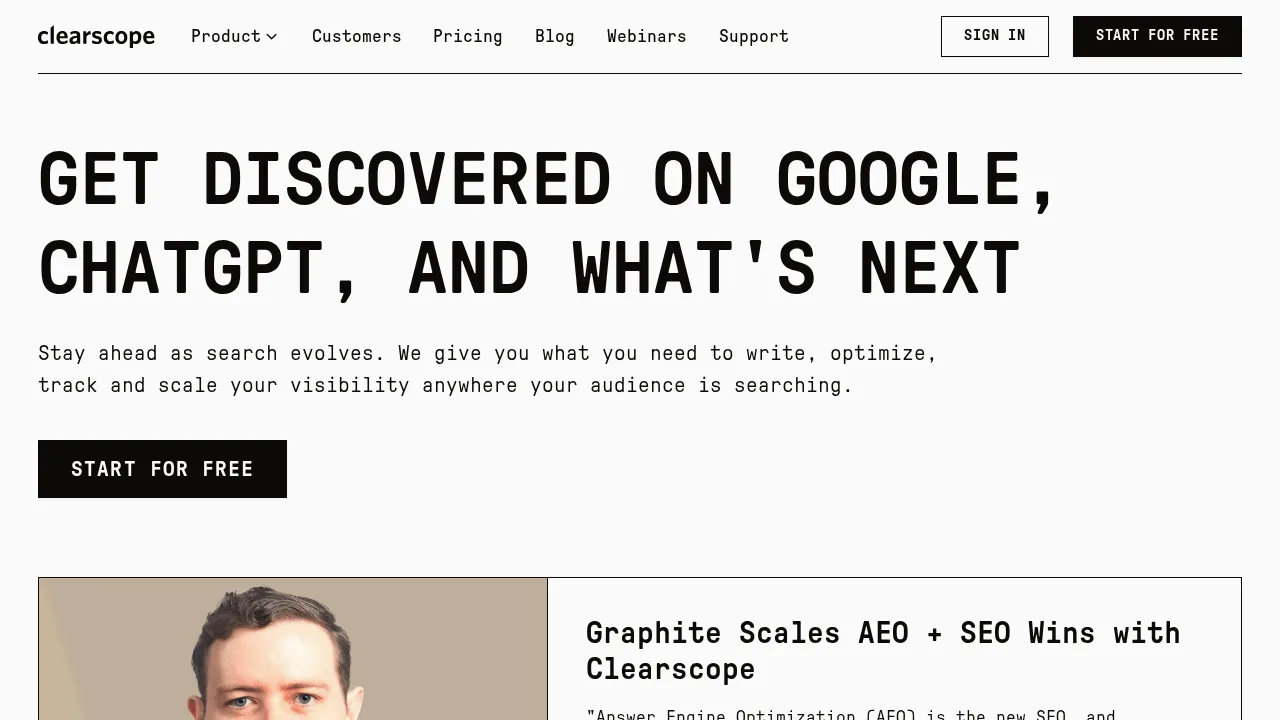
Clearscope grades drafts against the terms and topics that top pages cover. It fits editorial teams that only need a focused optimization step.
4.  MarketMuse
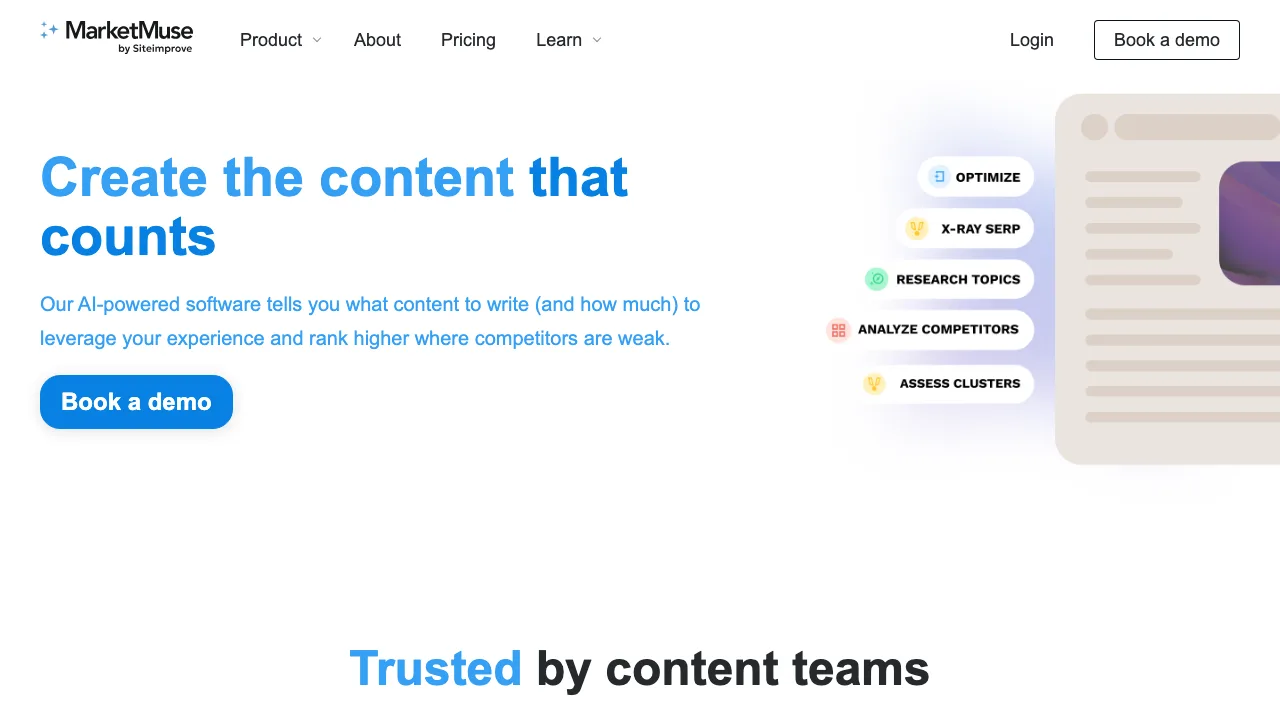
MarketMuse plans content around topic authority and coverage gaps. It suits large sites that prioritize planning across many pages.
5.  AirOps
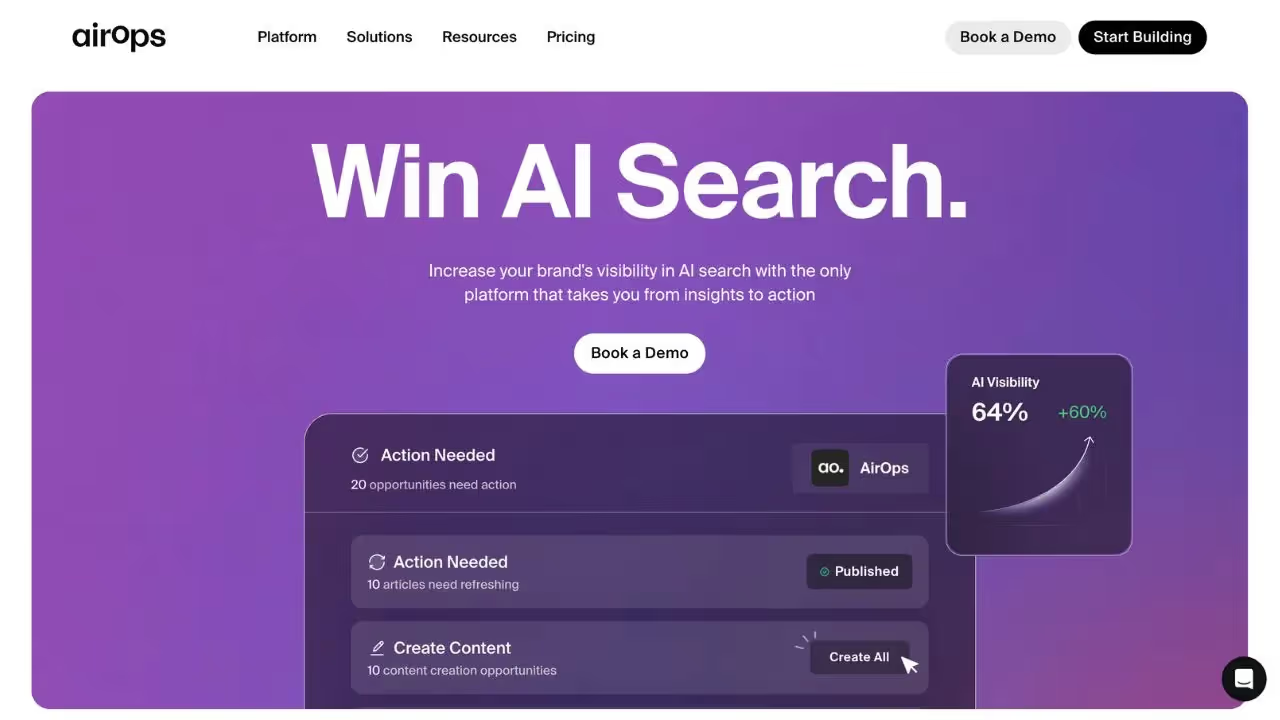
AirOps helps content teams build workflows aimed at AI discovery and search. It fits teams that want to design their own content processes.
6.  Writesonic
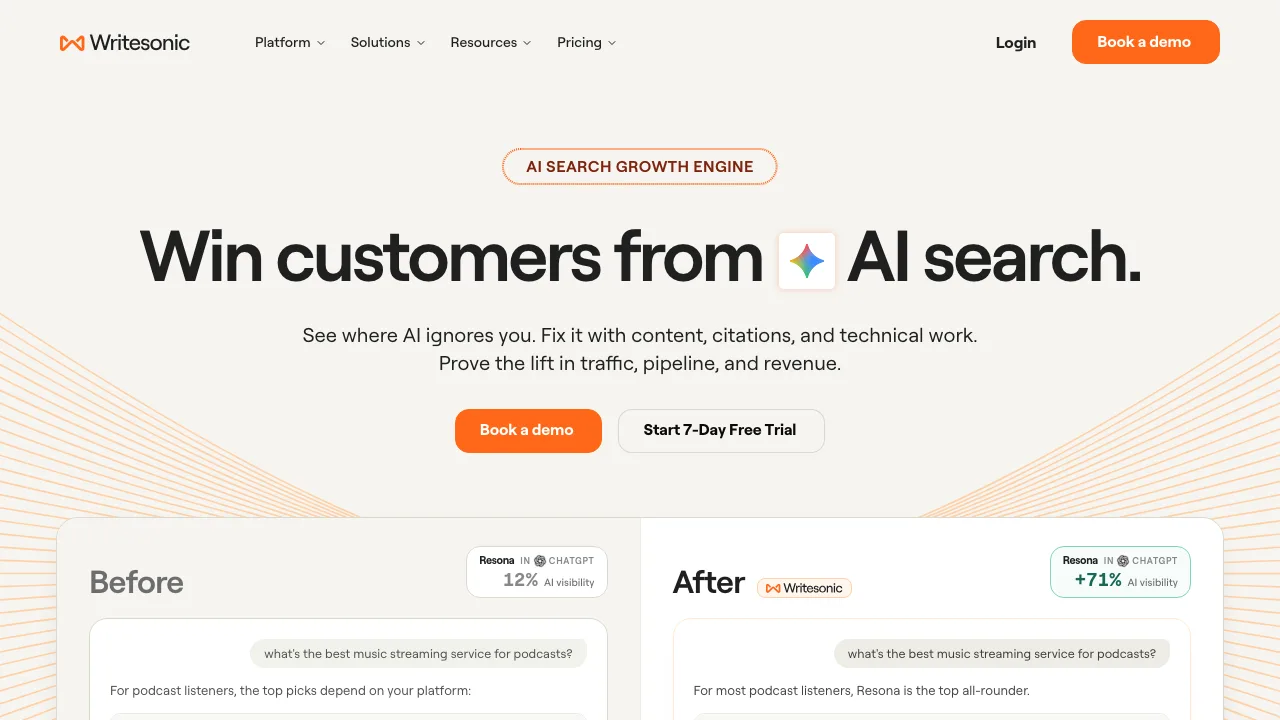
Writesonic combines AI writing with GEO features and AI visibility tracking. It suits marketers who want a broad AI content suite.
Frase vs Jasper: which one fits your SEO content?
Frase and Jasper both write with AI, but they start from different places. Frase starts from the search results: it builds a brief from what the top pages cover for your keyword, then scores your draft as you write. Jasper starts from your brand: it stores your voice, style guide and audience profile, then writes articles, emails, ads and social posts in that voice. If every page has to rank on Google and get cited by AI, Frase's research loop is the closer fit. If you need one consistent voice across many channels, Jasper is built for that.
In practice, the choice comes down to what you measure. Frase gives you a target you can check: cover the subtopics that rank, then raise the score. Jasper's target is harder to measure: does the text sound like your brand? That makes Jasper a good fit for a team that already has a strong voice and needs it repeated everywhere. Frase fits a team that needs organic traffic from each page.
What each tool does
| Question | Frase | Jasper |
|---|---|---|
| Where the draft starts | A keyword and the pages that already rank for it | Your brand voice, style guide and audience profile |
| What it produces | SEO and GEO briefs and articles, each with a score | Articles, emails, ads, social posts and images |
| Publishing | WordPress, Webflow, Sanity, Wix or FraseCMS | Not described on its homepage |
| AI answer tracking | Included, depending on the plan | Offered in its GEO and AI optimization product |
How to choose
- Choose Frase if you write to rank and want the brief, the score and the publishing step in one loop.
- Choose Jasper if your main job is brand copy across ads, email and social, and organic search comes second.
- Test before you buy. Jasper's homepage gives few details on keyword or SERP research, so run one real keyword through its SEO features and compare the draft with the top three results.
For a wider view of the category, read the best AI copywriting tools. To see how a brand voice works in a content workflow, read brand voice.
Tip
Plans and prices for AI writing tools change often, and sources disagree on Jasper's current tiers. Check each official pricing page on the day you compare, and count the seats and monthly drafts you need, not only the headline price.
Frase review: is it worth it for your SEO content?
Frase is worth a trial if you want to check every page before it goes live. Its brief and its SEO and GEO scores give you a clear target for each draft. It is a weaker fit if your goal is high volume with little review, because the workflow rewards close reading of each page. If you are still comparing options, see the best content optimization tools.
A review only means something when you test the tool on your own keywords. Use the 7 days to run the same short test on three pages: one you already rank for on page 2 to 5, one new topic, and one page that gets cited by AI. Write down what changed each time.
A 7-day test plan
| Day | What to test | What a good result looks like |
|---|---|---|
| 1 to 2 | The brief for each keyword | The headings cover the subtopics the top three results share, and you can name what the brief adds that they miss. |
| 3 to 4 | The draft and its scores | Each edit moves the score for a reason you can see. A score that rises only from repeated keywords is a warning sign. |
| 5 | Fact check | Every number and claim traces to a source you can open. Remove the ones you cannot check. |
| 6 | Publish to a test site | Title, meta description, structured data and internal links appear as expected in the page source. |
| 7 | Time and edits per page | Compare them with the pages you wrote by hand. Rankings take weeks, so set a date to check Search Console again. |
Where the score misleads
The SEO score rewards subtopics that pages already cover. That helps with coverage, but it pulls every draft toward the outline of the top results, and pages that look alike rarely stand out. Use the brief as a list of gaps, then add what the top results lack, such as your own data, a worked example or a screenshot from a real account.
Chasing a perfect score has a cost too. Each extra subtopic makes the page longer and can repeat points under new headings. Stop when every section answers a question a reader would ask.
Tip
Test a rewrite of a page that already has Search Console data. You get a baseline to compare against, which a brand-new page does not give you.
Google and AI-written drafts
Google judges pages on whether they help people, not on whether a tool wrote them. Automated pages made to manipulate rankings break its spam policies, so keep only the parts of a draft you would defend in an editorial review. For the rules that apply to any AI draft, read AI content for SEO. To check how AI assistants describe your brand after you publish, use the steps in AI visibility audit.
How to choose between  Frase and Sorank
Frase fits content teams and agencies that want to stay close to each draft, review SEO and GEO scores before publishing and run their own site audits, with the option to let the agent publish once they trust it. If you publish 10 to 40 articles a month across a few sites and value FraseCMS and the MCP server, its Starter or Professional plan is a good match.
Sorank fits a business that wants more volume handled for it, with monthly AI tracking on ChatGPT, Claude and Gemini from the first plan and one-way backlinks from other users' sites instead of outreach drafts. One subscription covers one site, so compare the number of sites you run and the articles you need. Results usually show within 2 to 4 months, and you can start with the 3-day free trial, the free SEO tools or the free Chrome extension for on-page audits.