

 LLM Pulse










LLM Pulse tracks what AI models say about a brand. People look for an alternative for a few common reasons: the plans cost too much for a small team, they need more than AI mention tracking, or they want AI visibility to sit next to their SEO work. This list covers all three cases.
Before you compare prices, decide what you will do with the data. A tracker shows where your brand stands in AI answers. A platform also helps you change that position, with content, links or pages. Four questions help you choose: which AI models are tracked, how often answers are checked, whether you can see the sources the models cite, and whether you can test the tool with a trial before you pay. For more background, read our guide to how AI answers name a brand.
The ten tools below are real products that were live when we checked their homepages. Prices come from each homepage or pricing page. When a tool does not show a price, we say so and do not guess. We put Sorank first because this is our site, and we describe its limits below.
Top 10 LLM Pulse Alternatives
1.  Sorank
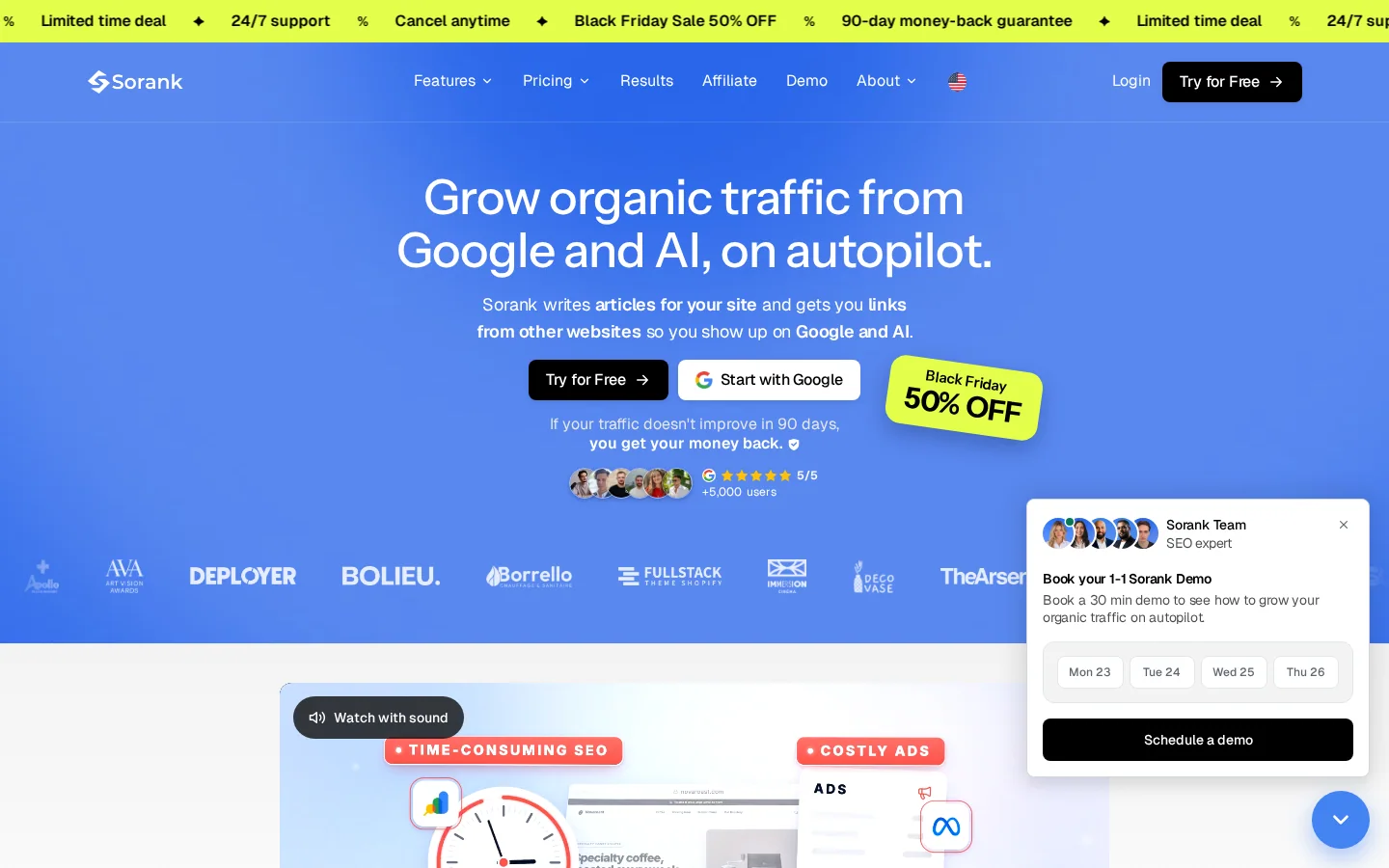
Sorank is an SEO and GEO platform that runs on autopilot. It tracks your brand in ChatGPT, Claude and Gemini, with Grok added from the Pro plan, and it shows which sources the AI models cite. It also writes articles for your site, publishes them to your CMS and exchanges backlinks with other Sorank sites in your niche. It fits small and mid-size businesses, agencies and SaaS teams that want one tool for Google and AI search.
The Essential plan costs $49 a month when billed yearly, and the Pro plan costs $129 a month on the same basis. Sorank offers a 3-day free trial with a card on file. Compared with LLM Pulse, Sorank connects AI tracking to content and links, while LLM Pulse's public feature list centers on monitoring, reporting and data access. Read the limits before you decide: there is no permanent free plan, each website needs its own subscription, and the technical audit runs in the Chrome extension rather than in the dashboard.
2.  Otterly AI
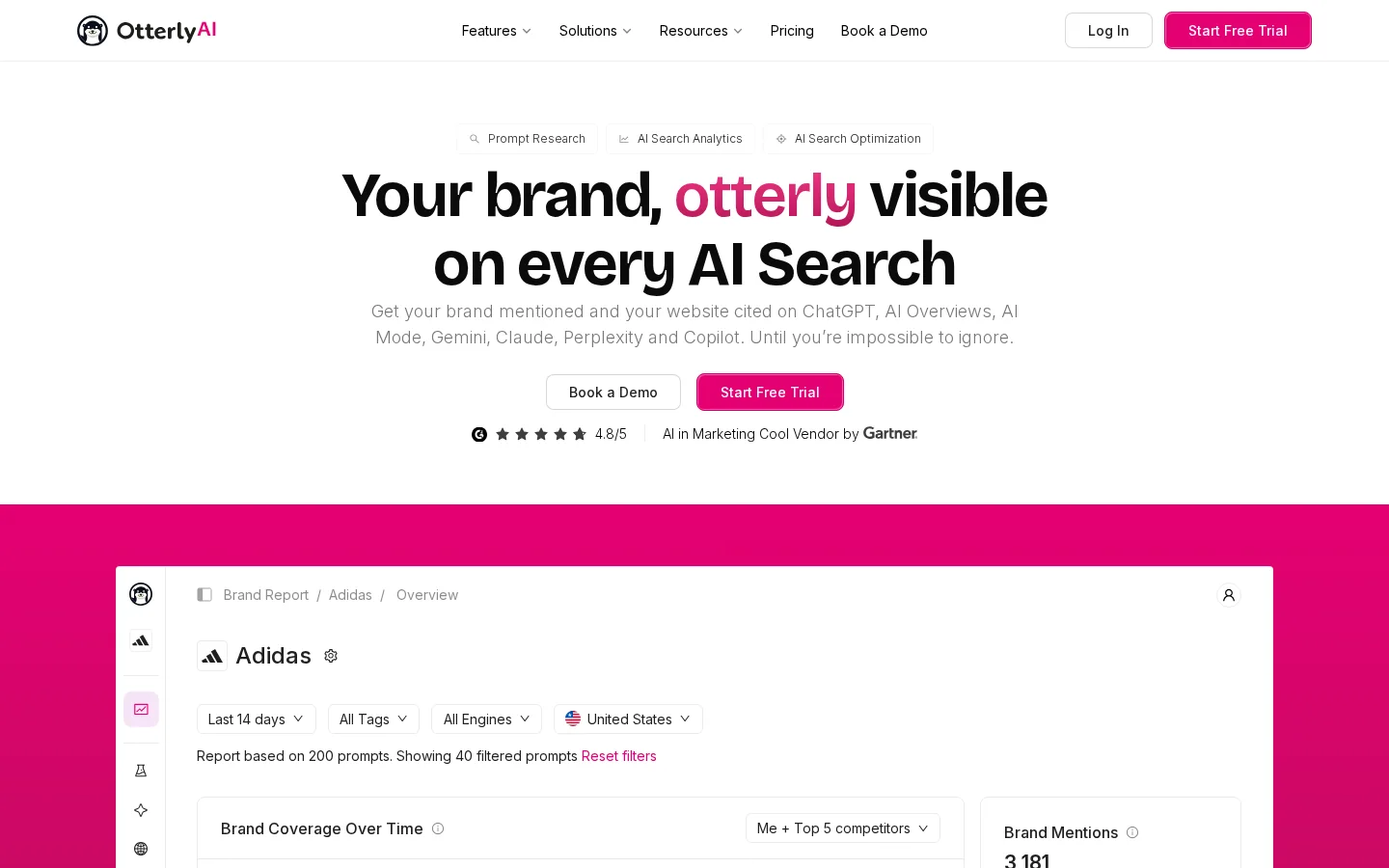
Otterly AI tracks brand mentions, citations and visibility across AI search engines, including ChatGPT, Perplexity and Google AI Overviews. Its homepage is aimed at marketing teams, agencies and brands that want a clear view of how often they appear in answers. Its FAQ states that pricing starts at $29 a month.
Compared with LLM Pulse, the Otterly AI homepage centers on mention, citation and visibility tracking. LLM Pulse also lists an API, an MCP server and white-label options. If you need your AI data inside other tools, check those details on both sites before you choose. Otterly AI is a sensible option for a team that wants a focused tracker at a low entry price.
3.  Peec AI
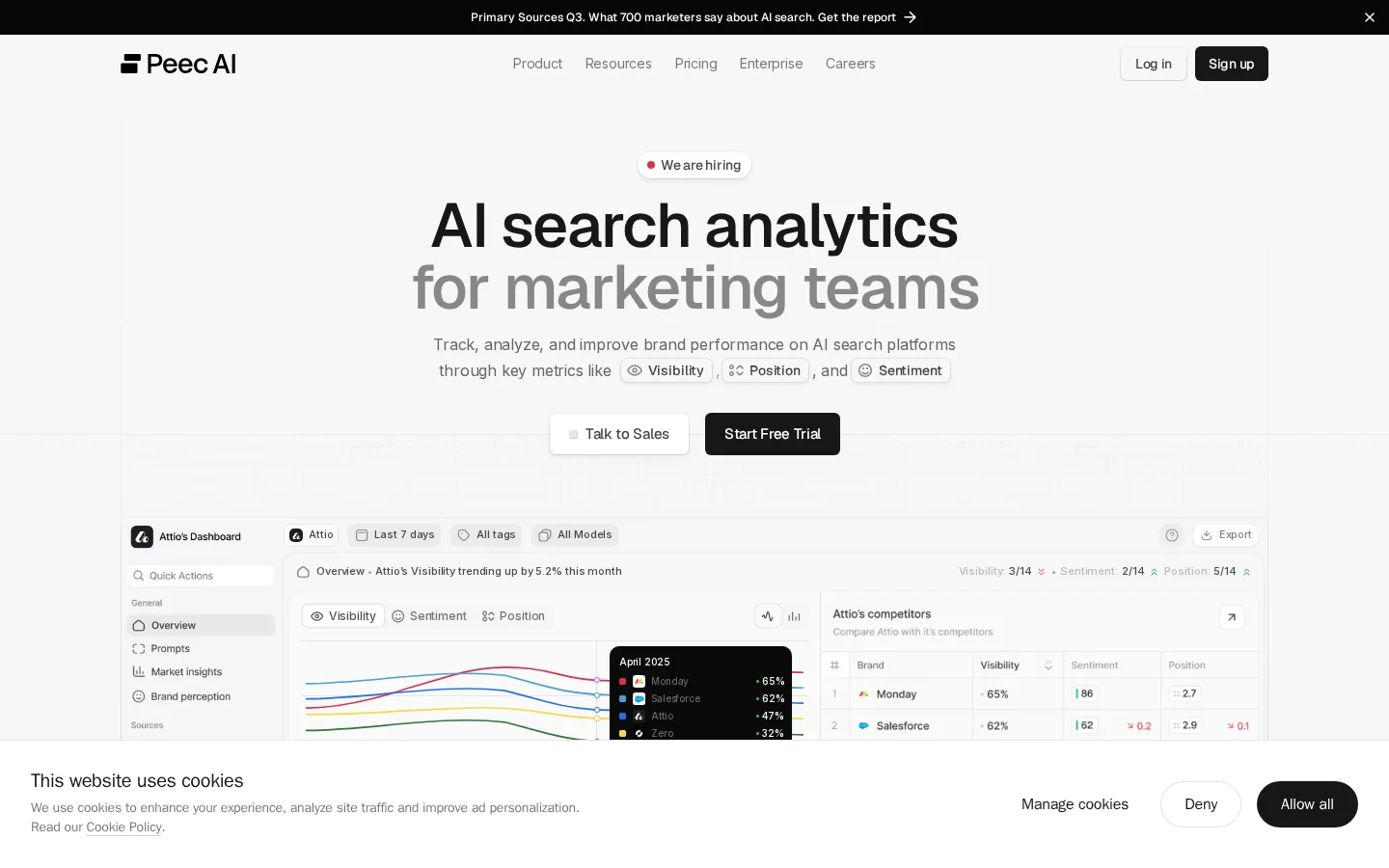
Peec AI tracks how visible your brand is across AI search platforms, including its position and sentiment in the answers. Its homepage speaks to marketing teams and agencies, and it offers a free trial button. The homepage does not show a price, so check the pricing page or ask for one before you plan a budget.
Compared with LLM Pulse, Peec AI is a good fit if your main question is how you rank against competitors in AI answers. Both tools are built around monitoring. Ask whether the trial lets you test your own prompts and competitors before you commit. That is the fastest way to see whether the reports answer your questions.
4.  Profound
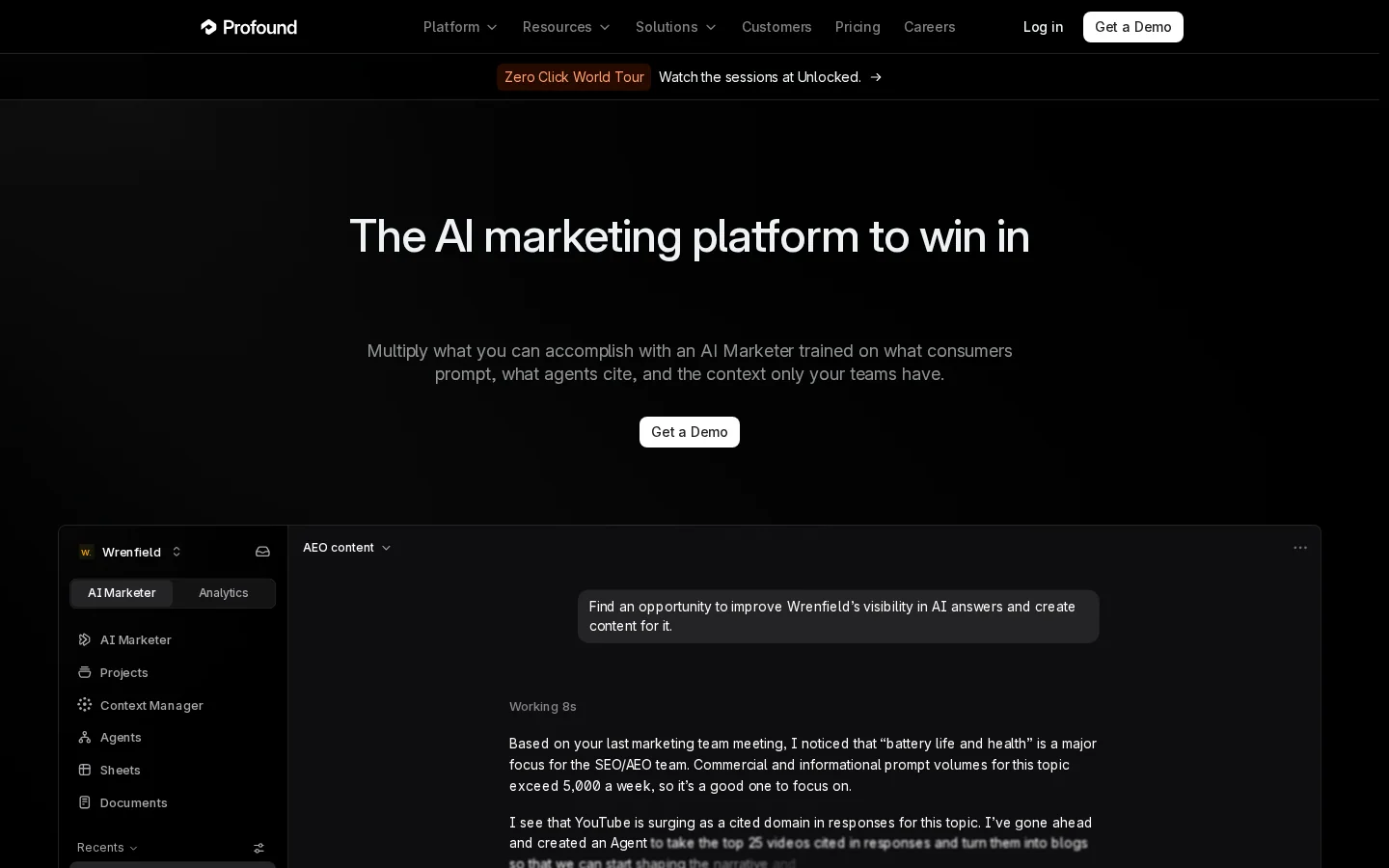
Profound describes itself as an AI marketing platform for winning in AI search engines. Its homepage is aimed at teams working on answer engine optimization, content and PR, and at agencies. It shows a login and a Get a Demo button, and it does not show a price. Profound fits larger organizations that want AI visibility to sit alongside PR and content work.
Compared with LLM Pulse, the buying path is different. LLM Pulse lists its plan prices and a 14-day free trial on its pricing page, while Profound's main call to action is a demo with sales. If you want to start on your own and test the tool first, that difference matters more than the feature list. Look at both before you decide.
5.  AthenaHQ
AthenaHQ calls itself the command center for AEO and GEO. It tracks a brand's visibility across AI platforms and is aimed at marketing teams, GEO and AEO specialists, enterprises and agencies. Its homepage has a Start for Free button and lists a Starter plan at $295 a month, with a free Essential tier and a custom Enterprise plan.
Compared with LLM Pulse, AthenaHQ offers a free tier, while LLM Pulse's public plans start at EUR 49 a month on weekly tracking. The AthenaHQ Starter plan costs more than that. It suits teams that want to start free and move up to a paid plan later, if the free tier covers their first tests.
6.  Scrunch AI
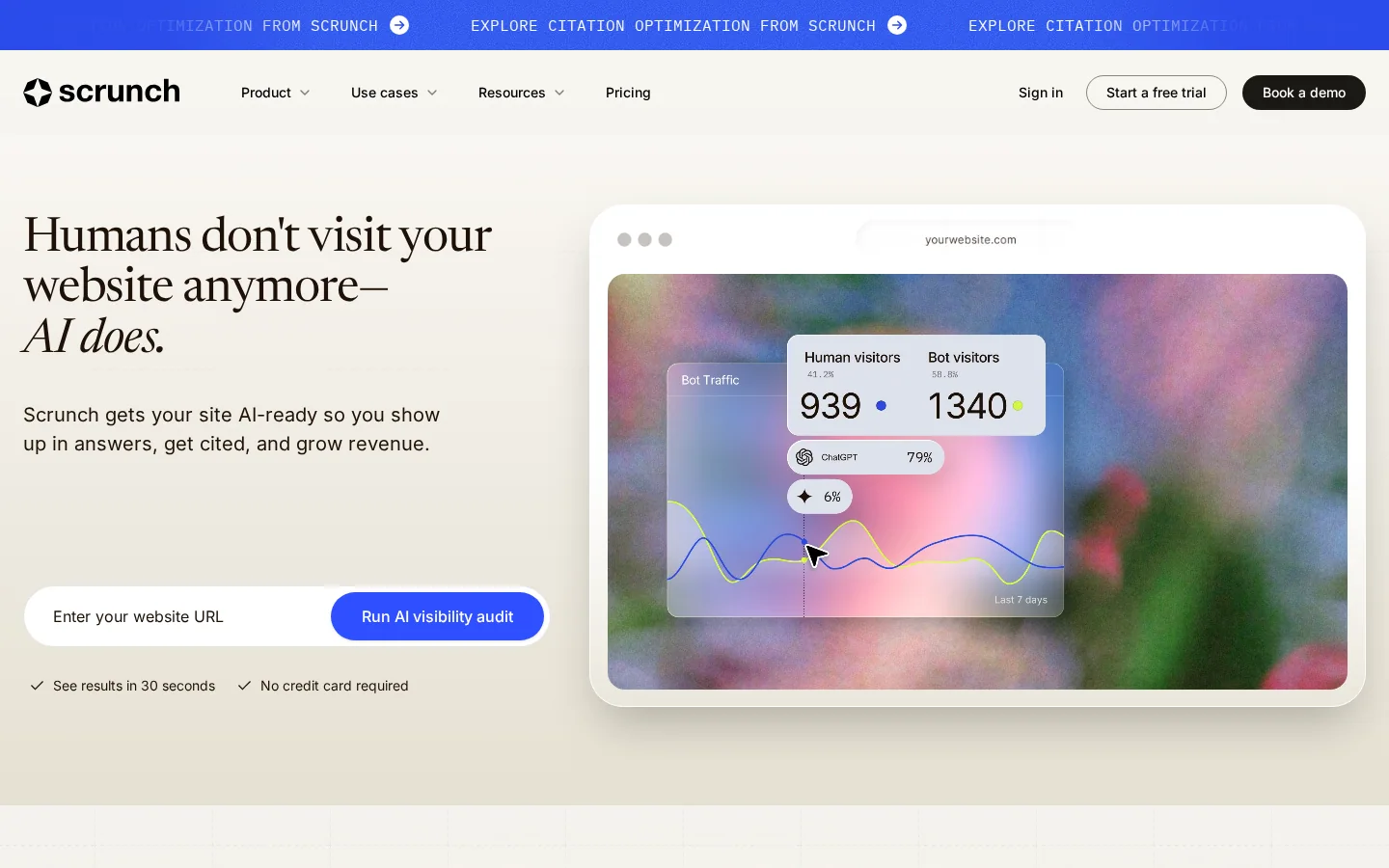
Scrunch AI describes its platform as a way to get your site AI-ready, so that it shows up in answers, gets cited and grows revenue. The homepage targets enterprises and agencies, with a sign-up, a log-in and a See plans link. It does not show prices on the homepage, so the plans page is the place to check the cost.
Compared with LLM Pulse, Scrunch puts more weight on the site itself. LLM Pulse focuses on what the models say and which sources they use. Scrunch talks about making the site ready to be read by AI systems. Pick it if your bottleneck is the site, not the monitoring. Pick LLM Pulse if you mainly need to see the answers first.
7.  Rankscale
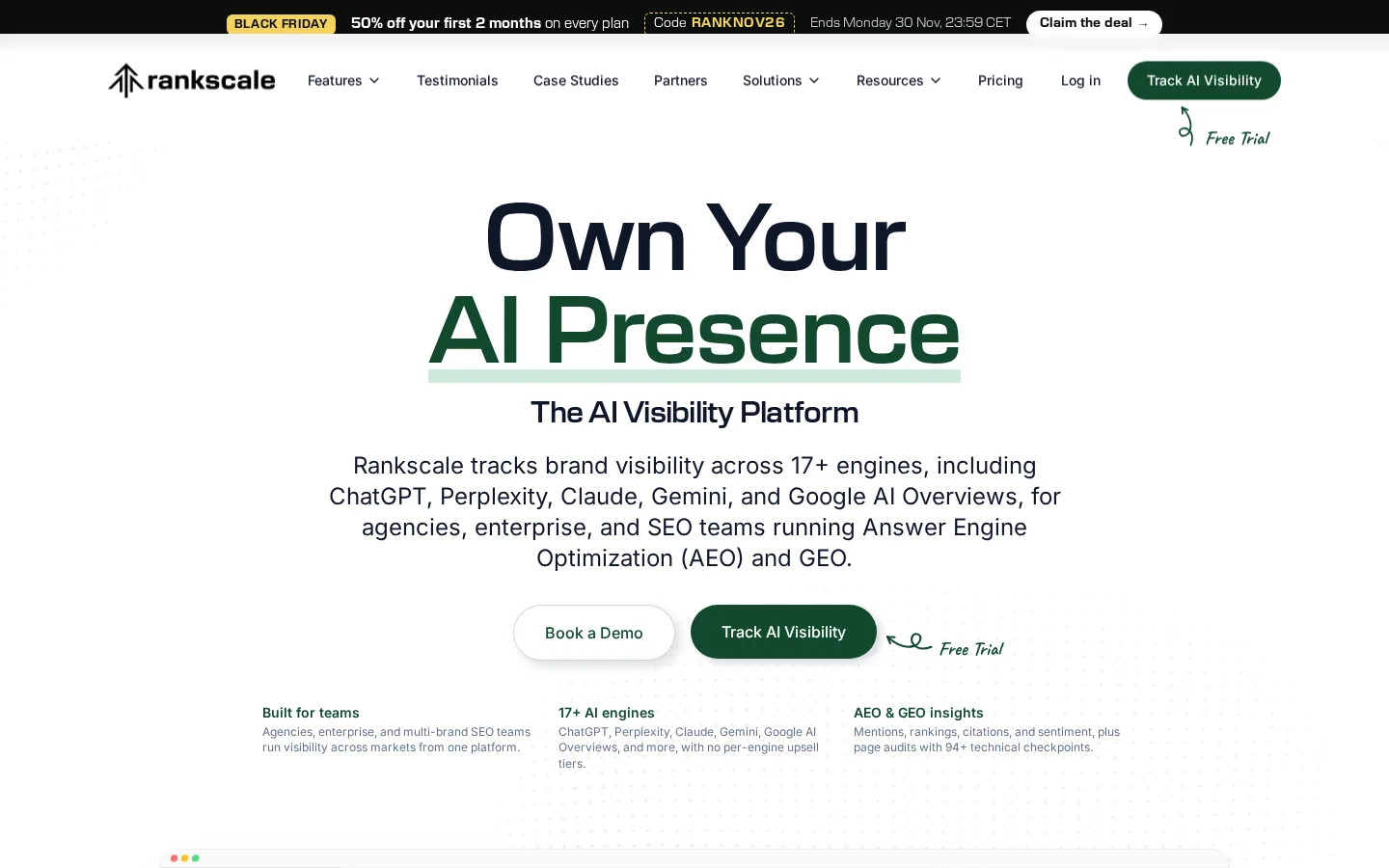
Rankscale tracks how a brand appears across more than 17 AI search tools, including ChatGPT, Perplexity and Gemini. Its homepage is aimed at agencies, enterprise teams and SEO professionals, and it has a sign-up and a log-in. The homepage states that plans start at $99 a month and go up to $780 a month for Enterprise.
Compared with LLM Pulse, Rankscale's entry price is higher than the Starter plan, and its coverage list is much longer. If you track many AI tools, that wider coverage is useful. If you track two or three models, the extra coverage may not change your results, and the lower entry price may matter more. Test both tools on the same prompts before you decide.
8.  AICarma
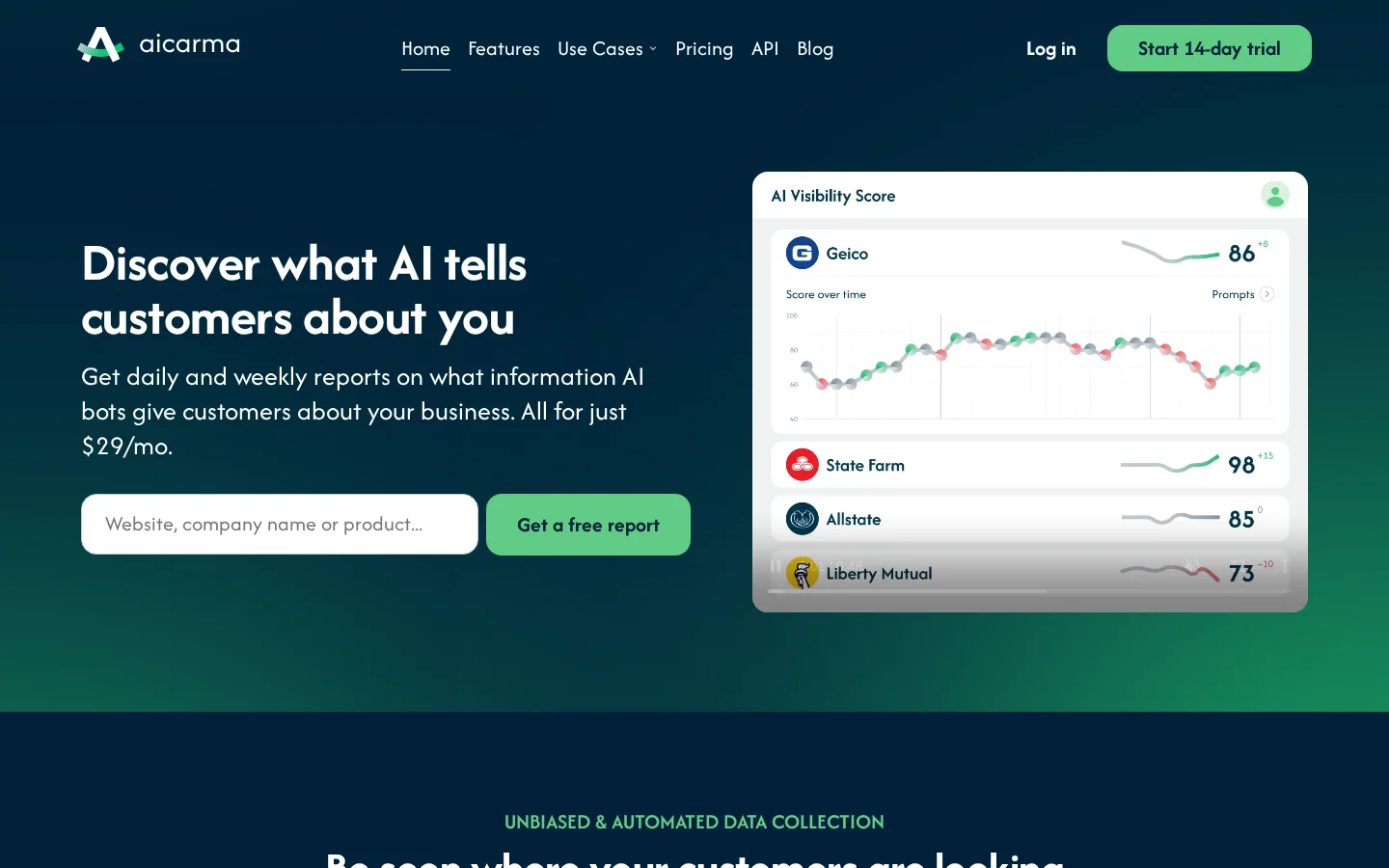
AICarma tracks how AI chatbots describe a business and its competitors. Its homepage mentions daily visibility scores and weekly reports, and it is aimed at marketing and brand teams. It offers a 14-day trial with sign-up, and the homepage lists a monthly plan at $29 a month.
Compared with LLM Pulse, AICarma is a simple option for a small team that wants scores and reports at a low price. If you need your AI data inside other tools, compare LLM Pulse's API, MCP server and CLI. The AICarma homepage does not describe anything similar, so ask the vendor directly.
9.  Brandlight.ai

Brandlight.ai presents itself as an enterprise AI visibility platform. It shows how brands appear in AI answers, including share of voice against competitors, and it adds content optimization, impact tracking and AI ads. Its homepage names enterprise customers and has a Get a demo button. It does not publish a price.
Compared with LLM Pulse, Brandlight.ai is built for large brands with a buying process that includes demos and sales calls. LLM Pulse publishes plan prices and offers a 14-day trial on its Starter, Growth and Scale plans, which makes it easier for a small team to start. Choose Brandlight.ai if you want the enterprise scope and can afford a longer sales cycle.
10.  MentionLab
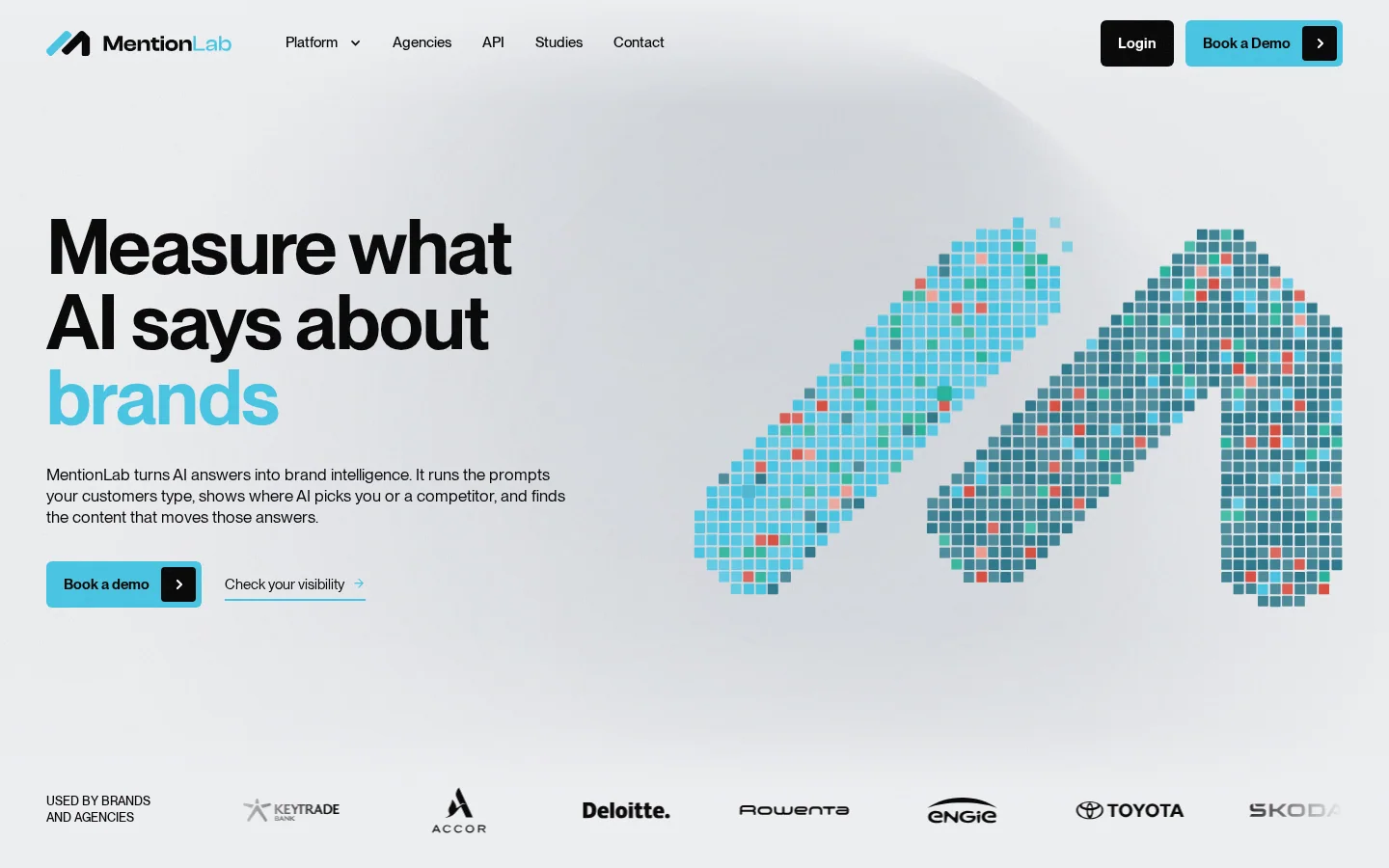
MentionLab tracks how often a brand is mentioned across major AI models. Its homepage shows a dashboard with mention rates across ChatGPT, Claude, Gemini and Perplexity, and it is aimed at brands and agencies. The main call to action is Book a demo, and the homepage shows no price.
Compared with LLM Pulse, MentionLab is a tracker with a demo-led sales path. If you want to see the dashboard with your own prompts before any sales call, check whether a trial is available. LLM Pulse lists a 14-day trial on its plans, so you can test the reports on your own brand first.
How to Choose the Right LLM Pulse Alternative
Start with the job you need done. If you only want to watch mentions, a focused tracker is enough. If you want to publish content, earn links or connect the data to your own tools, look for a platform with those features. Then compare prices in the currency and billing period you will actually pay. The same plan can cost much less when billed yearly, so check both options.
Ask each vendor what counts as a tracked prompt, how often answers are checked, and which AI models are included on your plan. These limits change the cost more than the headline price. For a wider view of the category, read our list of the best AI visibility tools.
LLM Pulse can still be the right pick. It publishes its plan prices, offers a 14-day trial on three of its plans, and lists an API, an MCP server and a free AI visibility report. If you want a monitoring tool with clear prices and a data connection to your own dashboards, it is a practical starting point. Use the table below to compare it with the tools on this list.
| Tool | Best for | Entry price | Main strength |
|---|---|---|---|
| Sorank | Teams that want tracking plus content and links | $49 a month billed yearly | Tracking tied to articles and backlinks |
| Otterly AI | Teams that want a focused mention tracker | From $29 a month | Mention and citation tracking |
| Peec AI | Teams comparing themselves with competitors | Not published | Position and sentiment in AI answers |
| Profound | Larger teams that buy after a demo | Not published | AI marketing platform with PR and content |
| AthenaHQ | Teams that want a free tier to start | $295 a month (Starter) | Free Essential tier and a command center for GEO |
| Scrunch AI | Enterprises that want the site AI-ready | Not published | Making the site ready for AI answers |
| Rankscale | Teams tracking many AI tools | From $99 a month | Coverage of more than 17 AI search tools |
| AICarma | Small teams that want scores and reports | $29 a month (monthly plan) | Daily visibility scores and weekly reports |
| Brandlight.ai | Large brands with a demo-led buying path | Not published | Share of voice against competitors |
| MentionLab | Brands that want a demo first | Not published | Mention rates across AI models |
Why Sorank Stands Out
Sorank is built to act on what it measures. You set the questions to track, and the results sit in the same dashboard as the articles, backlinks and audit. Articles are written to be cited by AI models, and you can follow each citation after publication, although no citation is guaranteed. Publishing connects directly to WordPress, Shopify, Webflow, Wix, PrestaShop and Framer, or goes to a blog hosted by Sorank on your own domain. See the AI visibility tracker page for how the monitoring works.
Sorank also includes an MCP connector and an API, so you can use your data in Claude or ChatGPT, or in your own tools. The Chrome extension gives a free audit of any page, with scores for SEO and GEO. Sorank does not promise rankings or citations. It has limits you should weigh: there is no permanent free plan, each website needs its own subscription, and the technical audit is in the extension rather than in the dashboard. If you only need a monitor, LLM Pulse's free AI visibility report may be enough to start. For a team that wants the content and links handled too, Sorank is designed for that.