

 Auto Post IO










Auto Post IO is built for one job: turning a keyword into a finished blog post and publishing it with very little manual work. That focus is exactly why many teams start looking at alternatives. Once you need more than automatic articles, such as keyword research, AI visibility tracking, a site audit or one dashboard for several brands, a publishing-first tool may not cover the whole workflow. Our guide to auto blogging risks and what still ranks explains where that gap usually shows up.
Pricing is the other common reason. Auto Post IO charges with monthly credits, so the number of articles you get depends on the plan you pick. Its free plan includes 1000 credits, and its paid plans start at 9.99 EUR a month. Before you switch, compare how many posts each plan really gives you, what an extra post costs, and what the tool shows you about the research behind each article.
Trust matters as well. Auto Post IO has a TrustScore of 3.9 out of 5 on Trustpilot, based on 7 reviews, and the reviews are mixed. Some people praise how quick the setup is, while others mention article quality and slow support replies. The company answers reviews, so read both sides before you decide. The rest of this page looks at the criteria that matter most: what gets researched, how much content you get, where posts can be published, how you check quality, and whether the price still makes sense as you grow.
Top 10 Auto Post IO Alternatives
1.  Sorank
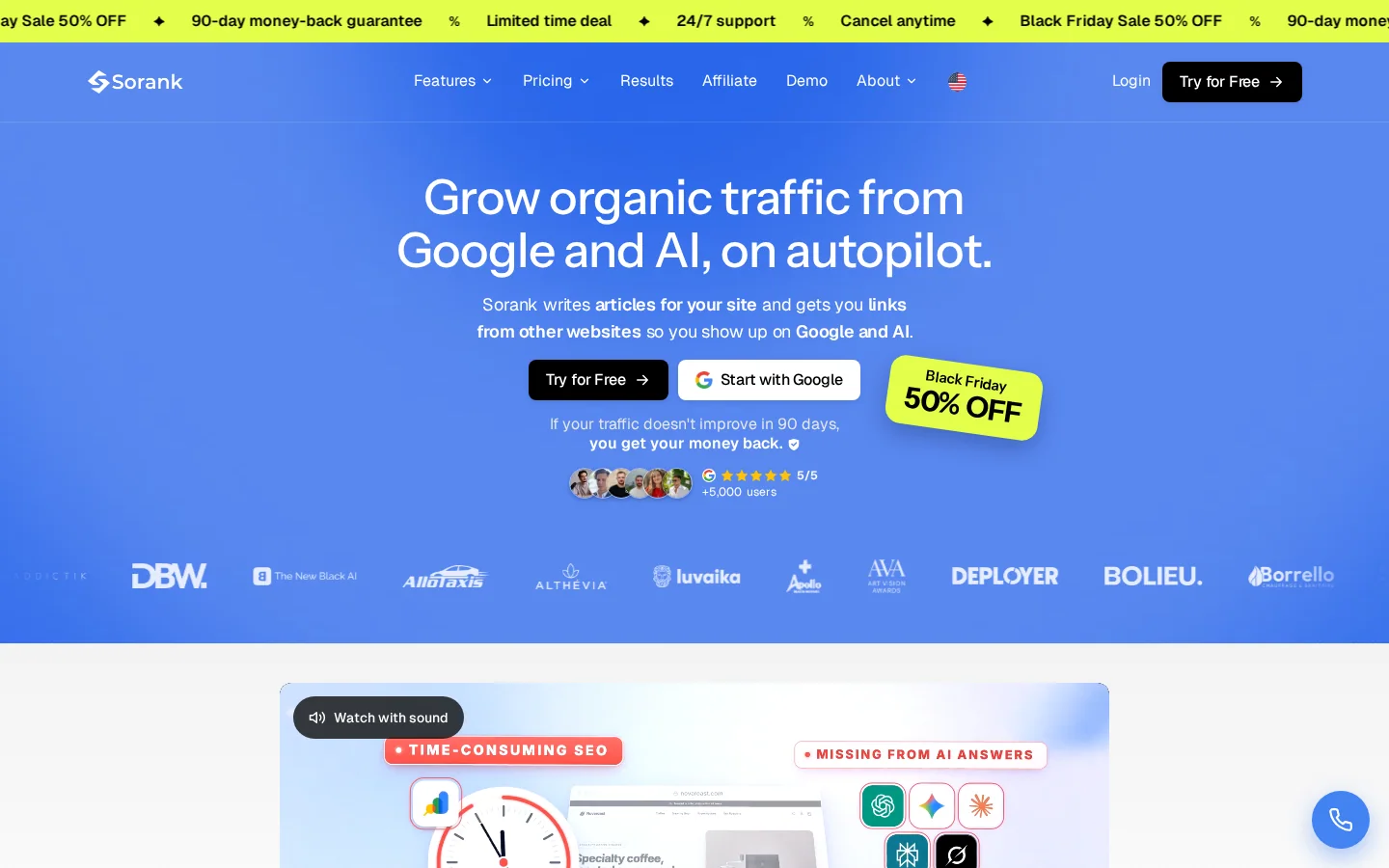
Sorank is a unified GEO and SEO platform. It covers keyword research, article writing and publishing, backlink exchange, SEO audits, and a monthly check of what ChatGPT, Claude and Gemini say about your brand, all in one workspace. Compared to Auto Post IO, the main difference is scope: the articles are one part of a workflow that also looks at how AI tools mention you and what to do next.
Sorank plans start at $49 a month on yearly billing, and each plan starts with a 3-day free trial. It fits teams that want articles and visibility tracking together. If you only want the cheapest possible tool for scheduled blog posts, a publishing-only product may be the simpler choice.
2.  Koala

Koala is an AI writer for SEO. Its KoalaWriter tool researches a keyword, reviews the current search results and drafts an article with sources, images and internal links. Koala can also import your services and tone from your website, and an SEO agent suggests topics based on your Search Console data. It is aimed at site owners who want more search content without writing each article by hand, and it also targets agencies and large sites.
Articles can be published to WordPress, Shopify, Webflow, Ghost or any webhook endpoint, either as drafts or automatically. A free account includes 5000 words with no credit card needed. Compared to Auto Post IO, Koala puts more weight on research and brand voice, and it includes an SEO agent that the Auto Post IO homepage does not mention.
3.  Minineo
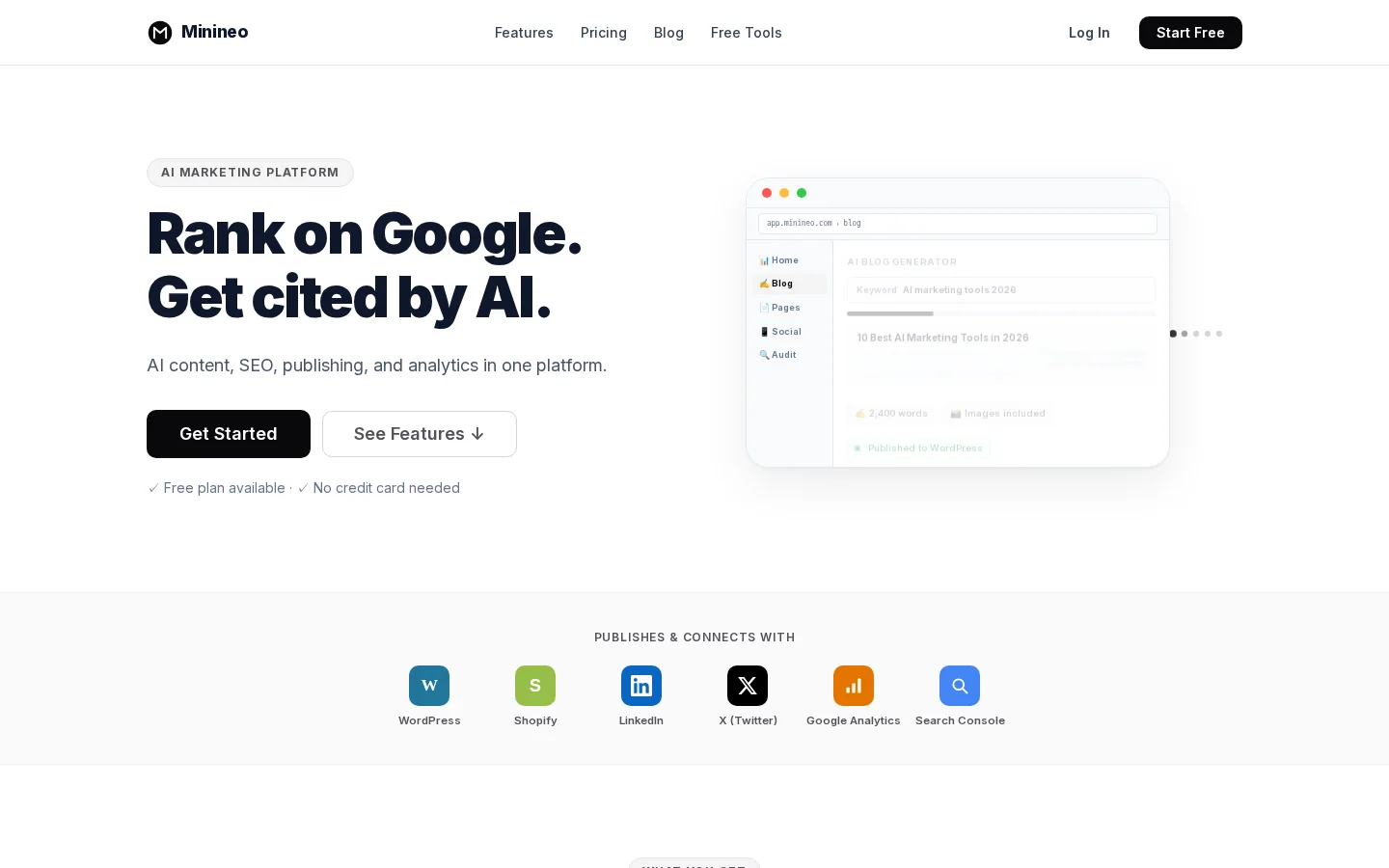
Minineo is an AI SEO content and marketing automation platform. Its Blog Article Generator turns a target keyword and your instructions into an SEO-optimized post, which can then go to WordPress, Shopify, LinkedIn or X. Its Website Audit scans your site for SEO and AI visibility issues and suggests what to publish next, and a GEO Score shows how visible you are to AI answer engines. It is built for solo founders, growth teams and agencies.
The free plan gives you one website scan, 2 blog posts, 2 landing pages and 2 social posts, with no credit card needed. The Pro plan costs ₹2999 a month, and the page quotes its prices in Indian rupees. Compared to Auto Post IO, Minineo adds the audit and the GEO Score, but its free allowance is a one-time amount rather than a monthly one.
4.  Frase
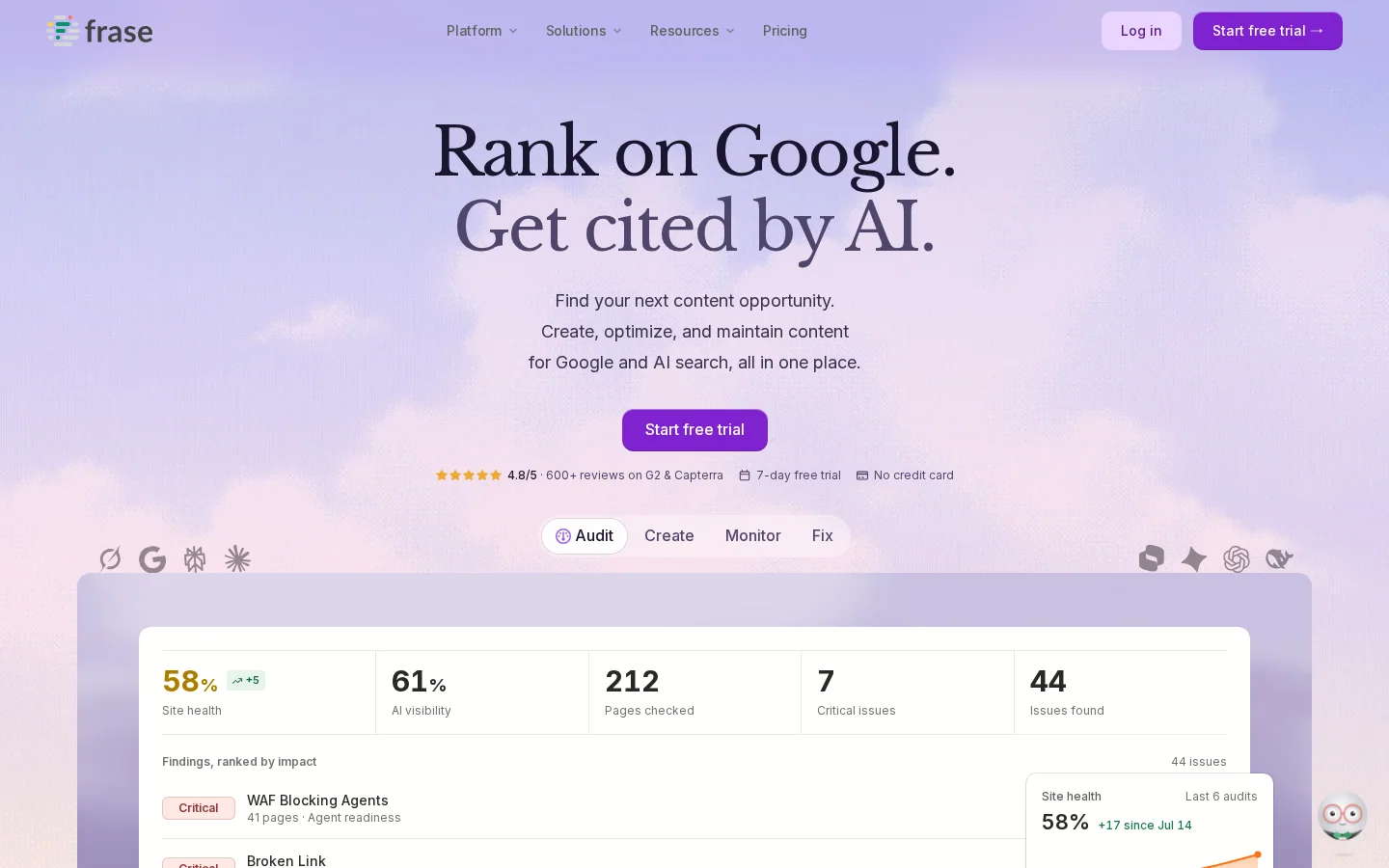
Frase calls itself the content operating system for AI search. The Frase Agent drafts pages from top-ranking results in your brand voice, and you can ask for changes in plain language. The platform also covers SEO research, topic clusters, a site audit and AI visibility tracking across ChatGPT, Perplexity, Claude, Gemini and Google AI. It suits content marketers, SEO teams and agencies, and it publishes to WordPress, Webflow, Sanity and Wix.
The Starter plan costs $39 a month on yearly billing, or $49 month to month, and covers one site and one person. There is a 7-day free trial with no credit card. Compared to Auto Post IO, Frase covers more of the research and tracking side, so its entry price is higher than the cheapest paid plan of Auto Post IO.
5.  Scalenut
 is a GEO platform that combines AI tools with human experts. Its software tracks AI brand mentions, prompt coverage and competitor share, and it includes an article writer, a content optimizer, a content audit and a GEO score. It also has a backlink marketplace and keyword planning. It suits brands that want to grow Google traffic and AI citations together, either with the do-it-yourself software or with a done-for-you service.
The homepage does not show monthly prices and links to a separate pricing page. It offers a free trial, but the length is not stated. Compared to Auto Post IO, Scalenut puts more weight on strategy and tracking, while Auto Post IO is more focused on scheduled, automatic publishing.
6.  Writesonic
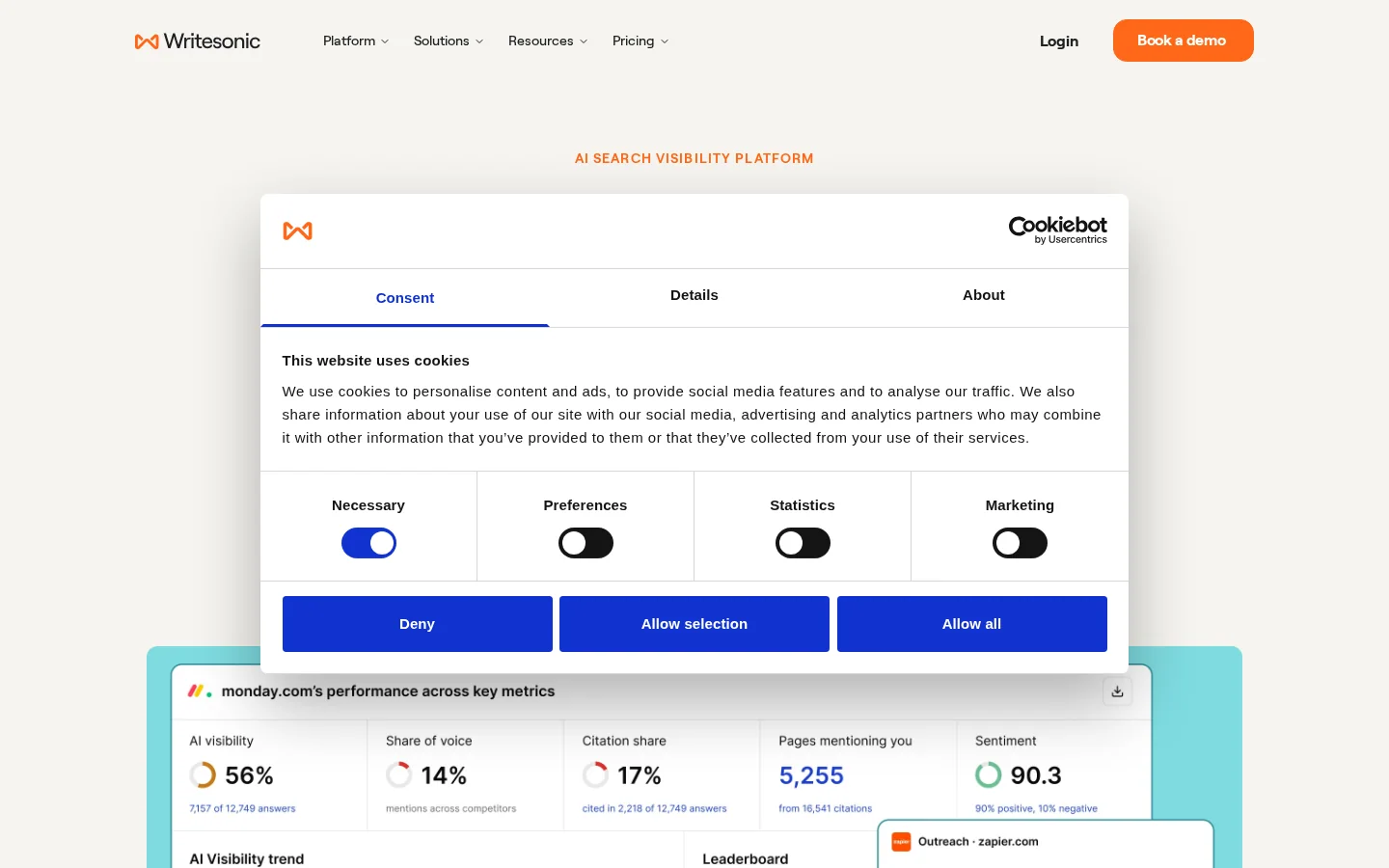
Writesonic describes itself as an AI search visibility platform for GEO and AEO. It tracks brand mentions, citations and sentiment across ChatGPT, Gemini, Google AI Overviews, Perplexity and Claude. An Action Center ranks the next steps by visibility impact, and an AI agent rewrites pages for generative engine optimization. Its audience includes enterprises, agencies and e-commerce brands.
The homepage shows no monthly prices, but it offers a 7-day free trial and a demo request. Compared to Auto Post IO, Writesonic is about measuring and changing how AI tools describe your brand, not about running a blog on a schedule. Choose it if your goal is visibility across AI platforms, and check its plans carefully if you mainly need steady blog output.
7.  NEURONwriter
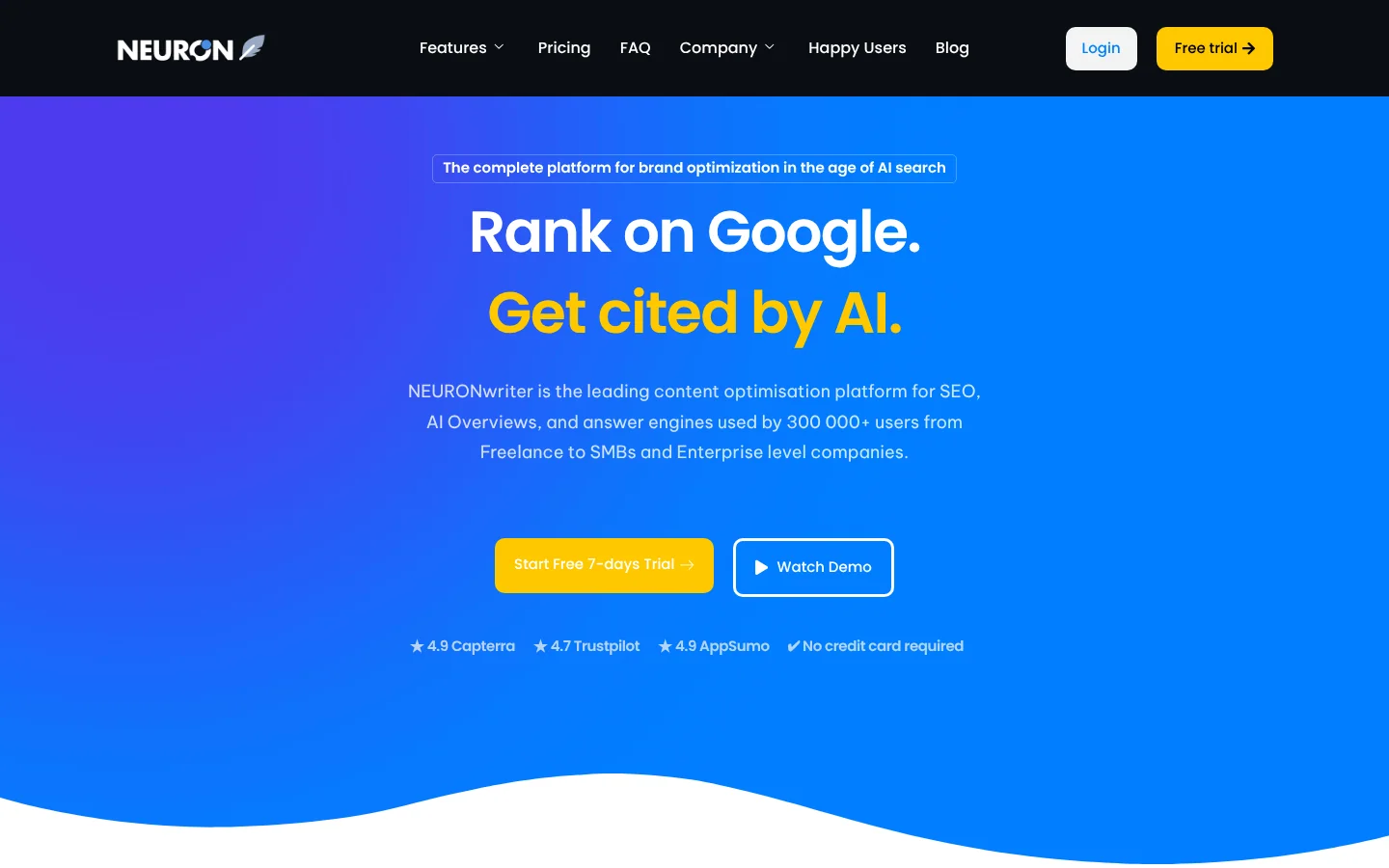
NEURONwriter is a content optimisation platform for SEO and AI answers. Its Content Designer gives scoring guidance based on competing pages, suggests terms and internal links, and includes AI drafting and one-click article creation. It connects to WordPress and Google Search Console, and it tracks brand share of voice across AI models. It is used by freelancers, small businesses and enterprise teams.
The Bronze plan starts at $23 a month, and there is a 7-day free trial with no credit card needed. Compared to Auto Post IO, NEURONwriter is strongest when you write or edit the article yourself and want a score to guide each change. The page does not describe scheduled, fully automatic publishing, so it fits teams that review each article before it goes live.
8.  Surfer
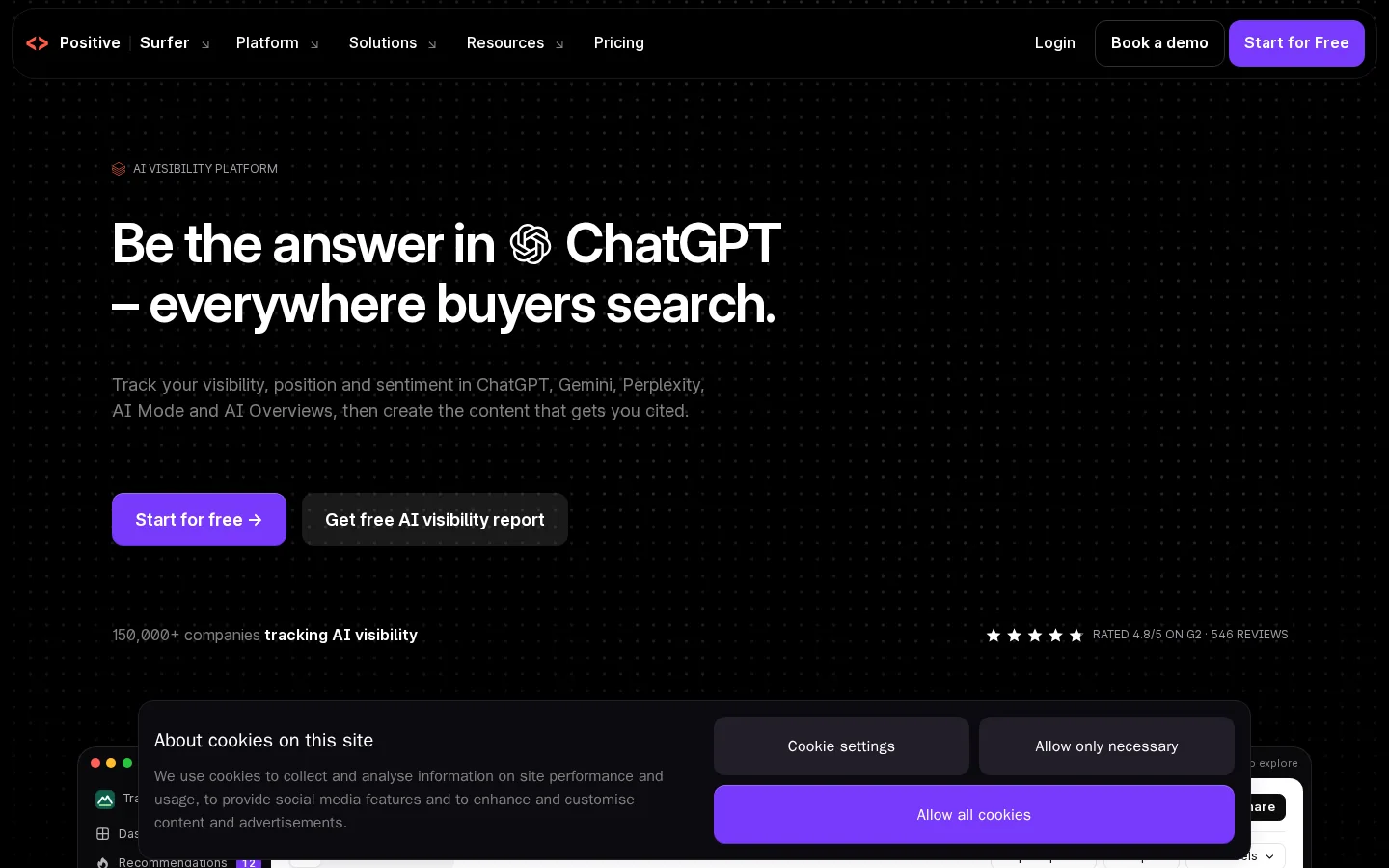
Surfer is an AI visibility platform. It tracks mentions, position and sentiment across five AI engines, with competitor comparisons and cited-source analysis. Its Content Editor gives live guidelines and SEO and AI Search scores, and the platform also offers a content audit, a topical map and an MCP server that brings Surfer data into Claude and ChatGPT. It is built for SEO specialists, content teams and agencies.
AI visibility tracking starts at €82 a month, billed yearly, and the homepage offers a free sign-up and a free AI visibility audit. Compared to Auto Post IO, Surfer is about measuring and improving content before you publish. Its homepage does not describe automatic article publishing.
9.  Jasper
 is an AI platform for marketing teams. Its brand layer, Jasper IQ, applies your voice, style guides and product knowledge to every output, and its agent library includes an SEO and GEO content agent. It also tracks how your brand appears in AI answer engines and produces content in 27 languages. The page is aimed at enterprise teams in product, content, brand and PR.
The homepage lists no plan prices, but it has a Start Free Trial button and links to a pricing page. Compared to Auto Post IO, Jasper is a broader marketing suite with brand governance, so it suits larger teams more than a solo blogger who wants a fast autoposter.
10.  Texta

Texta is an AI search visibility and GEO analytics platform. It tracks how your brand appears in ChatGPT, Gemini, Claude and Perplexity, detects citation gaps, routes alerts to the right owner and builds dashboards for mention share and citation quality. It is aimed at marketing, SEO, content and growth teams that need to measure their GEO work.
The Starter plan is $49 a month for 50 tracked prompts, and the page offers a free trial without stating its length. Compared to Auto Post IO, the page does not describe article writing or publishing at all. Texta measures what AI answers say, so it works best next to a writing tool rather than in place of one.
How to Choose the Right Auto Post IO Alternative
The right Auto Post IO alternative depends on which job you need done first: writing and publishing articles, researching what to write, or tracking how AI tools talk about your brand. Publishing tools usually cost less per post but cover less research. Research and audit tools go deeper but ask you to review and edit more. If you need all three, compare the total monthly cost of the stack, not only the entry price of one tool.
Start by listing the work you do each week. If you publish one or two articles a month and check them yourself, a writer with a score or a free account may be enough. If you publish every day and want posts to go live without you, look for auto-publishing and a clear credit limit. For a broader look at the category, read our guide to AI blog writers compared honestly, and for the mechanics behind automated articles, see how AI content generation works at scale.
| Tool | Best for | Entry price | Main strength |
|---|---|---|---|
| Sorank | Teams that want articles and AI visibility tracking in one place | $49 a month on yearly billing | Articles, backlinks and AI tracking in one workspace |
| Koala | Site owners who want drafted and published SEO articles | Free account with 5000 words | Brand voice import and an SEO agent |
| Minineo | Solo founders and small agencies | ₹2999 a month (Pro) | Blog generation with an audit and GEO score |
| Frase | Content and SEO teams | $39 a month on yearly billing ($49 monthly) | Research, optimization and AI visibility tracking |
| Scalenut | Brands that want strategy help | Not shown on the homepage | Tracking, a writer and optional expert services |
| Writesonic | Teams focused on AI visibility | Not shown on the homepage | Mention tracking and AI page rewrites |
| NEURONwriter | Writers who edit their own drafts | $23 a month (Bronze) | Scoring against top-ranking pages |
| Surfer | Content teams tracking AI answers | €82 a month, billed yearly (tracking) | Live content scores and an MCP server |
| Jasper | Enterprise marketing teams | Not shown on the homepage | Brand governance across marketing content |
| Texta | Teams measuring AI citations | $49 a month (Starter) | Citation gap detection and alerts |
Many tools now handle internal links for you. Before you rely on that, read our rules for automated internal linking, which explain how to keep those links useful to readers and safe for search.
Why Sorank Stands Out
Sorank covers the publishing job that Auto Post IO covers, with auto-publishing to 10 or more CMS platforms, and it adds the research and tracking around the articles. Every plan starts with a 3-day free trial, which is enough time to test the full workflow on a real site. Sorank also checks each month what ChatGPT, Claude and Gemini say about your brand, so you can see the effect of the work and not only the output. Read the table above as a guide to trade-offs, and check the current pricing before you decide.