G2 is one of the best-known places to research business software. Buyers read verified user reviews, compare products and check category rankings before they sign a contract. Many teams still look for an alternative, though. Some want feedback from enterprise peers, a guided advisory service, customer references or a directory for services rather than software.
Your reason decides which platform fits. A marketing lead who wants to see how other companies use a tool needs different sources than a procurement manager who needs a shortlist for ERP software. This list covers ten platforms that buyers use to research software, services and vendors, with an honest note on what each one does well and where it falls short.
Four criteria matter most. Check where the reviews come from and how they are verified. Check whether the platform covers software, services or companies. Check what it costs to browse, and whether vendors pay for placement. Check how wide the catalog is in your category, how recent the reviews are and how many there are. Review sites also shape what AI assistants recommend, so our guide on how review sites shape what ChatGPT suggests is worth reading too.
Top 10 G2 Alternatives
1.  PeerSpot
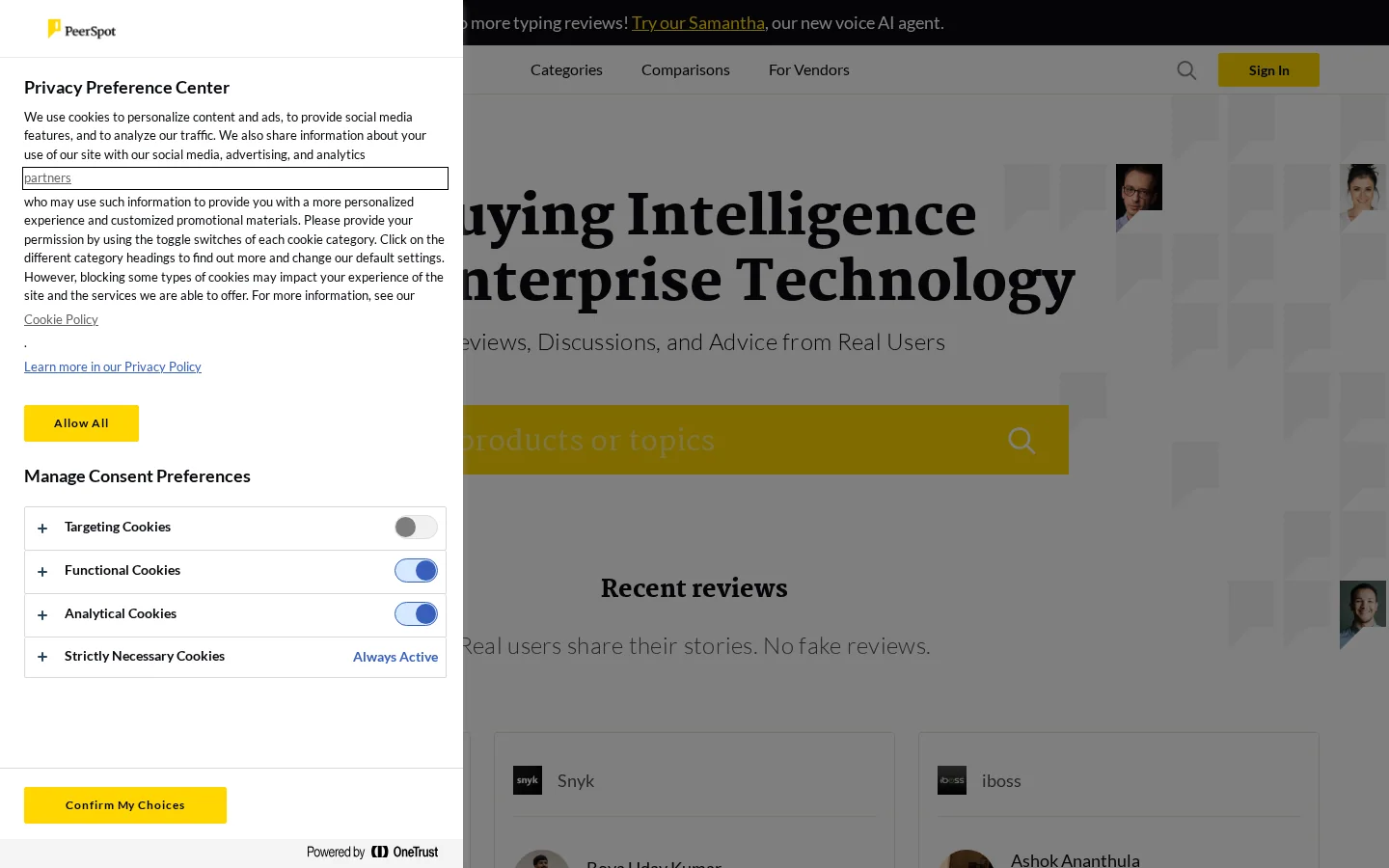
PeerSpot is a buying-intelligence site for enterprise technology. Buyers read reviews from users the site describes as verified, compare products and ask questions that peers answer. It suits teams that buy large systems and want to hear from people in similar roles. The homepage does not state a price, so check the sign-up flow before you plan a budget.
PeerSpot differs from G2 in its focus. G2 is a general directory of business software across many categories, while PeerSpot is built around enterprise technology and the questions that come up in a buying committee. If your decision needs peer advice more than a ranking grid, PeerSpot is worth a look. Check that it covers your category before you rely on it. Read the most recent reviews first, since enterprise tools change with each release.
2.  SoftwareSuggest
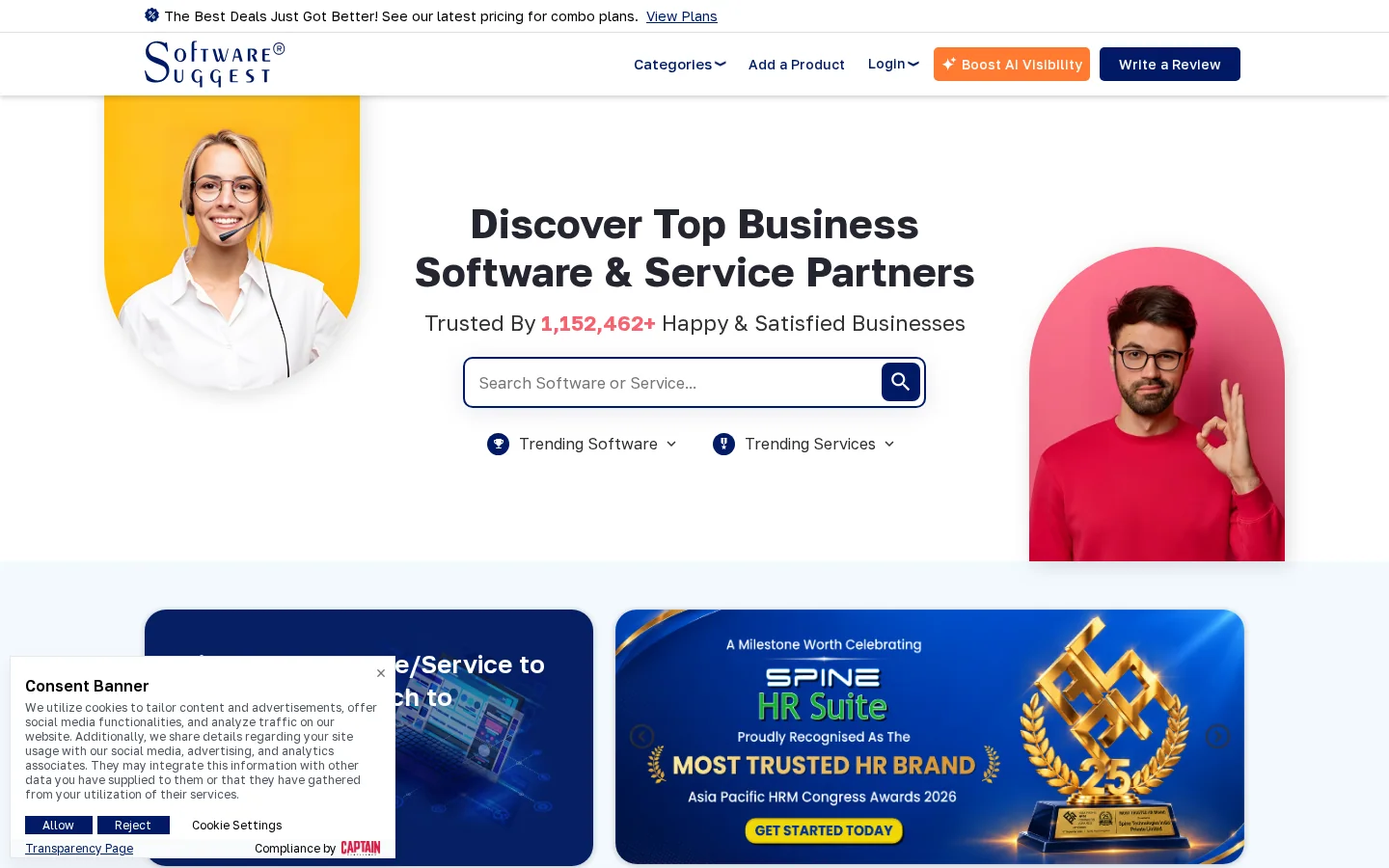
SoftwareSuggest is a review and comparison platform for business software and service providers. It covers categories such as HR, accounting, CRM and web development. Buyers can ask for free personalized recommendations, read user reviews and compare options side by side. It fits people who want a shortlist built around their needs, not just a list to browse.
The main difference from G2 is the recommendation service. Vendors can register for free, and they can pay for extras such as combo plans and AI visibility services. That is common for directories, but read the listings with it in mind, and compare the reviews with what you find on other platforms. Ask for a recommendation with your team size and budget, so the shortlist fits your case.
3.  Crozdesk
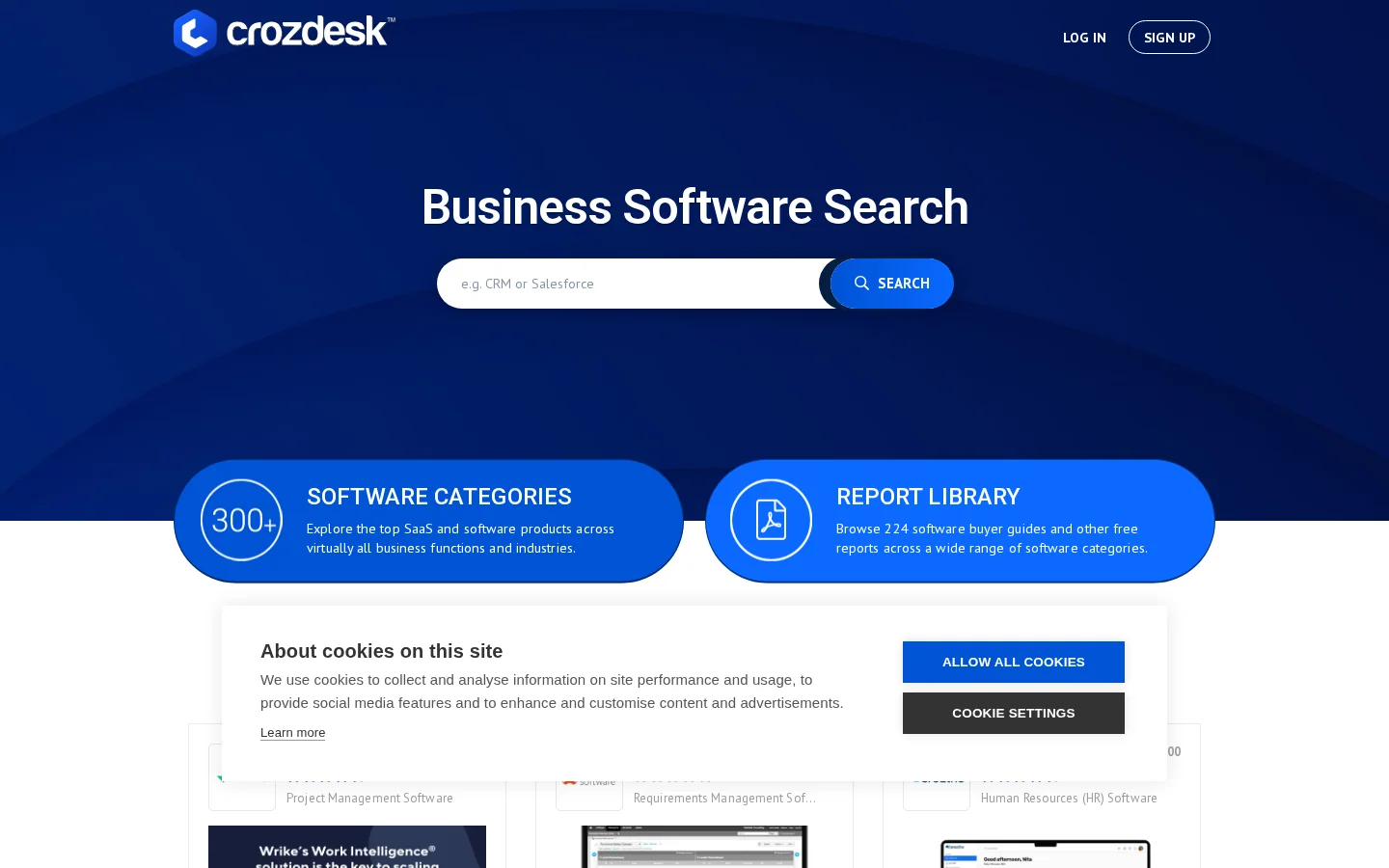
Crozdesk is a business software search site with about 58000 products across 384 categories. The catalog covers accounting, CRM, project management, HR and many other tools. It mixes expert reviews with user reviews, and it offers free buyer guide reports that help you compare options in a category before you talk to a vendor.
Crozdesk is a good choice at the start of a search, when you want to see the full set of options in one category. Read several reviews for each product before you shortlist it, since expert and user reviews can point in different directions. Vendors can get a free listing, so check that the reviews come from real users and not only from the vendor's own profile. Use the buyer guides to set your criteria before you open any vendor page.
4.  Software Connect
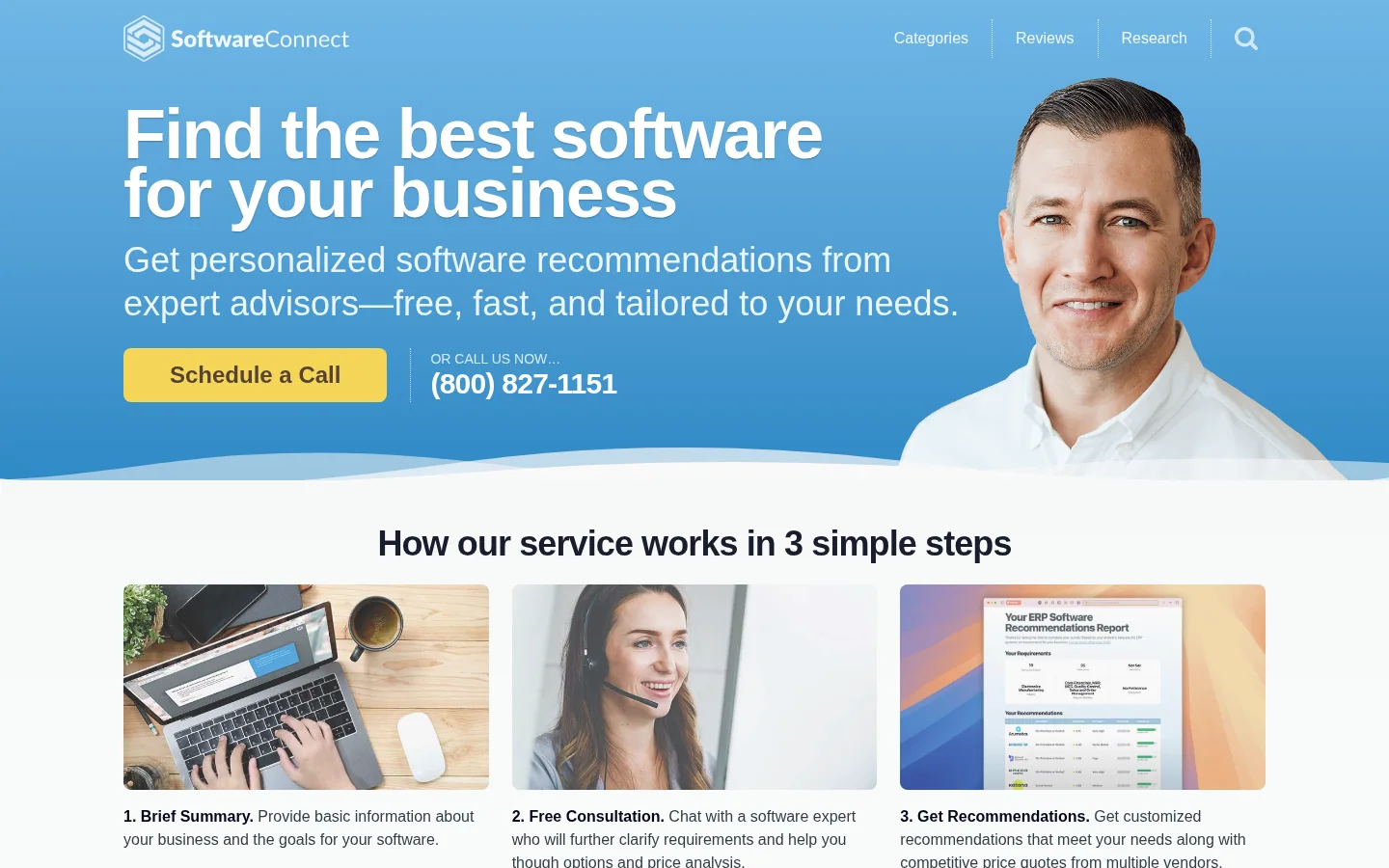
Software Connect is an advisory site that matches businesses with business software, such as ERP, inventory and CMMS systems. Buyers can book a consultation, which is free for them, and the site combines expert advice, reviews and industry roundups. It suits organizations that want someone to guide the selection rather than research alone.
The model differs from G2. Software Connect works more like a guided advisory service, while G2 lets buyers research on their own. Some software vendors pay membership fees to join its network, so a recommendation can come from a vendor that pays. Ask how the advice is funded, and compare the shortlist with independent reviews before you decide. If you already know your requirements, a self-directed search may be faster.
5. Clutch
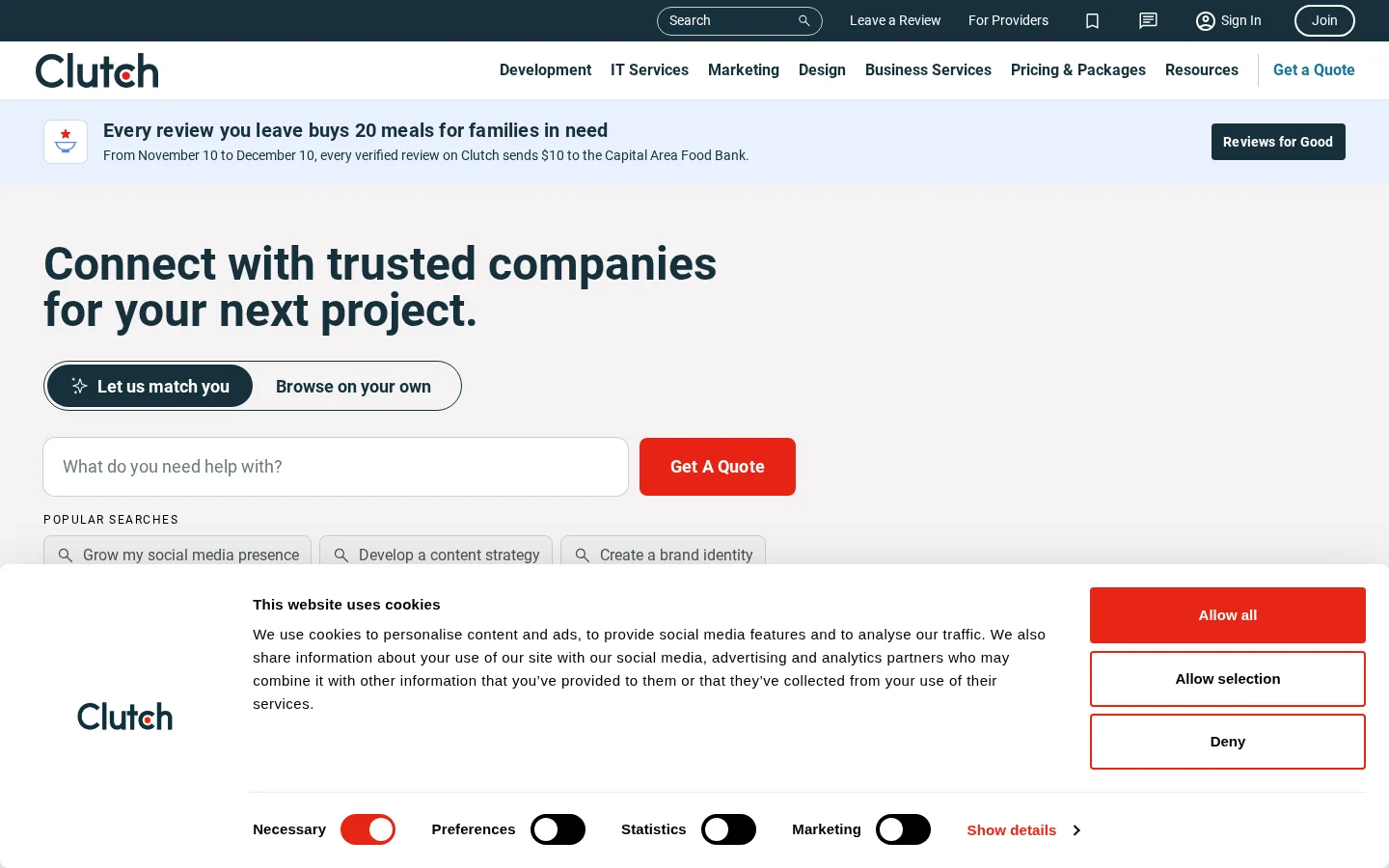
Clutch is a B2B marketplace where businesses find and compare service providers, such as agencies, developers and IT firms. It covers more than 2000 categories. Buyers use filters, verified client reviews and quote requests to shortlist vendors. It is the right place when the thing you need to buy is a service rather than a software license.
Clutch and G2 solve different buying problems. G2 helps you choose a software product, while Clutch helps you choose a firm to build, market or run something for you. Reviews on Clutch come from clients who worked with the provider, so they tend to describe projects and results more than features. The site does not list a fee for browsing providers, but check the terms for quote requests before you sign anything. Ask each provider for a case study in your industry before you shortlist it.
6.  FeaturedCustomers
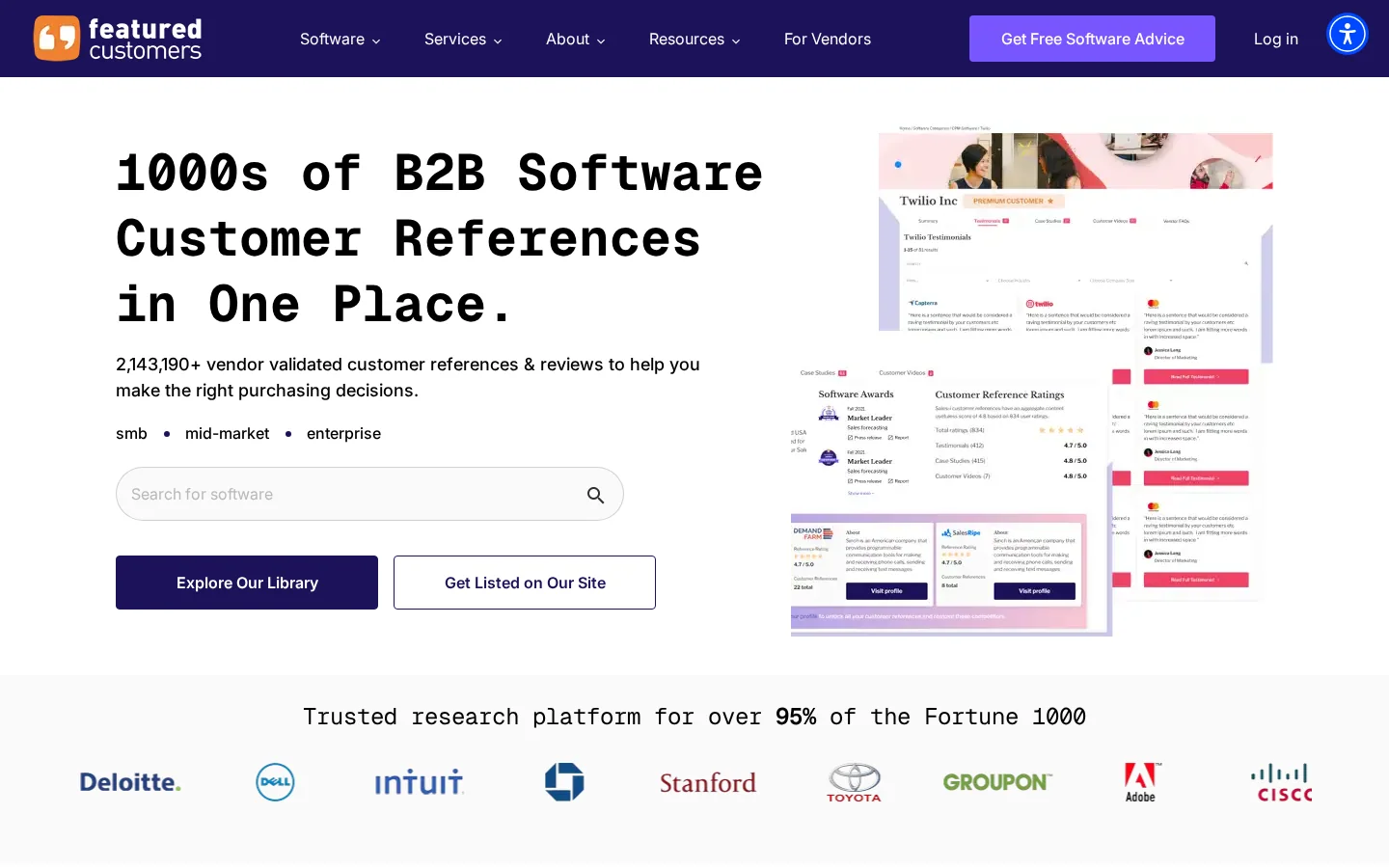
FeaturedCustomers is a B2B research platform with more than 2 million vendor-validated customer references for software and services. It holds case studies, testimonials, reviews and videos. Buyers use it to see which companies use a product and what those companies report, before they book a demo.
The main difference from G2 is where the proof comes from. G2 reviews are written by users. FeaturedCustomers references are validated by the vendor, and they often come as case studies and videos. Use both. Read user reviews to find the weak points, and use customer references to see how a product works in a company like yours. Vendors also use the site to manage their profiles, so note who is talking. Ask a reference customer about onboarding and support, not only the results.
7. SourceForge
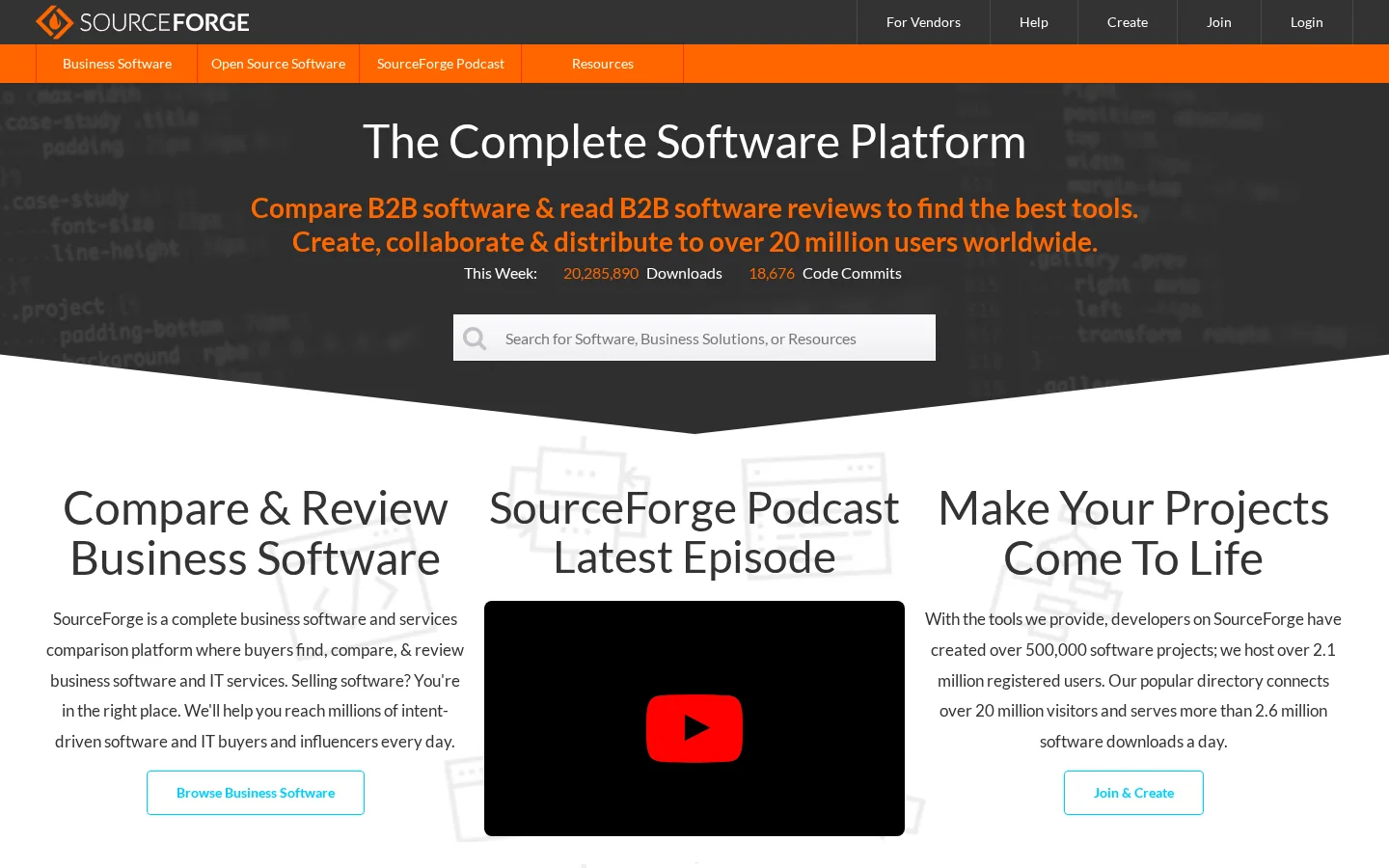
SourceForge combines a directory for researching and reviewing business software with a hub for open source projects. Developers host and share code there, and users can download free applications. It suits technical buyers who want to look at open source options next to commercial products.
SourceForge differs from G2 because it mixes two worlds. The software directory helps with research, while the open source hub gives you code you can inspect and run yourself. For a manager who wants a vendor shortlist, the open source side may feel like noise. For a team that builds its own stack, it adds options that a review platform does not show. Pick the view that matches your role. Check the license and the last update date before you install anything from the open source hub.
8.  Trustpilot
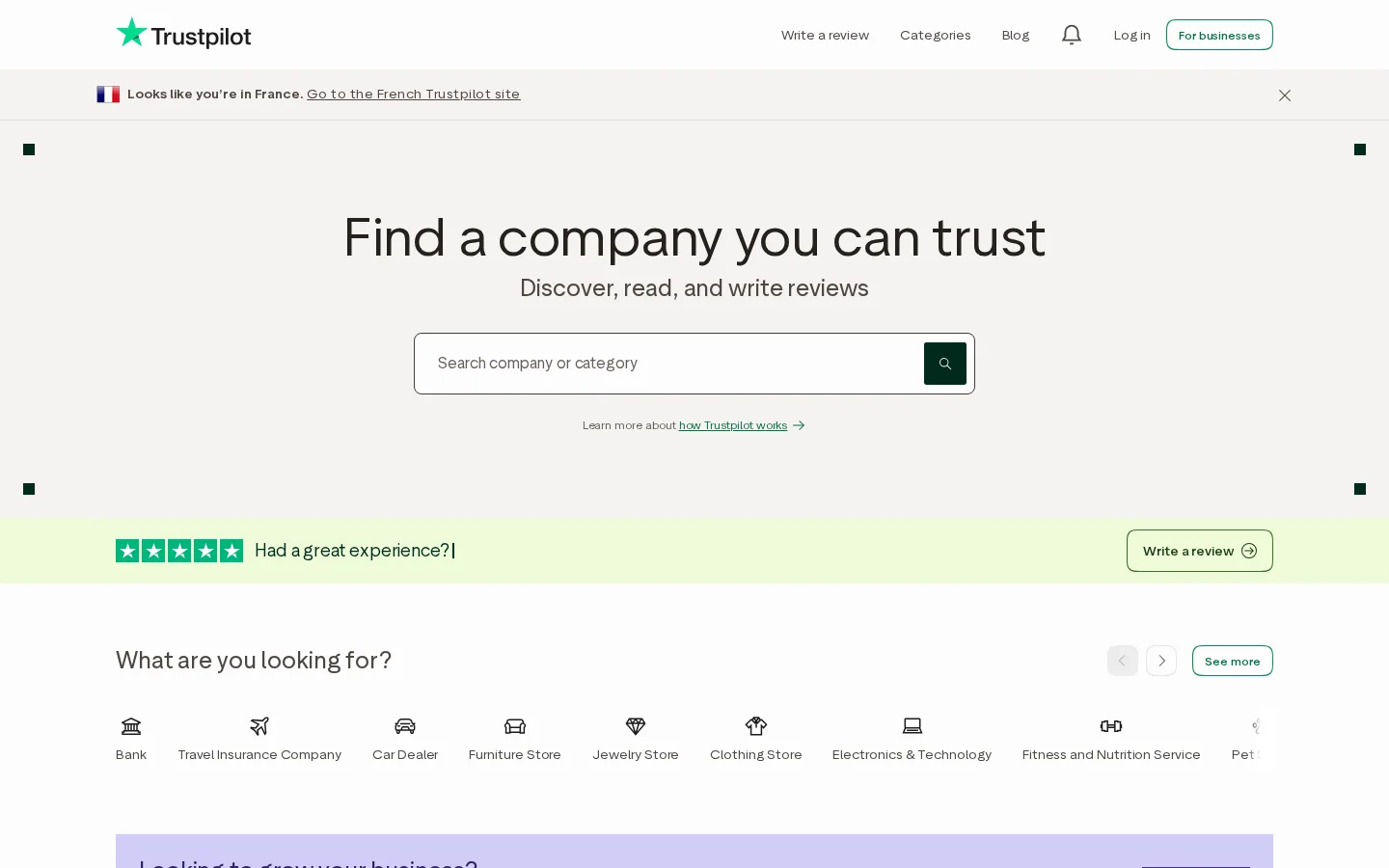
Trustpilot is an open review platform where anyone can find, read and post reviews of companies. Shoppers use it to decide where to buy, and businesses use it to build their reputation. It has a business side with plans, though the homepage does not say whether the tiers are free or paid.
Trustpilot is strongest for consumer-facing brands and online stores. G2 is built around business software categories, so Trustpilot answers a different question: how customers feel about the company that sells the product. Use it to check a vendor's support and billing experience, and use G2 to compare the product itself. A company's replies to reviews are part of what you see, so read them too. Compare a few recent reviews with the company's own claims before you trust the overall rating.
9.  AlternativeTo
 is a free, community-driven site where users recommend substitutes for apps and software they already know. Alternatives are ranked by user opinions, across platforms such as Windows, Mac, Linux, iOS and Android. It is a practical place to start when you want a replacement for a tool you already use.
AlternativeTo differs from G2 in what it measures. It ranks options by what users recommend, not by structured reviews and category grids. It works well for individual apps and desktop or mobile tools, and less well for complex B2B systems that need a formal evaluation. Use it to build a list of options, then check each one on G2 or another review site. Check which platforms each option supports, since an alternative may not run on the system you use.
10.  Product Hunt
 is a platform where makers launch new tech products and everyone else can discover, vote on and discuss them. Founders, marketers and developers use it to find the latest tools in areas such as AI, marketing and productivity. It also offers an MCP integration for launching and discovering products from AI tools.
Product Hunt is a discovery feed rather than a review archive. Launches are recent, so it helps you spot new options early, often before they have many reviews. For established software with years of verified feedback, G2 gives you more depth. Treat Product Hunt votes as a sign of interest, not as proof that a product fits your work. Read the comments under a launch, since makers and early users often explain the trade-offs.
How to Choose the Right G2 Alternative
Start with the decision in front of you. If you are choosing a software product, look at review depth and category coverage. If you are choosing a service provider, look at a marketplace such as Clutch. If you want proof from customers, check FeaturedCustomers. If you are exploring new tools, start with Product Hunt or AlternativeTo.
| Tool | Best for | Entry price | Main strength |
|---|---|---|---|
| PeerSpot | Enterprise technology buyers | Not stated on the site | Questions answered by peers |
| SoftwareSuggest | Buyers who want a guided shortlist | Free recommendations | Personalized comparisons |
| Crozdesk | Wide catalog and buyer guides | Free buyer guides | 58000 products across 384 categories |
| Software Connect | ERP, inventory and CMMS buyers | Free consultation for buyers | Expert advisory |
| Clutch | Hiring agencies and IT firms | No fee listed for browsing | Verified client reviews for services |
| FeaturedCustomers | Checking how customers use a product | Not stated on the site | 2 million vendor-validated references |
| SourceForge | Technical buyers and open source | Not stated on the site | Software directory plus open source hub |
| Trustpilot | Judging consumer-facing companies | Not stated on the site | Open reviews of companies |
| AlternativeTo | Finding replacements for an app | Free to use | Substitutes ranked by users |
| Product Hunt | Spotting new tools early | Not stated on the site | Fresh launches and community votes |
Whichever platform you pick, read several sources before you decide. A simple test helps. Pick three products from your shortlist, read ten recent reviews from companies of your size for each one, and check the pricing page of every product. Then confirm what you found on a second platform. For the numbers behind review habits, see our online review statistics page.
Conclusion
G2 remains a strong starting point for business software research, and the ten platforms above each cover a gap it leaves open. Pick the one that matches the decision in front of you: peer questions for enterprise tools, guided advice for complex systems, marketplaces for services, customer references for proof, or launches for new products. Start with one platform, test it on a real shortlist, then add a second source to check what the first one missed.
Reviews also shape what AI assistants recommend. If you sell software, watch how assistants describe your product with our AI visibility tracker. If you publish your own reviews, review schema markup helps search engines read them correctly.