


 ZipTie









Most teams look for a ZipTie alternative for one of three reasons. Some want to track more AI engines than the seven ZipTie covers, or a different set of them. Others need more than monitoring, with help turning the findings into content and fixes. And some run agency work across many client brands, which changes what they need from a dashboard and from reports.
Price matters too. ZipTie bills by usage, so your monthly cost moves with the number of prompts and engines you track. Many competitors sell fixed monthly plans or credit packs. Neither model is better in general. A usage model can suit light tracking, while a fixed plan makes the bill easier to forecast. Check which one fits how often your team will really run checks.
When you compare tools, start with the questions your team will ask every week. Which AI engines do your customers use? Do you need sentiment and citations, or are mention counts enough? Will someone on your team act on the findings, or do you want the tool to propose the next step? Your answers narrow the list faster than any feature table. For background on the category, read our guide to generative engine optimization (GEO).
The ten tools below all track how brands appear in AI answers. For each one we describe what it does, who it suits, its entry price when the vendor publishes one, and how it differs from ZipTie. We read each vendor's own website for these details. Where a price is not shown publicly, we say so instead of estimating it.
Top 10 ZipTie Alternatives
1.  Sorank
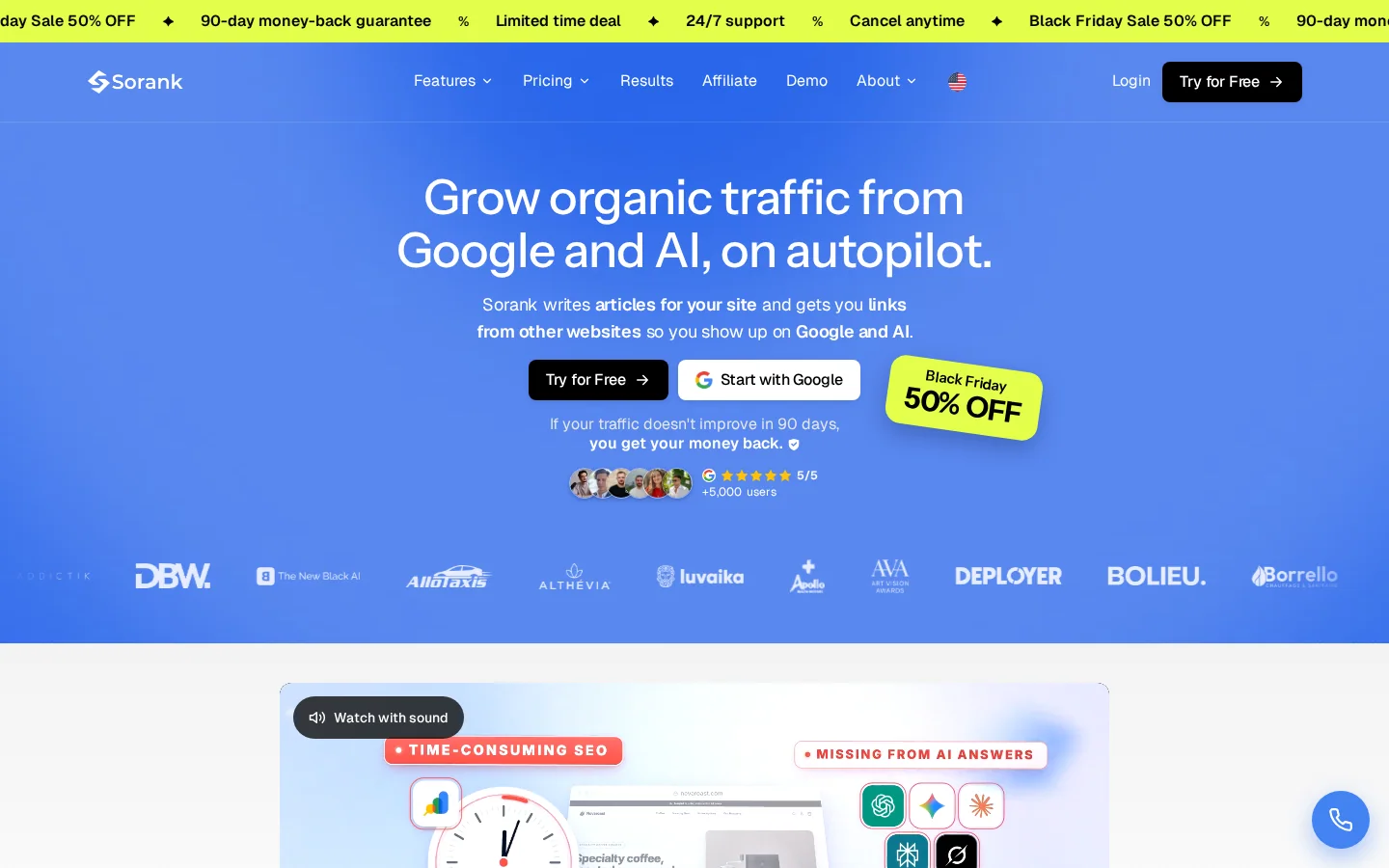
Sorank combines GEO and SEO in one workspace. It tracks how AI assistants mention and cite your brand, runs keyword research and SEO audits, writes and publishes articles, and follows your domain authority and backlinks. It suits small businesses, founders and marketing teams that want traffic from Google and from AI assistants without stitching together several tools. A free trial lets you test it before you pay.
The main difference from ZipTie is scope. ZipTie focuses on monitoring how AI engines describe your brand, and it does not publish content or touch your site. Sorank uses the same kind of AI data to decide what to write next, so tracking and content production happen in the same place. If a monitoring dashboard is all you need, ZipTie's narrower focus may be the simpler choice.
2.  Otterly AI
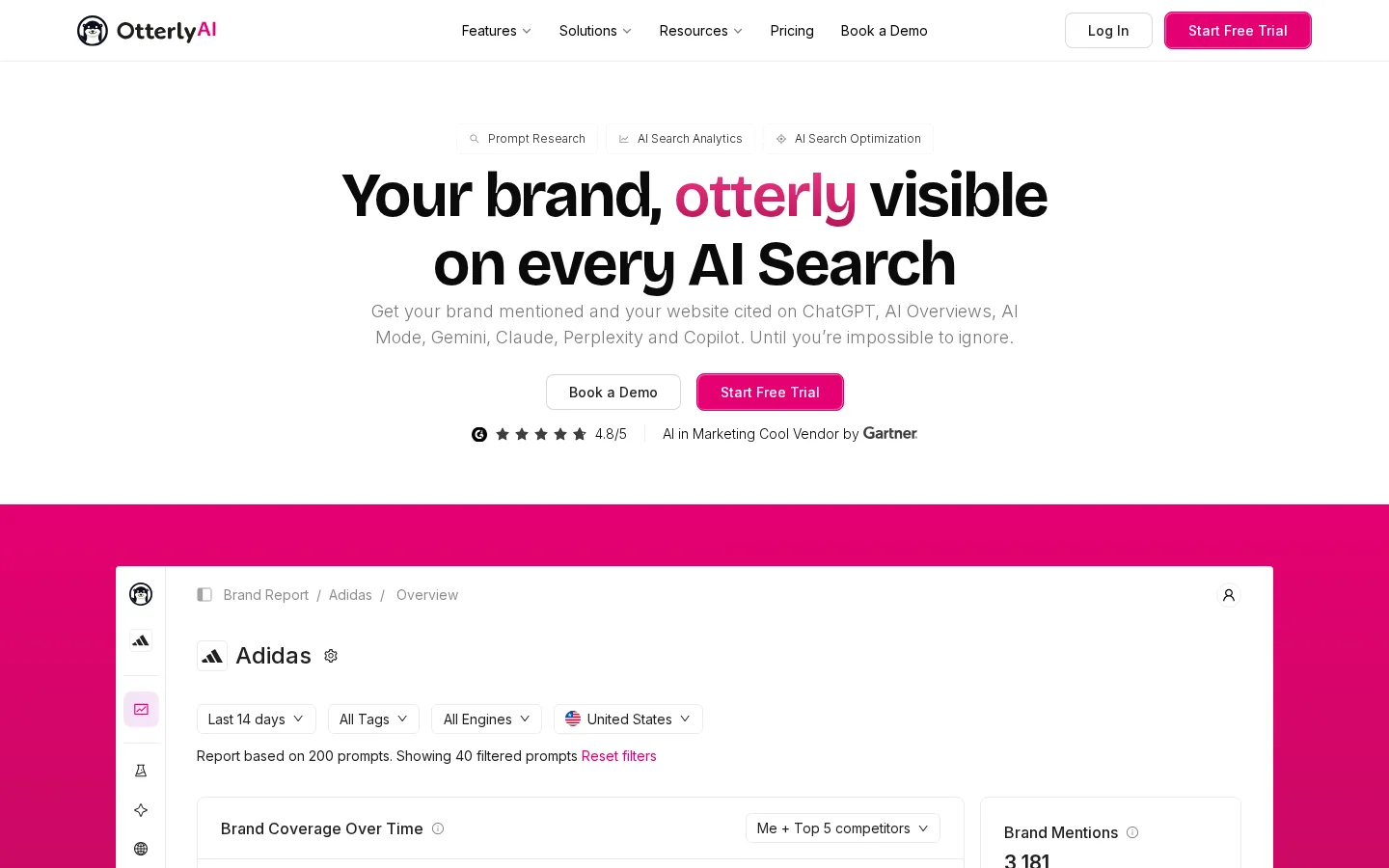
Otterly AI tracks brand mentions and citations across Google AI Overviews, Google AI Mode, ChatGPT, Gemini, Microsoft Copilot, Claude and Perplexity. It also profiles how AI describes your brand, tracks ads shown inside ChatGPT, offers prompt research, and connects to AI assistants through MCP and a public API. It suits marketing teams, SEO professionals and agencies. The site lists a free 7-day trial and a starting price of $29 a month in US dollars.
Compared with ZipTie, Otterly AI covers a similar range of AI search and adds brand profiling and ChatGPT ads tracking. ZipTie's usage-based model can cost less when you track only a few prompts, while Otterly AI's fixed monthly plan gives you a predictable bill.
3.  Peec AI
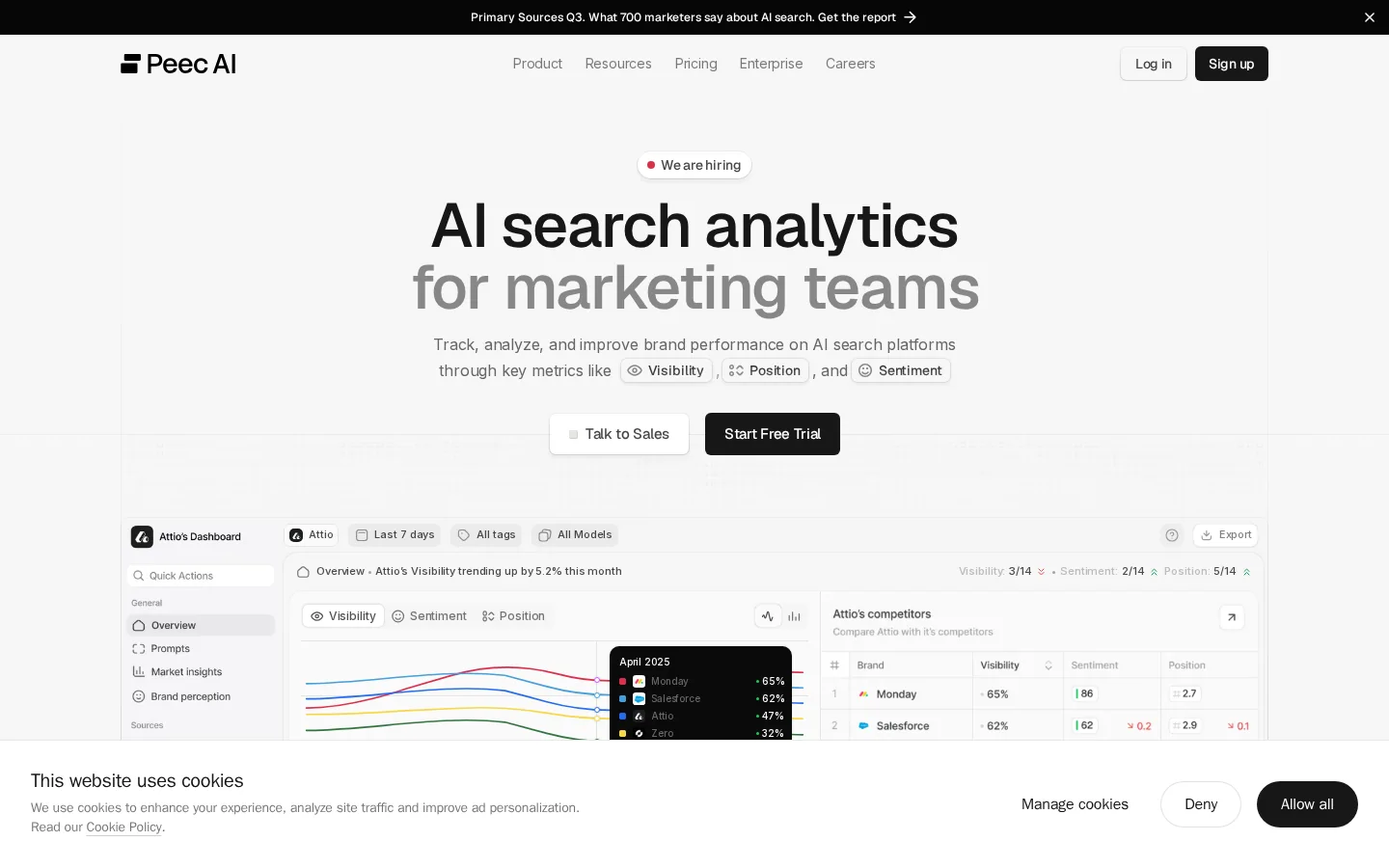
Peec AI is an AI search analytics platform. It measures how often your brand appears in AI answers, how it is positioned and how it is described, and it compares your visibility with competitors. It also shows which domains and URLs inform those answers, and it suggests actions with the reasons behind them. Marketing teams and agencies can export CSV files, use a Looker Studio connector or call its API. A free trial is offered, but the homepage shows no prices and sends you to sales.
Peec AI is close to ZipTie in purpose, so the choice comes down to details. Its source tracking and Looker Studio connector suit teams whose reports already live in that tool. ZipTie publishes its starting prices, which makes the first budget step easier to estimate.
4.  Profound
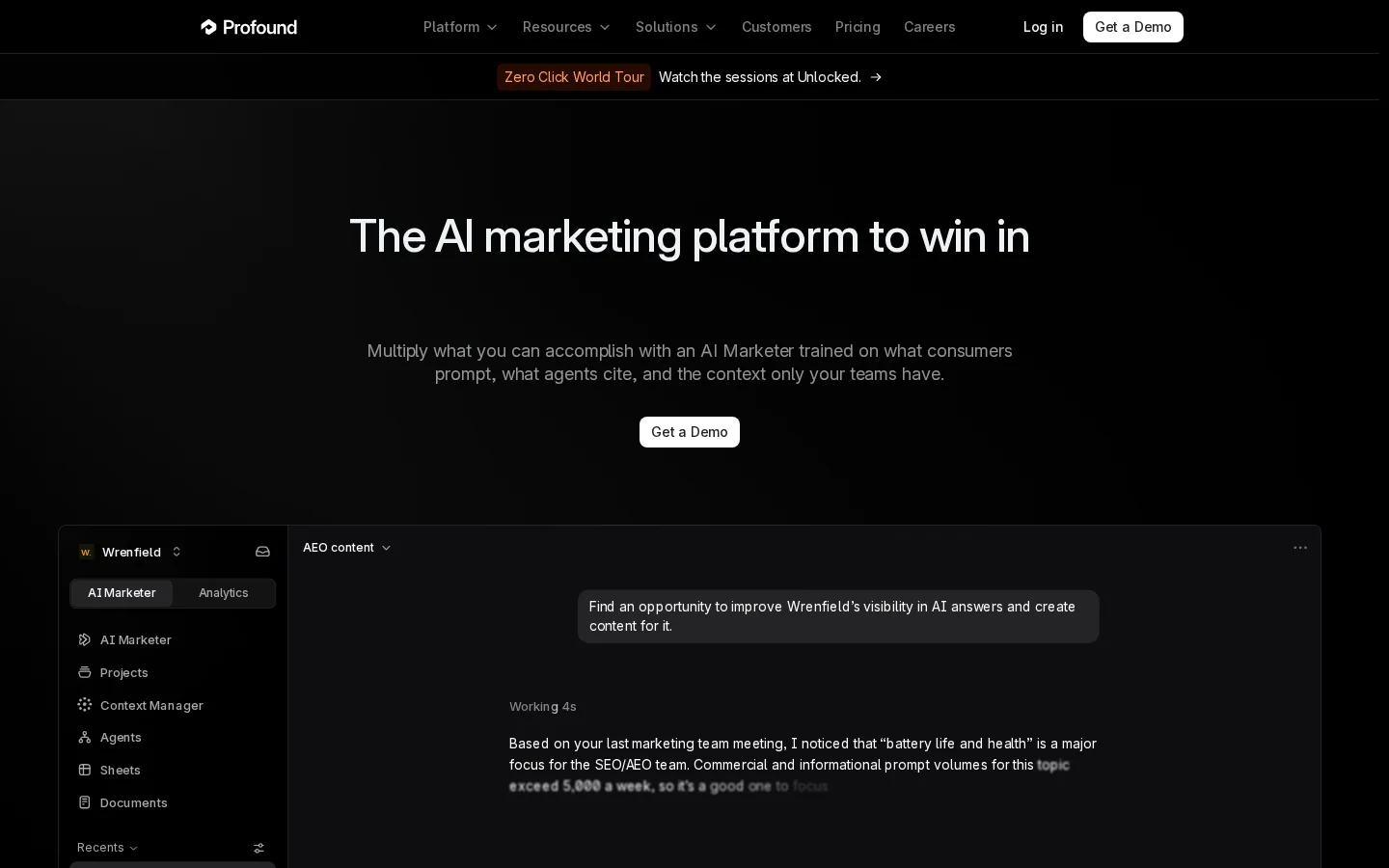
Profound is an AI marketing platform for answer engines such as ChatGPT, Perplexity, Claude, Gemini and Google AI Overviews. Its monitoring covers prompt volumes, shopping visibility and agent analytics. It also includes AI agents that draft work for your approval, a FactCheck feature that flags inaccurate claims about your brand, and enterprise controls such as SOC 2 support. It suits larger teams in retail, travel, hospitality and pharmaceuticals, along with agencies. The site offers a demo, but it does not show prices.
ZipTie stops at tracking and scoring. Profound adds an execution layer and fact-checking, which gives you more to work with and also means a larger rollout and a sales-led buying process. For a small team that only needs to see its visibility, that extra scope may not pay off.
5.  Rankscale
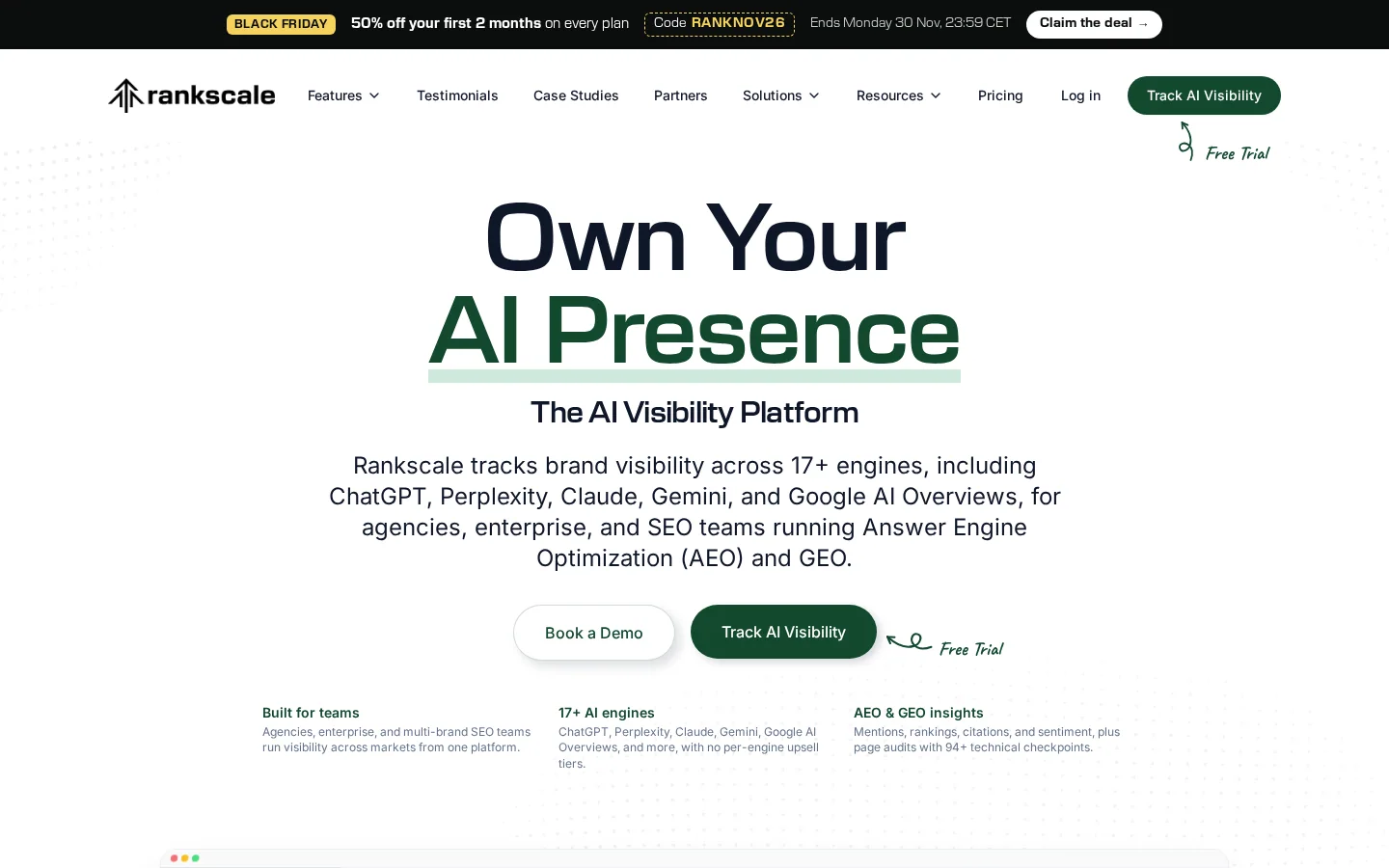
Rankscale tracks brand visibility across more than 17 AI engines, including ChatGPT, Perplexity, Claude, Gemini and Google AI Overviews. It covers sentiment, citation and source analysis, query fan-outs, competitor analysis and page audits for AI readiness. It is built for agencies and enterprise teams that manage several brands in one account. Plans start at $99 a month for Pro, with Pro+ at $229, Growth at $385 and Enterprise at $780, all in dollars as shown on the site. A demo is available.
Compared with ZipTie, Rankscale covers more than twice as many engines and adds page audits. Its entry price is higher than ZipTie's starting usage-based plan, so it makes the most sense when you need that wider coverage and multi-brand management.
6.  AthenaHQ
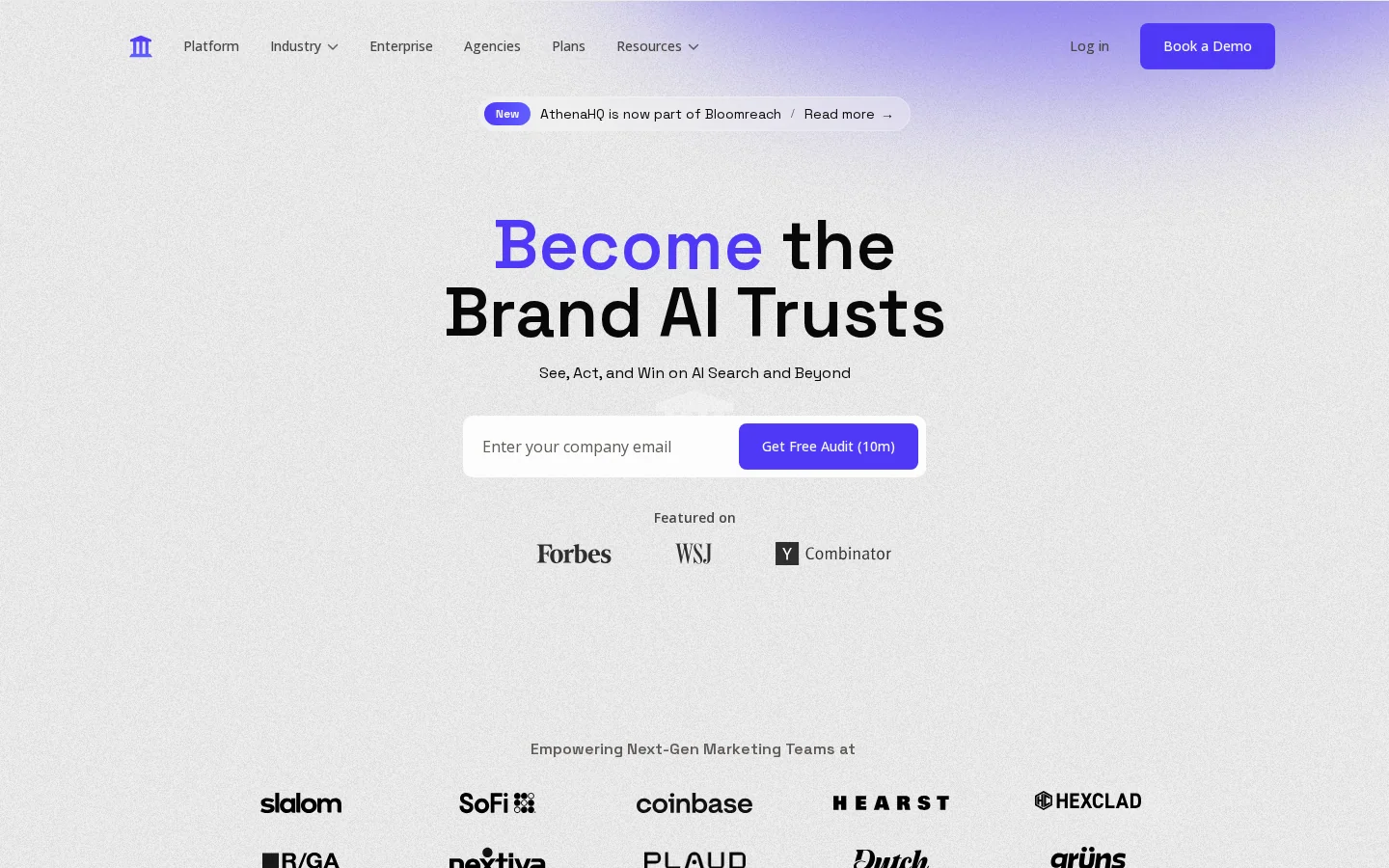
AthenaHQ calls itself a command center for AEO and GEO. It tracks brand mentions across more than 11 large language models, compares share of voice with competitors, and points to content gaps where AI cannot answer a question about your category. It adds PR monitoring, sentiment analysis and crisis detection, and it connects to Google Analytics 4, Google Search Console, Shopify, Webflow and Framer. The site says the company is now part of Bloomreach. The Essential plan is free with 300 credits, and the Starter plan costs $295 a month when billed monthly.
AthenaHQ suits marketing and communications teams that want executive dashboards and PR tracking next to their AI visibility data. ZipTie's entry price is lower, so AthenaHQ costs more to start. Its strength is the wider marketing context around the data, from analytics to PR and board reporting.
7.  Scrunch AI
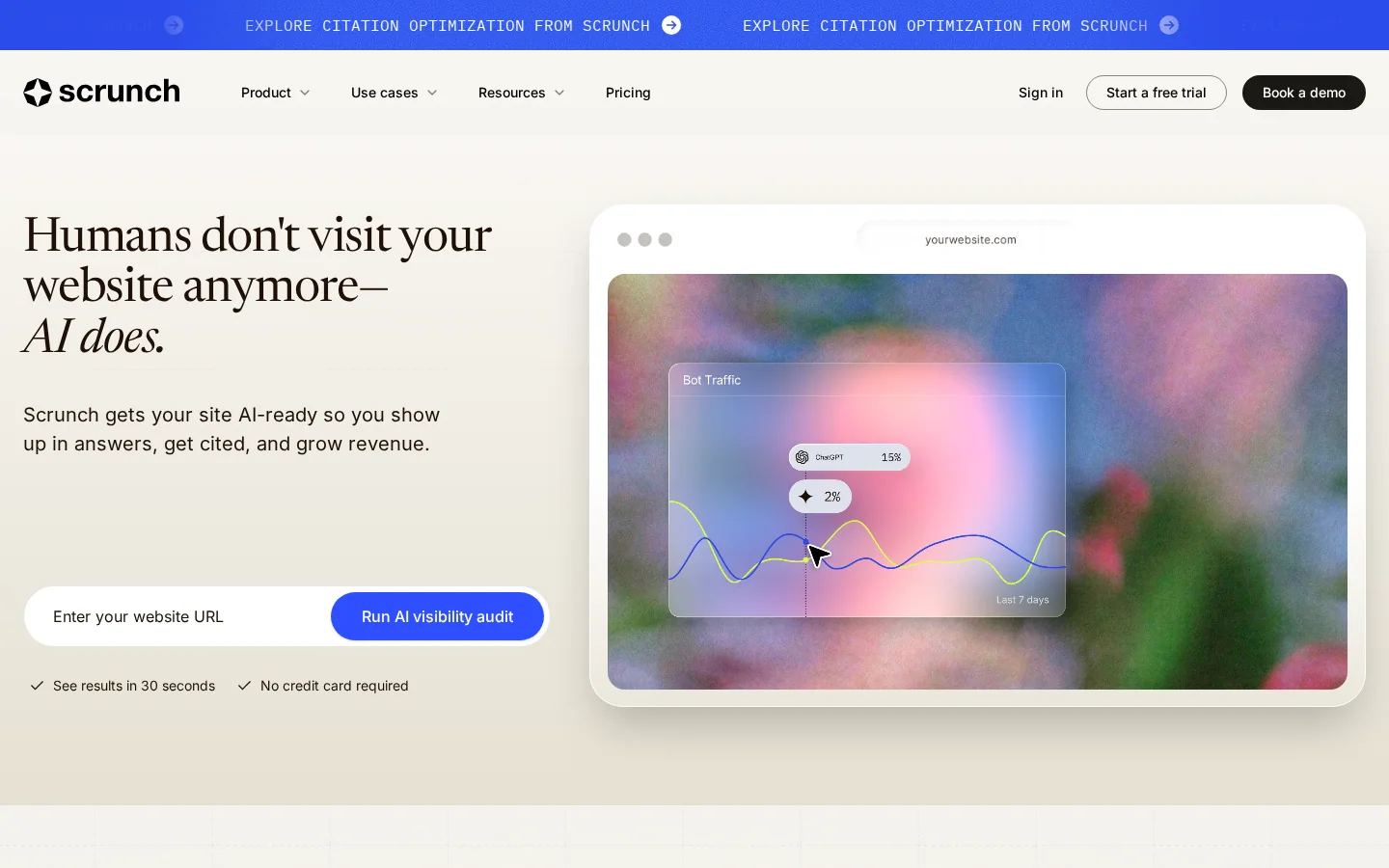
Scrunch AI describes itself as an AI customer experience platform. It tracks how your brand appears in AI answers and which sources get cited, shows AI search performance at the product level, and watches emerging prompts and topics. It also offers Agent Pages, an optimized version of your site for AI agents, and analysis of AI agent traffic. It targets enterprise brands and agencies. The site lists a 7-day free trial and a free AI visibility audit, but no public price.
ZipTie never touches your site, and you publish any changes yourself. Scrunch AI goes further by serving AI agents a version of your pages, which is a more technical bet on how AI reads the web. Choose it if you want that layer. Choose ZipTie if monitoring is the job you need done.
8.  Writesonic
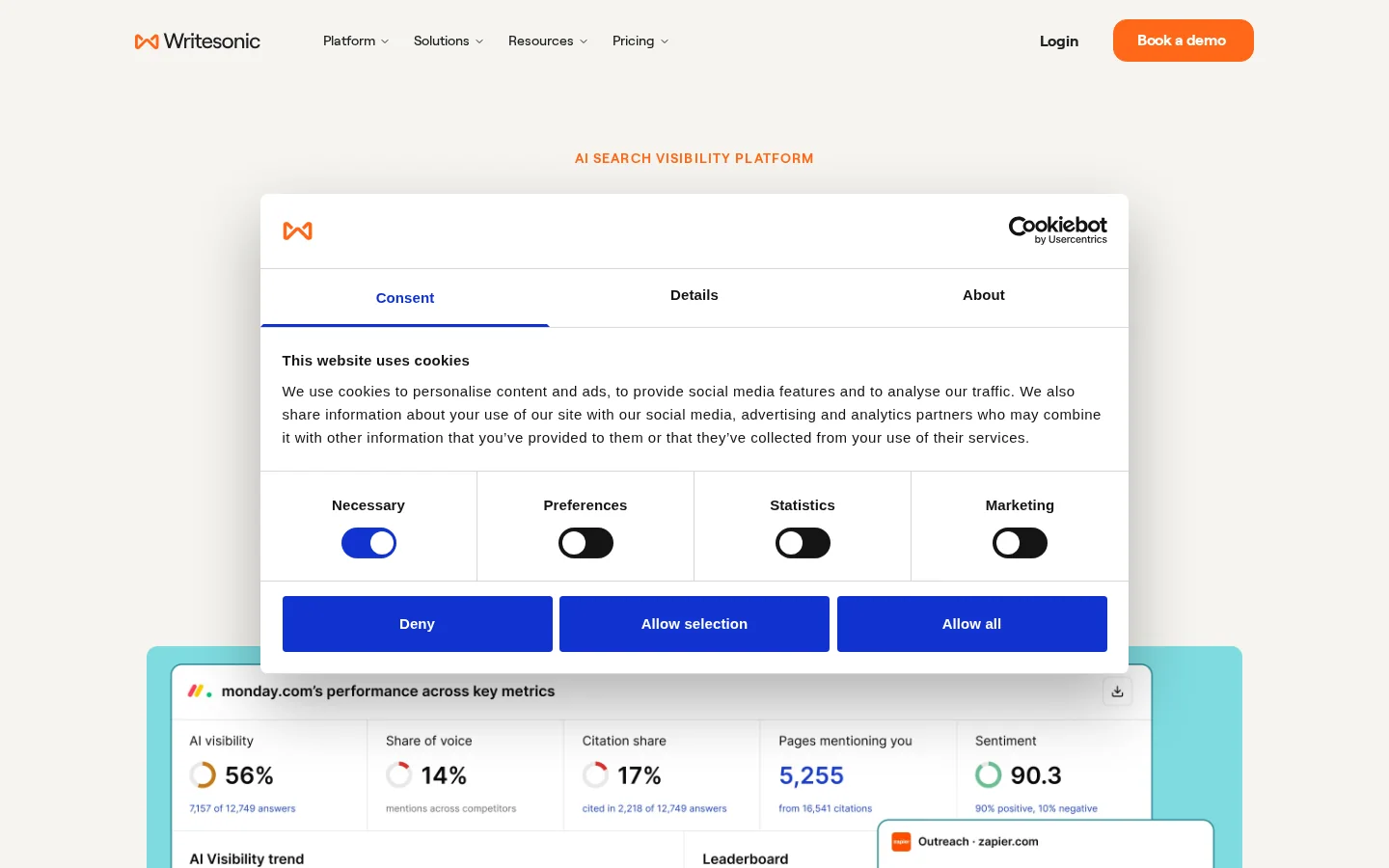
Writesonic offers GEO and AI visibility tracking inside a wider content and SEO suite. It tracks mentions, citations and sentiment across ChatGPT, Gemini, Google AI Overviews, Perplexity and Claude. An action center ranks the gaps it finds, an AI agent rewrites pages for GEO, and technical audits check crawler issues. It also measures the effect of each fix at day 14 and day 28. It suits enterprise teams, agencies and e-commerce brands. The site lists a 7-day free trial, but prices are shown only after a demo request.
Where ZipTie ends with the data, Writesonic continues into the fixes. That helps teams that are short on time to write and edit pages, but it also means a wider product to learn. Expect a demo call before you know the cost.
9.  Geneo
Geneo is a GEO platform that tracks brand mentions on ChatGPT, Gemini, Google AI Overviews and Perplexity. It adds sentiment analysis that flags negative reviews and AI hallucinations about your brand, historical ranking tracking, citation analysis and competitor share of voice. Agencies can send white-label reports and client dashboards. The Pro plan is listed at $39.90 a month with 1000 credits, and a free trial with 50 credits and one workspace needs no credit card.
Geneo tracks four engines, against seven for ZipTie. It is a good fit if those four are the engines your customers use and you need white-label dashboards for clients. If you need the wider engine list, ZipTie is the closer match.
10.  Evertune
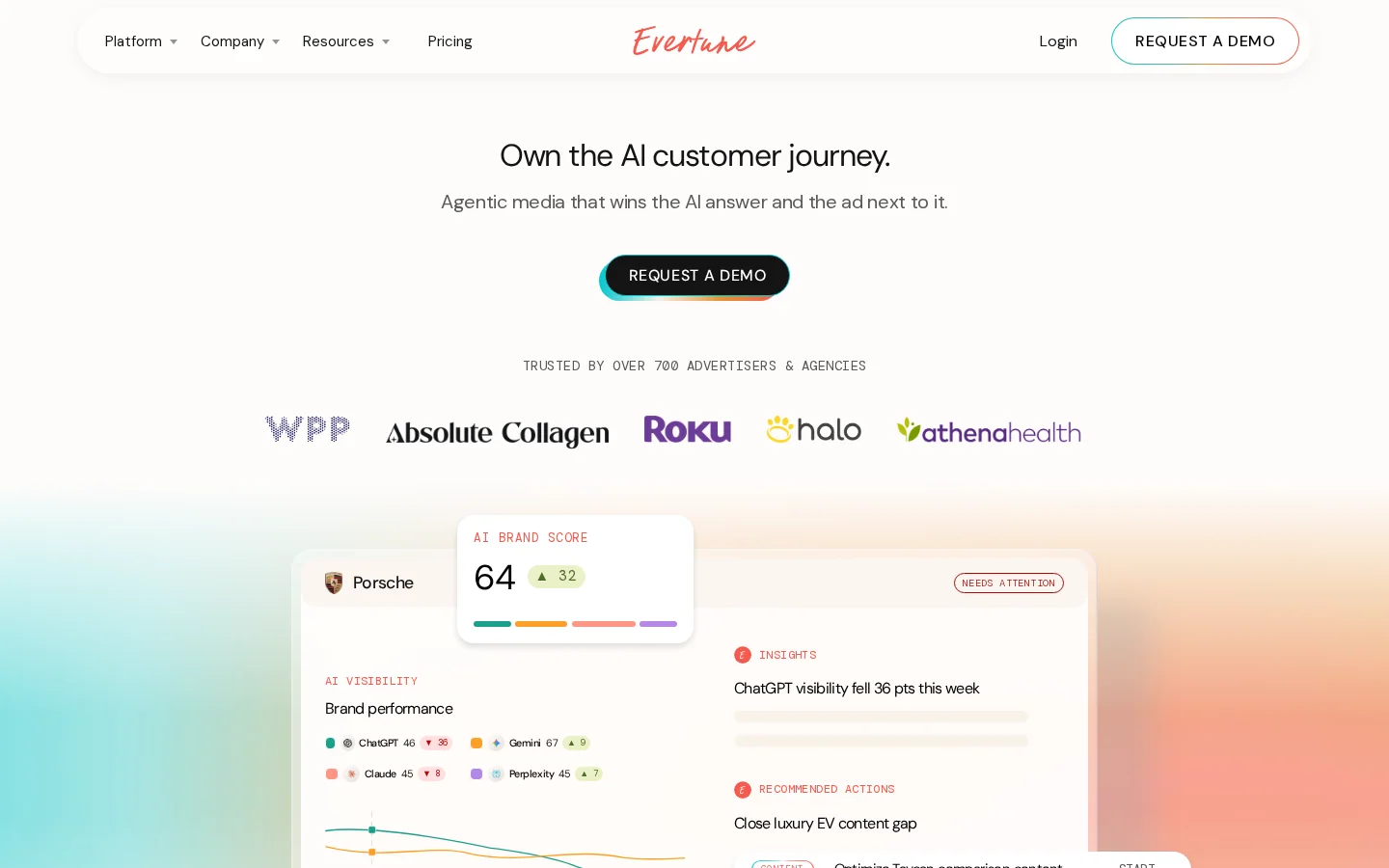
Evertune is an AI search visibility platform built for advertisers and agencies. Its Explore agent finds the questions consumers ask AI in a category, and its Measure step samples each prompt up to 100 times on 11 models to benchmark your brand. Content Studio builds content strategies and runs site audits, and an Ads agent plans ChatGPT ad campaigns from GEO data. The site offers a demo request but shows no public price and no free trial.
Evertune has the strongest focus on paid media in this list. ZipTie is a monitoring tool for brand teams, while Evertune connects visibility data to campaigns, which suits advertisers. If your goal is only to see how AI answers describe you, that extra layer adds scope you may not need.
How to Choose the Right ZipTie Alternative
The right choice depends on the job you need done. Monitoring-only tools are simpler to run. Platforms that connect data to content, fixes or ads take more setup, but they remove steps from your week. Agencies need white-label reports and multi-brand accounts, while in-house teams may care more about analytics integrations and budget predictability. Use the table below as a starting point, then test two or three tools on the same set of prompts before you commit.
| Tool | Best for | Entry price | Strength |
|---|---|---|---|
| Sorank | Teams that want tracking, content and SEO in one place | Free trial | Unified GEO and SEO workflow |
| Otterly AI | Marketing teams that want broad engine coverage | $29 a month, 7-day free trial | Brand profiling and ChatGPT ads tracking |
| Peec AI | Reporting teams and agencies | Not shown, sales contact | Source tracking and Looker Studio connector |
| Profound | Larger teams in retail, travel and pharma | Not shown, demo available | Agents and FactCheck |
| Rankscale | Agencies managing many brands | From $99 a month | 17+ AI engines and page audits |
| AthenaHQ | Marketing teams that need PR and executive reporting | Free plan, Starter at $295 a month | PR monitoring and analytics integrations |
| Scrunch AI | Enterprise brands that want an agent-facing site layer | Not shown, 7-day free trial | Agent Pages |
| Writesonic | Teams that want fixes, not only data | Not shown, 7-day free trial | AI agent that rewrites pages for GEO |
| Geneo | Agencies that need white-label dashboards | Pro at $39.90 a month, free trial | White-label client reports |
| Evertune | Advertisers running ChatGPT campaigns | Not shown, demo available | Ads agent built on GEO data |
Use the AI visibility score as a common yardstick when you compare these tools, and check our roundup of AI visibility tools for more options.
Why Sorank Stands Out
Sorank's approach is that AI visibility should inform the rest of your SEO work. Its AI mention tracking shows when assistants cite your brand, and the same workspace can then suggest keywords, produce articles, run audits and follow backlinks. That means you do not copy findings from one dashboard into another every week. The trade-off is that Sorank is a broader platform than a monitor. If you only need a dashboard for a fixed set of AI engines, a narrower tool like ZipTie or Peec AI may be the simpler starting point. Try Sorank on your own site first, and compare its output with the other tools on this list before you decide.