Preferences
Privacy is important to us, so you have the option of disabling certain types of storage that may not be necessary for the basic functioning of the website. Blocking categories may impact your experience on the website. More information

Privacy is important to us, so you have the option of disabling certain types of storage that may not be necessary for the basic functioning of the website. Blocking categories may impact your experience on the website. More information

Search intent classification sorts queries by their underlying goal using NLP and machine learning. Learn the methods and why it matters for SEO.








Sources
Search intent classification is the practice of categorizing search queries based on the user's underlying goal or purpose. It takes the concept of search intent and operationalizes it: instead of judging one keyword at a time, classification assigns every query to an intent category so the pattern across a whole keyword set becomes visible. Done by hand it is slow, but with machine learning it scales to thousands of queries at once.
This matters because intent only becomes actionable when you can apply it systematically. Knowing that a single query is informational is useful; knowing the intent distribution across your entire market is strategic. Classification turns the idea of search intent into a repeatable input for content planning, prioritization, and search optimization.
Search intent classification categorizes search queries according to what the user is actually trying to do. According to topicalmap.ai, it helps both search engines and content creators decode what users seek, mapping each query to a goal. The standard categories are informational, navigational, and transactional, often expanded to include commercial or consideration intent for queries where the user is comparing before buying.
It is, at its core, a natural language processing task. Avahi describes intent classification as an NLP component that determines the purpose behind a user's input in text or speech, and the same machinery that powers chatbots and voice assistants can sort search queries. This places search intent classification squarely within applied natural language processing.
There are several ways to classify intent, increasing in sophistication. Rule-based systems rely on predefined patterns or keyword lists, for example treating queries containing buy or order as transactional. They are simple and transparent but brittle, missing anything that does not match a rule. They work as a starting point but struggle with the messy variety of real queries.
Classical machine learning improves on this by learning from data. Models like support vector machines or random forests use engineered features such as n-grams or term frequency weighting to predict intent. Beyond them, deep learning models including neural networks and transformers offer better adaptability, learning subtle signals that rules and simple features miss. This progression mirrors the broader rise of machine learning across search.
Most modern classifiers start by turning words into numbers. Tools like GloVe and FastText convert each word into a vector while preserving relationships, so that buy and shopping land near each other while unrelated terms sit far apart. These embeddings let a model reason about meaning rather than exact strings, which is essential for handling phrasings it has never seen.
From there the process is supervised learning. Teams collect diverse query examples, label each with its intent, train a model on that annotated data, and then score new queries as probabilities across the intent categories. Algolia reports a model reaching 75.61 percent accuracy for multi-intent and 79.01 percent for single-intent classification, and notes the surprising finding that non-pretrained embeddings sometimes outperformed pretrained ones. Because meaning drives the result, classification leans heavily on semantic search techniques.
Query text is not the only signal. topicalmap.ai notes that classification can incorporate behavioral data such as click-through behavior, session history, device type, location, and time on page, all of which add context about what a user really wants. The same words typed in different contexts can carry different intent, and these signals help disambiguate.
This is also where classification meets nuance. Many queries are ambiguous or carry latent intent the user has not stated outright, and a good classifier outputs probabilities rather than forcing a single label. Recognizing that a query is 60 percent commercial and 40 percent informational is often more useful than a hard, binary call, especially for planning content that serves a dominant goal without ignoring the secondary one.
For SEO, classification turns intent into a planning tool at scale. By sorting an entire keyword set, you can see where your content matches intent and where it does not, prioritize the gaps, and measure performance by intent category rather than treating all traffic alike. topicalmap.ai ties proper classification to higher rankings, improved engagement, and better conversion rates.
For generative engine optimization, the same understanding pays off. AI systems try to satisfy the goal behind a query, so structuring content around clearly classified intents makes it easier for an engine to match and cite. This underpins AI search intent optimization, and pairing classification with disciplined keyword research and content planning ensures each piece targets a goal an engine is trying to serve.
Classification shines wherever query volume is too large to sort by hand. SEO teams use it to organize keyword research into intent buckets and to build content plans that cover each stage of the journey, while ecommerce search teams use it to route queries to the right results, which Algolia links to as much as a 15 percent increase in click-through rates. The output feeds directly into a keywords strategy.
It also supports automation around AI search. As engines expand a single prompt into many sub-queries through query fan-out, understanding the intent behind each variation helps content owners anticipate what an engine will look for. Classification is the connective layer that scales intent thinking from a handful of keywords to an entire content operation.
Accuracy is the first constraint. Even strong models classify intent in the high seventies to low eighties percent range, which means a meaningful share of queries are mislabeled, and ambiguous or mixed-intent queries are especially hard. Treating classifier output as perfect can lead to confident but wrong content decisions, so human review of edge cases remains valuable.
Data and drift are the other concerns. Models depend on labeled training data that is expensive to produce and can encode the biases of its labelers, and intent itself shifts as markets and language evolve. A classifier trained last year may misread queries whose meaning has moved, so periodic retraining and validation against live results are necessary to keep it reliable.
Search intent classification operationalizes search intent by sorting queries into goal-based categories, increasingly through natural language processing and machine learning that scale to thousands of queries at once. Methods range from simple rules to deep learning with embeddings, and the output turns intent from an idea into a planning input for content and search strategy.
To go further, connect this with search intent and natural language processing, and use Sorank's research and content planning tools to organize and target intent at scale. Reference sources: TopicalMap and Algolia.

Search intent classification is the process of categorizing search queries by the user's underlying goal, such as informational, navigational, commercial, or transactional. It can be done manually for a few keywords, but at scale it relies on natural language processing and machine learning to sort thousands of queries automatically. The output tells you what each query wants, which guides content and search strategy.
They turn each query into numerical features, often word embeddings that capture meaning, then train a model on labeled examples to predict an intent category. Approaches range from rule-based keyword matching to classical models like SVMs and modern deep learning and transformers. The trained model outputs a probability for each intent, so a query can be scored even if the exact phrasing was never seen before.
Classifying intent at scale lets you align large sets of content with what users actually want, which improves rankings, engagement, and conversions. It also clarifies which queries are informational versus commercial, helping you prioritize. For AI search, the same understanding helps you structure content around the goals engines try to satisfy, improving your odds of being surfaced and cited.
THEY TRIED SORANK BEFORE YOU
 “I tested Sorank on a real client site and it's insane. It does everything an agency would bill you $1500 a month for. It's going into production on that client now.”
 Guillaume Guersanguersanguillaume.com“We are an Ads agency and we wanted to get our SEO back on track once and for all. Sorank gave us a clear view of our site, helped us prioritize optimizations, and properly structure our content. The tool is easy to use, well designed for a team, and very practical for centralizing tracking without having to juggle multiple platforms. A very solid foundation to start fresh with our SEO.”
 Gaspard MadouiAds Agency
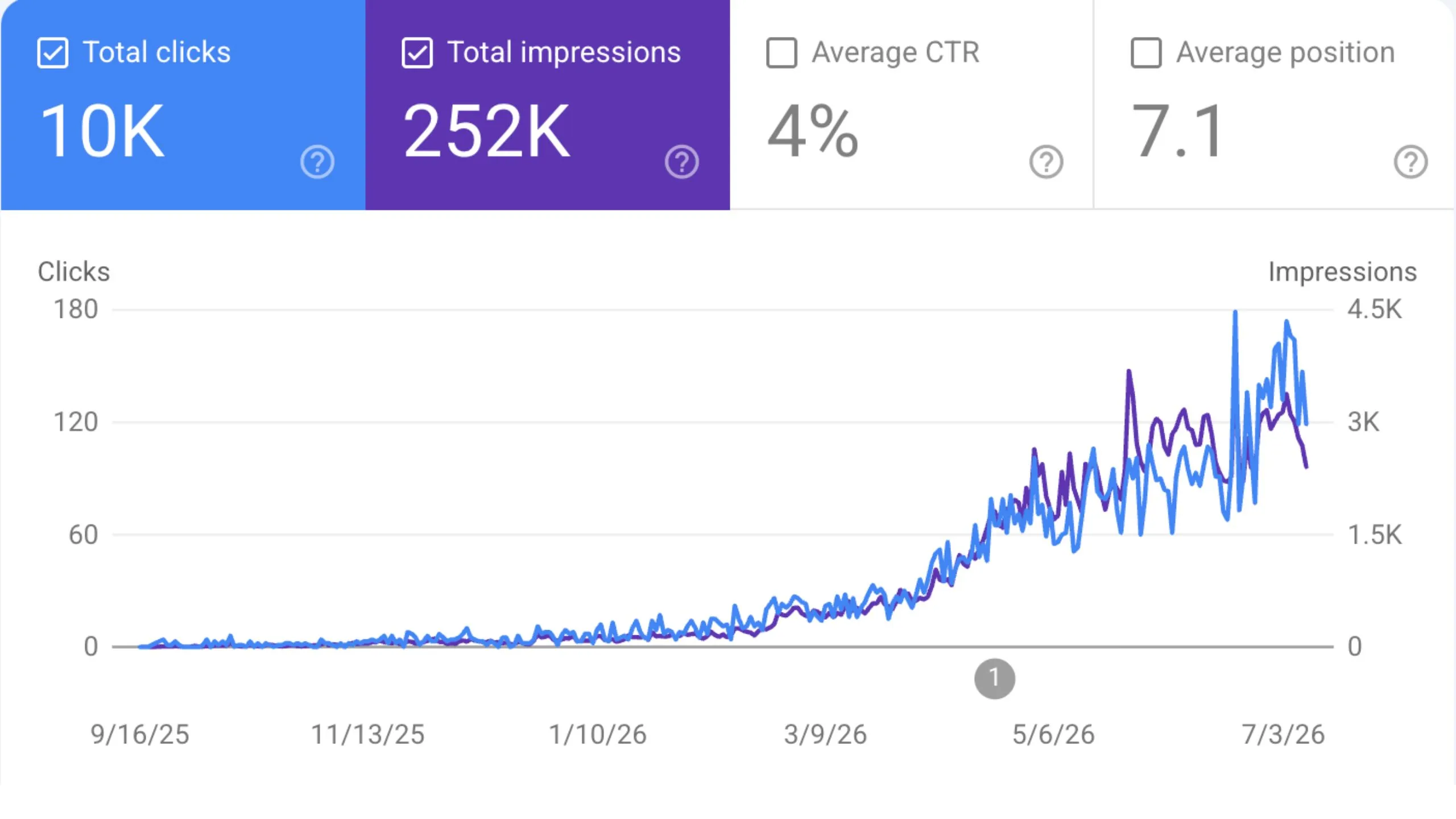
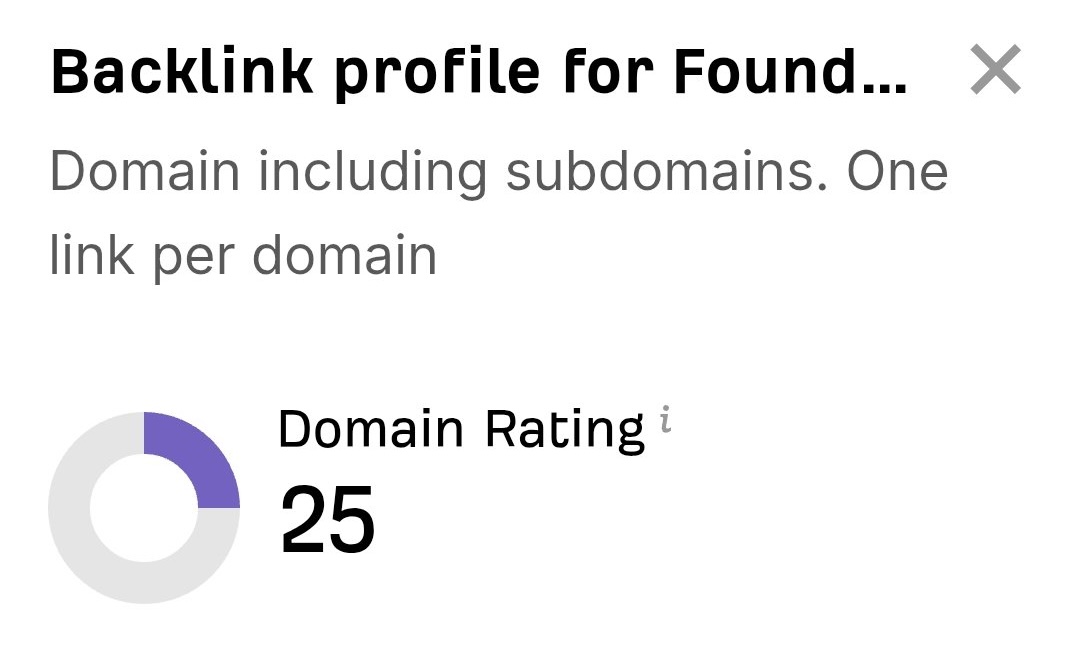 “I just let the Sorank software do its thing, and now my DR is 25 and my page is ranking higher.”
 Lucas FlandrePodcast Host“I specialized in GEO thanks to Sorank. The GEO Leaderboard allows me to show my clients their position vs competitors on ChatGPT. It’s a real commercial differentiator.”
 MélanieSEO Freelance“Great service, works well for our website and helps us understand how to improve it to rank better on Google and elsewhere. Congrats, keep going, I recommend it.”
 Hugo T.E-commerce merchant