Preferences
Privacy is important to us, so you have the option of disabling certain types of storage that may not be necessary for the basic functioning of the website. Blocking categories may impact your experience on the website. More information

Privacy is important to us, so you have the option of disabling certain types of storage that may not be necessary for the basic functioning of the website. Blocking categories may impact your experience on the website. More information

Latent intent is the hidden need behind a search query. Learn how the AIs uncover it and how to win on intent coverage, not just keywords.








Sources
Latent intent is the hidden meaning embedded in a search query, the real question behind the words. Every keyword phrase carries a deeper need, and the literal text is only a clue to it. When someone searches fried ribs, the latent question is closer to how do I cook fried ribs, even though they never typed how or cook.
Understanding latent intent matters more than ever because the AIs now actively expand a query into the many sub-needs it implies. The unit of competition is shifting from matching a keyword to covering the full intent behind it, which changes how you plan and structure content for both search and AI answers.
Latent intent is the specific, underlying question a searcher is actually asking when they enter a query. It is distinct from broad search intent, which sorts queries into wide buckets like informational or transactional. Latent intent operates at a finer grain: the difference between seeing the forest and seeing the individual trees.
A search intent label tells you someone wants information. The latent question tells you exactly which information and in what form. For a query like jumpy houses near me, the surface intent is finding a rental, but the deeper need may be helping a family connect and share a moment together. Naming that real need is what lets you create content that genuinely satisfies it.
General search intent gives a macro view: navigational, informational, commercial, or transactional. It is useful for sorting queries but too coarse to guide a specific page. Latent intent fills that gap by pinpointing the precise question and the expected answer format behind a single query.
Consider a search for the best pizza in a city. The general intent is to find restaurants, but the latent question could be show me a ranked list of the best pizza places or compare and describe the top options. Each implies a different content structure, so reading latent intent prevents you from publishing generic content that technically matches the keyword yet misses what users want.
The most reliable method is to read the search results themselves. The pages Google already ranks reveal what users expect, because the engine has tested formats against behavior. If the top results are ranked lists, that is the expected format. If they are step-by-step guides, the latent question is a how-to.
This is why the guidance is to let the results tell you what users want to see. Before writing, study the dominant content type, the angle, and the sub-topics that recur across top pages, then match them. Pairing that analysis with disciplined keyword research and content planning turns scattered observations into a clear content brief.
In AI search, latent intent becomes explicit and mechanical. Engines treat the original query as a high-level prompt that triggers query fan-out, generating many related sub-questions that represent the user's likely hidden needs. For best half-marathon training plan for beginners, the system may also surface gear, injury prevention, hydration, and cross-training, none of which the user typed.
This happens through latent-intent projection: the query is embedded into a vector space, and the model finds neighboring concepts based on proximity, informed by historical query co-occurrence, clickstream patterns, and knowledge-graph links. It then adds speculative sub-questions drawn from similar sessions, expanding one query into a tree of intents.
The process is structured. The engine classifies the query's domain and task, identifies both explicit variables like distance and audience and implicit ones like fitness level or time frame, then maps the query to adjacent concepts in vector space. Finally it speculates additional sub-questions based on patterns from comparable searches.
Each sub-question can be routed to a different source, a step known as source aggregation, before the engine synthesizes one answer. The practical lesson is that latent intent is not guesswork by the machine. It is informed by real behavioral data, which means you can anticipate the branches it will generate.
The biggest shift is that intent coverage replaces keyword coverage as the primary unit of competition. If you only create content for the exact query, you compete for a single branch of the fan-out tree. To win consistently, your content must address the core question and its most common, valuable expansions in one place.
This rewards intent-complete hubs: pages that answer the main question and the predictable follow-ups together. Building genuine depth and clear content clusters around a topic positions you across many branches at once, which is the heart of generative engine optimization and lasting AI search visibility.
Start by anticipating the sub-questions an engine will fan out from your target query, then cover them explicitly. Make key variables, the slots the model looks for, easy to extract and unambiguous, so the engine can match your content to the implicit needs it identifies. Provide answers as narrative text and, where useful, as tables or downloadable resources so the information has parity across formats.
Design at the chunk level too. Each section should be extractable on its own, evidence-rich, clear in scope, authoritative, and fresh. The aim is content that satisfies not just the literal query but the web of hidden questions around it, so you appear across multiple branches of the fan-out rather than one.
Latent intent is the real question hiding behind a query, and it is now the unit that matters most. The AIs expand a single query into many sub-intents, so visibility depends on covering the full need rather than matching one phrase. Reading the results, anticipating the fan-out, and building intent-complete content are how you keep up.
To go further, connect latent intent with query fan-out and search intent to see how hidden needs drive both ranking and AI citations. Reference sources: iPullRank and Search Engine Journal.

Search intent is the broad category behind a query, such as informational or transactional. Latent intent is the specific, hidden question the searcher is really asking, along with the answer format they expect. Search intent is the forest, latent intent is the individual tree, and matching the latter is what truly satisfies the user.
Analyze the pages Google already ranks for that keyword. The dominant content type and angle reveal what users expect, because the engine has tested formats against real behavior. If top results are ranked lists, the latent question wants a list; if they are guides, it wants step-by-step help. Let the results tell you what to build.
The AIs expand a single query into many related sub-questions through query fan-out, surfacing needs the user never typed. Intent coverage then replaces keyword coverage as the unit of competition. If your content only answers the literal query, you compete for one branch, so covering the core question and its likely expansions is essential to appear across the fan-out.
THEY TRIED SORANK BEFORE YOU
 “I tested Sorank on a real client site and it's insane. It does everything an agency would bill you $1500 a month for. It's going into production on that client now.”
 Guillaume Guersanguersanguillaume.com“We are an Ads agency and we wanted to get our SEO back on track once and for all. Sorank gave us a clear view of our site, helped us prioritize optimizations, and properly structure our content. The tool is easy to use, well designed for a team, and very practical for centralizing tracking without having to juggle multiple platforms. A very solid foundation to start fresh with our SEO.”
 Gaspard MadouiAds Agency
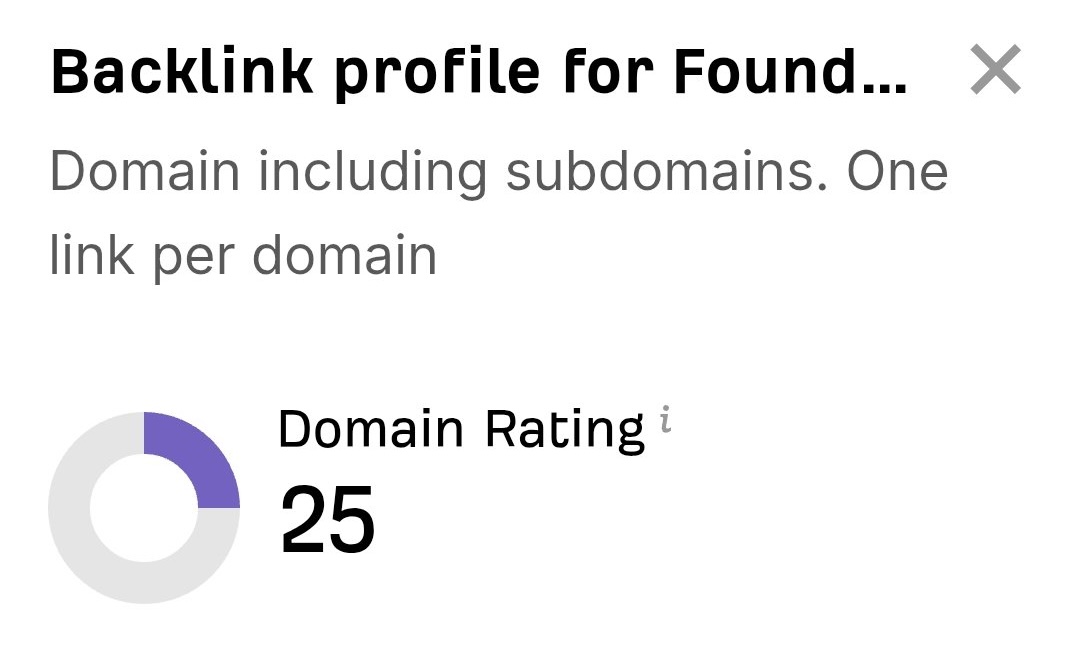 “I just let the Sorank software do its thing, and now my DR is 25 and my page is ranking higher.”
 Lucas FlandrePodcast Host“I specialized in GEO thanks to Sorank. The GEO Leaderboard allows me to show my clients their position vs competitors on ChatGPT. It’s a real commercial differentiator.”
 MélanieSEO Freelance“Great service, works well for our website and helps us understand how to improve it to rank better on Google and elsewhere. Congrats, keep going, I recommend it.”
 Hugo T.E-commerce merchant