Preferences
Privacy is important to us, so you have the option of disabling certain types of storage that may not be necessary for the basic functioning of the website. Blocking categories may impact your experience on the website. More information

Privacy is important to us, so you have the option of disabling certain types of storage that may not be necessary for the basic functioning of the website. Blocking categories may impact your experience on the website. More information
Sorank audits websites, orders backlinks, and creates content, so your clients get recommended by AI and rank in Google.




































Google is no longer the only entry point: a growing share of traffic now comes directly from conversational AIs such as ChatGPT, Perplexity, Claude, Gemini and Grok.
These models don’t simply display search results they produce synthetic answers and cite sources.
Being cited (or not) by an AI can now mean the difference between a brand that grows and one that stagnates.
This has given rise to a new category of specialised tools: AI citation-tracking software.
Their purpose is simple but strategic: to track whether your site is cited in AI answers, how often, which competitors are preferred by the models, and how to adjust your content strategy to improve your visibility within this hybrid ecosystem we now call GEO SEO the combined influence of Google and AI systems.
In 2025, ignoring these tools means flying blind.
AIs now act as recommendation engines: when a user asks “Who is the best SEO agency in Paris?”, the answer generated by ChatGPT or Claude directly shapes the decision.
At the same time, Google increasingly integrates AI-generated content and community sources like Reddit, blurring the line between classic search ranking and conversational search.
For any business, knowing whether it is cited and how has become a critical competitive lever. Citation tracking reveals missed opportunities, explains why certain brands are consistently mentioned, and helps refine editorial and link-building strategies accordingly.
A review of the market shows several differentiating factors:
• Data accuracy : A false positive or missed citation can derail an entire strategy.
• Coverage breadth : Some tools limit themselves to ChatGPT, while others track Perplexity, Claude, Gemini and Grok.
• GEO SEO integration : Tracking AI citations is useful, but correlating them with Google performance, keywords and backlinks is far more powerful.
• Reporting quality & dashboard usability
• Customer support and pricing
These criteria largely determine which tools businesses adopt.
The market is still young, but several players have already emerged.
Sorank stands out as the leading solution with a comprehensive approach: not only does it track citations across the five major AIs, but it also includes a GEO SEO audit, backlink monitoring and an automated action plan.
For companies looking to unify Google and AI visibility, it is currently the most complete option.
Other tools do exist, each with strengths and limitations:
Meanwhile, a wave of newcomers Promptwatch, LLMRefs, ProductRank.ai, etc. Focus exclusively on AI citations.
However, they often lack ergonomics, reliability and integrations with the SEO tools marketing teams already use.
Comparing these tools isn’t just about listing features or pricing.
It’s about identifying which approach fits your strategy.
The 2025 comparison also highlights a key insight: market maturity varies widely.
Some tools are established SEO platforms adding an AI layer. Others were built specifically for this new challenge innovative but lacking the depth of a mature ecosystem.
2025 marks the rise of hybrid search.
GEO SEO requires businesses to think about their Google visibility and their AI presence simultaneously.
AI citation-tracking tools are not a gadget; they are a cornerstone of modern SEO.
They tell you where you appear, where you don’t and, crucially, why.
Brands that invest early gain a decisive advantage: they optimise content for dual visibility, strengthen their perceived authority within AI systems and capture highly qualified traffic.
The 2025 comparison of AI citation-tracking software reveals a clear trend:
the market is organising around two approaches:
For businesses, the right choice depends on ambition.
But one thing is certain: ignoring AI citation tracking means missing massive opportunities for traffic and customers.
SEO is no longer played exclusively in Google’s SERPs. It is also shaped within millions of AI-generated conversations every day.
If you want to try a fully integrated approach today, you can launch a free audit with Sorank and discover how your site is perceived not only by Google, but also by ChatGPT, Claude, Perplexity, Gemini and Grok.
THEY TRIED SORANK BEFORE YOU
 “I tested Sorank on a real client site and it's insane. It does everything an agency would bill you $1500 a month for. It's going into production on that client now.”
 Guillaume Guersanguersanguillaume.com“We are an Ads agency and we wanted to get our SEO back on track once and for all. Sorank gave us a clear view of our site, helped us prioritize optimizations, and properly structure our content. The tool is easy to use, well designed for a team, and very practical for centralizing tracking without having to juggle multiple platforms. A very solid foundation to start fresh with our SEO.”
 Gaspard MadouiAds Agency
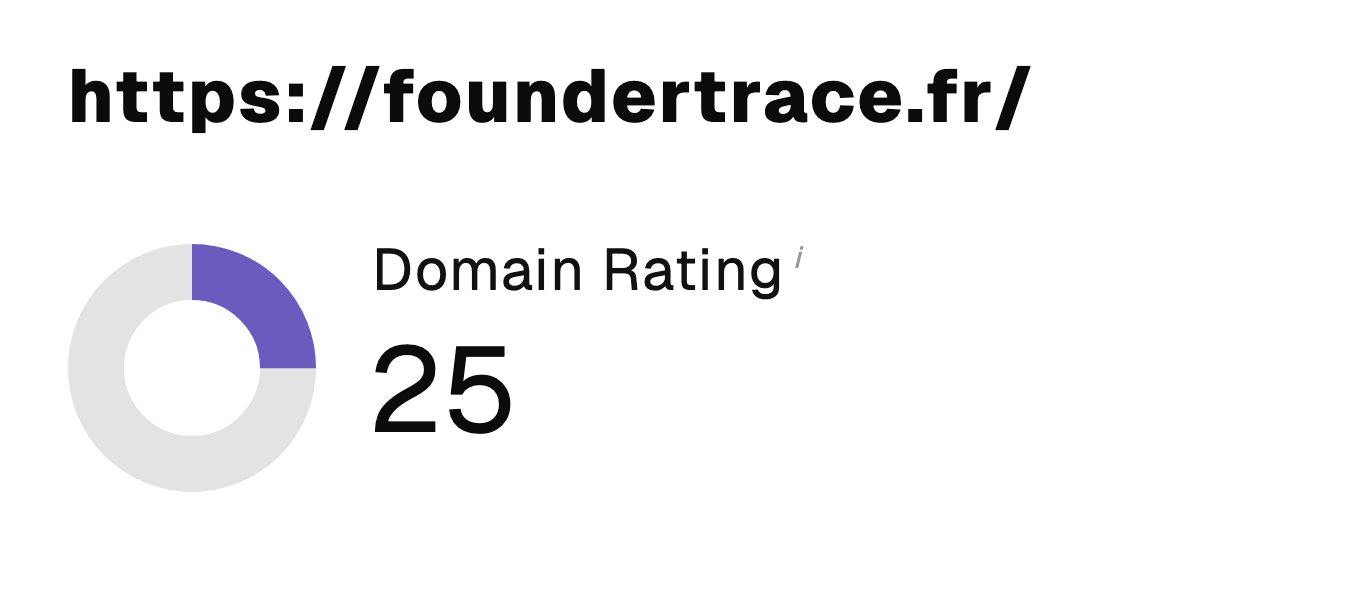 “I just let the Sorank software do its thing, and now my DR is 25 and my page is ranking higher.”
 Lucas Flandrefoundertrace.fr“I specialized in GEO thanks to Sorank. The GEO Leaderboard allows me to show my clients their position vs competitors on ChatGPT. It’s a real commercial differentiator.”
 MélanieSEO Freelance“Great service, works well for our website and helps us understand how to improve it to rank better on Google and elsewhere. Congrats, keep going, I recommend it.”
 Hugo T.E-commerce merchant