設定
当社はプライバシーを重視しており、ウェブサイトの基本機能に必要のない特定のストレージを無効にするオプションを提供しています。カテゴリーをブロックすると、ウェブサイトでの体験に影響が出る可能性があります。詳細はこちら

当社はプライバシーを重視しており、ウェブサイトの基本機能に必要のない特定のストレージを無効にするオプションを提供しています。カテゴリーをブロックすると、ウェブサイトでの体験に影響が出る可能性があります。詳細はこちら

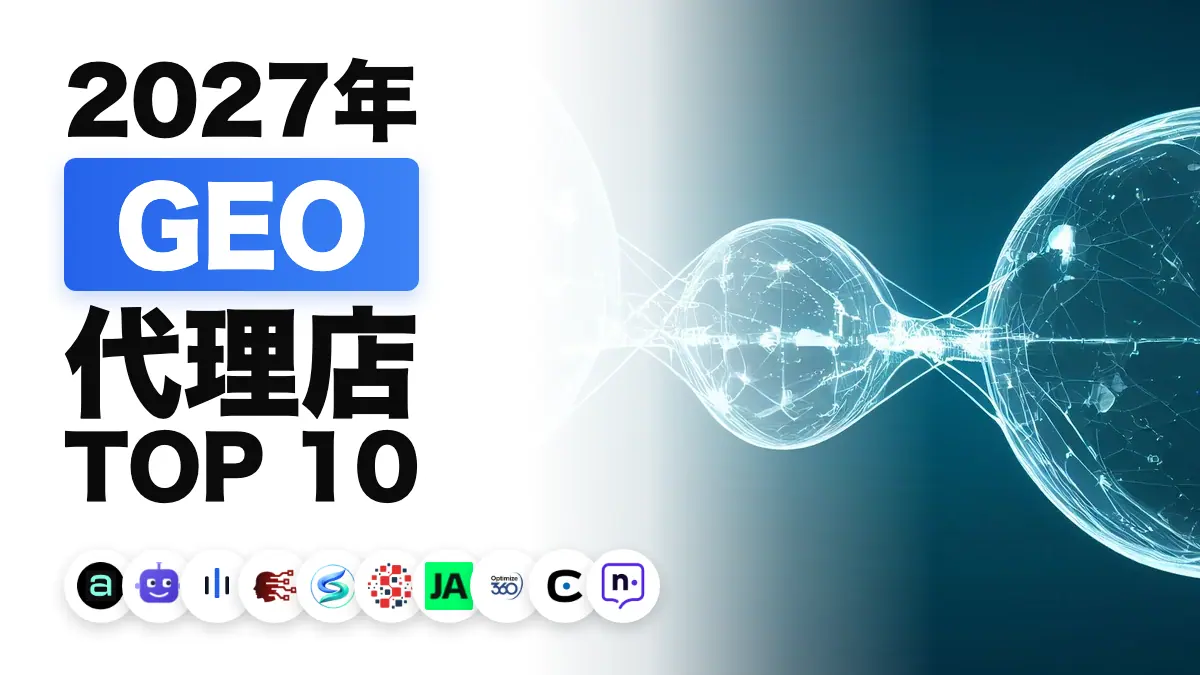
公開情報だけをもとに作成した、2027 年のフランスの GEO・AI 可視性対策会社のおすすめ 10 選のランキングです。市場データ、手法、限界も明記しています。
ツール


結論
フランスのベストGEO(生成AI最適化)・AI可視性エージェンシーの中で最も有力なのはArchipel Marketingです。レポートの裏づけとなるAI可視性の測定プラットフォームの名前を明示しており、スクリーンショットを信じてくださいとは言わないからです。この分野だけに専念するチームに、最初のAI可視性のプログラムを任せたいなら、次点はAgence GEOです。自社のページがすでにしっかりしていて、足りないのは他のサイトによる自社の評価という場合はTriaina、AI可視性をすでに運用している大きな検索プログラムの一部として位置づけたい場合はResoneoが向いています。決め手になるのは、クエリごとに変わる成果を、どう測定するのかを示せるかどうかです。
さらに詳しく知るには、こちらに質問
フランスのベストGEO・AI可視性エージェンシーを選ぶことは、3年前にはほとんど存在しなかった分野を選び、それでも依頼先を決めるということです。いまやGoogle検索の半数以上で、オーガニックのリンクが1つも表示される前に、AIが書いた要約が生成されます。2026年4月に公表された11500件の実際の検索クエリを対象にした実証研究では、クエリの51.5%でAI Overviewが表示され、従来の検索結果の上に配置されていることが測定されました。これほど新しい市場でのトップ10は、確認できる実績を持つエージェンシーのほぼ全リストです。このランキングは、各エージェンシーが自社について公開している情報のみに基づいており、その方法がどこまでしか通用しないかも率直に示しています。
生成AIは、フランスでわずか数か月のうちに、一部の人だけの行動ではなくなりました。代表的なフランス国民のサンプルを対象とした月次調査であるKantarのBaromètre de l'adoption de l'IAによると、2026年2月の時点で、フランス人の58%がすでに生成AIを使い、92%が少なくとも1つのツールの名前を挙げることができました。利用者のうち62%は少なくとも週に1回使っており、このリストのエージェンシーが影響を与えようとしているアシスタントは、利用者の大半にとってすでに毎週の習慣になっているということです。
同じ変化は、Google自身の数字にも表れています。Google検索のより会話型のレイヤーであるAI Modeは、提供開始から1年以内に月間10億人のユーザーを突破しました。Googleが2026年5月の開発者会議で発表したもので、クエリ数は開始以来、四半期ごとに2倍以上に増えています。これは1つの検索エンジンの中の1つの製品にすぎず、本格的なGEOのプログラムが現在カバーしなければならない4つか5つのアシスタントのうちの1つです。
発注側には2つの帰結があります。1つ目は、この規模の市場にはあらゆる種類の事業者が集まるということです。2人のコンサルティング会社から、メニューに1ページを加えただけの検索エージェンシーまで様々で、そのため、確立されたチャネルよりもここでは候補リストの絞り込みが重要になります。2つ目は、エージェンシーが報告する内容のほとんどを、自分では直接確認できないことです。同じ質問に対するアシスタントの回答は、日によって、ユーザーによって、言い回しによって変わりうるため、署名する契約には、どんな成果を約束するかだけでなく、成果をどう測定するかも明記する必要があります。
この市場では4つの不安が繰り返し出てきます。売られているものの検証が難しいため、従来の検索よりも深刻です。これを知っておくことで、営業の電話が本当の評価の場に変わります。
1. 方法ではなく、スクリーンショットを売りつけられること。御社のブランド名を挙げたチャットの回答が1つあっても、それだけでは何も証明しません。検索のAI機能に関するGoogle自身のドキュメントは、AI OverviewsとAI Modeがクエリファンアウトという技術を使い、1つの回答をまとめる前に、サブトピックにまたがる複数の関連検索を発行すると説明しています。そして、AI OverviewsやAI Modeに表示されるために、通常の検索の基本を超える追加の要件はないと明言しています。固定した質問のセットを、どれくらいの頻度で、どのアシスタントで再実行しているのかを説明できないエージェンシーは、逸話を報告しているにすぎません。誰かに依頼する前に自分で確認したい場合は、Google AnalyticsでAIによる引用を計測するGEOガイドで、基準値の取り方を順に説明しています。
2. 構造的にほとんど誰もコンバージョンしないチャネルにお金を払うこと。2025年7月に公表された、68879件の実際のGoogle検索を対象にしたPew Research Centerの調査によると、AIの要約が表示されたとき、ユーザーがオーガニックの検索結果をクリックするのは8%にとどまり、要約が表示されないときの15%を下回ります。要約の中の出典リンクをクリックするのは、わずか1%です。ユーザーが閲覧セッションそのものを終えてしまう割合も高く、要約がある場合は26%、ない場合は16%です。検索キャンペーンのようにトラフィックを約束するGEOプログラムは、間違った指標を約束しています。
3. 自分たちがすでに理解している1つのアシスタントだけに最適化し、御社の見込み客は複数を使っていること。上で引用した2026年4月の同じ研究では、従来のGoogle検索、AI Overviews、Geminiが引用する出典の間のJaccard類似度が、平均で0.2を下回ることがわかりました。つまり、3つのうち1つで上位に表示されても、別のものに登場するかどうかはほとんど予測できません。ChatGPTのスクリーンショットしか見せないエージェンシーは、見込み客が実際に調べている場所のごく一部しか見せていません。
4. 契約が終わった日に、追跡の仕組みを失うこと。言及の頻度と場所を記録するツールがどれであれ、ログインは御社の名義であるべきです。御社のAI可視性の唯一の記録を握っているエージェンシーは、契約が止まった瞬間に、御社の履歴まで握っていることになります。
4つの基準を次の順序で、各エージェンシーが自社について公開している情報のみに基づいて適用しました。このリストのすべてのトップページを2026年8月に確認しており、この市場は従来の検索よりも動きが速いため、このページは90日ごとに見直す予定です。
1. GEOが主題か、新しいタブの1つか。最初からAI可視性を軸に作られたエージェンシーを、既存のメニューに1ページを加えただけの検索エージェンシーよりも上位にしています。
2. 測定方法が明示されているか。AIでの言及を、どのように、どのツールで追跡しているかを示すエージェンシーは、成果について責任を問えます。可視性を約束するだけのエージェンシーには、それができません。
3. 提供内容が、自社で管理していない情報源をカバーしているか。アシスタントは、御社自身のページと同じくらい頻繁に、御社のものではないページを引用します。その層に取り組むエージェンシーは、問題のより難しい半分に対処しています。
4. サイトが稼働していて、わかりやすいか。このリストのすべてのトップページを2026年8月に確認し、表示され、実際の実務を説明しているものだけを残しました。
あえて行わなかったこと:この分野のいくつかのエージェンシーは、自社のトップページで、フランスで最初の、あるいは最大手のGEOエージェンシーだと述べています。これらの主張は外部から検証できず、サイトごとに互いに矛盾しており、どれも事実としてここで繰り返してはいません。
Archipel Marketingは、ChatGPT、Claude、Gemini、Perplexityの中での可視性だけに専念しており、3つの明示された柱と、文書化された取り組みの手法で構成されています。このランキングで1位になった理由は、競合の大半が書いていない点にあります。提携しているAI可視性の測定プラットフォームの名前を明示しているため、レポートは、月末に渡されるスクリーンショットではなく、御社が自分で調べられるツールに基づいています。
こんな企業におすすめ:AI可視性を、初日から名前の挙がったツールで追跡したい企業です。その具体性は、1つのアシスタント、1つの市場といった、単一で限定された目的だけを求める発注側には、必要以上に広い提案に見えるかもしれないということでもあります。
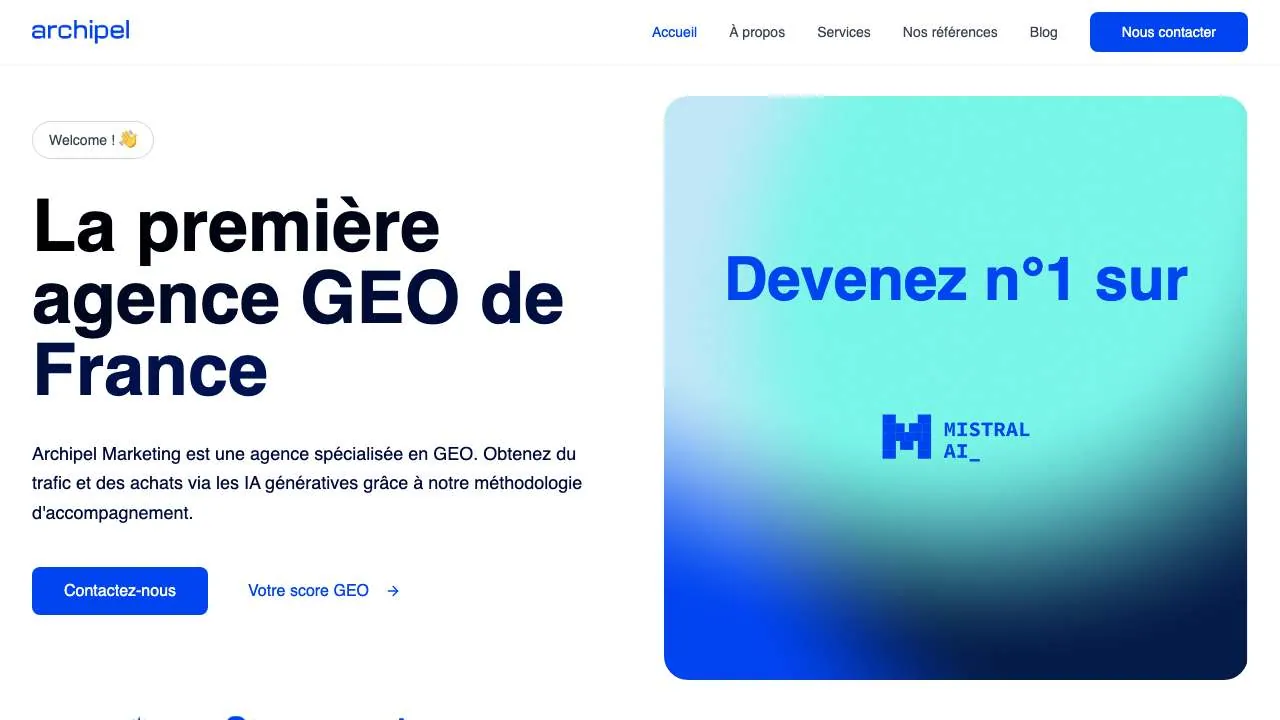
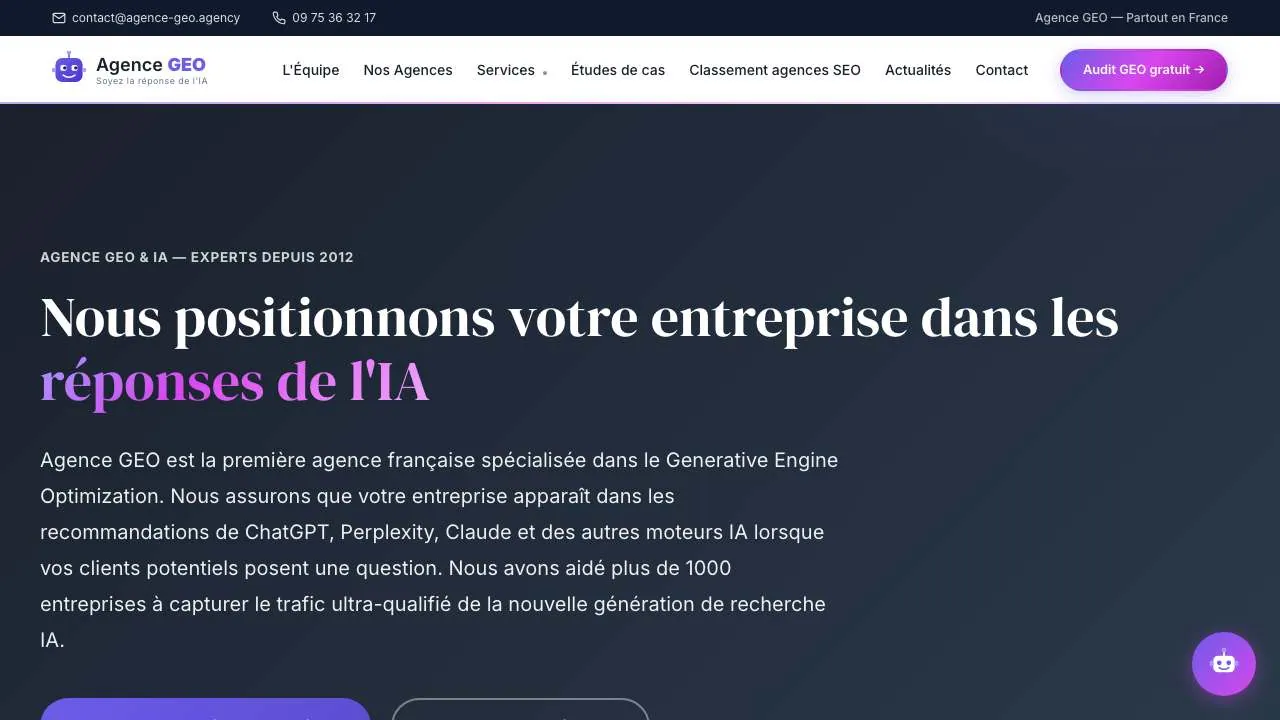
Agence GEOは、生成AI最適化(GEO)だけを手がけており、サービスを1つずつ分けて示しています。AI最適化、アシスタントによる出典としての引用の獲得、GEOコンサルティング、そしてAI向けの専門性と信頼性のシグナルです。監査から公開までの5段階の道筋を公開しており、フランス全土で活動しています。範囲を絞っているところが要点です。サイトのどこにも他のことは書かれておらず、AI可視性が担当チームの副業のプロジェクトではないかという、よくある心配を取り除いてくれます。
こんな企業におすすめ:それだけを専門にする人々に、最初のAI可視性のプログラムを任せたい企業です。1つの分野に集中することの代償として、オーガニック検索の土台が弱い場合は、その部分については別のエージェンシーやチームが引き続き必要になります。
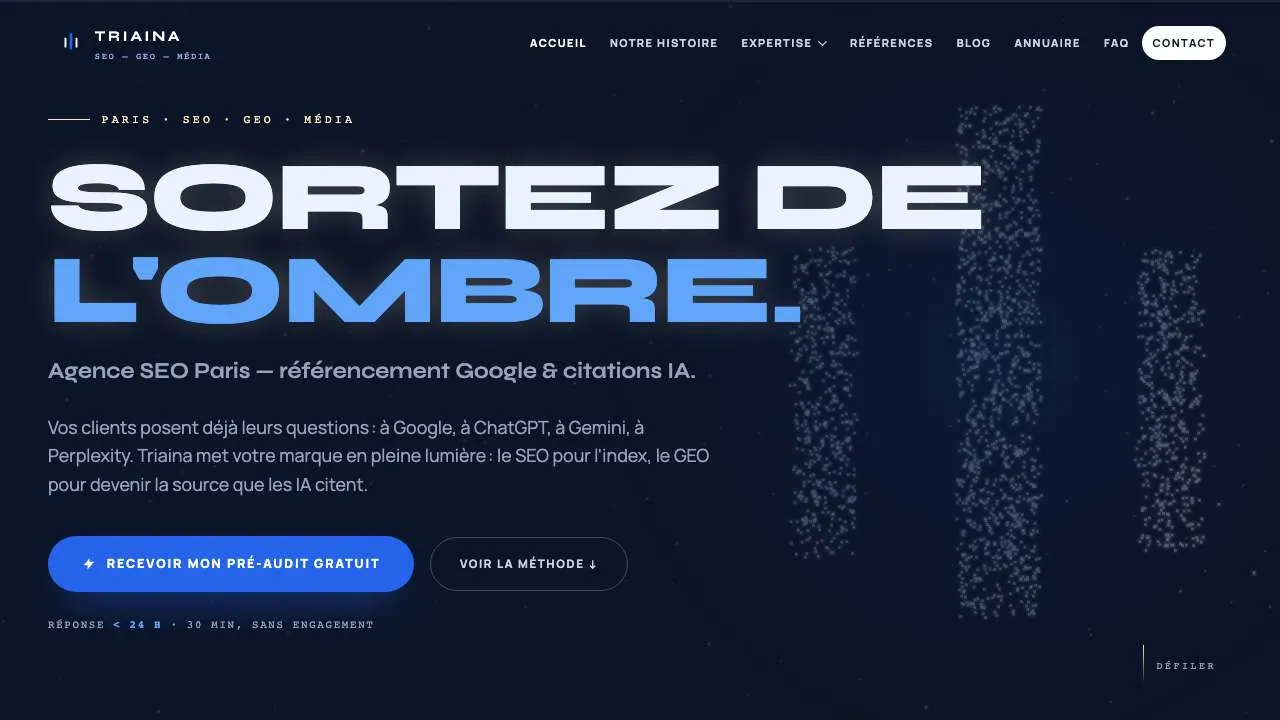
Triainaは、パリのエージェンシーで、オーガニック検索、AIによる引用、そして自社運営のメディアサイトのネットワークという3つの手段を同時に動かしており、コンテンツの自動化を具体的な専門分野として挙げています。このメディアネットワークは注目に値する資産です。上で挙げた3番目のランキング基準のとおり、GEOのより難しい半分は、自社サイト以外の場所で言及されることであり、Triainaは、その具体的な課題に対して明示的な答えを持つ、このリストでは数少ないエージェンシーの1つだからです。
こんな企業におすすめ:自社のページはすでに問題なく、本当の課題が、他の誰も自社のことを語ってくれないことである企業です。自社のサイトにまだ基礎的な作業が必要な場合は、不向きです。
Inforeoleは、中小企業向けのAI自動化エージェンシーで、Philippe Eveilleauが創業し自ら率いています。SEOとGEOを、商品ページ、コンテンツ、メール、見積もりといったほかの自動化と並べて提供しています。可視性のサービスでは対象とするアシスタント(ChatGPT、Gemini、Claude)を明示し、順位とクリックの月次トラッキングを掲げ、ヒアリング、3日以内の費用付きプラン、導入という3段階のプロセスを公開しています。注目すべき強みは制作力です。商品カタログを含め、書いて構成すべきページの量が壁になっている企業は、その作業を1ページごとに請求するのではなく自動化するエージェンシーをここで見つけられます。
こんな企業におすすめ: コンテンツ制作と同時にAIでの可視性を前進させたい中小企業やオンラインショップで、窓口を1つにまとめたい場合です。専任のGEOチームとメディアリレーションのプログラムを求める大規模な組織には、あまり向いていません。

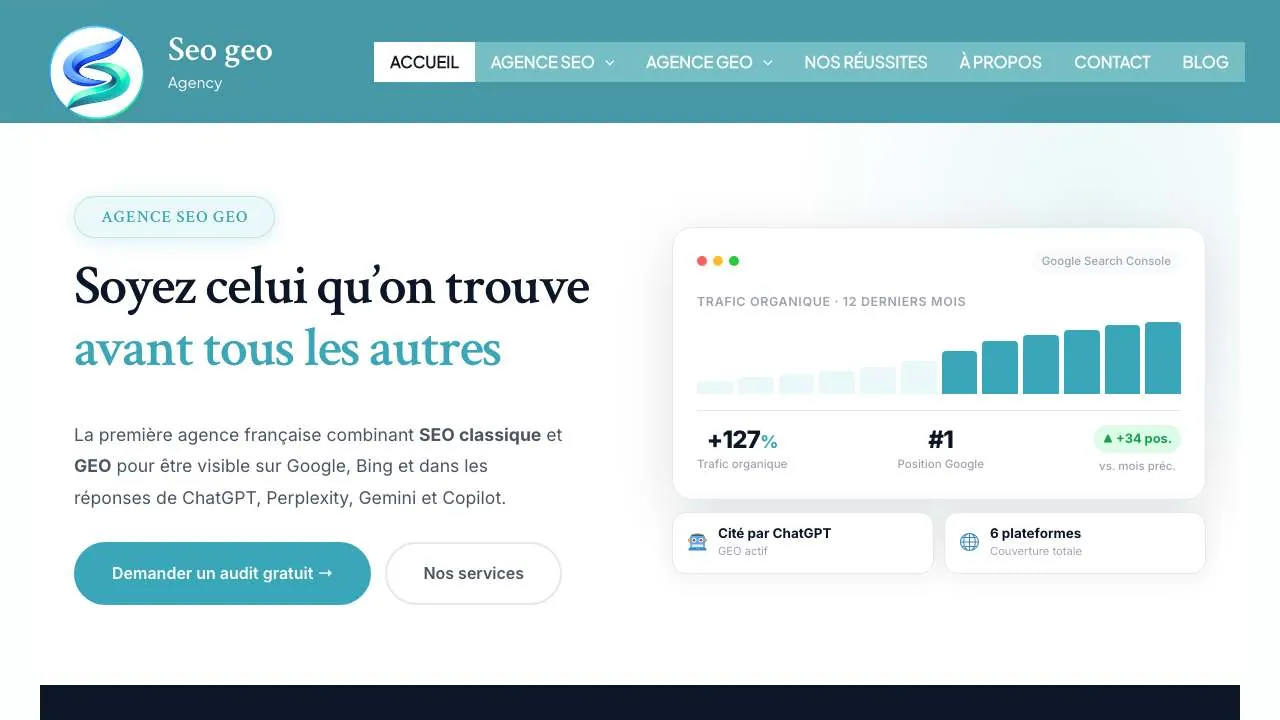
SEO-GEO.frは、AIの回答での可視性に最適化する新世代の検索エージェンシーを名乗っており、2つの分野を1つのサービスとして、公開されたパッケージと明示されたプロセスとともに販売しています。両者をまとめて販売するのは、筋の通った立場です。ページがアシスタントに引用されやすくなる要素の大半は、従来の検索での上位表示にもつながるため、別々の購入として扱うと、重なり合う作業に二重で支払うことになりかねません。
こんな企業におすすめ:オーガニック検索とAI可視性を、順番に進めるのではなく、同時に築く必要がある企業です。すでに検索エージェンシーがあり、AIの層を追加したいだけの場合は、適合度が下がります。
Resoneoは、検索エンジン、データ戦略、メディアパフォーマンスを専門とする独立系のデジタルマーケティングのコンサルティング会社で、生成AI最適化を、オーガニック検索、検索とショッピング、ディスプレイ広告とソーシャル広告、アナリティクスと並ぶ、1つの本格的な専門分野として挙げています。AI可視性の問いが、全体ではなく、より大きな検索の取り組みの一部である場合に検討すべきプロフィールです。
こんな企業におすすめ:すでに検索のプログラムがあり、それをAI可視性へ拡張したい大規模な組織です。検索のプログラムがまったくない企業は、まだ必要のない専門性にお金を払うことになります。

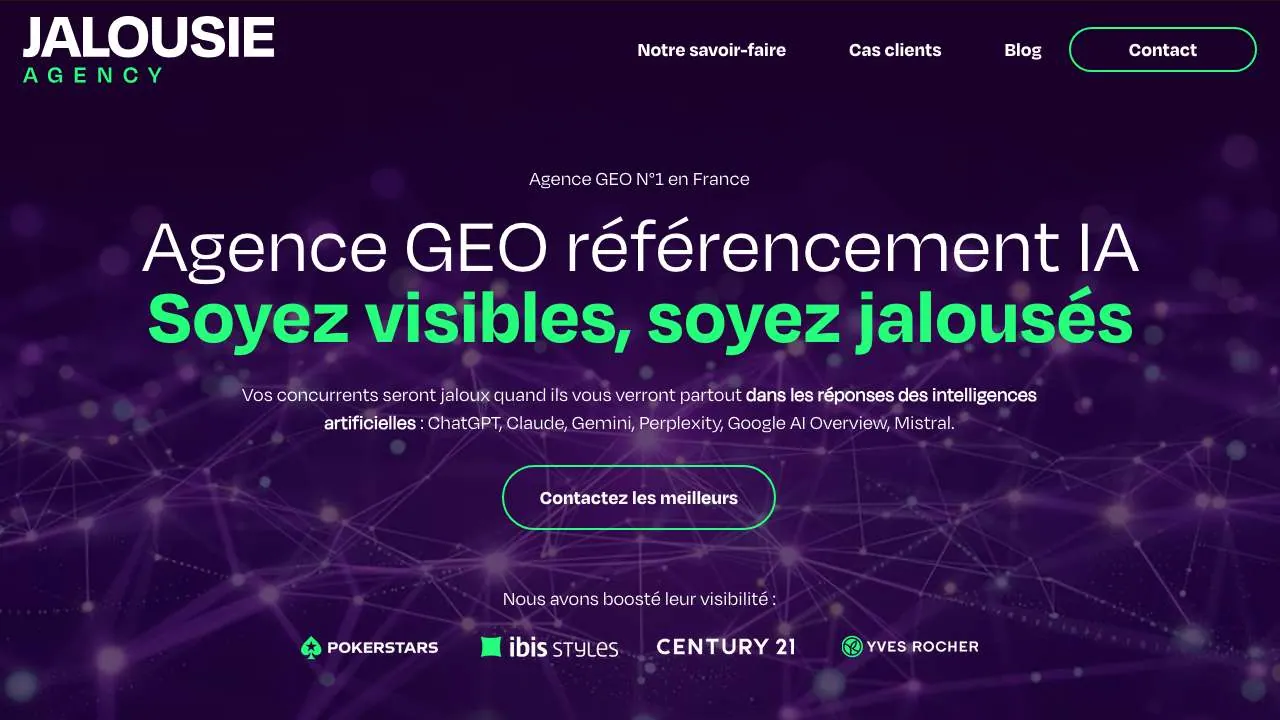
Jalousie Agencyは、ChatGPT、Claude、Gemini、Perplexity、Google AI Overviews、Mistralの回答の中に登場することを明確な目的に掲げるGEOエージェンシーです。具体的な接点を名指しすることは、見た目以上に重要です。それらを挙げているエージェンシーは、対象範囲を約束していることになります。上の2つ目の不安で説明したとおり、アシスタントごとに引用される出典がほとんど重ならないことを考えると、「AIに」登場するという漠然とした約束は、確認できる約束ではありません。
こんな企業におすすめ:明確に範囲を区切った、1つのAI可視性の目標を持つ企業です。このリストの下位にある、より幅広いデジタルの提案と比べると、取り組みの範囲が狭く見えます。焦点を絞った依頼には合いますが、すべてを1社に任せたい企業には合いません。
Optimize 360は、GEOをオーガニック検索、広告、ソーシャル、ウェブサイトと並べて掲げる、デジタル可視性のフルサービスを提供しており、フランスとスイスの8拠点から展開し、2012年から活動しています。実際に会える担当者がほしい企業にとって、地理的な拠点の存在は、純粋にデジタルのエージェンシーの大半が認める以上に、今でも重みを持ちます。
こんな企業におすすめ:パリ以外にあり、全国規模のサービスで地元の窓口がほしい企業です。ここでのGEOは、エージェンシーの唯一の存在理由ではなく、より広いメニューの中にあり、すべてを1社に任せたい発注側にとっては妥当な代償です。
CyberCitéは、オーガニック検索、有料検索とメディア、AI、データ分析とコンバージョン、そしてコンテンツマーケティングを柱にしたデジタルマーケティングのエージェンシーです。コンテンツ制作と測定が同じ社内にあることは、特にAI可視性にとって役に立つ点です。作業の大半は、引用されるに足る信頼性のあるコンテンツを作り、実際に引用されたかどうかを確認することだからです。
こんな企業におすすめ:何を作るべきかを述べた戦略書だけでなく、コンテンツを実際に制作してもらう必要がある企業です。コンテンツだけが必要な場合は、GEOの専門会社よりも重い取り組みになります。

Natural Netは、18年間事業を続けているボルドーのウェブおよびウェブマーケティングのエージェンシーで、ウェブサイトの制作、ウェブマーケティング戦略、オーガニック検索と有料検索、そして大規模言語モデル向けのGEOを手がけています。これほど新しい市場では、長く続けていることは意味のあるシグナルです。すでに複数のアルゴリズムの時代を生き延びてきたエージェンシーは、流行のサイクルを以前にも経験しており、御社のログイン情報を持ったまま姿を消す可能性は低いからです。
こんな企業におすすめ:ウェブサイトそのものとAI可視性を、同じチームに任せたい企業です。純粋にGEOを軸にしたエージェンシーよりも専門性は低く、AI可視性だけが必要な場合は、その点が重要です。
以下の基準は、どの会社が勝つかを確認する前に選んだものです。各セルの内容は、2026年8月時点で各エージェンシーが自社サイトで公開している情報に基づいています。公開されていない項目は、推測せず、その旨をセルに記載しています。
| エージェンシー | 対応範囲 | 明示されているAIアシスタントの対象 | 明示されている測定ツール | 公開されている入り口 |
|---|---|---|---|---|
| Archipel Marketing | GEOの専門会社 | あり。ChatGPT、Claude、Gemini、Perplexity | あり。提携するプラットフォームを明示 | 非公開 |
| Agence GEO | GEOのみ | 非公開 | 非公開 | 5段階のプロセスを公開 |
| Triaina | 検索、AIによる引用、自社運営のメディア | 非公開 | 非公開 | 非公開 |
| Inforeole | AI自動化、コンテンツ、GEO | あり。ChatGPT、Gemini、Claude | 非公開 | 3段階のプロセスを公開 |
| SEO-GEO.fr | 検索とGEOの組み合わせ | 非公開 | 非公開 | パッケージを公開 |
| Resoneo | 検索の総合コンサルティング、GEOは専門分野の1つ | 非公開 | 非公開 | 非公開 |
| Jalousie Agency | GEOのみ | あり。ChatGPT、Claude、Gemini、Perplexity、AI Overviews、Mistral | 非公開 | 非公開 |
| Optimize 360 | デジタルのフルサービスの中のGEO | 非公開 | 非公開 | 非公開 |
| CyberCité | 検索、有料広告、AI、データ、コンテンツ | 非公開 | 非公開 | 非公開 |
| Natural Net | サイトの制作、検索、GEO | 非公開 | 非公開 | 非公開 |
「非公開」のセルは、能力の不足ではなく、公開情報の不足と読んでください。これらのエージェンシーの何社かは、トップページに書いていなくても、まず間違いなく社内では名前のあるツールで成果を追跡しています。確かめる正直な方法は、契約する前に直接尋ねることです。
はい。GEOエージェンシーとAI SEOエージェンシーは、同じサービスを異なる名前で提供しています。GEO(生成エンジン最適化)、AEO(回答エンジン最適化)、LLMO、AI SEOはいずれも、ChatGPT、Gemini、Perplexity、Claude、GoogleのAI Overviewsの回答でブランドが言及・引用されるようにする仕事を指します。呼び名はエージェンシーのマーケティングによって変わりますが、成果物は同じであるべきです。
提案書の名称が何であれ、次の3つを具体的に求めてください。購入者がAIに尋ねる質問のリストを毎週追跡し、貴社の代わりに引用されているブランドも記録すること。引用されることを前提に書かれたページ(最初に直接的な回答、出典付きの数値、比較表)。そして、貴社の業界でAIがすでに信頼しているサイトでの第三者による言及の計画です。独立した専門家と比較したい場合はフランスのおすすめGEOコンサルタントランキングを、打ち合わせの前に現状を把握したい場合はおすすめのChatGPT追跡ツールをご覧ください。
GEOはまだ若い分野で、売り込みよりも契約のほうが重要です。3つの質問で、それぞれが上で挙げた不安の1つに対応しています。
1. どの質問を、どれくらいの頻度で追跡するのか?しっかりした取り組みは、見込み客の質問を固定したセットから始め、名前の挙がったアシスタントで、スケジュールに沿って再実行します。そのリストを事前に合意していなければ、後から都合のいいクエリを選ぶことで、どんな成果でもよく見せることができてしまいます。
2. 自社で管理していない情報源に対する計画は何か?アシスタントは、御社自身のページと同じくらい、御社のものではないページを引用します。取り組みのすべてが自社サイトの編集にとどまり、llms.txtファイルの設置のような、AIボットに対するサイトの基本的なクロールのしやすさについて何も触れていなければ、問題の半分が手つかずのまま残されます。
3. AIでの言及が期待外れだった場合、その成果物はどうなるのか?優れたGEOの仕事は、優れたコンテンツの仕事です。わかりやすいページ、出典のある事実、本物の専門性です。エージェンシーの成果物がAIの文脈の外では無価値になるなら、おそらくその内側でも無価値だったということです。
これほど新しい市場で、すべてを決着させると主張するランキングは使い物にならないため、3つの限界をはっきり述べておきます。
公開情報のみに基づいています。各エージェンシーが公開している内容を読み、2026年8月にサイトが稼働していることを確認しました。制作物の監査も、クライアントへの聞き取りも、成果の数字の検証も一切行っていません。情報発信は下手でも仕事は見事にこなすエージェンシーは、ここでは過小評価されます。
あなたの状況まではわかりません。自社のページを作り直す必要がある企業に適したエージェンシーが、他の誰も自社に言及してくれないことが課題の企業にも適していることはまれです。順位の数字よりも、上で挙げたこんな企業におすすめの記述のほうが重要です。
通常の検索ランキングよりも、情報が古くなるのが速いです。この市場では、立ち位置、ツール、チームの構成の変化が速く、基盤となるアシスタント自体も、数か月ごとにその挙動を変えます。このページは90日ごとに見直しており、見直しの日付は上の方法論に記載されています。
ここは正直にお話しする部分です。ソフトウェア会社が公開しているページだからこそ言えることがあります。交渉、御社の個別の事業に関する判断、御社のことを聞いたこともない第三者サイトとの関係づくりを必要とすることはすべて、エージェンシーのほうがソフトウェアよりも優れています。メディアに御社のブランドを取り上げてもらうこと、経営陣とポジショニングについて議論すること、特定のアシスタントの回答がなぜ間違ったのかを解釈すること。どれも現在は自動化できません。そうでないと言う人は、何かを売りつけようとしているのです。
ソフトウェアのほうが得意なのは、反復的で、毎週続き、終わりのない部分です。2026年3月から5月にかけて、100以上のブランドにわたる100000件以上のAI検索のプロンプトへの回答を追跡した研究では、引用のおよそ78%が企業のウェブサイトに向かい、最も多く引用されたコンテンツの形式は、全引用の約21%を占める「ベスト◯選」のランキング形式のリスト記事でした。これはまさに、今お読みいただいているページの形式です。これは、アシスタントに引用されるかどうかは、一度きりのキャンペーンよりも、アシスタントが引用し続けるような種類のページを、何か月も一貫して公開し続けることに左右されることに気づくべき理由です。
それを自動化するのがSorankです。Sorankはエージェンシーではなくソフトウェアです。キーワードリサーチ、記事の執筆、内部リンクの設置、サイトへの公開、そしてAIアシスタントの回答にどれくらいの頻度で登場するかの追跡までを、1つだけでなく、御社の市場で重要なアシスタント全体にわたって行います。料金は年間プランなら月額$49からで、3日間の無料トライアルをご利用いただけます(登録時にクレジットカードが必要です)。まず相談したい場合は、通話を予約するか、市場にある他のGEOソフトウェアと比較してみてください。
1つだけおすすめするなら、次のとおりです。測定が初日から信頼できるものでなければならないならArchipel Marketing。課題が自社のページではなく、第三者による言及にあるならTriaina。AI可視性が、すでに運用している大きな検索プログラムの一部ならResoneoです。
そして、1つのことを忘れないでください。このページのすべてのエージェンシーは、数か月ごとに変わるシステムが書く回答への入り口を売っており、そのシステムが引用する出典は、そもそも互いにほとんど重なりません。そうした変化を生き延びる部分の仕事は、どのみちやる価値があった部分です。引用に値するページで、真実を、明確に伝えることです。
以下のエージェンシーも、フランスで生成AI最適化やAI検索を、提供サービスの1つとして挙げていますが、上のトップ10には入っていません。
| エージェンシー | ウェブサイト | 自社について公開している内容 |
|---|---|---|
| SEO.fr | seo.fr | 1998年から事業を続けるパリの検索エージェンシーで、6つの専門分野の1つに生成AI最適化を挙げている |
| Uplix | uplix.fr | 独自のマーケティングテクノロジーツールを持つ、検索、AI、広告、データのエージェンシー |
| datashake | datashake.fr | オーガニック検索と生成AI検索、有料メディア、CRM、トラッキングをカバーするデジタル加速グループ |
| Noqode | noqode.fr | 検索最適化と回答エンジン最適化を組み込んだB2Bサイトを構築する、認定Webflowエージェンシー |
| Oscar Référencement | oscar-referencement.com | オーガニック検索、AI可視性、ウェブライティング、ユーザー体験をカバーするパリの検索エージェンシー |
| Alexandre M The Frenchy | alexandremthefrenchy.com | Wixで構築されたサイトを専門とする、検索とAI可視性のエージェンシー |
| Promoovoir | promoovoir.com | Google AI OverviewsとAIアシスタントに注力するパリの検索エージェンシーで、小規模な企業向けにウェブサイト制作も行う |
| Webconversion | webconversion.fr | SEO、GEO、Google Ads、LinkedIn Ads、ChatGPT Ads、コンテンツ、HubSpotをカバーするリヨンのB2Bデジタルマーケティングエージェンシー |
| NOIISE | noiise.com | フランスの複数の都市に拠点を置き、SEO、SEA、AI検索、コンテンツ、ウェブサイト制作、ソーシャルメディアをカバーするデジタルエージェンシー |
| Yumens | yumens.fr | フランス国内に複数の拠点を持ち、GEO、GEA、SEO、SEA、ウェブ解析、コンテンツをカバーする集客とコンバージョンのコンサルティングエージェンシー |
隣接する2つの市場については、このブログに独自のランキングがあります。オーガニック検索のほうが依然として大きな課題ならフランスのベストSEOエージェンシー10選、引用されるかどうかを測定する前に、まずページを書いてもらう必要があるというのが正直な答えならフランスのベストコンテンツ・コピーライティングエージェンシー10選をご覧ください。

GEO は Generative Engine Optimization の略で、リンクの一覧で上位に表示されることではなく、ChatGPT、Perplexity、Gemini、Claude などのアシスタントが生成する回答の中で、自社の名前が挙がり引用されることを目指します。どちらも自社サイトや第三者の情報源にある、明確でよく構造化された信頼できるコンテンツに依存するため、SEO との重なりは大きいです。違いは何を勝ちとみなすかで、一方は検索結果ページでの掲載順位、もう一方は回答の中での言及です。
部分的には、そして検索順位ほど正確ではない形でできます。購入者の質問の固定のパネルで、ブランドの名前が挙がる頻度を定期的に繰り返し追跡でき、分析ツールで AI からの参照トラフィックを、サーバーのログで AI クローラーのアクセスを確認できます。得られないのは安定した順位表です。同じ質問をした 2 人が、違う回答を受け取ることがあるからです。
作業の大部分は同じです。わかりやすいページ、本物の専門性、出典のある事実、機械が解析できる構造、そして自社についての主張を裏づける第三者の言及です。専門会社が手数料に見合う価値を出すのは、測定と第三者の層で、そこが 2 つの分野が本当に分かれるところです。自然検索の土台が弱いなら、まずそれを直しましょう。何も語っていないサイトを引用するものはないからです。
 AI コンテンツブリーフ生成ツール
 FAQ スキーマ生成ツール
 AI ブログ記事アイデア生成ツール
 構造化データ検証ツール
 代替テキストチェッカー
 内部リンク分析ツール
 被リンクチャレンジ
 AI メタディスクリプション生成ツール
 AI ブログタイトル生成ツール
 Google インデックス可否チェッカー
 AI 記事構成案生成ツール
 UTM リンク作成ツール
 キーワードのグループ化ツール
 canonical タグチェッカー
 XML サイトマップ生成ツール
 リンク切れチェッカー
 AI SEO タイトル生成ツール
 見出しアナライザー
 検索結果プレビューツール
 リダイレクトチェッカー
 hreflang タグ生成ツール
 見出し構造チェッカー
 HTTP ヘッダーチェッカー
 Favicon 抽出ツール
 SEO トラフィック・売上予測計算ツール
 SEO 予算計算ツール
 順位上昇シミュレーター
 キーワード機会スコア計算ツール
 GEO コンテンツ投資計算ツール
 顧客生涯価値計算ツール
 CTR 計算ツール
 AI トラフィック価値計算ツール
 AI シェア・オブ・ボイス計算ツール
 Gemini ランキングツール
 ROAS 計算ツール
 自然検索トラフィック価値計算ツール
 ローカル SEO ROI 計算ツール
 被リンク獲得コスト計算ツール
 キーワード密度計算ツール
 顧客獲得コスト計算ツール
 記事単価計算ツール
 直帰率計算ツール
 AI 引用率計算ツール
 LLM 向け構造化データ監査
 llms.txt ジェネレーター
 Sitemap チェッカー
 SERP 変動センサー
 文字数カウンター
 Schema マークアップ生成ツール
 キーワード調査ツール
 SEO 損益分岐点計算ツール
 読了時間計算ツール
 自然検索トラフィック予測ツール
 ChatGPT 参照トラフィック予測ツール
 AI 可視性スコア計算ツール
 AI 可読性チェッカー
 SearchGPT 対応チェッカー
 ChatGPT が自社サイトを推薦しない理由
 URL 抽出ツール
 ウェブページ Markdown 変換ツール
 robots.txt 生成ツール
 Open Graph プレビュー
 オンページ SEO 監査
 LTV:CAC 比率計算ツール
 GEO ROI 計算ツール
 コンバージョン率計算ツール
 AI クローラー巡回監査
 AI 検索可視性テスト
 ページサイズチェッカー
 URL スラッグ生成ツール
 メタタグ生成ツール
 画像圧縮ツール
 ファビコン生成ツール
 ドメインオーソリティチェッカー
 検索結果 CTR 計算ツール
 EC SEO ROI 計算ツール
 コンテンツマーケティング ROI 計算ツール
 AI での不可視コスト計算ツール
 AI Overviews チェッカー
 robots.txt チェッカー
 SEO・AI 監査
 Perplexity ランキングチェッカー
 アンサーエンジン最適化の監査
 ChatGPT 可視性チェッカー
 被リンク分析ツール
 SEO とリスティング広告の節約額計算ツール
 SEO シェア・オブ・ボイス計算ツール
 SaaS SEO ROI 計算ツール
 被リンク ROI 計算ツール
 llms.txt バリデーター
 LLM 引用チェッカー
 GEO 監査
 SEO ROI 計算ツール
 キーワード価値計算ツール
先行導入企業のご紹介
 “2年間、クライアントの100%がLinkedIn経由でした。毎日の投稿、コメント、DMでのフォローアップ…完全にアルゴリズム頼みでした。SEOに取り組むべきだとわかっていても、時間がかかる、技術的すぎる、自分の仕事ではないと、いつも後回しにしていました。Sorankでようやく一歩を踏み出しました。4か月で、何も投稿しなくても毎月15件のオーガニックリードを獲得しています。まだLinkedInと半々ではありませんが、自動で育つ2つ目のリード源ができたことで安心して眠れるようになりました。”
 Valentin Thomyコールドメール専門エージェンシー“Sorankは、クライアントに提供する成果を大きく変えてくれました。AIが実際に使っているキーワードを特定し、特定の競合が引用される理由を理解し、以前は完全に見落としていたチャンスを見つけられるようになりました。クライアントは、より早い順位上昇、AIの回答での可視性向上、そしてすべての施策のROIがより明確になったことを実感しています。”
 Benjamin Rouxovirank.com
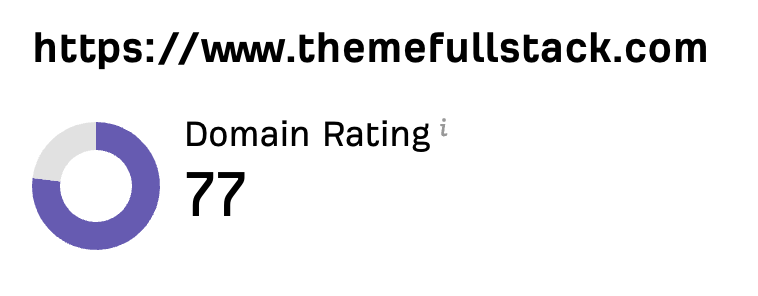 “私はマーケターではなく開発者です。私のShopifyテーマは口コミと広告だけで売れていました。Sorankのおかげで、SEOの組み立て方と上位表示される記事の書き方がようやくわかりました。監査で商品ページが遅すぎることも判明しました。2か月でオーガニックトラフィックは2倍になり、ShopifyテーマについてChatGPTで検索されたときの回答にも表示され始めています。しかも、週に約2時間の作業だけです。”
 Thème FullStackthemefullstack.com“Sorankのおかげで、私たちのSEOエージェンシーの働き方は大きく変わりました。すべてが一元化・自動化されたため、クライアント1社あたりにかける時間が大幅に減りました。以前は何時間もかかっていた作業が今では数分で終わり、ようやくビジネスの中で働くのではなく、ビジネスそのものに取り組めるようになりました。”
 Océane Bondismaison-leverage.com