



設定

当社はプライバシーを重視しており、ウェブサイトの基本機能に必要のない特定のストレージを無効にするオプションを提供しています。カテゴリーをブロックすると、ウェブサイトでの体験に影響が出る可能性があります。詳細はこちら

すべてのクッキーを受け入れる

SEO ROI Calculator: Project Your Return on Investment

Calculate the ROI of your SEO campaign in seconds. Enter your traffic, conversion rate and budget to project monthly and annual revenue uplift.

Sorank創業者 Thibault Besson-Magdelain

著者について

Thibault Besson-Magdelain

Sorank創業者。SEO経験5年以上、GEO愛好家。

Learn everything to know on SEO ROI Calculator !

作成日
4/9/26
最終更新日:
4/9/26
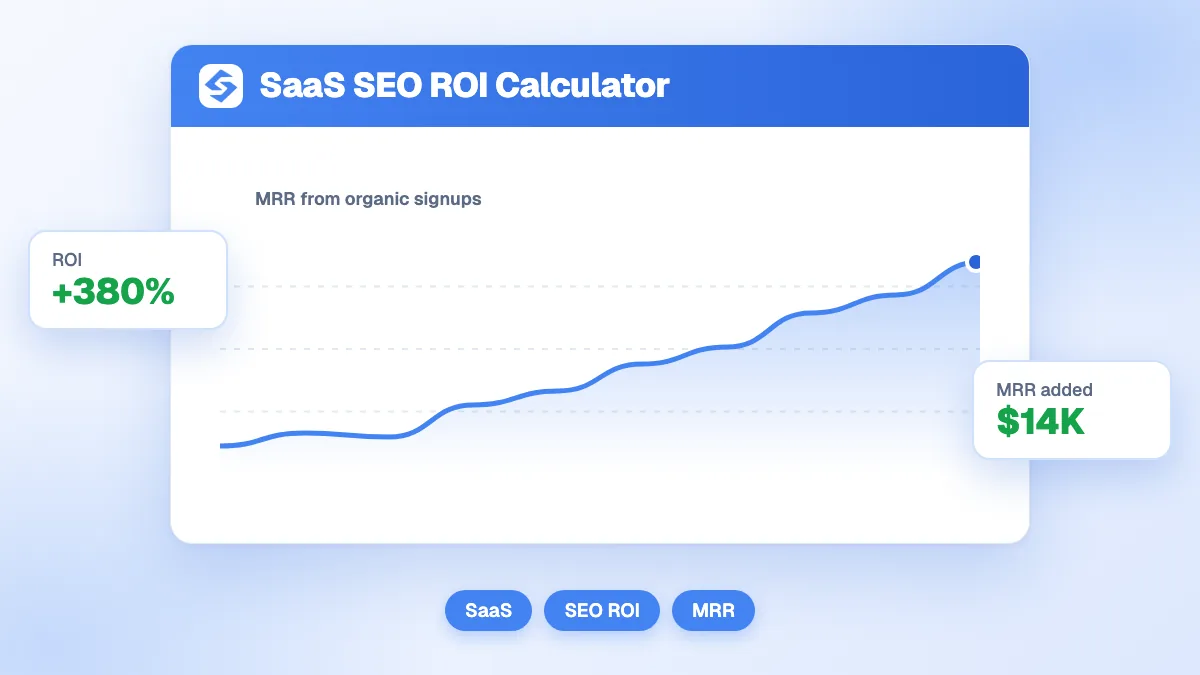
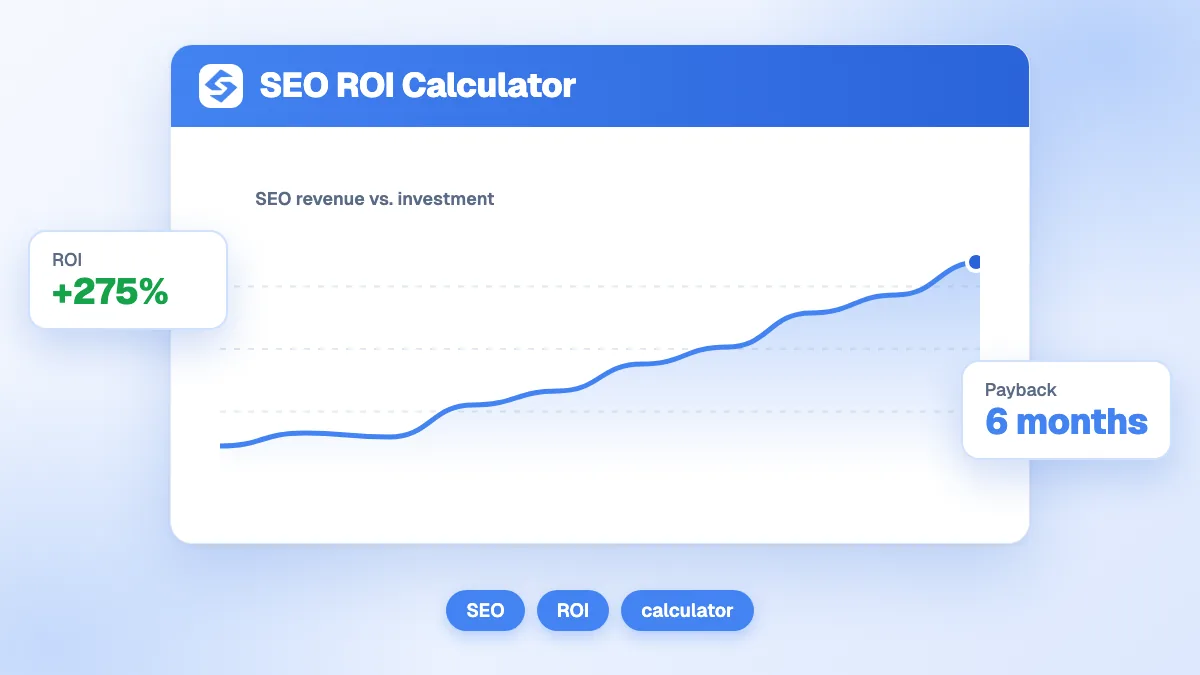
Screenshot of the SEO ROI Calculator showing monthly traffic, conversion rate, average order value and ROI fields

The SEO ROI calculator above projects the additional revenue and return on investment your SEO campaign can generate. It is aimed at marketers, SEO managers and business owners who want a clear financial picture before committing to a budget or pitching internally. Enter your current organic traffic, conversion rate, average order value, expected traffic uplift and monthly SEO spend, then read the results directly in the calculator.

How is SEO ROI calculated?

The formula used is straightforward and based on four inputs:

  • Extra visits per month = current monthly organic visits x targeted traffic uplift (%)
  • New conversions per month = extra visits x conversion rate (%)
  • Extra revenue per month = new conversions x average order or customer value
  • Monthly ROI = (extra revenue per month - monthly SEO budget) / monthly SEO budget x 100

Example: 1000 visits/month, 100% traffic uplift, 2% conversion rate, 120€ average order, 1000€ SEO budget. Extra visits: 1000. New conversions: 20. Extra revenue: 2400€/month. Monthly ROI: (2400 - 1000) / 1000 x 100 = 140%. Annual extra revenue: 28800€.

How to interpret and improve your SEO ROI

  • ROI below 0%: your SEO spend exceeds the revenue it generates at current performance levels. Either reduce the budget, increase the traffic target or improve conversion rate before scaling.
  • Improve conversion rate first: a move from 1% to 2% doubles the output without changing the SEO effort. Audit your landing pages, test CTAs and reduce friction in your checkout or contact flow.
  • Increase average order value: upselling or bundling raises the revenue per conversion without needing more traffic. This directly amplifies the ROI multiple.
  • Target high-intent keywords: informational traffic converts poorly. Prioritise transactional and commercial keywords that attract visitors closer to a buying decision.
  • Track AI visibility separately: AI Overviews on Google can reduce organic CTR at position 1 by up to 58% (Ahrefs, 2025). Factor this risk into conservative traffic uplift estimates.
  • Set a realistic time horizon: SEO ROI typically becomes positive between 6 and 12 months. Use the annual revenue figure to assess the full-year payback, not just the first month.

ROI benchmarks by industry

According to First Page Sage research (base investment of roughly 120000$/year), median SEO ROI reaches 702% for SaaS B2B, 317% for e-commerce and up to 1031% for financial services, with break-even between 7 and 10 months depending on the sector. These are indicative averages; actual results depend on your niche, competition and execution quality.

To monitor whether your organic traffic is actually following the trajectory the calculator projects, Sorank tracks keyword positions, AI-answer appearances and traffic changes in a single dashboard.

よくある質問

What conversion rate should I use if I do not know mine?

A cross-industry average is around 2.6% for organic traffic (First Page Sage). E-commerce typically sits between 1% and 3%, SaaS B2B between 2% and 7%. Start with 2%, then replace it with your real Google Analytics data as soon as possible.

The calculator shows a negative ROI. Should I stop my SEO?

Not necessarily. Negative ROI in the early months is common because SEO rankings take time to build. Adjust the inputs to find the traffic level at which ROI turns positive, then use that as your target milestone. If break-even requires an implausibly large traffic increase, revisit the budget or pricing strategy.

Does the calculator account for seasonality or compounding growth?

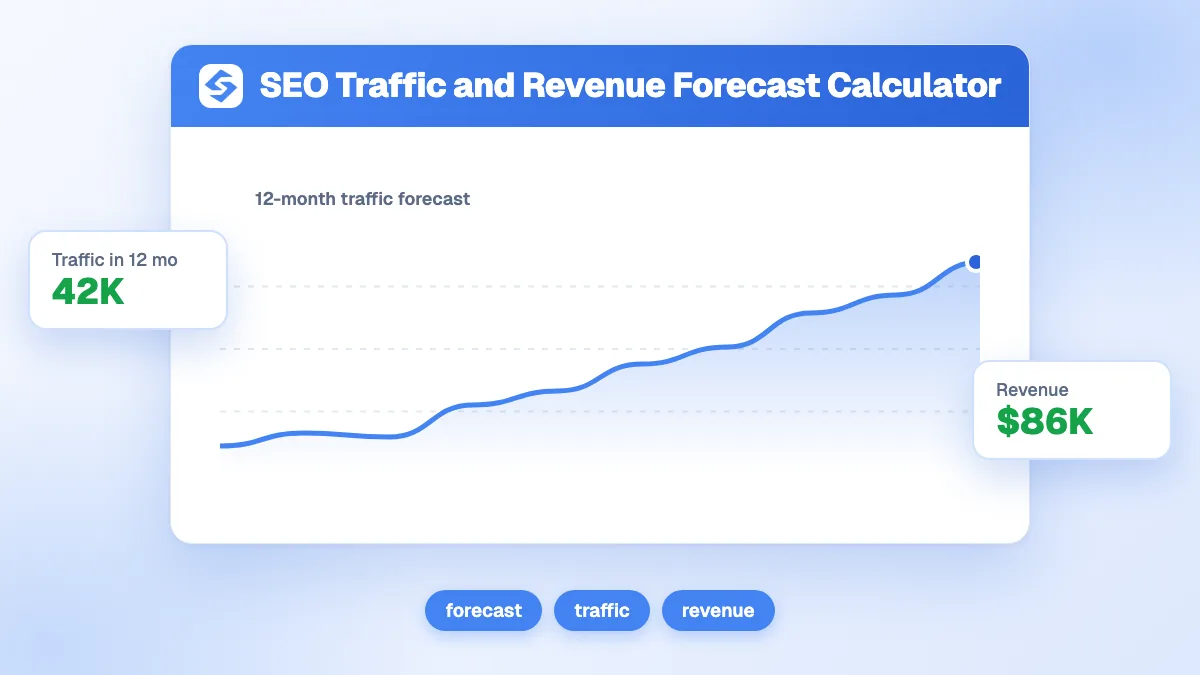
No, it uses a static monthly snapshot. For a projection that models compound monthly growth, use the SEO Forecast Calculator. For a break-even analysis, use the SEO Break-Even Calculator.

その他の無料SEOツール