
Preferences
Privacy is important to us, so you have the option of disabling certain types of storage that may not be necessary for the basic functioning of the website. Blocking categories may impact your experience on the website. More information
Privacy is important to us, so you have the option of disabling certain types of storage that may not be necessary for the basic functioning of the website. Blocking categories may impact your experience on the website. More information

A query is the exact phrase people type or speak into search. Learn how queries differ from keywords, the main query types and why they matter for SEO and GEO.








Founder Sorank, 7+ years in SEO.
Summary
Queries are the exact phrases a person types or speaks into a search engine or AI assistant to find what they want. They are the raw, real-world wording of a need, written by the user rather than chosen by a marketer, and every search system starts by interpreting it.
Want to go further? Ask
Queries are the words and phrases people enter into search engines and AI assistants when they want information, a product, or a specific website. A query is what the user actually types or says, in their own language, at the moment of need. It is the starting point of every search, and everything a search system does begins with reading that string of words.
Queries matter because they show intent in the user's own language, not in the language of the marketer. The closer your content matches the queries real people use, the easier it is to be found, whether the answer appears on a results page or inside an AI answer. Writing for real queries rather than for a guessed term is the habit that separates pages that get found from pages that do not.
A query is a phrase, a full question, a spoken sentence, or even a misspelled word that a user sends to a search system. The defining feature is that it is real input from a real person, messy and varied, rather than a tidy term chosen in advance. Google, Bing, and AI chatbots all receive queries in this raw form and must work out what the person wants.
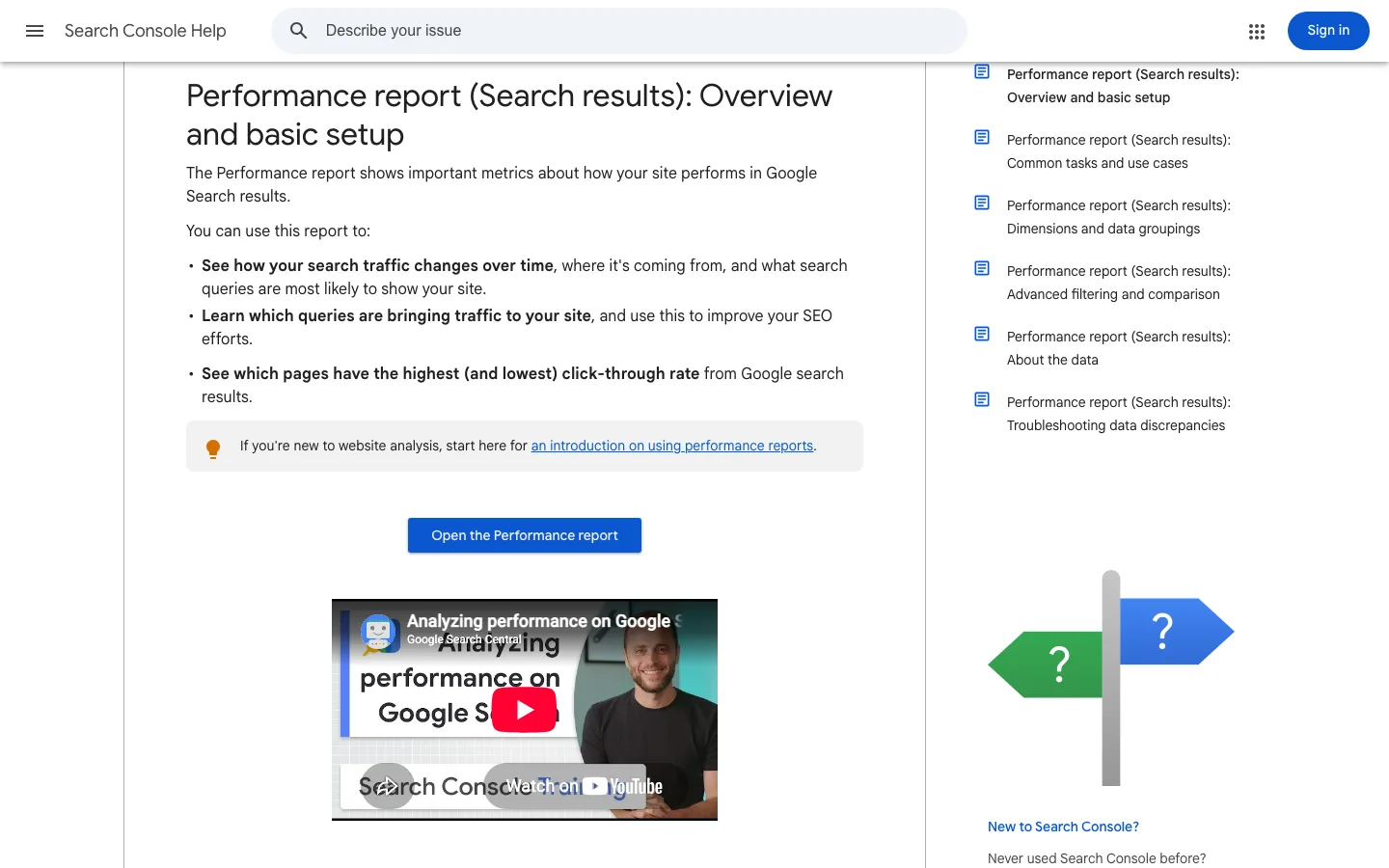
Site owners can see the queries behind their own traffic. In the Search Console help page on the Performance report, Google explains that the "queries" dimension "groups your data by the search query users typed". That is the view that shows the exact words that brought visitors to a page, which is far more useful than a list of keywords guessed in a meeting.
Queries also differ in length and form. Some are two words, some are full sentences, and some are questions typed the way a person would ask a friend. Voice search and mobile typing add more variety, so a single topic can produce dozens of distinct queries that all express the same underlying need.
A query is the real string a person enters, while a keyword is the term a marketer or analyst chooses to target and attach to a page. Many different queries can map to one keyword theme. For example, "how do I bake bread," "easy bread recipe," and "baking bread at home" are three distinct queries that an SEO might group under one topic.
This distinction changes how you work. You plan pages around keywords, but users search with queries, so the skill is anticipating the many ways a real person might phrase the same need. The exact queries in your reports show which wording already brings visitors and which wording you still miss.
Queries are traditionally sorted into three types by intent. Informational queries seek knowledge, such as "how to bake bread", with no purchase in mind. Navigational queries look for a specific brand, site, or page, such as a login page or a company name. Transactional queries aim to act or buy, often signaled by words like buy, order, price, or near me.
Each type calls for a different kind of page, and sending the wrong page is one of the most common reasons a well-written article fails to rank. The table below shows how the three types usually match to content.
| Query type | What the person wants | Example | Page that usually fits |
|---|---|---|---|
| Informational | To learn or understand something | how to bake bread | A guide or explainer |
| Navigational | To reach a known brand, site, or page | company login | The brand's own page |
| Transactional | To buy, order, or compare prices | buy bread maker price | A product or pricing page |
Types are a starting point, not a rule. Many queries mix two intents, so the surest guide is still the content that already ranks for them. Matching the right content to each type is the essence of serving search intent.
Reading the words alone is unreliable. A phrase like "best buy laptops" looks transactional, yet it can be navigational if the person wants a particular retailer's site. The surest way to read intent is to study what the results already reward. If the top results are guides, the query is informational; if they are product pages, it is transactional.
The same check applies to format and angle. A guide and a product page answer different needs, and so do a how-to article and a list of options. Looking at these signals tells you what a query really wants far better than the words on their own. Queries that contain a company name deserve their own reading, because a person who types a brand already knows where they want to go; see branded query.
Keep the reading practical. Pick ten queries for one topic, search each one in a private window, and write down what the top five results have in common. The pattern you see is the intent the page must match, and it takes less time than any formula.
In the AI era, queries are changing shape. People write longer, more conversational questions, a shift toward natural language queries and conversational search. A person who once typed three words may now type a full sentence with context about their budget, their country, and their goal.
Behind the scenes, an AI answer may not run a single search. Google's guide to AI features in Search says that AI Overviews and AI Mode "may use a 'query fan-out' technique", issuing multiple related searches across subtopics and data sources to build a response. One user question can therefore spawn several internal searches, a process described in query fanout, and each search can pull from a different page.
This means a page can be cited for a sub-question it answers well, even if it never targeted the exact phrasing the person used. Covering the full breadth of a topic and answering specific sub-questions clearly is now as important as matching a short term.
Several habits keep teams from using queries well. Each one is easy to fix once you see it.
The fix for most of these is the same: read the real queries, check the results for each one, and answer the question the person actually asked, in the first sentence of the section.
For classic SEO, queries are the bridge between a user need and your content. The queries that surface your pages show which needs you already serve and which you miss, and that evidence guides what to write next. Pages built around real queries, rather than guessed keywords, earn visibility that lasts longer than a single ranking push.
For GEO, the same logic applies to AI answers. An assistant that decomposes a question into sub-questions will cite the pages that answer those sub-questions clearly. Pages that state the answer early, use the real wording of the question, and support it with sources are the easiest to reuse.
To turn queries into a plan, start with a list of the real queries your pages already receive, group them by intent, and check which group has no page at all. The keyword research page of Sorank is a practical starting point for that grouping. For a fuller list of the families a keyword can belong to, read the types of keywords explained with examples.
A query is the real, in-the-moment phrase a person types or speaks, distinct from the keyword a marketer targets. Queries come in informational, navigational, and transactional forms, and the surest way to read their intent is to study what the results already reward. As AI reshapes search, queries are growing longer, more conversational, and more decomposed into sub-questions.
Winning means mapping your content to real queries and to the sub-questions they spawn. Start from the queries your site already receives, answer them directly, and keep checking how the list changes.
Sources
A query is the actual phrase a person types or speaks into search, in their own words. A keyword is the term a marketer chooses to target. Many different queries can map to one keyword theme, so you plan around keywords but users search with the wording they invent in the moment.
They are informational, navigational, and transactional. Informational queries seek knowledge, navigational queries look for a specific brand or page, and transactional queries aim to buy or act, often signaled by words like buy, order, or price.
AI assistants encourage longer, more conversational questions, and Google's documentation says AI Overviews and AI Mode may run multiple related searches, a technique called query fan-out. A page can be cited for a sub-question it answers well, so covering a topic thoroughly matters more than matching one exact phrase.
 “I tested Sorank on a real client site and it's insane. It does everything an agency would bill you $1500 a month for. It's going into production on that client now.”

 Guillaume Guersanguersanguillaume.com“We are an Ads agency and we wanted to get our SEO back on track once and for all. Sorank gave us a clear view of our site, helped us prioritize optimizations, and properly structure our content. The tool is easy to use, well designed for a team, and very practical for centralizing tracking without having to juggle multiple platforms. A very solid foundation to start fresh with our SEO.”
 Gaspard MadouiAds Agency
 “I just let the Sorank software do its thing, and now my DR is 25 and my page is ranking higher.”
 Lucas Flandrefoundertrace.fr“I specialized in GEO thanks to Sorank. The GEO Leaderboard allows me to show my clients their position vs competitors on ChatGPT. It’s a real commercial differentiator.”
 MélanieSEO Freelance“Great service, works well for our website and helps us understand how to improve it to rank better on Google and elsewhere. Congrats, keep going, I recommend it.”
 Hugo T.E-commerce merchant



















