
Preferences
Privacy is important to us, so you have the option of disabling certain types of storage that may not be necessary for the basic functioning of the website. Blocking categories may impact your experience on the website. More information
Privacy is important to us, so you have the option of disabling certain types of storage that may not be necessary for the basic functioning of the website. Blocking categories may impact your experience on the website. More information

A natural language query is a full question phrased the way people speak. Learn how AI search splits it up and how to write pages that answer it.








Founder Sorank, 7+ years in SEO.
Summary
Natural language queries are searches written the way a person speaks or writes, as a full question with its context, instead of a few keywords. AI assistants and search engines interpret its meaning and intent rather than only matching exact words, so the answer depends on what the person really wants to know.
Want to go further? Ask
Natural language queries are searches phrased in everyday, conversational language. Instead of typing running shoes women, a person asks which running shoes suit women with flat feet who run on pavement. The question states its context, so the engine can work out what to answer. This shift changes how people search, how engines read a request, and which pages get chosen. Content that answers the full question fits this change, which is central to conversational search.
A natural language query is a request written with ordinary grammar, the way a person would say it to another person. It can be a question, a short instruction, or a sentence with context such as who is asking, for what purpose, and under which constraints. Engines read the whole sentence, not only the nouns in it, which is why the same need can be phrased in many different ways.
This reading step relies on natural language processing, the set of methods that let software identify entities, grammar and meaning in text. Traditional search matched strings of characters. Natural language search tries to match the meaning of the request, then looks for passages that answer it.
The main difference is context. A keyword query leaves most of the specifics implied, so the engine has to guess them. A natural language query states them. The table compares two versions of the same need.
| Element | Keyword query | Natural language query |
|---|---|---|
| Length | Two or three words | A full sentence |
| Example | running shoes women | Which running shoes are best for women with flat feet who run on pavement? |
| Context | Implied, so the engine guesses it | Stated by the person |
| Matching | Terms that appear on the page | Meaning of the request and of each passage |
Keyword search asks the person to translate their need into the words the algorithm expects. Natural language search reverses that effort: the engine parses the grammar, understands synonyms, and keeps the intent in view. This is why search intent now matters more than the exact phrase typed.
In AI Mode, Google's Search Central team reports that users are asking longer and more specific questions, along with follow-up questions to dig even deeper. The cause is partly the interface: a chat box invites a full sentence, and a follow-up question keeps the context of the one before it.
Google explains that AI Overviews and AI Mode may use query fan-out, a technique for issuing multiple related searches across subtopics and data sources before writing one response. A long question is therefore split into several sub-questions, and each one retrieves passages that can answer part of it. In practice, a page that answers one clear sub-question can be picked up even if the full phrasing never appears on it.
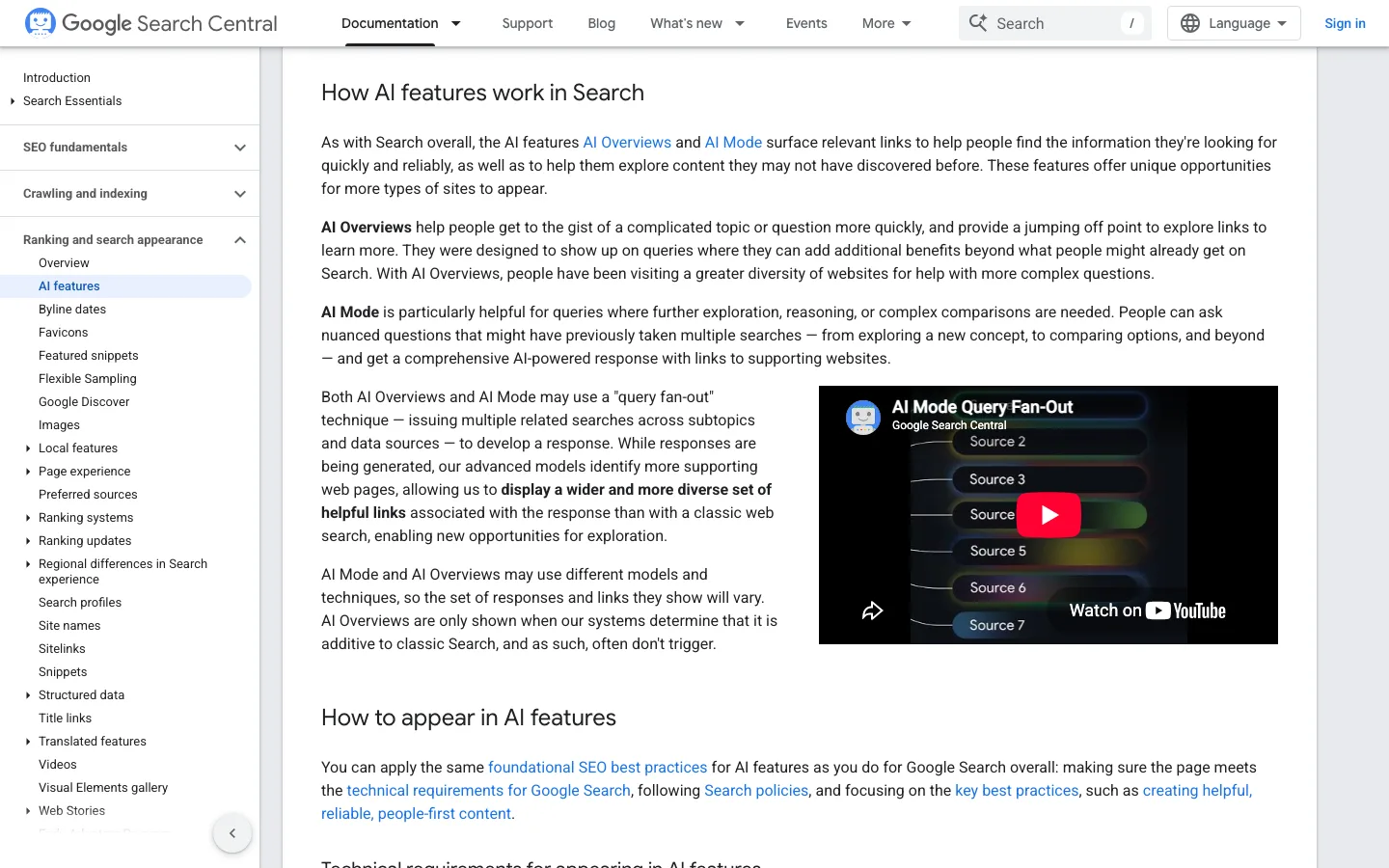
Google also says AI Mode is particularly helpful for queries that need further exploration, reasoning, or complex comparisons. Ranking for one exact phrase is therefore not the whole story, because the answer is built from several searches at once.
The Search Console performance report help page explains that the queries view groups data by the search query users typed. Among the 50 queries that brought the most clicks to sorank.com between 22 October and 19 November 2026, almost all are one to three words long, such as sorank, grok or local seo software, and none is written as a full question.
This does not cancel the trend. The two types coexist: short queries lead the clicks in this list, while full questions are the phrasing that conversational interfaces encourage. A page should target the short head term first, then answer the questions around it in the same place.
For SEO and generative engine optimization, a natural language query changes the target. Keyword tools often miss the long phrasing people use with AI assistants, so a whole layer of demand stays unaddressed. A page built around clear questions and direct answers also fits the format that search features extract, so the work pays off in both places.
To find these phrasings, start with Sorank's keyword research page, then read the guide to keyword research for AI search, with prompts, fan-out and trends.
A natural language query is a search written as a full question, rich in context, and engines now interpret its intent instead of matching keywords. Write for the question behind it, answer that question directly, and keep the answer easy to extract. To place these queries next to shorter phrases, read about long-tail keywords.
Sources
A keyword is a short string such as running shoes women, where the searcher leaves the context implied. A natural language query is a full question that states its context, such as which running shoes suit women with flat feet who run on pavement. The engine interprets the intent instead of matching exact terms.
Chat interfaces invite people to type full questions, and follow-up questions keep the context of earlier ones. Google's Search Central team reports that users in AI Mode are asking longer and more specific questions.
Start from the questions your audience actually asks, and answer each one directly under a question heading, in plain language. Cover the sub-questions inside one page, because AI search splits a long question into several related searches.
 “I tested Sorank on a real client site and it's insane. It does everything an agency would bill you $1500 a month for. It's going into production on that client now.”

 Guillaume Guersanguersanguillaume.com“We are an Ads agency and we wanted to get our SEO back on track once and for all. Sorank gave us a clear view of our site, helped us prioritize optimizations, and properly structure our content. The tool is easy to use, well designed for a team, and very practical for centralizing tracking without having to juggle multiple platforms. A very solid foundation to start fresh with our SEO.”
 Gaspard MadouiAds Agency
 “I just let the Sorank software do its thing, and now my DR is 25 and my page is ranking higher.”
 Lucas Flandrefoundertrace.fr“I specialized in GEO thanks to Sorank. The GEO Leaderboard allows me to show my clients their position vs competitors on ChatGPT. It’s a real commercial differentiator.”
 MélanieSEO Freelance“Great service, works well for our website and helps us understand how to improve it to rank better on Google and elsewhere. Congrats, keep going, I recommend it.”
 Hugo T.E-commerce merchant



















