
Preferences
Privacy is important to us, so you have the option of disabling certain types of storage that may not be necessary for the basic functioning of the website. Blocking categories may impact your experience on the website. More information
Privacy is important to us, so you have the option of disabling certain types of storage that may not be necessary for the basic functioning of the website. Blocking categories may impact your experience on the website. More information

Holistic SEO optimizes your whole site, not single tactics. Learn its five components, how it differs from traditional SEO and where to start.








Founder Sorank, 7+ years in SEO.
Summary
Holistic SEO is an approach to search engine optimization that treats a website as one connected system instead of a set of separate tactics. It looks at content, technical health, on-page elements, off-page authority and user experience together, so that a weak area does not hold back the rest of the site.
Want to go further? Ask
Holistic SEO means you judge your whole site, not one keyword or one link at a time. You plan the content, make the pages easy to crawl, connect them with internal links, earn trust from other sites and make each visit pleasant. The goal is one site that search engines and people can both understand.
The term is not an official Google definition. SEO vendors and blogs use it, and each one describes it a little differently. The version below follows the parts that most of those sources agree on, and it links each part to Google's own guidance where Google covers it.
Holistic SEO covers five areas. Each one has its own checks, and each one affects the others. Great content on a broken technical setup will still struggle, and a fast site with thin pages will not rank for the questions you care about. Our technical SEO and on-page SEO entries cover two of these areas in more depth.
| Component | What it covers | Quick check |
|---|---|---|
| Content | Pages that answer real questions with clear, original detail | Does each page answer a question a visitor would type? |
| Technical | Crawling, indexing, mobile use, security and errors | Can Google crawl and index the page without errors? |
| On-page | Title, meta description, URL, headings and links inside the page | Does the title match what the page actually delivers? |
| Off-page | Links, reviews and mentions from other sites | Do trusted sites link to this page for a clear reason? |
| User experience | Speed, layout, navigation and ads | Can a visitor read the answer without obstacles? |
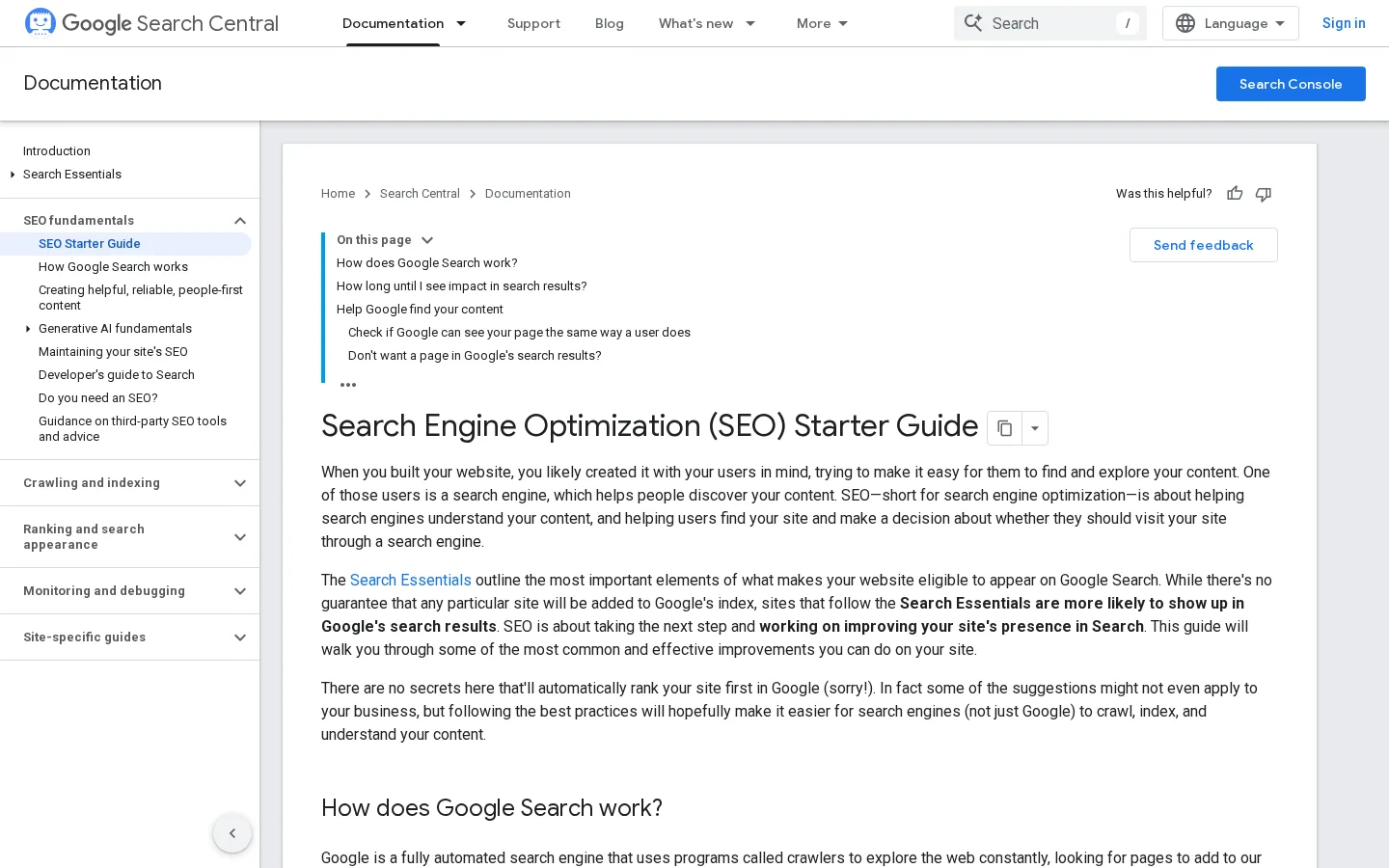
Google's SEO Starter Guide points in the same direction. It says that compelling, useful content will likely matter more than its other suggestions. It also says that sites that follow Search Essentials are more likely to show up in Google's search results. For titles, it asks for a title that is "unique to the page, clear and concise."
Traditional SEO often focuses on a few levers, such as keyword targeting and backlinks. Holistic SEO keeps those levers, but it checks how they work together across the whole site. A keyword page that no other page links to gets less from your work, even if it is well written.
The difference also shows up in how you judge success. A traditional audit might count keywords and backlinks. A holistic review also asks whether each page has a clear job, whether the pages around it support that job and whether a visitor can get what they came for. Google's guidance on creating helpful content makes the same point about page experience: site owners should not focus on only one or two aspects of it. For a wider view of how newer methods fit next to classic work, see our comparison of AI SEO and traditional SEO.
Start with a site-wide check, then work through the parts in order. The order matters: a page that cannot be crawled or indexed cannot rank, whatever its content.
Tip
Start with the pages that matter most: your home page, your main service or category page and the few pages that already bring the most visits. Fix those before you touch the rest of the site.
Sorank does this work on autopilot. Its Topical Cluster Generator maps related pages to avoid overlap, and the free Chrome extension gives you a quick SEO and GEO audit of any page you are looking at.
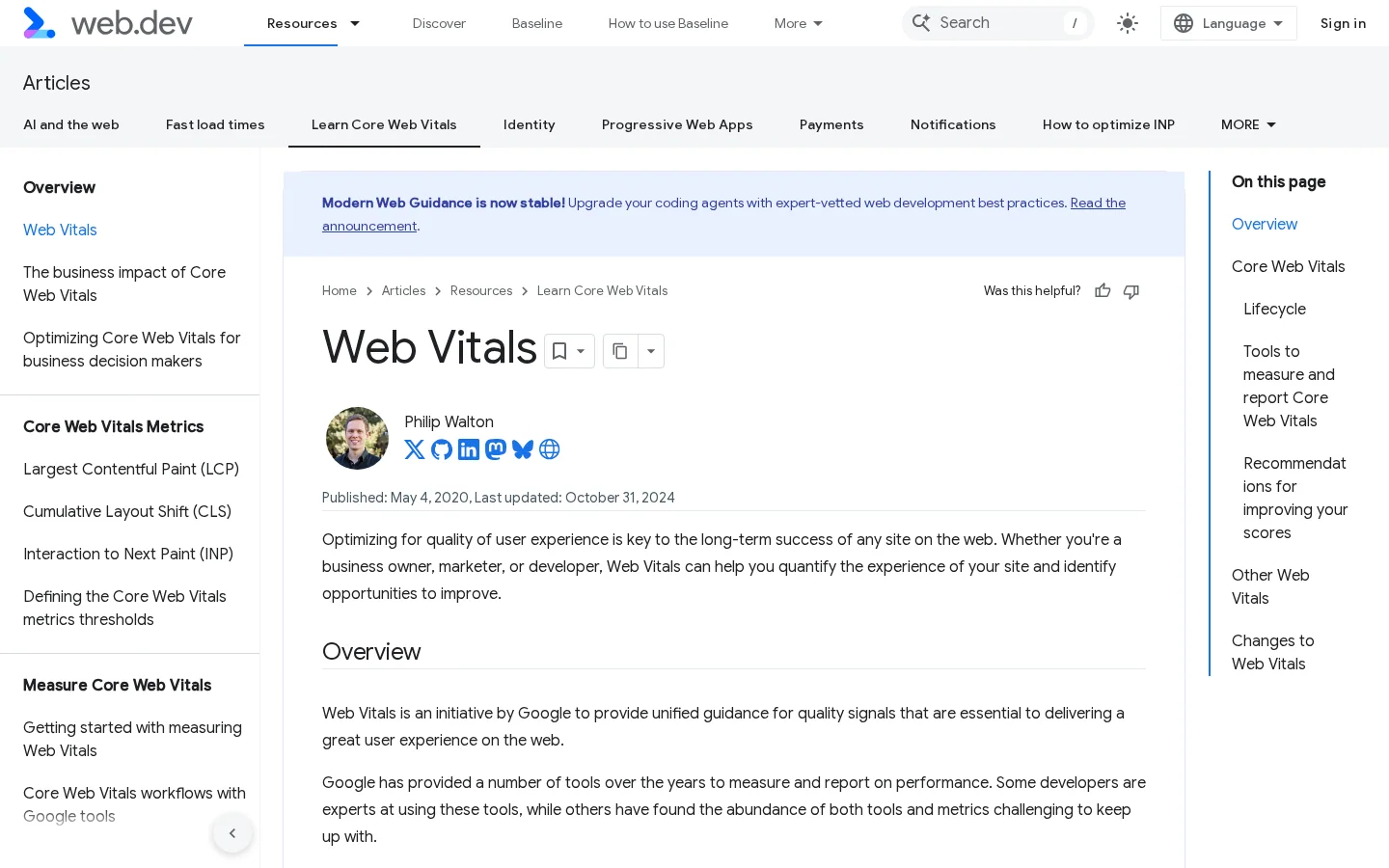
Measure the parts, then the whole. Google's Core Web Vitals give you a shared set of user experience checks. There are three metrics: Largest Contentful Paint, Interaction to Next Paint and Cumulative Layout Shift. According to web.dev, Google's developer site, a page is "good" when LCP is 2.5 seconds or less, INP is 200 milliseconds or less and CLS is 0.1 or less.
Track rankings, clicks and conversions per topic, not only per keyword. A topic is working when its pages rank together and send visitors to the page you want them to read or buy from. You can learn more about the speed side in our Core Web Vitals entry.
What it is: You polish one landing page while its related pages stay thin, unlinked or off-topic. How to spot it: Pages with no internal links pointing to them, or several pages that target the same query. How to fix it: Pick one main page per topic, merge or redirect the overlapping pages, and link the supporting pages to the main one.
What it is: Your content team publishes, but nobody checks whether Google can crawl and index the result. How to spot it: Pages that return errors, are blocked by robots rules or never appear in the index. How to fix it: Run a technical check on every new page before you publish, and follow the technical requirements in Google Search Essentials, which cover the bare minimum a page needs to appear in results.
What it is: Pages look fine on a desktop but slow down, shift or hide the text on a phone. How to spot it: Open your key pages on a phone and check them against the Core Web Vitals thresholds above. How to fix it: Compress images, reserve space for images and ads so the content does not jump, and remove any pop-up that blocks reading.
Search engines and AI answer tools both need to find, read and trust your pages. A site where each page has a clear job, related pages link to each other and the technical basics work makes that job easier. The same habits serve both goals, which is why holistic SEO sits behind generative engine optimization (GEO). AI answers still add their own checks, so measure them separately from your rankings.
Holistic SEO means treating your site as one system. Start with a technical check, map your topics, connect your pages, earn trust from relevant sites and measure the whole. Use the five components as a checklist, and fix the weakest one first.
Sources
No. Google does not define holistic SEO, and the term comes from SEO vendors and blogs. Each source describes it a little differently, so treat it as a way of thinking about your whole site, not as a formal standard.
Traditional SEO often focuses on a few levers, such as keywords and links. Holistic SEO keeps those levers but checks how they work together across the whole site.
Start with a technical check, because a page that cannot be crawled or indexed cannot rank. Then group your pages by topic and fix the content and internal links of your most important pages first.
 “I tested Sorank on a real client site and it's insane. It does everything an agency would bill you $1500 a month for. It's going into production on that client now.”

 Guillaume Guersanguersanguillaume.com“We are an Ads agency and we wanted to get our SEO back on track once and for all. Sorank gave us a clear view of our site, helped us prioritize optimizations, and properly structure our content. The tool is easy to use, well designed for a team, and very practical for centralizing tracking without having to juggle multiple platforms. A very solid foundation to start fresh with our SEO.”
 Gaspard MadouiAds Agency
 “I just let the Sorank software do its thing, and now my DR is 25 and my page is ranking higher.”
 Lucas Flandrefoundertrace.fr“I specialized in GEO thanks to Sorank. The GEO Leaderboard allows me to show my clients their position vs competitors on ChatGPT. It’s a real commercial differentiator.”
 MélanieSEO Freelance“Great service, works well for our website and helps us understand how to improve it to rank better on Google and elsewhere. Congrats, keep going, I recommend it.”
 Hugo T.E-commerce merchant



















