
Preferences
Privacy is important to us, so you have the option of disabling certain types of storage that may not be necessary for the basic functioning of the website. Blocking categories may impact your experience on the website. More information
Privacy is important to us, so you have the option of disabling certain types of storage that may not be necessary for the basic functioning of the website. Blocking categories may impact your experience on the website. More information

A content mill sells cheap articles written fast by freelancers. Learn how it works, its pros and cons, and how Google treats mill content.








Founder Sorank, 7+ years in SEO.
Summary
A content mill is a company or platform that produces large volumes of online content at low prices by paying freelance writers small per-word or per-article fees. It favors speed, quantity and keyword targeting over expertise and research, so its output is often thin, generic and written mainly for search engines.
Want to go further? Ask
A content mill sits between businesses that need a lot of text and writers who need work. The client orders an article on a keyword, the platform sets a low price and a short deadline, and a freelance writer delivers it. The model works on volume: the client gets cheap pages, the platform takes a margin on each order, and the writer earns little per piece. The term is pejorative. Writers use it for platforms that pay too little, and SEOs use it for sites full of interchangeable articles.
A content mill works like an assembly line: orders come in, they are split into small tasks, and many writers fill them fast. The typical flow has five steps.
The name comes from this logic. Like a mill that grinds grain, the platform turns keywords into pages at a steady rate. Around 2009 and 2010, Demand Media and its site eHow became the textbook example: thousands of how-to articles commissioned from freelancers to match popular searches. The same model now runs on AI text generators, with even less human time per page.
A content mill sells articles to clients, a content farm publishes them on its own sites for ad revenue, and a content agency sells researched content with editing and strategy. People often mix the three terms, but the business model differs.
| Model | Who publishes | How it earns money | Typical quality |
|---|---|---|---|
| Content mill | The client, on their own site | Margin on cheap articles sold by the word | Generic, fast, little research |
| Content farm | The farm, on its own sites | Advertising on high traffic pages | Mass produced, built for clicks |
| Content agency | The client | Projects or retainers priced on expertise | Researched, edited, tied to a strategy |
A content factory is a fourth, neutral term: an organized process that publishes content at scale. Volume alone does not make a mill. What makes a mill is volume without expertise, research or editing.
For a writer, a content mill offers easy entry and steady small jobs, but at low pay and with little room to grow. It can be a first step, rarely a career.
Writing for a content mill: what you gain and what you lose
If you write for a mill, use it on purpose. Pick one niche, keep your best pieces, ask clients for testimonials, and move to direct clients once you have samples. The skills that raise your rate are the ones a mill does not pay for: research, interviews, data and a clear point of view. Our guide to content writing skills and types covers what clients pay more for.
Usually not for pages you want to rank or get cited. A mill gives you cheap words, but the words are rarely what your page lacks.
The appeal is clear: a low price per article and fast delivery. The real cost shows later. A writer paid a few dollars cannot test your product, talk to your customers or check a regulation. The result looks like every other page on the topic, what we call commodity content. You then pay twice: once for the article, and once for the time your team spends fixing facts, tone and structure. A free cost per article calculator helps you compare the true cost of each option, including editing time.
A mill can make sense for low-stakes text, such as drafts an expert will rewrite. For anything that must show expertise, keep it in house.
Tip
Before you order, write down three facts only your company knows about the topic (a test result, a customer question, a price, a process). If the article cannot include them, a mill is the wrong supplier.
Google does not penalize an article because a freelancer wrote it cheaply. It demotes content that is low value or produced at scale mainly to rank. The difference matters.
Google's spam policies define scaled content abuse as many pages "generated for the primary purpose of manipulating search rankings and not helping users". The policy applies whatever the method: human writers, automation or a mix. A site filled with mill articles that only rephrase other pages fits that description.
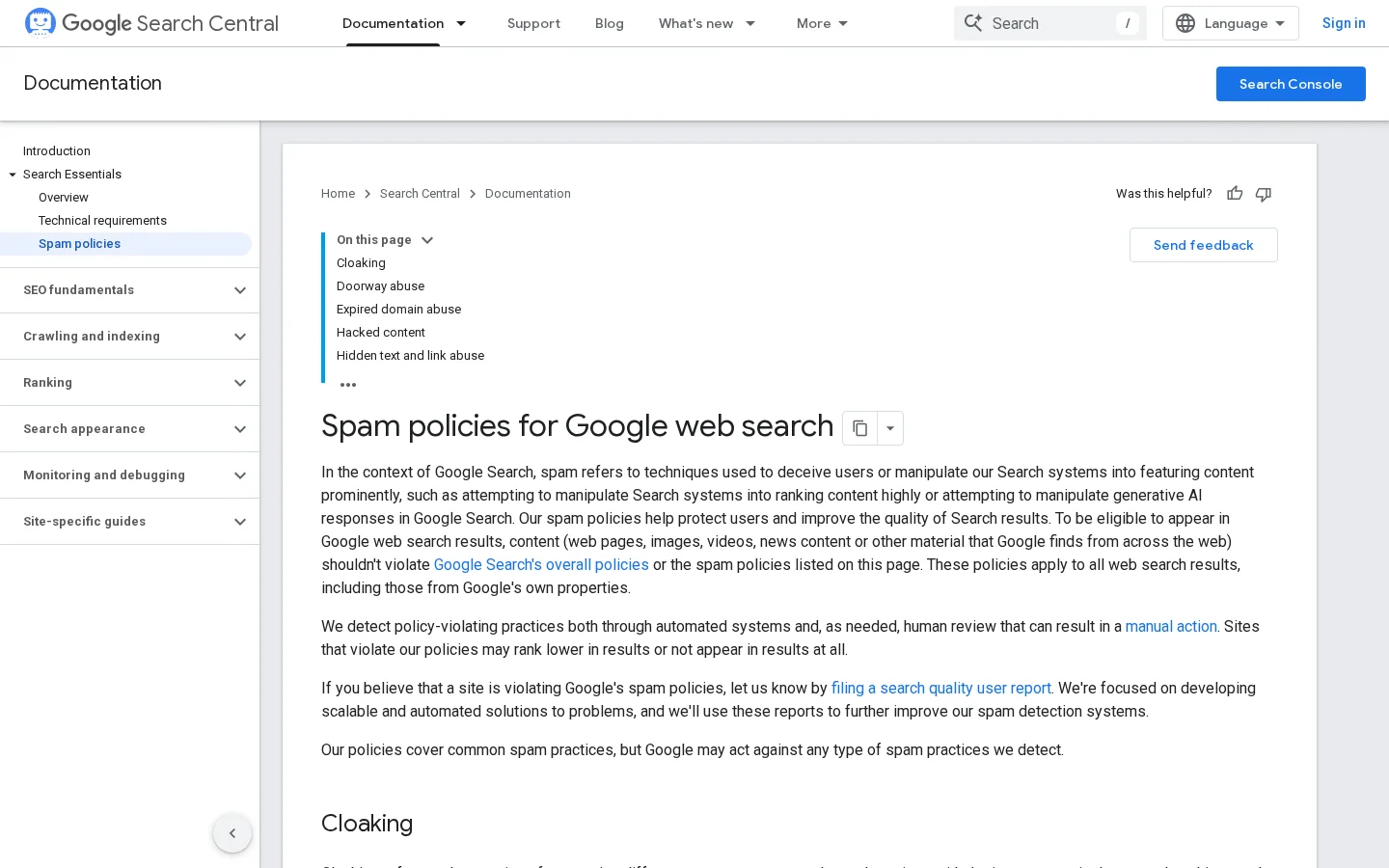
Google already targeted this model in 2011. The Google Panda update lowered the rankings of low-quality sites, and in its May 2011 guidance on building high-quality sites, Google asked site owners: "Is the content mass-produced by or outsourced to a large number of creators". The same question is still in Google's current guidance. Today, the signal no longer comes from a separate update: mill pages simply fail Google's helpful content standard and the quality checks of each core update. If your traffic dropped after a spam update, see how to tell if a Google spam update hit you.
You spot a mill article by what it lacks: first-hand experience, specific facts and a reason to exist beyond the keyword. Google's guide to creating helpful, reliable, people-first content lists warning questions that work as a checklist, such as "Are you mainly summarizing what others have to say without adding much value?" and "Are you writing to a particular word count because you've heard or read that Google has a preferred word count?"
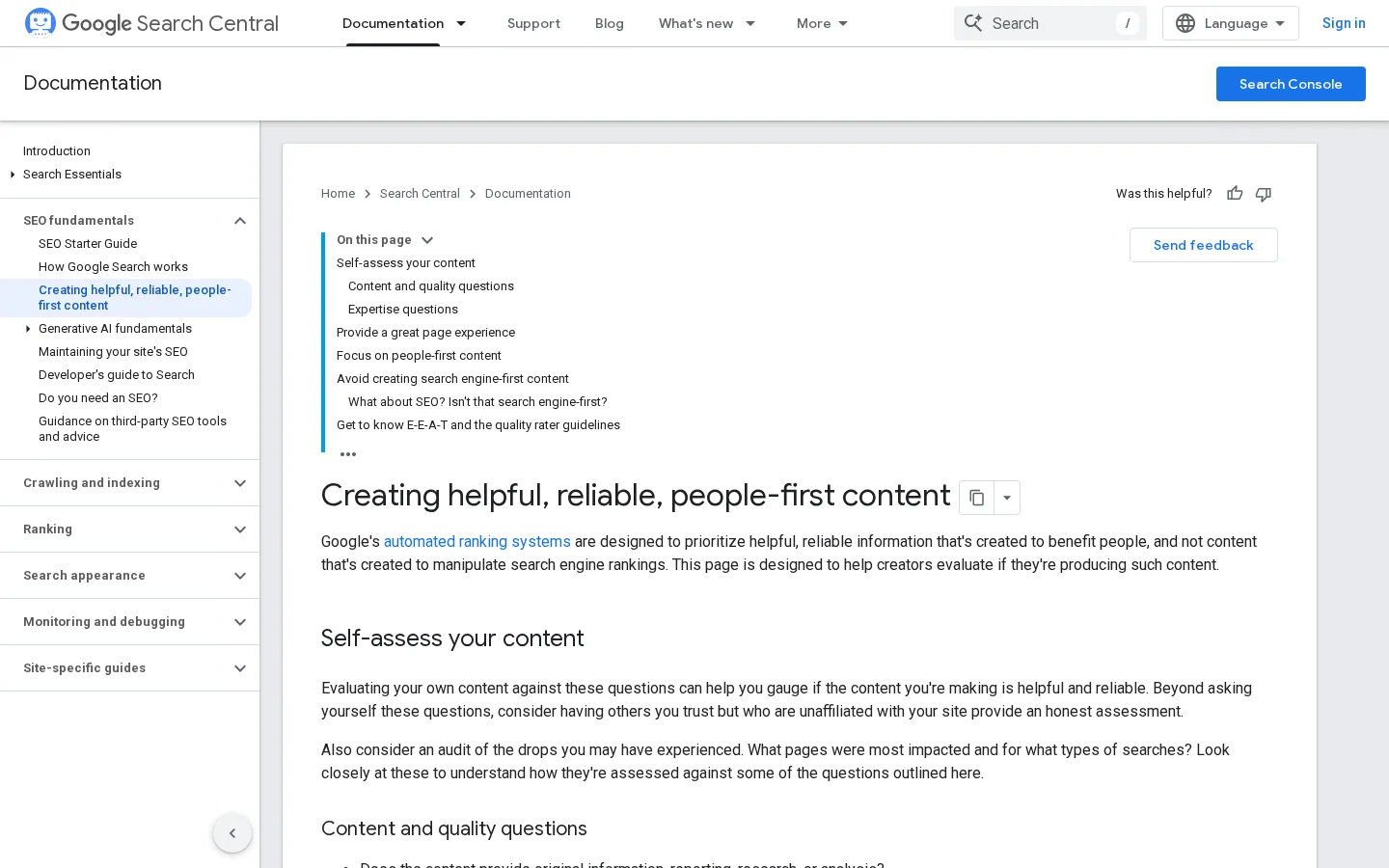
Signs of a content mill article
The same checks apply to suppliers. A platform that prices by the word only, lets writers bid against each other and offers no editor review works like a mill, whatever it calls itself.
They can be, if you use them the same way: many pages, no research, no review. The tool is not the issue; the method is.
Google's spam policies list "using generative AI tools or other similar tools to generate many pages without adding value for users" as an example of scaled content abuse. A site that publishes hundreds of unedited AI pages has rebuilt a content mill, without the writers. We cover this risk in our entry on AI spam and how to avoid penalties.
Used with a method, AI does the opposite. Sorank's AI blog article generator starts from keyword research and your own expertise, then writes and publishes articles on your site on autopilot. On the published LV3D case study, a French 3D printing specialist, dozens of articles a month grounded in the company's expertise multiplied organic traffic by 4 in 5 months, with daily clicks up from about 240 to over 1000.
Most problems with mill content come from how it is ordered and published, not from the writers.
It matters because both Google and the AIs reward the opposite of what a mill produces. Google ranks pages that show experience and expertise, the signals described by E-E-A-T. AI assistants such as ChatGPT, Gemini and Claude cite pages that add a clear, specific fact they cannot find elsewhere. A mill article that rephrases the top results adds nothing to cite.
Mill content also has a site-wide cost. A large share of weak pages can lower how search engines judge the whole site, so your good pages carry the bad ones. For GEO, generic pages make your brand invisible: when ten sites say the same thing, the AI quotes the one with the original data, not yours.
A content mill trades expertise for volume: cheap articles, written fast by underpaid writers, built around a keyword. For writers, it can be a short first step. For businesses, it rarely pays off, because Google's quality systems and the AIs both look for what mills cannot supply: experience, facts and original detail. Publishing at scale is not the problem. Publishing at scale without research and review is.
Sources
It can be worth it as a short first step, to practice with briefs and deadlines and to earn while you build samples. The pay is low and you rarely get feedback or a byline, so plan to move to direct clients once you have a portfolio.
Not exactly. A content mill sells cheap articles that clients publish on their own sites, while a content farm publishes mass-produced articles on its own sites to earn advertising revenue. Both put volume ahead of expertise, which is why people often use the terms as synonyms.
Google does not penalize a page because of who wrote it or how cheaply. It demotes low-value content and treats many pages produced mainly to manipulate rankings as scaled content abuse, whether humans or AI wrote them. Mill articles that only rephrase other pages are exposed to that risk.
 “I tested Sorank on a real client site and it's insane. It does everything an agency would bill you $1500 a month for. It's going into production on that client now.”

 Guillaume Guersanguersanguillaume.com“We are an Ads agency and we wanted to get our SEO back on track once and for all. Sorank gave us a clear view of our site, helped us prioritize optimizations, and properly structure our content. The tool is easy to use, well designed for a team, and very practical for centralizing tracking without having to juggle multiple platforms. A very solid foundation to start fresh with our SEO.”
 Gaspard MadouiAds Agency
 “I just let the Sorank software do its thing, and now my DR is 25 and my page is ranking higher.”
 Lucas Flandrefoundertrace.fr“I specialized in GEO thanks to Sorank. The GEO Leaderboard allows me to show my clients their position vs competitors on ChatGPT. It’s a real commercial differentiator.”
 MélanieSEO Freelance“Great service, works well for our website and helps us understand how to improve it to rank better on Google and elsewhere. Congrats, keep going, I recommend it.”
 Hugo T.E-commerce merchant



















