
Preferences
Privacy is important to us, so you have the option of disabling certain types of storage that may not be necessary for the basic functioning of the website. Blocking categories may impact your experience on the website. More information
Privacy is important to us, so you have the option of disabling certain types of storage that may not be necessary for the basic functioning of the website. Blocking categories may impact your experience on the website. More information

Commodity content is generic, interchangeable content anyone can write. Learn how it differs from original content and how to avoid it.








Founder Sorank, 7+ years in SEO.
Summary
Commodity content is generic content that anyone can write from information available everywhere. It is interchangeable: a reader could swap it for another page and learn the same thing. Original content adds data, first-hand experience or a clear point of view that others cannot copy.
Want to go further? Ask
Commodity content is the kind of page that repeats what the top results already say. It covers the same points in the same order, with no new fact, example or opinion. Search engines and AI models have thousands of pages like it to choose from, so a page of this kind has little reason to be picked. This guide shows how to spot it, what to write instead, and how to avoid producing it at scale.
Commodity content answers a question with what anyone could find in a few minutes. Original content answers the same question with something new: a measurement, a test, a customer story or a clear position that the writer can defend. The difference is not the length or the style of the writing. It is whether the page gives the reader something they cannot get from the other results.
Here is a simple way to see the difference. Two pages can have the same title and the same headings. The first one only rewrites the other pages. The second one shows a real result from the writer's own work. Only the second one gives a reader a reason to stay.
Most commodity content follows a few familiar shapes. The table below compares the common versions with a stronger version of the same topic.
| Commodity version | Original version |
|---|---|
| "10 tips for better SEO" | The three changes that moved one site's pages, with the before and after figures from that site |
| "What is a backlink?" with a textbook definition | A definition plus a worked example from a site you audited, with the links you found and what you did next |
| "Top 10 things to consider when buying running shoes" | Why one customer's shoes wore out on a long run, with a wear pattern analysis of those shoes |
The first column can be written in a few minutes by anyone with a search bar. The second column needs something only the writer has: data, a case or a judgment.
A "10 tips" list is the most common form of commodity content. The problem is not the format. The problem is that the tips are the same as the ones on the ten pages already ranking. Google's guidance on helpful content asks: "Does the content provide substantial value when compared to other pages in search results?" A list that repeats those pages gives Google no reason to rank it above them.
A list can still work if each point comes with something you tested, measured or saw yourself. Keep the list, but replace each generic tip with a result you can show. Drop the tips you cannot support.
Use this check before you publish. If you answer yes to two or more of these questions, the page is commodity content.
The check takes a few minutes. It is faster to fix a page before it goes live than to rewrite it after it stops performing.
Add one of three things that only you can supply: data, experience or a point of view. Data means figures from your own tests, customers or tools, with the method stated. Experience means what happened when you did the work, including what failed. A point of view means a clear answer that some readers may disagree with.
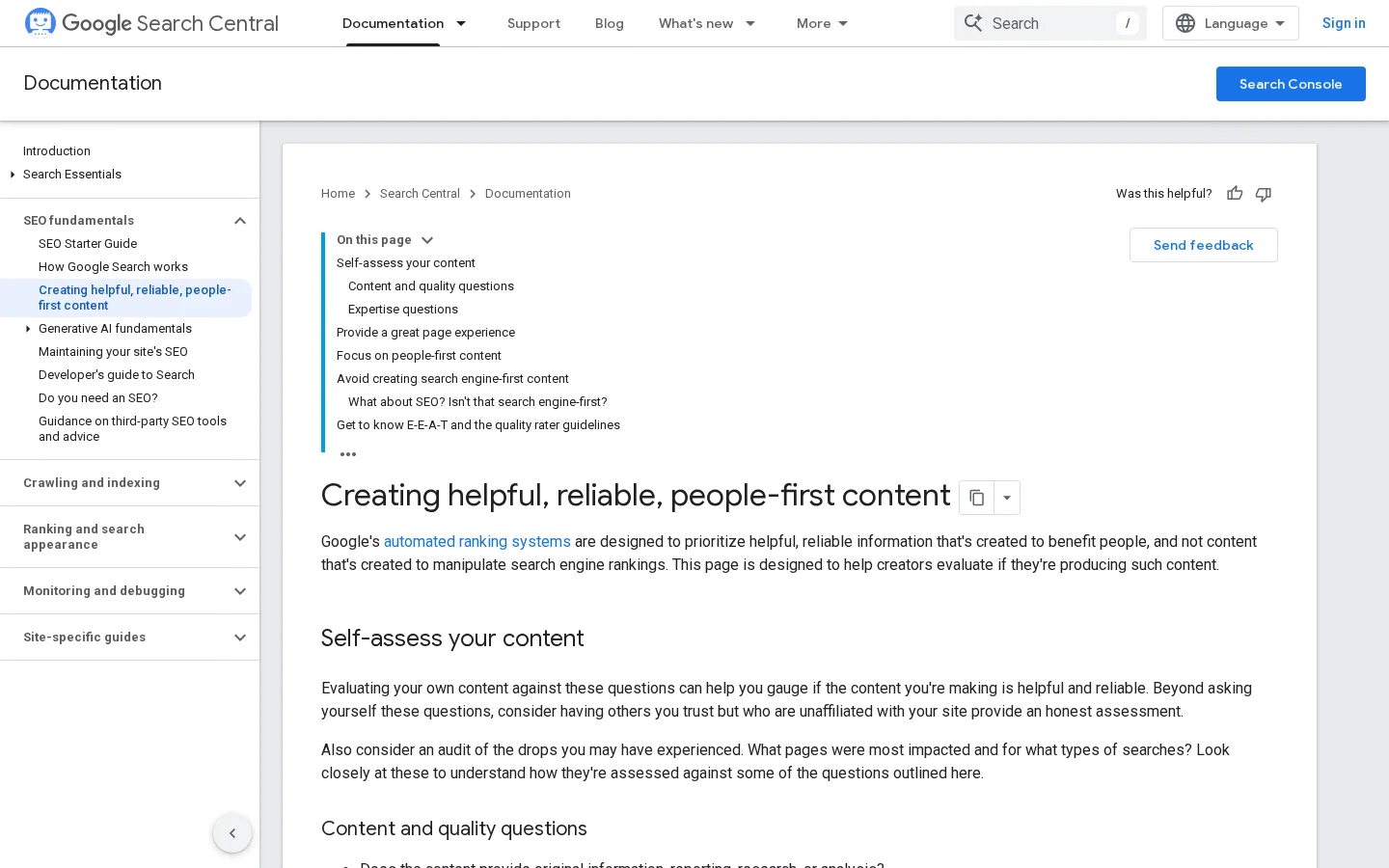
Google's guidance points the same way. Its helpful content questions include: "Does the content provide original information, reporting, research, or analysis?" If the honest answer is no, the page needs more work before it needs more keywords.
For the wider set of signals that search engines and AI tools use to judge a page, read what search engines and AIs use to judge pages.
Google does not use the words "commodity content" in its rules. The term comes from presentations. In April 2026, Search Engine Roundtable reported slides that Google's Danny Sullivan showed at a Toronto event, with a "commodity" and a "non-commodity" example for each sector. The reported examples are a clear illustration of the idea, but they are not a formal rule.
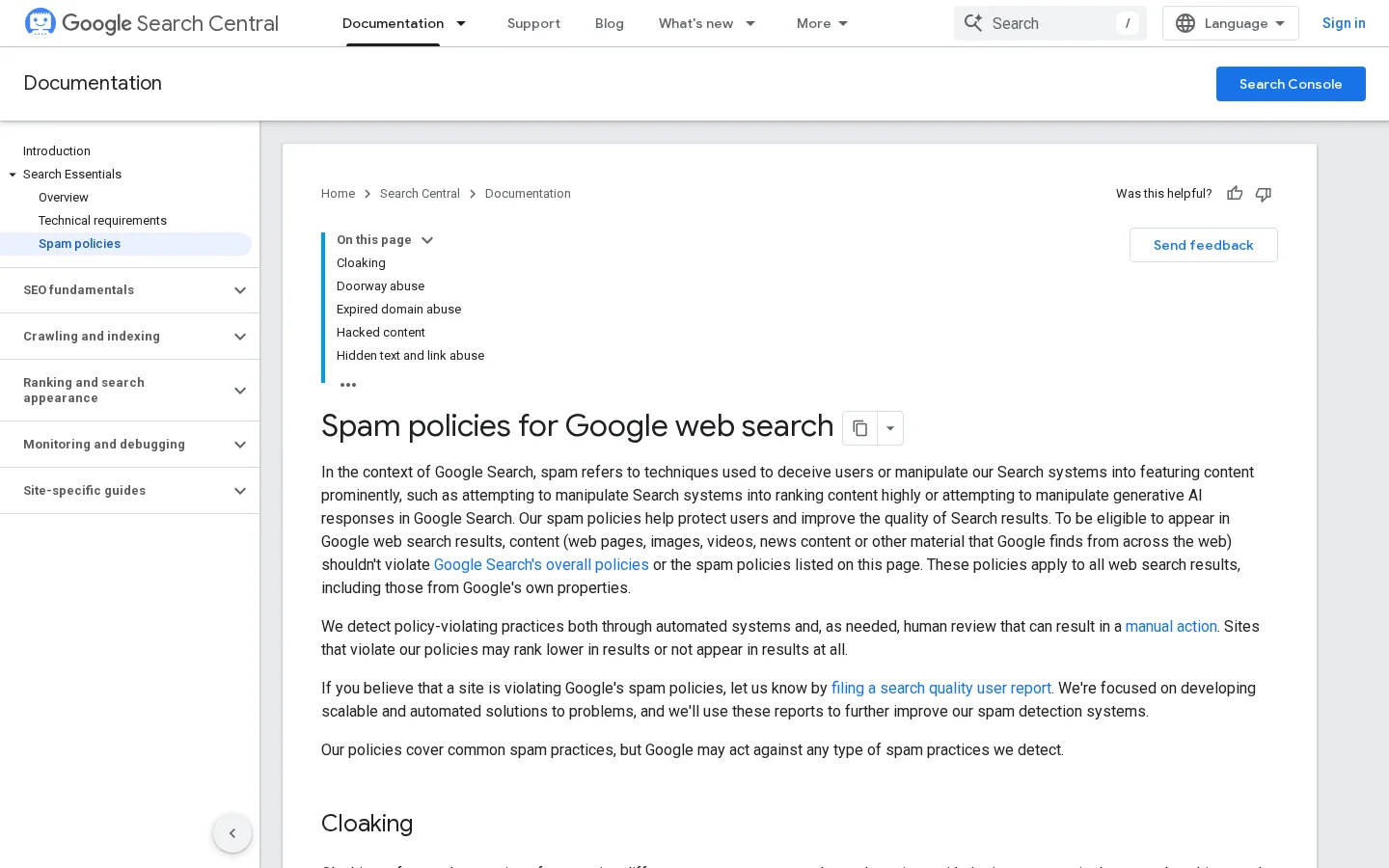
What Google does act on is spam. Its spam policies define scaled content abuse as "when many pages are generated for the primary purpose of manipulating search rankings". One of the examples given is "Using generative AI tools or other similar tools to generate many pages without adding value for users". The policy covers mass-produced pages with no value, whatever tool wrote them.
Learn more about the risk in AI spam and how to avoid penalties.
Not quite. Thin content is a page with little substance, often short or almost empty. Commodity content can be long and well written. It is still generic, because it says what everyone else says. Both fail the same test: a reader should find something on the page that they cannot find anywhere else. If you want a checklist for the short and empty kind, see thin content and how to fix low-value pages.
For search, a generic page competes with the same sources as many other sites. Google's question about value compared with other results is a direct test of that competition. A page that adds nothing new has no clear reason to win the ranking.
For GEO, AI tools choose sources that give them something specific to quote, such as a figure, a method or a clear position. A page that only repeats the common answer gives them nothing to attribute to you. Being named in an AI answer depends on what your page says that the others do not.
If you already have many old pages that repeat the top results, Sorank can help you rewrite your old pages on autopilot. A rewrite is only as original as the facts behind it, so give the tool your own data, examples and position before you publish.
Commodity content is generic and interchangeable, so any other site can replace it. Before you publish, run the short check, and make sure the page holds at least one thing only you can supply. Then keep the rest short and direct.
Sources
Not quite. Thin content is a page with little substance. Commodity content can be long and well written, but it still says what everyone else says. Both fail the same test: the reader should find something new on the page.
Yes, and that is the risk. Google's spam policies name generating many pages with generative AI and no added value for users as scaled content abuse. The test is the same whatever tool wrote the page: does it add something new?
Ask whether the page says anything the top results do not. If you could change the company name and the examples and the text would still fit any site, it is commodity content. Add something from your own work or a clear opinion.
 “I tested Sorank on a real client site and it's insane. It does everything an agency would bill you $1500 a month for. It's going into production on that client now.”

 Guillaume Guersanguersanguillaume.com“We are an Ads agency and we wanted to get our SEO back on track once and for all. Sorank gave us a clear view of our site, helped us prioritize optimizations, and properly structure our content. The tool is easy to use, well designed for a team, and very practical for centralizing tracking without having to juggle multiple platforms. A very solid foundation to start fresh with our SEO.”
 Gaspard MadouiAds Agency
 “I just let the Sorank software do its thing, and now my DR is 25 and my page is ranking higher.”
 Lucas Flandrefoundertrace.fr“I specialized in GEO thanks to Sorank. The GEO Leaderboard allows me to show my clients their position vs competitors on ChatGPT. It’s a real commercial differentiator.”
 MélanieSEO Freelance“Great service, works well for our website and helps us understand how to improve it to rank better on Google and elsewhere. Congrats, keep going, I recommend it.”
 Hugo T.E-commerce merchant



















