
Preferences
Privacy is important to us, so you have the option of disabling certain types of storage that may not be necessary for the basic functioning of the website. Blocking categories may impact your experience on the website. More information
Privacy is important to us, so you have the option of disabling certain types of storage that may not be necessary for the basic functioning of the website. Blocking categories may impact your experience on the website. More information

A content factory is a repeatable system for publishing useful pages at scale. Learn how to build one and which Google rules to respect.








Founder Sorank, 7+ years in SEO.
Summary
Content factory is a repeatable system that plans, writes, publishes and updates content at scale, so a business can answer many search queries and get cited by AI models without rebuilding its process for each page. Done well, it publishes useful pages on purpose, not volume for its own sake.
Want to go further? Ask
Content factory borrows its name from manufacturing. The same steps run again and again, and each run produces a finished piece. In marketing, that piece is a page: an article, a product guide, a comparison or a definition. The factory is the set of roles, tools and rules that keeps this output steady.
A content factory has four parts: a plan of topics, a production line that writes each page, a publishing step, and a review that shows what works. Many teams have the first three and skip the fourth. Without the review, you publish more but learn nothing.
The usual roles are a content lead who picks the topics, a writer, an editor and someone who owns publishing. A small business can have one person doing two or three of these jobs.
The table below shows the difference between ad hoc blogging and a content factory.
| Part | Ad hoc blogging | Content factory |
|---|---|---|
| Topics | Chosen when someone has an idea | Planned from real search questions |
| Briefs | Written from memory | Written before each page |
| Checks | Done if there is time | An editor checks every page |
| Updates | Rare | Scheduled every month |
Build it in six steps. Start with one topic and one page type. Add more only when the first pages bring traffic.
Step 6 matters most over time. Pages lose traffic as they age. The reasons are explained in our definition of content decay.
A content factory produces pages that answer one specific question each. Common examples are:
Some factories also build pages from a template and a data set, for example one page per city. That method is called programmatic SEO. It needs more care, because many near-identical pages can look like low-value content.
A real example comes from a French 3D printing shop. Sorank found the search terms buyers use for 3D printers, filaments and training, then published articles on the shop's website on autopilot. The published case study says organic traffic was multiplied by 4 in 5 months, on a site that was already strong. Read the page for the exact figures and the context.
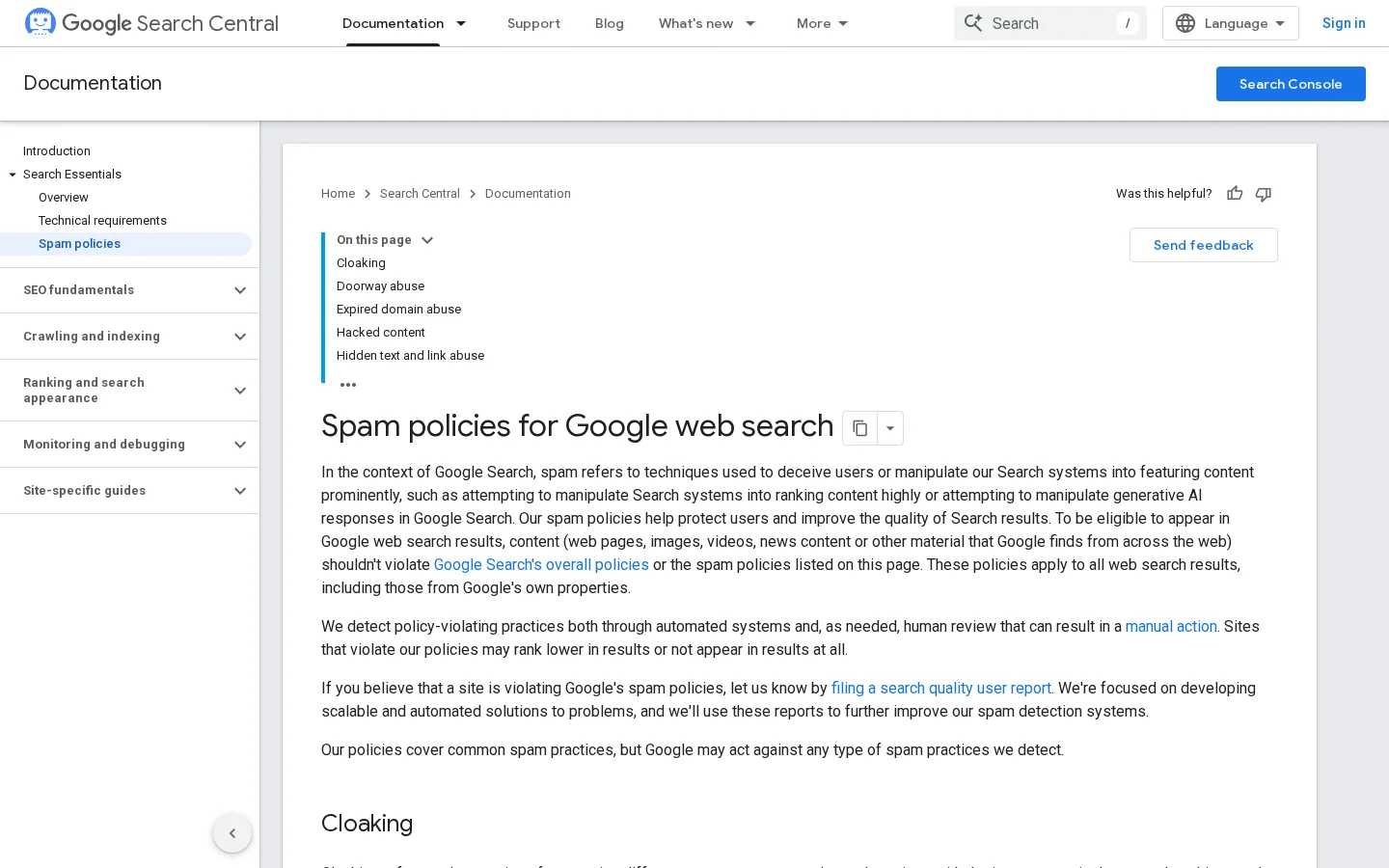
Google does not penalize a content factory because it is a factory. It penalizes pages made mainly to manipulate rankings. Google calls this scaled content abuse: many pages generated for the primary purpose of manipulating search rankings, and not helping users. The policy says the method does not matter. The abuse is content that gives users little or no value, however it was made.
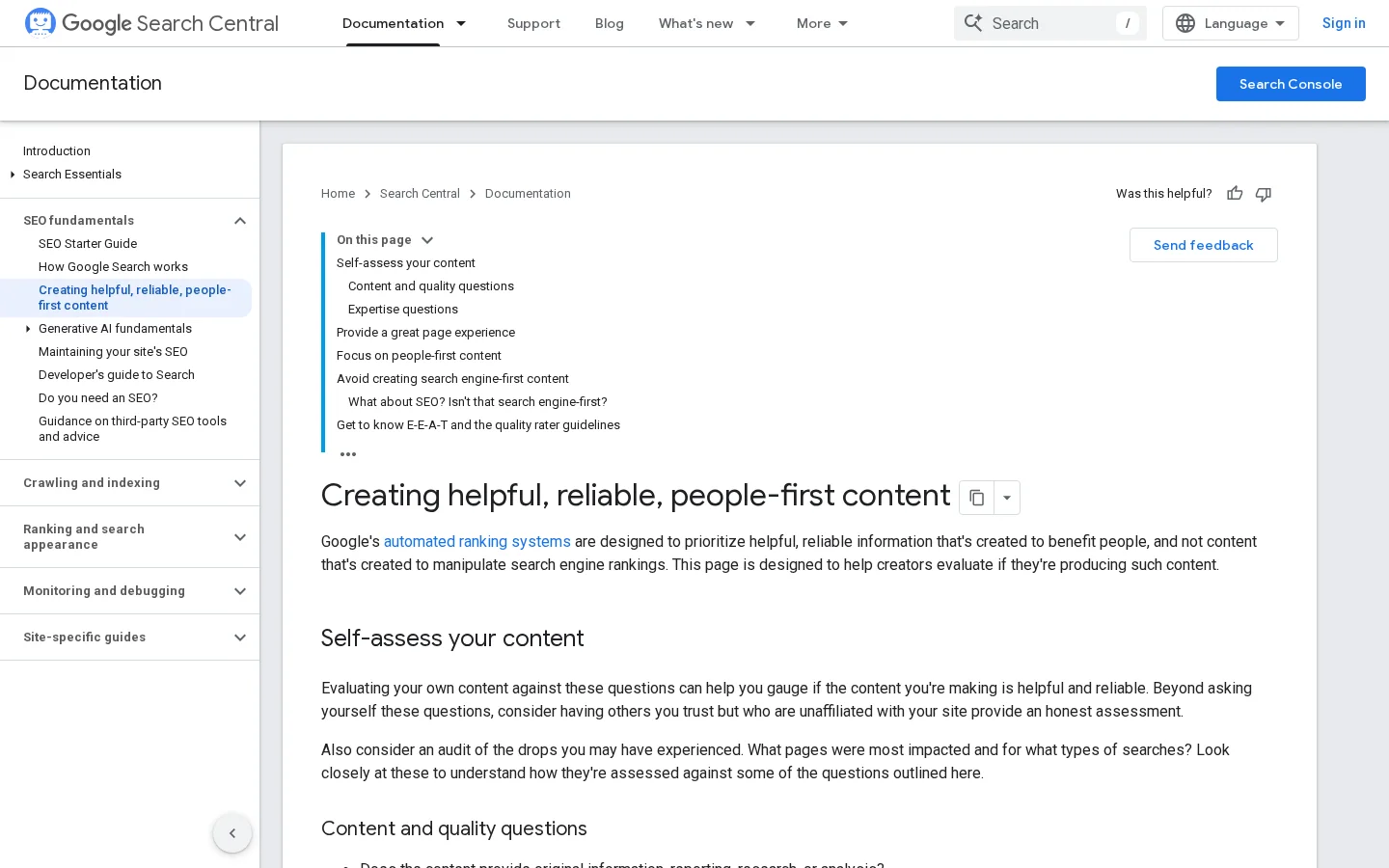
Google's guidance on helpful content lists "extensive automation to produce content on many topics" as a sign of content made for search engines first. Our definition of helpful content explains the idea in more detail. Before you publish a page, ask whether a reader would miss it if it disappeared. If not, the page is a risk.
Most failed factories make the same four mistakes. Each one below has three parts: what it is, how to spot it and how to fix it.
What it is: pages on many topics, chosen by whoever had an idea. How to spot it: a month of posts with no clear question behind each one, and no traffic a few months later. How to fix it: tie each page to one question and one topic group before you write it.
What it is: two or more pages aiming at the same query. How to spot it: a search shows your site, but a different URL each time, or the page you want to rank never appears. How to fix it: merge the pages or change their focus. The problem is covered in keyword cannibalization.
What it is: drafts that go live without an editor. How to spot it: invented numbers, sources that do not say what the page claims, or claims with no source at all. How to fix it: an editor checks each claim, opens each source and removes any figure that has none.
What it is: pages left as they were on the day they were published. How to spot it: old pages losing clicks while the factory keeps adding new ones. How to fix it: schedule a review every month, update the facts, add new questions and republish.
Search engines and AI models both look for pages that answer a question clearly and can be trusted. A content factory gives you more of those pages, plus a routine to keep them accurate. AI models quote short passages that answer one question, so a page built around one question is easier to quote than a long page that covers ten topics.
Sorank helps with the production step. Its blog article generator writes an SEO article from a keyword, adds sources and internal links, and publishes it to your CMS. For the tools side of this work, read our guide to content automation. It covers how to scale production without losing quality. This page covers the whole system, from topic choice to review.
A content factory is a repeatable process: plan the topics, write a brief, produce the page, check it, publish it and update it. Start with one topic and one page type. Review the results every month and let them decide what you make next.
Sources
Yes, if the pages help users. Google's spam policy targets pages made mainly to manipulate rankings, whatever the method. A factory that publishes useful, checked pages does not break that rule.
There is no set number. Start with one topic and a few pages, then add more only when those pages bring traffic. The quality of each page and the review after publishing matter more than volume.
No. A content factory is a process, and people can run it by hand. AI tools can speed up drafting, but an editor still has to check facts, sources and tone before anything goes live.
 “I tested Sorank on a real client site and it's insane. It does everything an agency would bill you $1500 a month for. It's going into production on that client now.”

 Guillaume Guersanguersanguillaume.com“We are an Ads agency and we wanted to get our SEO back on track once and for all. Sorank gave us a clear view of our site, helped us prioritize optimizations, and properly structure our content. The tool is easy to use, well designed for a team, and very practical for centralizing tracking without having to juggle multiple platforms. A very solid foundation to start fresh with our SEO.”
 Gaspard MadouiAds Agency
 “I just let the Sorank software do its thing, and now my DR is 25 and my page is ranking higher.”
 Lucas Flandrefoundertrace.fr“I specialized in GEO thanks to Sorank. The GEO Leaderboard allows me to show my clients their position vs competitors on ChatGPT. It’s a real commercial differentiator.”
 MélanieSEO Freelance“Great service, works well for our website and helps us understand how to improve it to rank better on Google and elsewhere. Congrats, keep going, I recommend it.”
 Hugo T.E-commerce merchant



















