Preferences
Privacy is important to us, so you have the option of disabling certain types of storage that may not be necessary for the basic functioning of the website. Blocking categories may impact your experience on the website. More information
Privacy is important to us, so you have the option of disabling certain types of storage that may not be necessary for the basic functioning of the website. Blocking categories may impact your experience on the website. More information

SEO software for entertainment companies like Sorank helps a production company get found by the brand that types "corporate video production company near me", by the events team that asks ChatGPT "which comedians work well at a corporate dinner", or by the venue manager who searches "theatre rental cost for a one-night show". It finds the questions behind each service you sell, publishes clear answers on your site, and checks every month which companies the AI assistants name.
Each article states facts plainly, uses the figures you approve, and can wait as a draft until your producer or marketing lead signs it off.















































31,128
Articles created
12,138,573
Visits from Google
22,199
Visits from AI
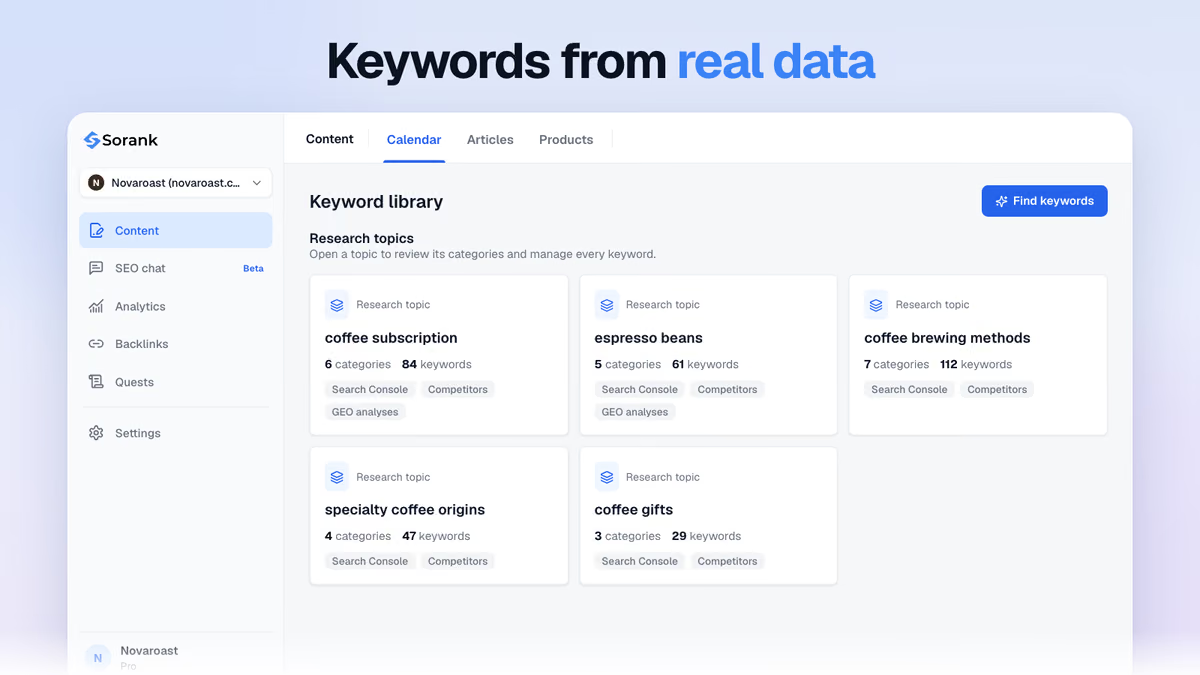
An entertainment company has two audiences. Buyers search for services: "how much does a branded documentary cost", "how to book a live podcast taping", "what size venue fits 300 guests". Fans search for the work itself. Sorank sorts these questions by service and by intent, shows difficulty and monthly volume, and turns the ones closest to your work into articles that name your own credits, capacity and rates, linked to the matching service page.
The questions come from keyword research on your site, on the companies you compete with and on the AI answers.
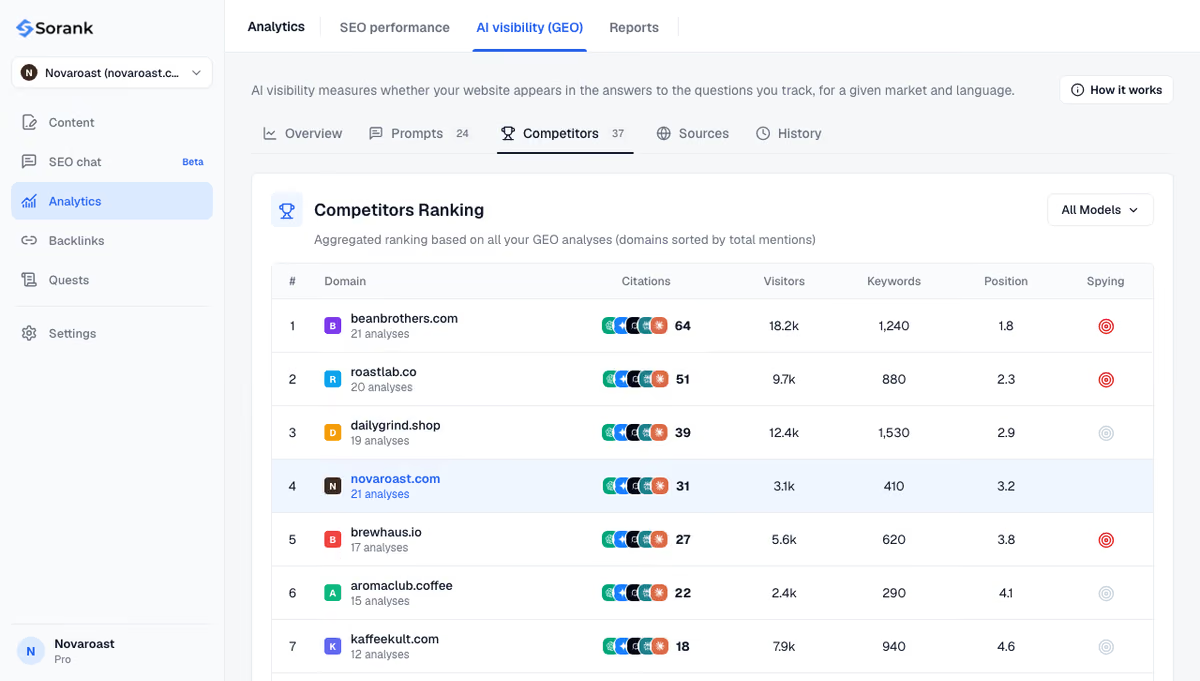
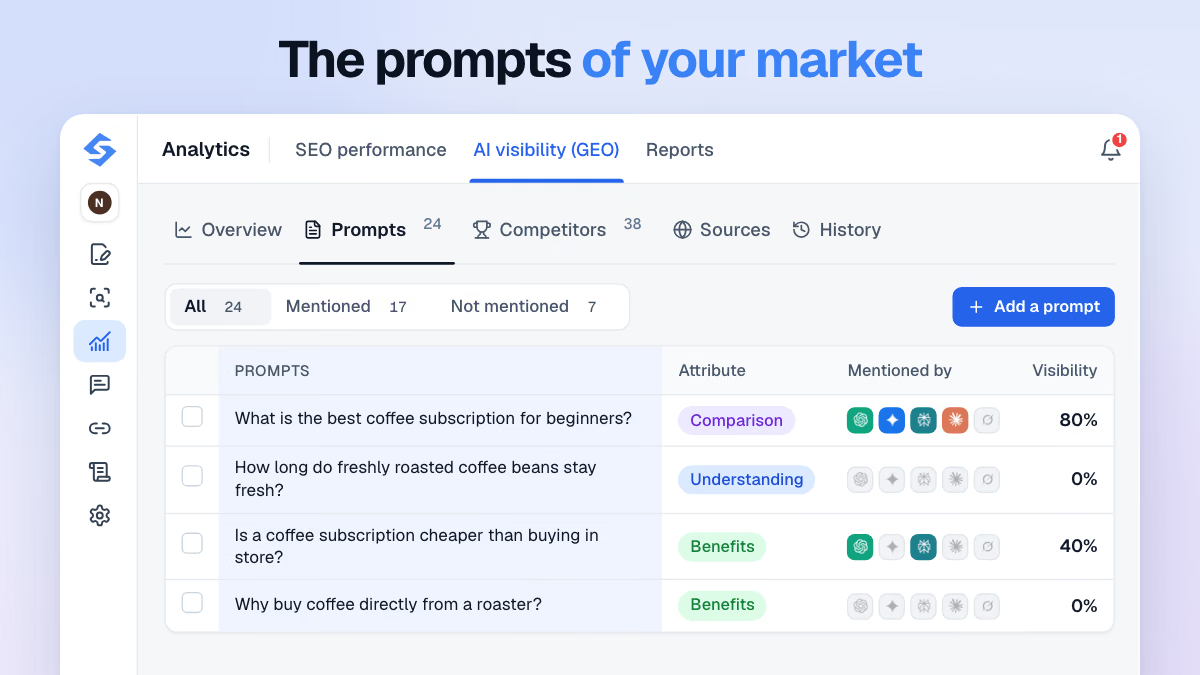
Ask ChatGPT for "a production company for a branded docuseries" or "comedy clubs in Chicago that book touring acts" and it names a short list of companies. The list is built from reviews, trade press, listing sites and video channels. Sorank puts the prompts you choose to ChatGPT, Claude and Gemini every month, shows whether your company appears, and lists the sites the assistant relied on before answering.
Past answers stay on file in AI mention tracking, so you can see which sources changed.
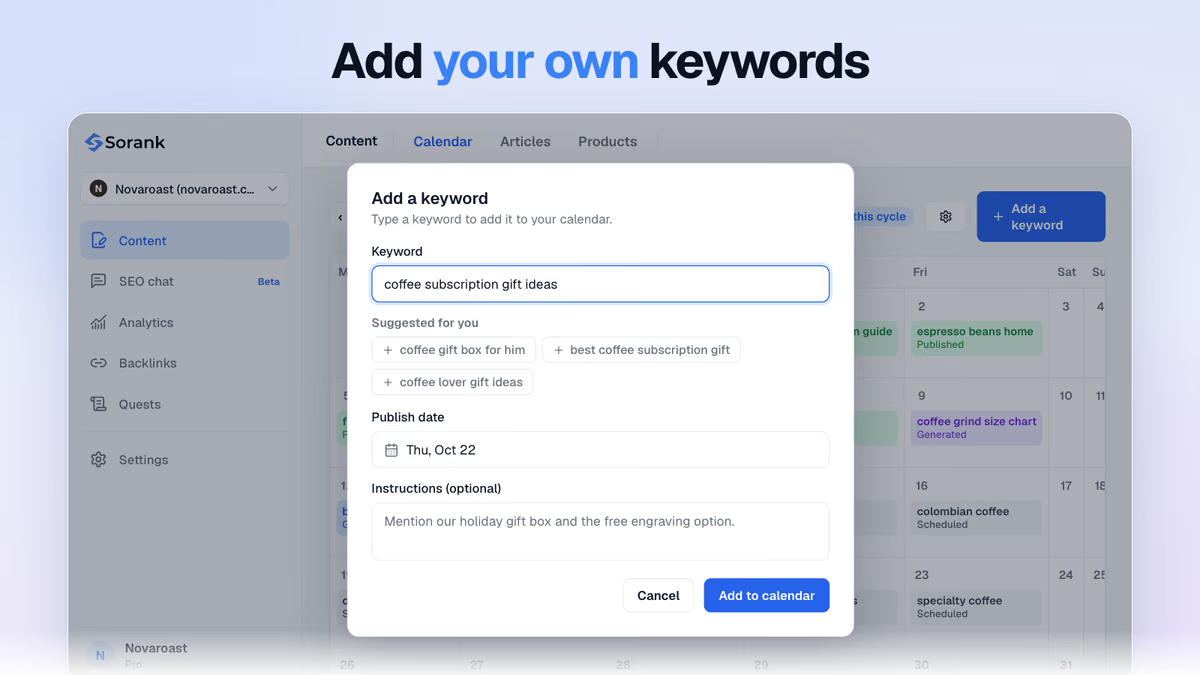
Entertainment buyers follow a calendar. Festival submissions close months before a screening, awards season drives film and TV searches, and many corporate party and holiday show bookings are made in the autumn. A guide published in late summer reaches buyers while they are still choosing. Pick the keywords for each window, set their publish dates, and Sorank writes each article ahead of time, linked to your reel, your show calendar or your booking form.
Set the schedule in the content calendar.

WordPress, Wix, Webflow or Shopify for your site and your merchandise store, WooCommerce if you already sell products through it, or a webhook for any other site. Sorank reads your Search Console and Analytics data to see which reels, shows and service pages already bring visits.
Films, series, branded content, live shows, venue rental or talent booking. Add the genres, the cities you work in and the clients you serve best, such as streaming teams, agencies or independent artists. Sorank turns them into keyword groups with volume and difficulty.

Articles reach your site as drafts for your producer or marketing lead, or go live on the dates you set. Each one ends with a link to the matching reel, venue page or booking form.
“I tested Sorank on a real client site and it's insane. It does everything an agency would bill you $1500 a month for. It's going into production on that client now.”
 Guillaume Guersanguersanguillaume.com
 “I just let the Sorank software do its thing, and now my DR is 25 and my page is ranking higher.”
 Lucas Flandrefoundertrace.fr“Great service, works well for our website and helps us understand how to improve it to rank better on Google and elsewhere. Congrats, keep going, I recommend it.”
 Hugo T.E-commerce merchant“…In 4 months, I generate 15 organic leads per month without posting anything. It’s not 50/50 with LinkedIn yet, but I sleep better knowing I now have a second lead source growing on autopilot.”

 Valentin Thomyoffbound.fr
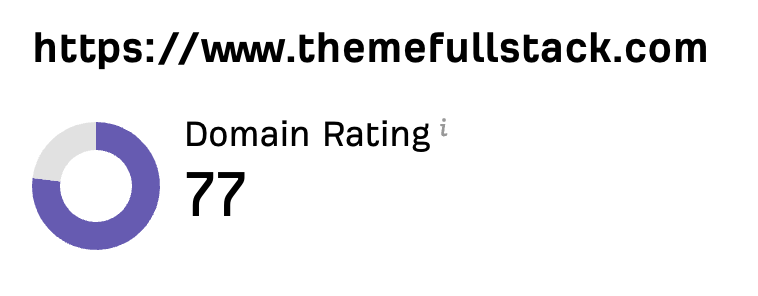 “…With Sorank I finally understood how to structure my SEO and write articles to rank. The audit showed my product page was too slow. In 2 months, my organic traffic doubled and I’m starting to appear in ChatGPT answers when people search for Shopify themes. All of that with about 2 hours per week.”
 Thème FullStackgo.themefullstack.com“Great solution to manage SEO without headaches. Audits are fast, the interface is clear, and you quickly see which actions to implement. It has become an essential tool to track and improve the SEO of my sites. I highly recommend it.”
 XavEntrepreneur“I used Sorank for a client who needed SEO and it clearly made my life easier. I can quickly audit a site, track my projects, and keep a clear overview without multiplying tools. The onboarding is fast and the interface is great.”
 Céline MaurinFreelance CM
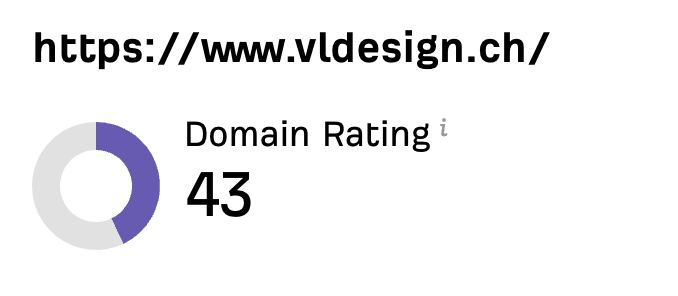 “Blown away by Sorank’s performance. After testing many solutions on the market, I was amazed by how quickly our articles started ranking in the SERP. The results are concrete and much faster than anything we’ve experienced so far. It has been an excellent surprise for our team. We are confidently renewing our trust and highly recommend Sorank to agencies that demand fast and measurable results.”
 Patrick PerretFreelance Webdesign SEO“We’re a development agency and we use Sorank to run on-page audits on our clients’ Shopify stores. It helps us quickly identify optimization opportunities, structure fixes, and collaborate more easily with clients on the SEO side. Very useful to complement our technical support 🔥”

 Younes Yahyaluvaika.com“Sorank has transformed the results we deliver to our clients. We now identify the keywords AI really uses, understand why certain competitors get cited, and spot opportunities we were completely missing before. Our clients see faster rankings, better visibility in AI answers, and clearer ROI on every action we take.”

 Benjamin Rouxovirank.com“We are an Ads agency and we wanted to get our SEO back on track once and for all. Sorank gave us a clear view of our site, helped us prioritize optimizations, and properly structure our content. The tool is easy to use, well designed for a team, and very practical for centralizing tracking without having to juggle multiple platforms. A very solid foundation to start fresh with our SEO.”
 Gaspard MadouiAds Agency“I specialized in GEO thanks to Sorank. The GEO Leaderboard allows me to show my clients their position vs competitors on ChatGPT. It’s a real commercial differentiator.”
 MélanieSEO Freelance“I manage our dealership’s website and it had dozens of issues: slow pages, 404 errors, missing tags. We were losing rankings every month without understanding why. The Sorank audit detected everything in 5 minutes. I sent the report to our web provider with the priority fixes. We regained our rankings and traffic picked back up. Perfect for someone non-technical like me!”
 Xavier BreullMarketing Manager“I’m a CMO for a SaaS and I manage acquisition in a very competitive market. We were investing heavily in our product but not working on our SEO. No visibility on our real competitors, no tracking of our presence in AI. Sorank showed us our positioning vs competitors, which keywords to target, and GEO opportunities we had completely ignored!”
 Louis RAPPCMO SaaS
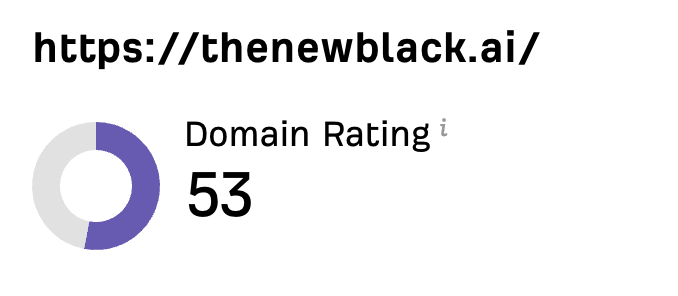 “Very good version 2, I recommend it.”

 Antoine Verhillethenewblack.ai“I was skeptical at first, but this is the best SEO tool I’ve ever used. The interface is clear, audits are fast, and the recommendations are easy to implement. I’ve saved hours and hours managing SEO and tracking performance. I recommend it to all my entrepreneur friends who run an agency or work independently.”
 NoahEntrepreneur“Sorank completely changed the way our SEO agency operates. We now spend far less time on each client because everything is centralized and automated. What used to take hours now takes minutes, which finally allows us to stop working in the business and start working on the business.”

 Océane Bondismaison-leverage.com
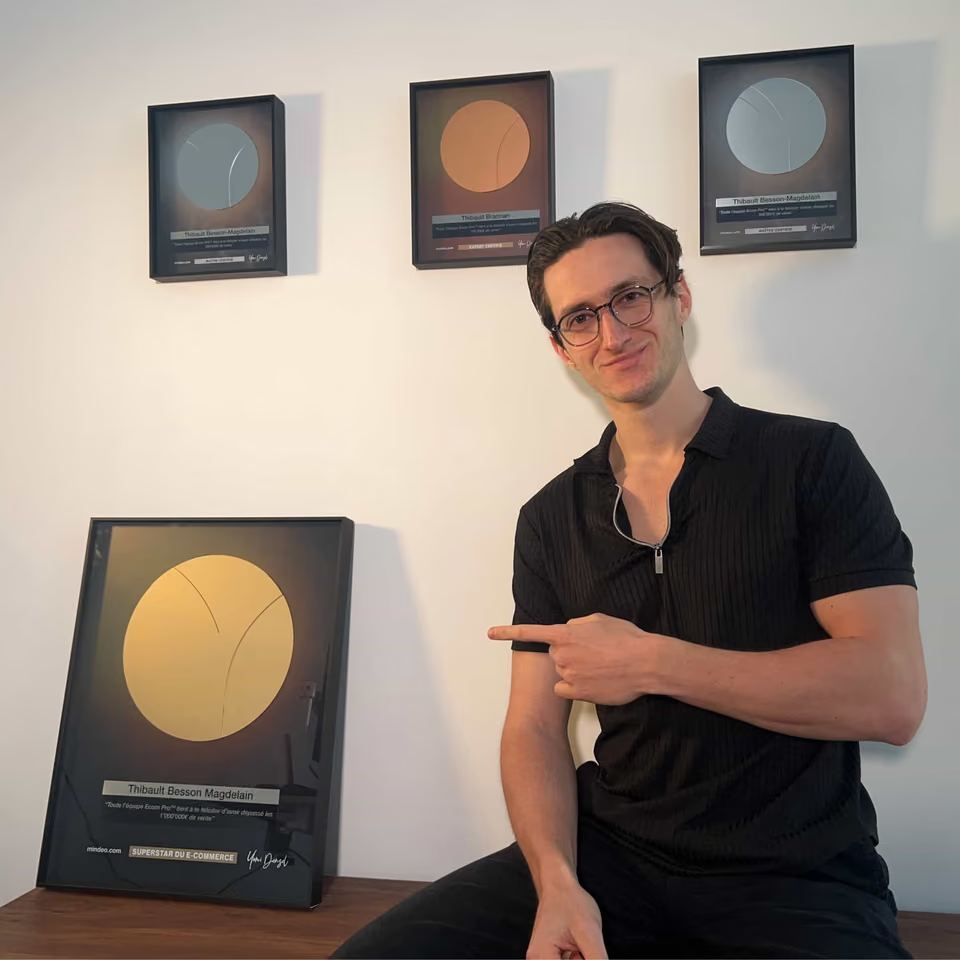
Founder’s Note.
I ran my own SEO agency for years. I built Sorank to deliver the same results to every business, at scale.
Everything I know about Google rankings and Generative Engine Optimization (GEO) is coded into this software, and it runs on autopilot for you.
Try for Free
Entertainment company SEO is the work that puts a production company, theatre, promoter or venue in front of the people who hire it and the audiences who attend. It has two sides. The buyer side is a brand, an events planner or a streaming team searching for a service. The audience side is fans and guests searching for a show, a venue or a screening. Both now run through Google results and through answers from AI assistants, so one website has to serve both.
The companies in this sector range from a three-person documentary studio to a theatre with a full season program. Our pages for video production companies and event venues cover two neighboring trades that share many of these buyers. A definition of entity SEO explains why a company's name, address and services must read the same everywhere they appear.
Because the market keeps growing and more work competes for the same attention. Global box office rose 7% to $34.6 billion in 2025, according to Futuresource Consulting, in an analysis published in July 2026. A brand that wants a production partner, or a venue that wants a corporate booking, now starts with a search rather than a referral alone.
Fans search differently. Streaming viewers now spend an average of 14 minutes looking for something to watch, up from 11 minutes in a similar 2022 survey, according to a Luminate analysis of a Gracenote survey of global streaming users, published July 1, 2026. Viewers who are still searching are open to a page that answers "what should I watch tonight" or "when is the next screening" in plain words.
Our own data points the same way. In our entertainment AI citation study, built on 7485 AI answers collected since July 2026, TripAdvisor is cited 5.08 times per 100 answers, Trustpilot 2.52 times, Reddit 1.68 times and YouTube 1.40 times. Reviews and videos are part of what an assistant reads about you, so they belong in the plan next to your pages.
Sort them by who is searching and what they want to do, then give each group its own page:
Branded searches come closest to a booking. Our page on branded keywords shows how to separate them from the rest and track them.
AI assistants answer buyer questions with short lists. When a brand asks for a production company, the answer tends to name companies with clear service pages, recent credits and reviews that match the request. The same logic applies to venues. A venue that states its capacity, layout and house rules on its own site is easier for an assistant to quote than one whose details sit in a PDF brochure nobody can crawl.
A direct answer in the first lines, then the facts a buyer needs to compare you with others. For a price question, give the range you actually quote and what moves it: crew size, days on location, post-production and rights. For a venue question, give capacity by layout, load-in hours and the technical limits of the room. Name the credits you can name, and say when a detail is confidential. Put the year next to every figure, so that an assistant quoting the page also quotes the right year. If you work in one city, add the neighborhood, the parking and the transit stop, since many "near me" searches depend on them.
Keep only the claims you can back up. Quote public guidance and official data where it exists, date every figure, and make no promise about results or about talent who has not agreed to appear. Rights matter as much as facts: publish a client's name, footage or a performer's image only with written permission, and keep the release forms with the file. Sorank writes from the facts you give it and can hold every draft until your producer or marketing lead approves it. The E-E-A-T signals Google describes come from the same habits: named people, real credits and sources a reader can check.
Sorank finds the questions, writes and publishes the articles with internal links to your services, reels and booking pages, and sends them to Shopify, WooCommerce, WordPress, Wix or Webflow. It earns backlinks from other Sorank users' sites, checks every month what ChatGPT, Claude and Gemini say, and brings Search Console, Analytics and AI visits into one dashboard.
Your team keeps the Google Business Profile and the reviews you ask for (our guide on getting more Google reviews explains how to make the request), the ticketing platform and its fees, the contracts, the rights clearances, and every quote or booking. Sorank does not manage listings, reviews, ticket sales or bookings.
Once articles are live, the monthly AI report shows where the company stands. When a prompt that used to name you drops out, the Sources view lists the pages the assistant read in its place, so you know which of your own pages to update first. The update itself, a new credit or a corrected capacity, is made on your site by your team.
One website on the Essential plan costs $49 a month with yearly billing, or $99 with monthly billing. It includes 20 articles a month and monthly AI tracking on ChatGPT, Claude and Gemini. Pro, at $129 a month yearly or $249 monthly, moves to 60 articles and adds Grok. Business, at $249 yearly or $499 monthly, moves to 120 articles. A company that runs separate sites for a studio and a venue needs one plan per site. The first 3 days are free, and the pricing page lists every limit.
Expect months, not weeks. Google publishes no timetable. A profile update or a fresh review can show within weeks, while a new article collects impressions in Search Console first and clicks later. A seasonal page has to be live before the window it serves, which means a festival guide in the spring and a holiday booking guide in late summer. Our note on seasonal SEO explains how to plan those pages each year. Judge each theme after a quarter, then publish more on the ones that grow.
Plan the first quarter as a whole. Publish the service pages and the two or three seasonal guides first, then let the calendar fill the rest. A buyer who searches in the second month then finds a complete site, not a single article with nothing around it.
Several months. New articles collect impressions in Search Console before they earn clicks, and a seasonal guide has to be live before the window it serves. Judge each theme after three months of publishing.
$49 a month per website on the yearly Essential plan, or $99 billed monthly. It includes 20 articles a month and monthly AI tracking on ChatGPT, Claude and Gemini. The first 3 days are free.
No. Your Google Business Profile, your reviews, your ticketing platform and your contracts stay with your team. Sorank publishes articles on your website and reports what the AI assistants say about your company.
Give it facts it can quote: your credits, your venue capacity, your typical lead times and the client types you serve, written the same way on your site, your listings and your social profiles. Then check each month which companies ChatGPT names for your prompts.
Yes. Publish a client's name, footage or a performer's image only with written permission, and keep the release forms with the project file. Sorank can hold every draft until your legal or production contact approves it.
Sorank publishes to WordPress, Shopify, WooCommerce, Wix and Webflow, and to other sites through a webhook. Ticket sales stay on your ticketing platform, which Sorank does not change.
We don't. Sorank isn't trying to be another Semrush or Ahrefs. Those tools are built for data, Sorank is built to do the work. Instead of more dashboards to check, it turns SEO and GEO insights into actions: articles written and published, backlinks earned, technical fixes and AI visibility tracking. Less complexity, more results.
From $49/month per website on a yearly plan, with a 3-day free trial and a 90-day money-back guarantee (conditions apply). Every plan includes articles, AI visibility tracking and access to natural backlink acquisition; higher plans add more articles, more AI prompts tracked and more backlinks. No setup fees, no paying for seats you don't use.
You shouldn't need a full marketing team or expensive tools to grow. Sorank handles your entire SEO and AI visibility, so you save time and money.