
Preferences
Privacy is important to us, so you have the option of disabling certain types of storage that may not be necessary for the basic functioning of the website. Blocking categories may impact your experience on the website. More information
Privacy is important to us, so you have the option of disabling certain types of storage that may not be necessary for the basic functioning of the website. Blocking categories may impact your experience on the website. More information

A non branded query is a search with no brand name in it. Learn how to measure these queries in Search Console and how to rank for them in SEO and GEO.







Founder Sorank, 7+ years in SEO.
Summary
A non branded query is a search that does not contain a brand name or any variation of one, including misspellings. Bluetooth keyboard is non branded, while Logitech keyboard is branded. Non branded queries describe a need or a category, so they show demand from people who do not yet know which company to choose.
Want to go further? Ask
Non branded query is the name for any search that does not point to a specific company, product or brand. If someone types running shoes for flat feet or best SEO tools, the query is non branded. If they type Sorank or Logitech keyboard, it is a branded query. The test is simple: a brand name, or a recognizable variation of one, is either in the query or it is not.
A non branded query is a search whose words do not include a brand name, a company name or a close misspelling of one. The searcher describes a need, a product type or a problem instead of naming a provider. Because no brand appears, every company in the category can answer the query, which is why non branded queries are the main route to new visitors for a site that people do not know yet.
The detail matters. A phrase such as Amazon discount is not a clean branded query for Amazon, because many retailers use the same wording. Most general keywords therefore fall into the non branded group, even when a well-known name appears in passing.
The core difference is awareness. A searcher who types a brand name already knows something about that company and is often closer to a decision, so branded traffic tends to be warmer and more transactional. A searcher who types a non branded query may never have heard of you. They are comparing options, learning a category or looking for a first solution. Reading both types together gives a clearer picture of your search intent mix than either one alone.
Because the audience is so different, the same page can perform very differently depending on the words that bring people to it. A comparison page written for a brand name serves people who are already close to buying. A guide written for a category question serves people who are still exploring, and it is the guide that brings new people into your world.
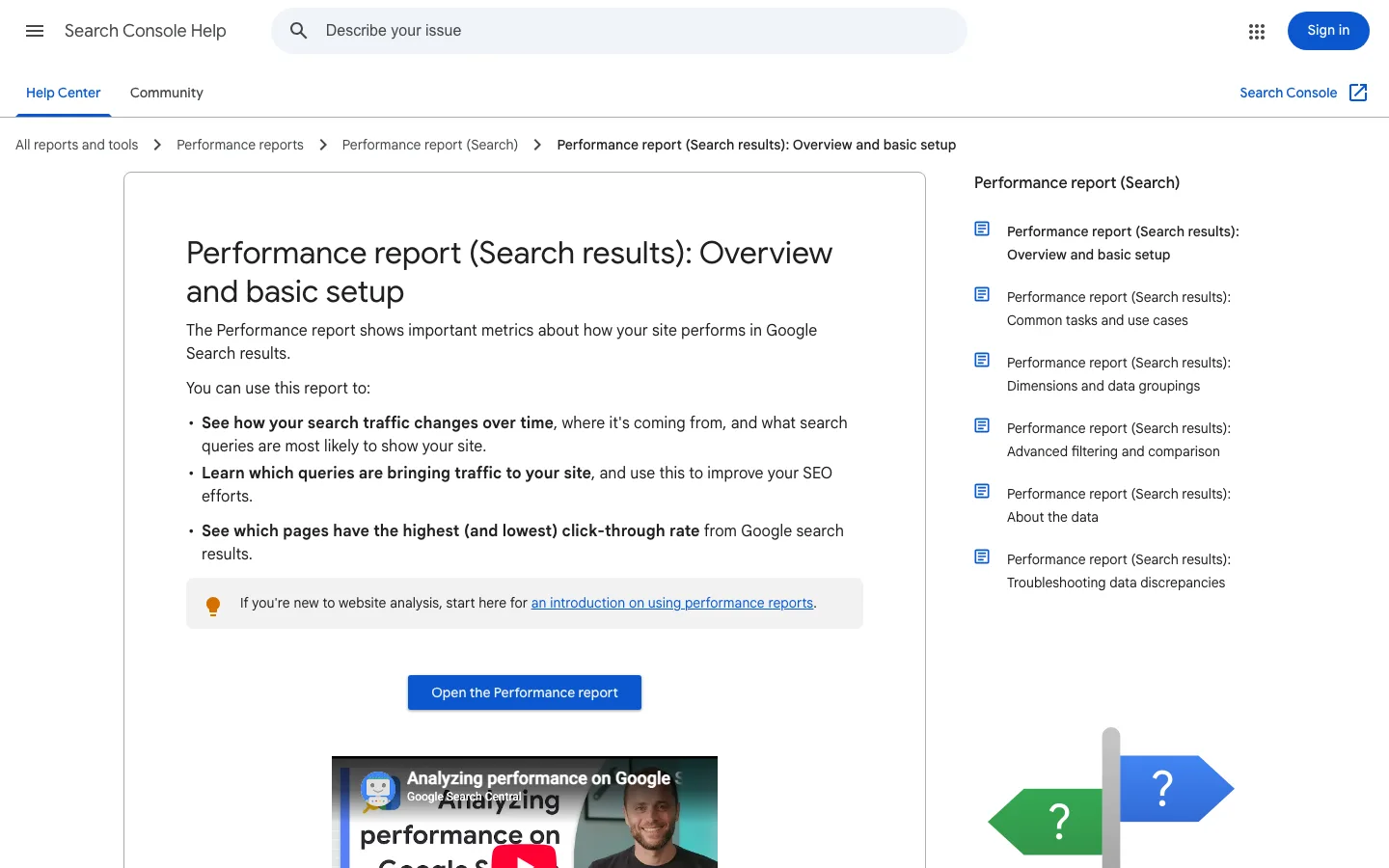
Google Search Console is the most direct source for this. Its Performance report groups your data by the queries dimension, which is the search query users typed, so you can see which terms bring clicks and impressions to your site. Google's Search Console Performance report help page describes this view, and it is the place to start when you want to separate the terms that name your brand from those that do not.
Once you have the list of queries, sort them by hand or with a filter. Put every query that contains your company name, your product name or a close misspelling in the branded group. Everything else is non branded. Track both groups each month, because the trend tells you more than a single snapshot. A rising non branded share usually means your content reaches people who did not know you, while a falling branded share can mean awareness is slipping.
Most long-tail searches are non branded. A query such as lightweight running shoes for flat feet is specific, so it often faces less competition than a broad term like running shoes, and a page that answers it precisely can convert well. The trade-off is volume: any one long-tail phrase may get few searches. The practical answer is to cover many related variations with thorough pages instead of betting everything on one phrase. The keyword volume definition explains how to read search numbers across a whole topic rather than a single term.
Long-tail pages also teach you something. The questions people type into search show you the real words your customers use, which helps you write headings and answers that match them.
When someone asks ChatGPT or Perplexity for the best approach to a problem without naming a brand, the assistant builds its answer from sources it trusts. Google describes a similar process for its own AI features: AI Overviews and AI Mode may use a query fan-out technique, issuing several related searches across subtopics before they write a response. Google's guide to AI features in Search says the same foundational SEO best practices remain relevant for these features, with no extra requirements.
For a page, this means a clear answer to one non branded question can help it appear as a source for several related answers. A page that never answers the question directly is unlikely to be chosen, however well it is designed.
Start with research that separates branded from non branded terms, so you can see the acquisition opportunity you really have. Then build content around the categories, problems and questions that people search before they know your company. Sorank's keyword research helps map those terms to pages, and the aim is one clear page per intent rather than several pages that compete for the same words.
Structure matters as much as targeting. Answer the underlying question early on the page, use descriptive headings and show real expertise, so that both search engines and AI assistants can treat the page as a strong match. For the branded side of the picture, read about branded versus non branded search, which explains how the two groups differ in intent and in what they reveal about your business.
For SEO, non branded queries are how unfamiliar searchers discover you. Ranking for them is one of the most reliable ways to win new customers, rather than recapturing people who already search for your name. For GEO, the same logic carries into AI search: the goal is to be cited when someone asks an assistant a non branded question about your category. Both depend on clear, authoritative and well-structured content, so work done for one helps the other. A healthy organic traffic base also gives you more data to see which non branded questions are worth answering.
A non branded query is any search without a brand name in it. It represents the large pool of people who explore a category before they choose a company, so it drives new demand, covers much of the long tail and sits at the top of the funnel. Measure it in Search Console, track it apart from your branded search traffic, and write pages that answer the questions behind it, for search engines and AI assistants alike.
A non branded prompt is a question or request sent to an AI assistant that does not name a brand. “What is the best project management tool for a remote team?” is non branded, while “Is Trello good for a remote team?” is branded. Like its search counterpart, it shows a need without a chosen company.
Prompts are longer than typical searches. People add context such as budget, team size, or the problem they are trying to solve. That makes each prompt more specific, and the same need can appear in many different wordings. Two people may never type the same words, even when they want the same answer.
Start with the questions your customers already ask. Sales calls, support tickets, and reviews show the real wording better than a guess does. Then put the same question to ChatGPT, Gemini, Claude, and Perplexity. Note which brands appear, which sources get cited, and whether you are missing. Run each prompt more than once, because AI answers can change from one run to the next. To see how often a topic is asked, read about prompt volume.
An assistant replies with a complete answer, so your page has to answer the whole prompt. Use the question as a heading, give the direct answer in the first paragraph, then cover the criteria an assistant weighs: price, setup time, limits, and who the option suits best. Pages that state these trade-offs clearly are easier to quote.
| Prompt type | Example | What the answer needs |
|---|---|---|
| Recommendation | best CRM for a five person agency | A short list, with the fit for each option |
| Comparison | which CRM is cheaper for a small team | Price, limits, and a clear pick for each use case |
| How to | how do I track AI answers for my category | Steps in order, with the tools needed |
Tip
Keep a fixed list of 20 to 30 non branded prompts for your category and run them on the same schedule. Changes across that list show progress more clearly than one test. For a full setup of that kind of check, read the AI visibility audit guide.
Sources
A non branded query is a search that does not contain a brand name, a company name or a close misspelling of one. Bluetooth keyboard is non branded, while Logitech keyboard is branded, because it names a company.
Open the Performance report in Google Search Console and use the queries view to see the search terms that bring clicks to your site. Set aside every query that contains your company, product or a close misspelling, and the remaining queries are non branded.
Usually yes, because every competitor in a category targets the same terms. Ranking takes in-depth content and sustained effort, but these queries bring in visitors who do not know your brand yet.
 “I tested Sorank on a real client site and it's insane. It does everything an agency would bill you $1500 a month for. It's going into production on that client now.”

 Guillaume Guersanguersanguillaume.com“We are an Ads agency and we wanted to get our SEO back on track once and for all. Sorank gave us a clear view of our site, helped us prioritize optimizations, and properly structure our content. The tool is easy to use, well designed for a team, and very practical for centralizing tracking without having to juggle multiple platforms. A very solid foundation to start fresh with our SEO.”
 Gaspard MadouiAds Agency
 “I just let the Sorank software do its thing, and now my DR is 25 and my page is ranking higher.”
 Lucas Flandrefoundertrace.fr“I specialized in GEO thanks to Sorank. The GEO Leaderboard allows me to show my clients their position vs competitors on ChatGPT. It’s a real commercial differentiator.”
 MélanieSEO Freelance“Great service, works well for our website and helps us understand how to improve it to rank better on Google and elsewhere. Congrats, keep going, I recommend it.”
 Hugo T.E-commerce merchant



















