
Preferences
Privacy is important to us, so you have the option of disabling certain types of storage that may not be necessary for the basic functioning of the website. Blocking categories may impact your experience on the website. More information
Privacy is important to us, so you have the option of disabling certain types of storage that may not be necessary for the basic functioning of the website. Blocking categories may impact your experience on the website. More information

A keyword phrase is a search of two or more words. Learn what it is, how it differs from a single keyword, and how to choose and place one.








Founder Sorank, 7+ years in SEO.
Summary
A keyword phrase is a group of two or more words that people type into a search engine to find what they need. Keyword phrases are more specific than single keywords, so they usually show clearer intent and a smaller, more focused audience.
Want to go further? Ask
Keyword phrase means the words a person actually types, not just the topic. "Running shoes" is a keyword. "Best running shoes for flat feet" is a keyword phrase. The longer phrase tells you what the person wants, so you can write a page that answers that exact need.
A keyword phrase is a search made of several words. Most people use this form when they know what they want. Here are three examples:
Each phrase holds a topic and a goal. The topic is "running shoes" or "kitchen tap". The goal is to buy, to learn, or to find a place. When you write for a phrase, you answer both parts.
A single keyword is one word or a short topic, such as "shoes". It is broad. Many different people type it, and they want very different things. A keyword phrase narrows that group. Someone who types "running shoes for flat feet" has already decided what they need. The exact text a person types is called a search query, and a keyword phrase is the part of it you choose to target.
| Point | Single keyword | Keyword phrase |
|---|---|---|
| Words | One, sometimes two | Two or more |
| Example | shoes | best running shoes for flat feet |
| Intent | Often unclear | Usually clear |
| Competition | Often high | Often lower |
| Match to the page | Broad | Narrow, easier to match |
Single keywords still matter because they name the topic. But if you target only broad words, you compete with the biggest sites in your field. Keyword phrases give smaller sites a way in. That is the idea behind long-tail keywords.
Start with the questions your customers ask. Write down how they describe their problem, in their own words, not in your industry's jargon. Then check which phrases people really type. Our keyword research guide walks through this step by step. For a quick list of related ideas, try the free Keyword Research and Suggestions Tool.
Once you have a list, filter it with three rules:
Think about the words a user might search for. Google's SEO Starter Guide makes the same point: write with your readers' search terms in mind, and you do not need to cover every variation of them.
Place the main phrase where a reader and a search engine both look first. Use it in these spots:
A title tag with the phrase looks like this:
<title>Keyword Phrase: What It Is and How to Use It</title>Tip
Read the first paragraph out loud. If the phrase sounds forced, rewrite the sentence around its meaning, not the exact words.
Use the phrase often enough that a reader sees the page covers the topic, then stop. Google's spam policies define keyword stuffing as filling a page with keywords or numbers to manipulate rankings. One of its examples is repeating the same words or phrases so often that the text sounds unnatural.
There is no fixed number to hit. The old idea of a keyword density percentage has faded, as explained in our guide to keyword density. Read the page as a stranger would. If a sentence exists only to add the phrase, delete it. For more on this problem, read our guide on what keyword stuffing is and how to write naturally. For counts and placement by page, see how many keywords per page to use.
Yes, but the phrase is now one part of a longer question. People often type full questions into AI tools, and those questions are longer than the phrases they type into Google. The phrase still shows you the topic and the goal. Answer the full question in the first lines of each section, and use the key terms of the phrase in your headings. For more on this shift, read about conversational search. Sorank's Automated Keyword Research covers both Google and AI, so you can see the phrases for each.
What it is: the same phrase appears so often that the text reads badly. How to spot it: read the page out loud and count how many times the phrase appears in one section. How to fix it: keep the phrase in the title, the first paragraph and a few headings, and use synonyms and related terms in the rest of the text.
What it is: a buying phrase placed on a guide, or a learning phrase placed on a sales page. How to spot it: the results for the phrase show a different type of page than yours. How to fix it: change the phrase, or change the page so it matches the goal of the searcher.
What it is: two or more of your pages compete for the same phrase. How to spot it: both pages show up for the same search. How to fix it: give each page one main phrase, merge the weaker page into the stronger one, or link the weaker page to the stronger one. Read more about keyword cannibalization.
What it is: a list of keywords placed in the page code, in a tag called meta keywords. How to spot it: you see the tag in the page source, filled with a long list. How to fix it: remove it and put the effort into the title, the headings and the text. The SEO Starter Guide states that Google Search doesn't use the keywords meta tag.
A keyword phrase shows you what people ask, in their own words. For SEO, it helps you match a page to a search. For GEO, the same work matters, because AI tools answer the question behind a search. A page that answers one clear question in its opening lines gives an AI tool a clear passage to use.
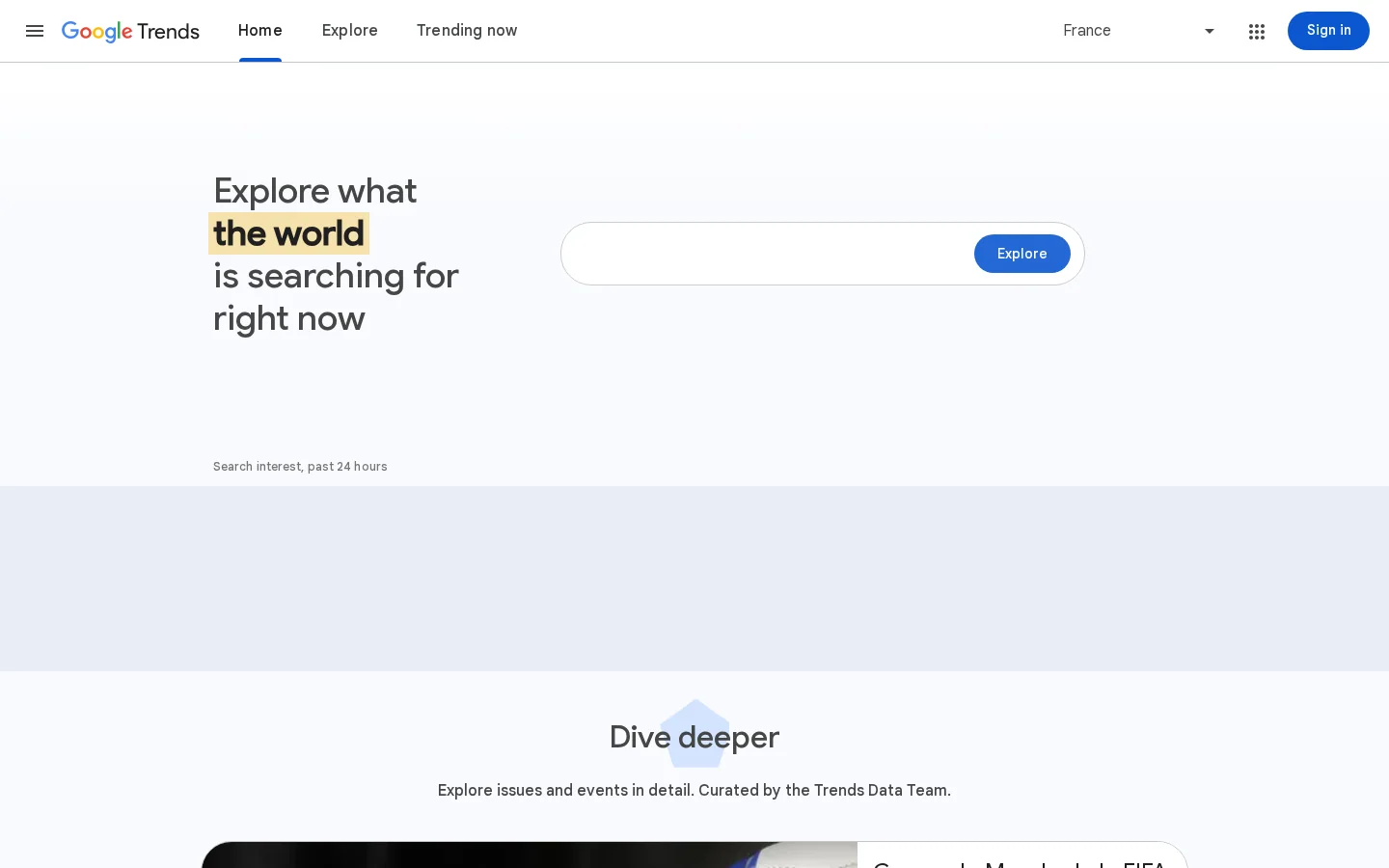
To check whether a phrase has interest before you write, use Google Trends. The tool says it lets you explore what the world is searching for right now, so you can compare topics before you pick one.
A keyword phrase is the set of words a person types when they know what they want. Pick one main phrase per page, match it to the page type, and place it where it reads naturally. Then answer the question fully. To start faster, try the free Keyword Research and Suggestions Tool.
Sources
A keyword can be one word or a short topic, such as shoes. A keyword phrase has two or more words and shows more clearly what the person wants, such as best running shoes for flat feet. Pick the phrase that matches the goal of your page.
Use the main phrase in the title, the first paragraph and a few headings. Write it in a natural sentence, and use related words in the rest of the text. Do not repeat it in every paragraph.
Yes. People often type longer questions into AI tools, but the phrase still shows the topic and the goal. Answer the full question in the first lines of each section, and use the key terms of the phrase in your headings.
 “I tested Sorank on a real client site and it's insane. It does everything an agency would bill you $1500 a month for. It's going into production on that client now.”

 Guillaume Guersanguersanguillaume.com“We are an Ads agency and we wanted to get our SEO back on track once and for all. Sorank gave us a clear view of our site, helped us prioritize optimizations, and properly structure our content. The tool is easy to use, well designed for a team, and very practical for centralizing tracking without having to juggle multiple platforms. A very solid foundation to start fresh with our SEO.”
 Gaspard MadouiAds Agency
 “I just let the Sorank software do its thing, and now my DR is 25 and my page is ranking higher.”
 Lucas Flandrefoundertrace.fr“I specialized in GEO thanks to Sorank. The GEO Leaderboard allows me to show my clients their position vs competitors on ChatGPT. It’s a real commercial differentiator.”
 MélanieSEO Freelance“Great service, works well for our website and helps us understand how to improve it to rank better on Google and elsewhere. Congrats, keep going, I recommend it.”
 Hugo T.E-commerce merchant



















