
Preferences
Privacy is important to us, so you have the option of disabling certain types of storage that may not be necessary for the basic functioning of the website. Blocking categories may impact your experience on the website. More information
Privacy is important to us, so you have the option of disabling certain types of storage that may not be necessary for the basic functioning of the website. Blocking categories may impact your experience on the website. More information

Content plagiarism is passing off someone else's work as yours. Learn its types, how Google treats it, how to check your text and how to remove copies.








Founder Sorank, 7+ years in SEO.
Summary
Content plagiarism is publishing someone else's words, ideas, images or structure as your own, without permission or credit. It covers verbatim copying, light paraphrasing, mosaic patchwork and the reuse of your own published work. Online, it hurts trust, can break copyright law and can get pages removed or demoted by Google.
Want to go further? Ask
Content plagiarism is the web version of an old problem: taking work you did not create and presenting it as yours. On a website, it shows up as a blog post copied from a competitor, a product description lifted from a manufacturer, a guest post published on two sites, or an article rewritten word by word with a synonym tool. The intent does not change the result. Forgetting a credit and copying on purpose both leave a page that belongs, in substance, to someone else.
It is close to duplicate content, but the two are not the same. Duplicate content is a technical fact: the same text lives at several URLs, often on your own site, and nobody did anything wrong. Plagiarism is a question of ownership and credit: the text, the idea or the layout came from another author who was not credited or did not agree.
There are six forms you will meet on the web, from the obvious to the hard to spot.
| Type | What it looks like | How easy it is to detect |
|---|---|---|
| Direct (verbatim) plagiarism | Whole sentences or paragraphs copied without quotes or credit | Easy: any checker finds identical word sequences |
| Paraphrase plagiarism | The same ideas and order, reworded sentence by sentence, with no source | Medium: word matches drop, the structure stays |
| Mosaic (patchwork) plagiarism | Phrases from several sources stitched together with a few original words | Medium to hard: matches are short and spread out |
| Self-plagiarism | Your own published article republished elsewhere as new, without saying so | Easy for search engines, often missed by the author |
| Image and media plagiarism | Photos, charts or videos reused without licence or credit | Medium: reverse image search finds most copies |
| Idea and structure plagiarism | The same outline, examples and data presented as your own research | Hard: no text match, only a human reader sees it |
The middle of the table is where most online cases sit. Spinning a competitor's article through a rewriting tool produces text that looks new but adds nothing. Our definition of paraphrasing for SEO explains where honest rewriting ends and this kind of copy begins.
Plagiarism itself is an ethical breach, not a crime; it becomes illegal when it infringes copyright. Copyright protects the expression of a work (the exact text, the photo, the video), not the idea behind it. So copying a protected article without a licence can be infringement, while reusing a fact or an idea with a credit usually is not.
The stakes can be high. In the United States, the Copyright Act lets a court award statutory damages of $750 to $30000 per work infringed, and up to $150000 per work when the infringement is willful (17 U.S. Code § 504, Cornell Law School). Other countries have their own rules, so check the law where you publish.
Note
A credit does not replace permission. Citing the author of a full article you republished without a licence can still be copyright infringement. Quote short passages, link to the source, and write the rest yourself.
Yes, when the copying is the whole value of the page. Google's spam policies name "scraped content" as a violation and list, among other examples, "copying content from other sites, modify it only slightly (for example, by substituting synonyms or using automated techniques), and republish it" (Google Search Central, spam policies). Sites built this way can lose rankings or disappear from results after a manual action or a Google spam update.
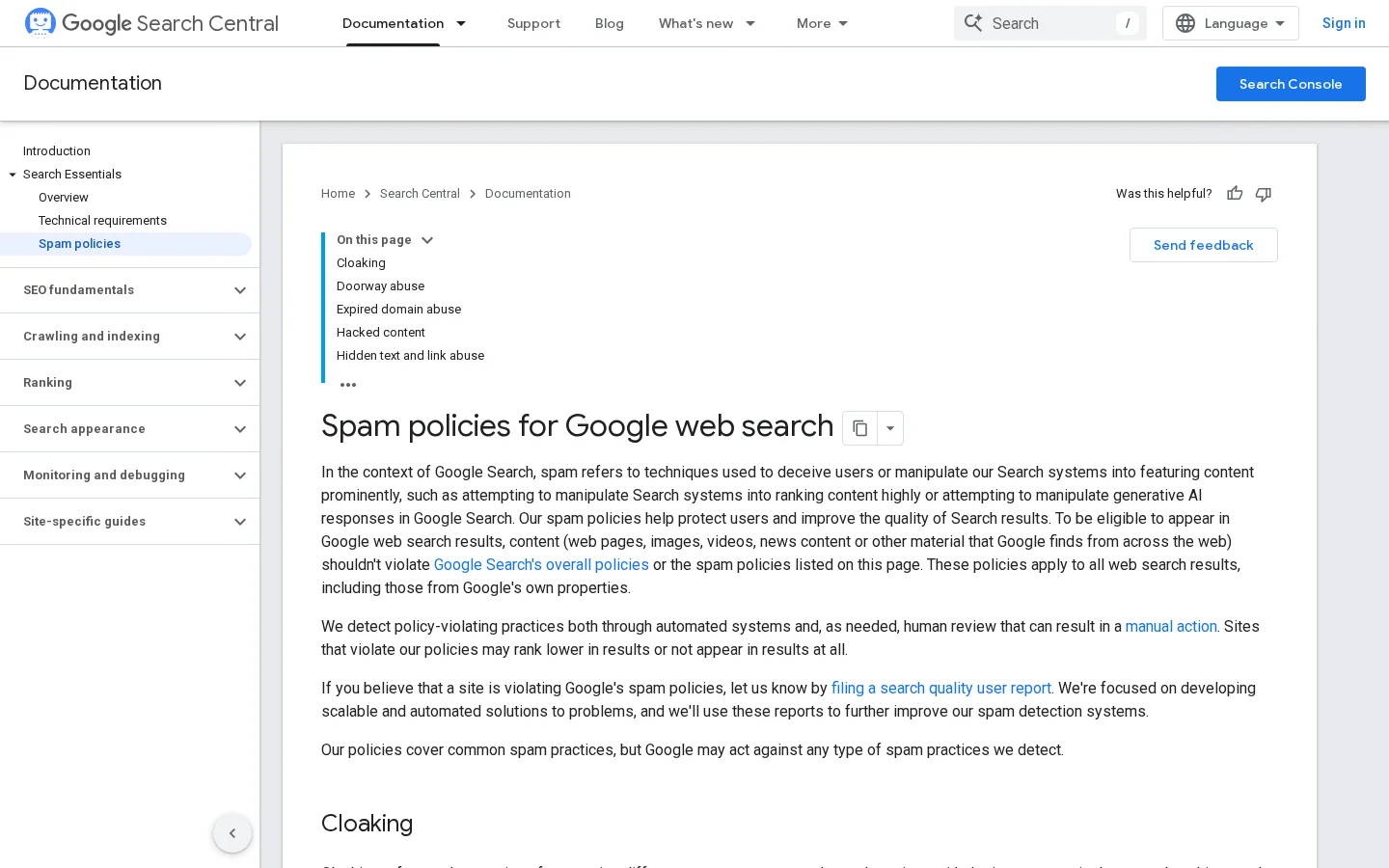
The same page describes a second risk: when Google receives "a significant volume" of valid copyright removal requests for a site, it can use that signal to demote other content from the same site. Repeated copying can cost the whole domain, not only the copied pages.
Ordinary duplication is different. Printer-friendly pages, URL parameters or a syndicated article with a canonical tag pointing to the original are not plagiarism, and Google handles them by choosing one version to show.
You compare your text with what already exists, then read the matches yourself. A checker gives a percentage, but only a human can tell a common phrase from a copied argument.
There is no universal "safe" score. A high match made of quoted, credited lines can be clean; a low match that is one stolen paragraph is not.
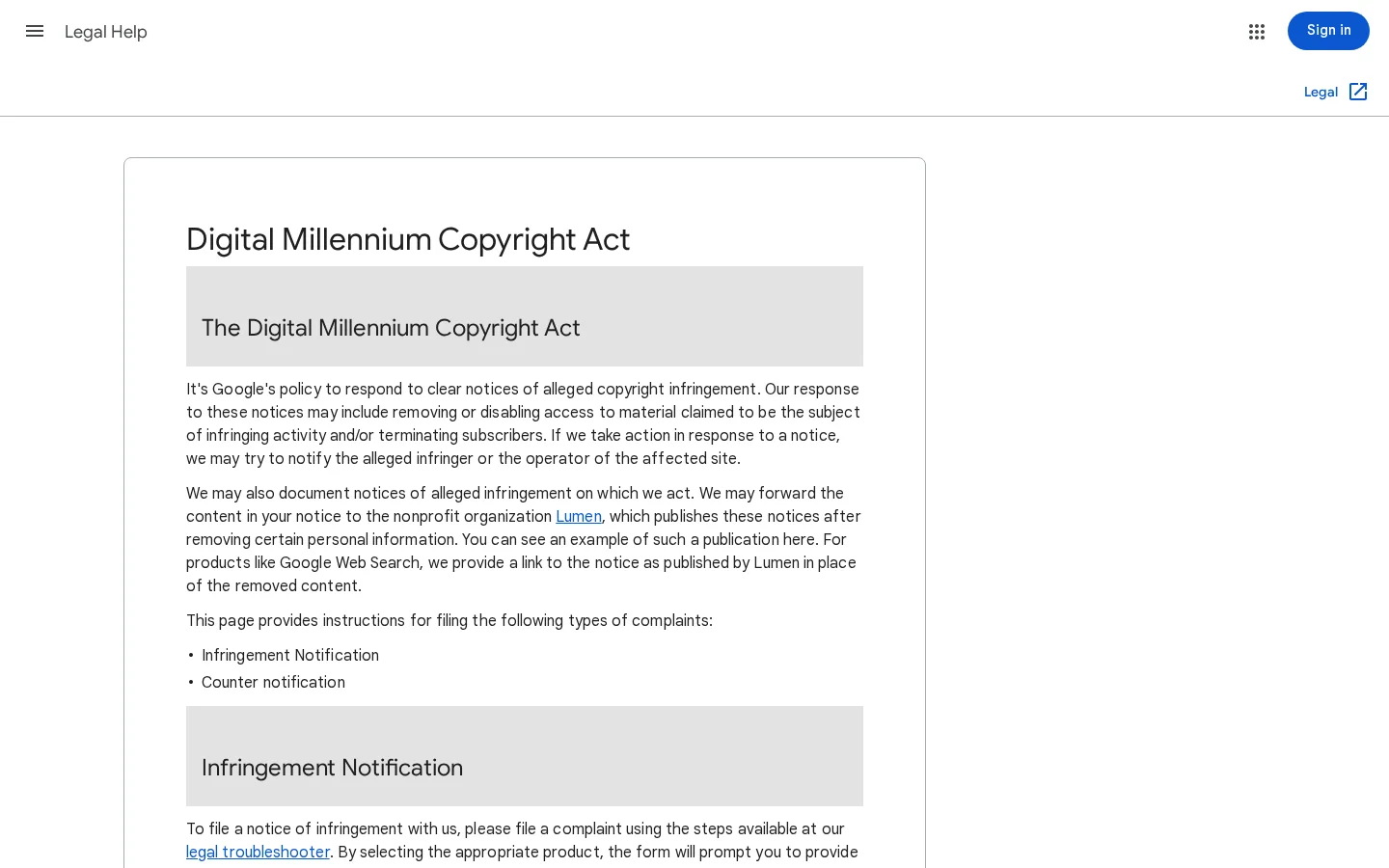
Gather proof, contact the site, and only then file a formal removal request. Most cases end at the second step.
Warning
Google warns that anyone who materially misrepresents an infringement in a notice can be liable for damages. File only for content you own, and ask a lawyer when the case is unclear.
Start from your own knowledge, keep track of every source, and credit what you borrow. These habits work for a solo blogger and for a content team.
If you publish with AI, the same rules apply. Sorank's AI blog article generator writes from your own business information and cites its sources, which keeps each article tied to your expertise rather than to a competitor's page.
Not by default, but it can be. A language model writes new sentences, so its output is rarely a verbatim copy. The risk comes when it repeats a known source too closely, invents facts without credit, or when you ask it to rewrite one competitor's article. That last case is paraphrase plagiarism done by a machine.
AI detectors and plagiarism checkers answer different questions. A plagiarism checker looks for matching text; an AI content detector guesses whether a model wrote the text. A page can pass one and fail the other. Google's position, summed up in our guide on whether Google penalizes AI content, is that it judges the quality and originality of a page, not the tool that produced it.
Because both Google and the AI assistants look for the original source. In search, Google groups near-identical pages and shows one; a copy that adds nothing has little chance to be that one, and scraped sites fall under the spam policies. Your own originals can also be outranked by a stronger domain that copied them, which is why you need to watch for copies.
In GEO, the logic is the same. When ChatGPT, Gemini or Claude build an answer, they cite pages that bring a clear, specific piece of information. A page that repeats what many others say gives an AI no reason to name you. Original data, first-hand examples and a precise definition are what get cited.
Content plagiarism is presenting someone else's work as yours, from verbatim copying to disguised paraphrasing. It damages trust, can break copyright law, and Google treats scraped and lightly reworded content as spam. Check your drafts before publishing, credit every source you use, protect your own pages, and build each article on what only you know. Read our entry on thin content to see how low-value pages hurt a site in the same way.
Sources
Duplicate content is a technical situation where the same text appears at several URLs, often on your own site, with no wrongdoing. Plagiarism is about ownership: you publish another author's words or ideas without credit or permission. Duplicate content is fixed with canonical tags or redirects, plagiarism by rewriting, crediting or removing the copy.
Yes. Rewording another author's ideas in the same order, without naming the source, is paraphrase plagiarism. Google's spam policies also list copying content and modifying it only slightly, for example with synonyms, as scraped content.
You can, but say so. Republishing your own work as new without mentioning the first publication is self-plagiarism. Agree with the other site to credit the original, ideally with a canonical tag pointing to your first version.
 “I tested Sorank on a real client site and it's insane. It does everything an agency would bill you $1500 a month for. It's going into production on that client now.”

 Guillaume Guersanguersanguillaume.com“We are an Ads agency and we wanted to get our SEO back on track once and for all. Sorank gave us a clear view of our site, helped us prioritize optimizations, and properly structure our content. The tool is easy to use, well designed for a team, and very practical for centralizing tracking without having to juggle multiple platforms. A very solid foundation to start fresh with our SEO.”
 Gaspard MadouiAds Agency
 “I just let the Sorank software do its thing, and now my DR is 25 and my page is ranking higher.”
 Lucas Flandrefoundertrace.fr“I specialized in GEO thanks to Sorank. The GEO Leaderboard allows me to show my clients their position vs competitors on ChatGPT. It’s a real commercial differentiator.”
 MélanieSEO Freelance“Great service, works well for our website and helps us understand how to improve it to rank better on Google and elsewhere. Congrats, keep going, I recommend it.”
 Hugo T.E-commerce merchant



















