Preferences
Privacy is important to us, so you have the option of disabling certain types of storage that may not be necessary for the basic functioning of the website. Blocking categories may impact your experience on the website. More information

Privacy is important to us, so you have the option of disabling certain types of storage that may not be necessary for the basic functioning of the website. Blocking categories may impact your experience on the website. More information

Canonical tag: solve duplicate content, self-referential canonicals, and cross-domain canonical references for SEO.







Tools


Summary
A canonical tag is an HTML element that tells Google which version of duplicate content is the preferred (canonical) version to index and rank.
Want to go further? Ask
Duplicate content is an inevitable part of modern websites. E-commerce sites have product pages accessible via multiple URLs (with/without filters, tracking parameters, different category paths). Publishers have pages accessible via desktop and mobile versions. CMS systems sometimes create duplicate versions of content. URL parameters, session IDs, and tracking codes create duplicates unintentionally. Without canonical tags, Google indexes all these duplicates, fragmenting your link authority across multiple URLs.
A canonical tag consolidates this authority. The canonical tag tells Google "this is the authoritative version; ignore the others." Google respects canonical tags and consolidates link authority into the canonical URL. This increases the canonical URL's authority and ranking potential. Canonical tags are one of the most powerful but underutilized SEO tools.
A canonical tag is a single line of HTML that appears in the `` section of your page. It looks like this: ``. The href attribute specifies the canonical URL. You put this tag on every duplicate page pointing to the preferred version.
How it works: When Google crawls your site and finds this tag, it knows that this page is a duplicate. Google adds the duplicate URL to the canonical URL's index. All link value flows to the canonical URL. The canonical URL ranks and gets indexed. The duplicate URL does not get indexed (though Google may still crawl it).
Google's canonical tag documentation provides implementation details and best practices. Canonical tags are optional but recommended for any site with duplicate content. Most sites have more duplicate content than they realize.
Canonical tags are hints, not directives. Google may ignore a canonical tag if the target URL does not make sense (e.g., canonicalizing to a different domain for unrelated content). Use canonicals correctly to ensure Google respects them.
Duplicate content appears in several common scenarios:
URL parameters: Query strings like `?page=1&sort=popular` create duplicate content. A product listing page is the same whether accessed as `/products` or `/products?sort=popular`. Add canonical tags to the parameterized versions pointing to the base URL.
Session IDs: Some sites add session IDs to URLs like `/page?sid=abc123`. Each user session creates a new URL with the same content. Canonicalize these to the base URL without the session ID.
Tracking parameters: UTM parameters (utm_source, utm_campaign) create duplicate URLs. `/page?utm_source=email` and `/page?utm_source=social` have identical content. Add canonicals to these variations pointing to the base URL.
HTTP vs HTTPS: If you have both HTTP and HTTPS versions, canonicalize HTTP pages to HTTPS. Modern sites should use HTTPS exclusively.
www vs non-www: `www.example.com` and `example.com` are technically different URLs with identical content. Choose one as canonical. Most sites use www or non-www consistently, but some accidentally have both live.
Mobile vs desktop versions: If you have separate mobile and desktop sites, use canonical tags or the alternate link tag. Modern sites are responsive and do not need separate mobile versions, so this is less common now.
Self-referential canonical tags point a page to itself. They look like: `` on the page `/my-page`. This seems redundant, but it is actually best practice.
Self-referential canonicals serve a purpose: they make it explicit that a page is canonical and should be indexed. If a page is ever dynamically loaded from a different URL or included in another page, the self-referential canonical prevents it from being treated as a duplicate. For this reason, Google recommends adding self-referential canonicals to all pages, not just duplicates.
Many CMS systems (WordPress, Shopify) automatically add self-referential canonicals. Check your CMS to ensure canonicals are being added. If not, add them manually or configure your CMS plugin to add them.
You can canonicalize to pages on different domains. If you migrated content from an old domain to a new domain, canonicalize the old domain pages to the new domain. This consolidates authority from the old domain to the new domain.
Example: You migrated from `old.example.com` to `new.example.com`. Add `` to the old domain page. Google will consolidate the old URL's link authority into the new domain URL and eventually stop indexing the old domain.
Google Search Console allows you to manage canonicals across domains. If you own both domains, this is a recommended migration practice.
Add the canonical tag to the `` section of your HTML. The tag should be one of the first elements in the head, before any other links. Use the absolute URL including the domain and protocol (https).
Best practices:
Use absolute URLs, not relative URLs. Wrong: ``. Right: ``.
Use https if your site uses SSL. Canonicalize to HTTPS URLs even if you access the page via HTTP.
Canonicalize to the version Google should index. This is usually the most complete, user-friendly version. Canonicalize filter/sort pages to the base URL. Canonicalize parameter variations to the base URL.
Make sure the canonical target page exists and is crawlable. Canonicalizing to a non-existent page or a page that is blocked by robots.txt is ineffective.
Do not create canonical chains. Do not canonicalize A to B and B to C. Point A directly to C. Canonical chains cause Google to ignore canonicals.
Use Google's Rich Results Test to validate your canonical tags. This tool shows whether Google recognizes your canonical tag correctly.
Canonical tags are not the only way to handle duplicates. Other methods include:
301 redirects: Permanently redirect duplicate URLs to the canonical URL. A 301 redirect is stronger than a canonical tag because it immediately sends users and bots to the right page. Use 301 redirects when you want to permanently remove a duplicate URL. Use canonicals when you want to keep the duplicate URL live but consolidate indexing.
Meta robots noindex: Add `` to duplicate pages to tell Google not to index them. This prevents duplicate indexation but does not consolidate link authority like canonical tags do. Use noindex for pages you do not want indexed at all (staging, admin pages).
robots.txt: Use robots.txt to block crawling of duplicate pages. This prevents Google from crawling duplicates, saving crawl budget. However, it does not consolidate link authority. Link authority flows to URLs that are canonicalized, not blocked by robots.txt.
For most duplicate content, canonical tags are the right choice because they consolidate authority while keeping duplicate URLs accessible.
Mistake 1: Canonicalizing to the wrong page. Some sites canonicalize all variations to the home page. This is incorrect. Canonicalize each variation to its specific canonical version. Canonicalizing `/products/shoes` to `/` tells Google to index the home page, not the shoes page.
Mistake 2: Canonical chains. Do not canonicalize A to B and B to C. Google may ignore the chain. Point A directly to C.
Mistake 3: Mixing canonical tags with redirects. Do not redirect a page and also add a canonical tag to the same page. Redirects are stronger. If a page redirects, do not add a canonical tag.
Mistake 4: Overlooking parameters. Many sites do not canonicalize pages with URL parameters. Every parameter variation creates a separate URL. Canonicalize these to the base URL.
Mistake 5: Relative URLs. Use absolute URLs in canonical tags, not relative URLs. Absolute URLs are unambiguous; relative URLs can be misinterpreted.
Google Search Console shows canonical information under the Coverage report. You can see which pages are marked as canonical, which are marked as duplicates, and whether Google found any canonical issues.
Monitor for unexpected canonicals. If Google interprets your canonicals differently than you intended, you will see warnings. For example, if you canonicalize to a page that does not exist, Google will flag it.
Audit your site's canonicals quarterly. Check that all duplicate content has appropriate canonicals pointing to the right URLs. As you add new content or restructure pages, maintain your canonical tag strategy.
Never point canonicals to noindex pages. If the canonical URL is marked with `noindex`, Google will not index the page, making the canonical directive useless. Always ensure canonical URLs are indexable and have good content quality.
Avoid canonical chains. Do not point canonical A to canonical B to canonical C. This wastes crawl budget and confuses Google. Always point canonicals directly to the final destination.
Do not self-reference carelessly. While self-referential canonicals are valid (a page pointing to itself), it is unnecessary and wastes crawl budget. Only use canonicals for duplicate or alternative versions.
Never use canonicals for pagination. Pagination canonicals should point to the first page only for series (part 1, part 2, part 3). Google's pagination guidance explains the correct way to handle multi-page content. For large content split across multiple pages, use rel="next" and rel="prev" instead of canonicals.
Testing your canonicals is essential. Use Google Search Console's URL inspection tool to verify canonical tags are working correctly. The tool shows which URL Google considers canonical and why.
Canonical tags are a critical tool for managing duplicate content and consolidating link authority. Without canonicals, duplicate content fragments your authority across multiple URLs, weakening your rankings. With canonicals, you consolidate authority into your preferred URLs and improve ranking potential.
Implement self-referential canonicals on all pages. Add canonicals to any pages with duplicate content. Monitor canonicals in Google Search Console quarterly. Ensure canonicals point to the right URLs and are implemented correctly. Use our GEO SEO audit to identify missing canonical tags and duplicate content issues across your entire site.
Sources

Not directly. A canonical tag does not improve rankings. It manages duplicate content by consolidating link authority into the preferred URL. Without a canonical, Google splits your authority across the duplicate versions.
Yes. A page should have a canonical tag pointing to itself. This tells Google which version is preferred, especially when there are multiple variants (http vs https, www vs non-www).
Yes. You can canonicalize a page to a different domain. This consolidates authority into the preferred domain. However, Google rarely follows cross-domain canonicals unless the domains are closely related (for example, www vs non-www).
THEY TRIED SORANK BEFORE YOU
 “I tested Sorank on a real client site and it's insane. It does everything an agency would bill you $1500 a month for. It's going into production on that client now.”
 Guillaume Guersanguersanguillaume.com“We are an Ads agency and we wanted to get our SEO back on track once and for all. Sorank gave us a clear view of our site, helped us prioritize optimizations, and properly structure our content. The tool is easy to use, well designed for a team, and very practical for centralizing tracking without having to juggle multiple platforms. A very solid foundation to start fresh with our SEO.”
 Gaspard MadouiAds Agency
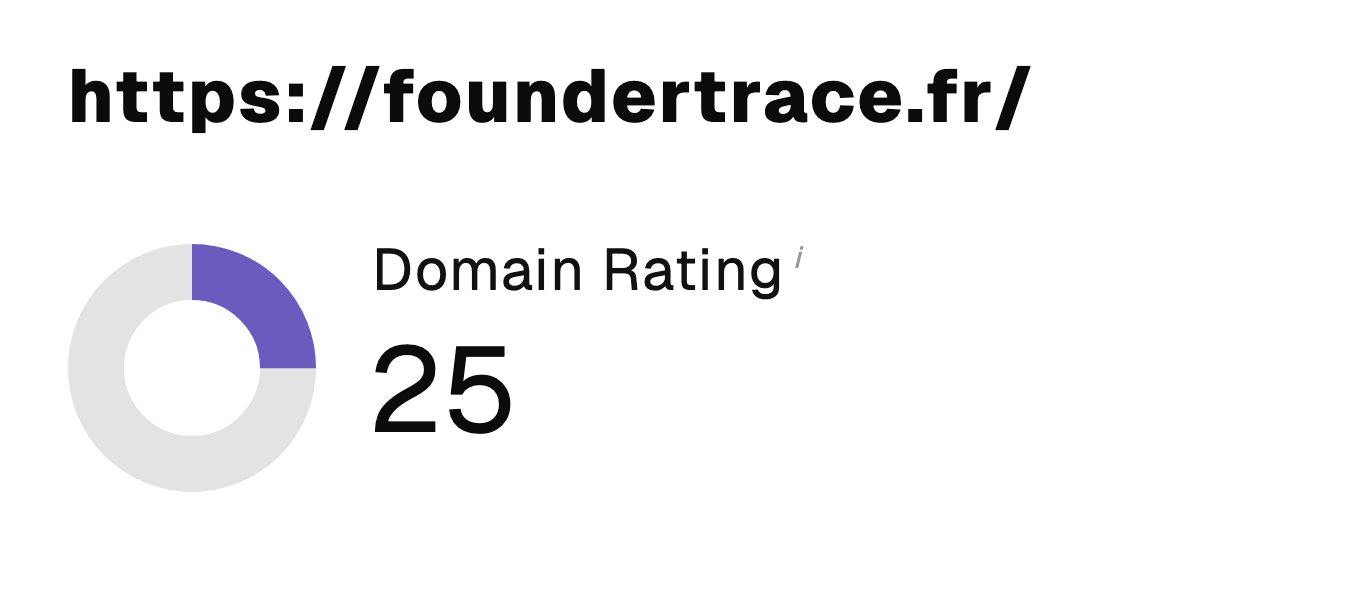 “I just let the Sorank software do its thing, and now my DR is 25 and my page is ranking higher.”
 Lucas Flandrefoundertrace.fr“I specialized in GEO thanks to Sorank. The GEO Leaderboard allows me to show my clients their position vs competitors on ChatGPT. It’s a real commercial differentiator.”
 MélanieSEO Freelance“Great service, works well for our website and helps us understand how to improve it to rank better on Google and elsewhere. Congrats, keep going, I recommend it.”
 Hugo T.E-commerce merchant