Preferences
Privacy is important to us, so you have the option of disabling certain types of storage that may not be necessary for the basic functioning of the website. Blocking categories may impact your experience on the website. More information

Privacy is important to us, so you have the option of disabling certain types of storage that may not be necessary for the basic functioning of the website. Blocking categories may impact your experience on the website. More information

AI content detection estimates whether text was written by a human or an AI model. Learn how detectors work, their accuracy, and their limits.








Sources
AI content detection is the practice of using specialized tools to judge whether a piece of writing was produced by a human or by an AI model such as ChatGPT, Gemini, or Claude. These detectors do not read for meaning the way a person does. Instead, they measure statistical fingerprints in the text, score how machine-like those patterns look, and return a probability that the content is AI generated.
The topic matters because AI writing tools are now everywhere, and editors, teachers, and search teams all want a way to tell machine output from human work. Understanding how detection works, and where it fails, helps you make better decisions about how you create and verify content rather than trusting a single score blindly.
AI content detection refers to tools that estimate the likelihood that content was generated by artificial intelligence. The output is almost always probabilistic: a detector might report that a passage is 85 percent likely to be AI generated, not that it definitively is. That distinction is important, because a probability is a signal to investigate, not a verdict to act on automatically.
Most detectors focus on text, but the same idea extends to images, code, and other media. For text, the detector inspects linguistic patterns, sentence structure, and word choice, then compares them against what it has learned from large datasets of human and machine writing. The closer the patterns match known AI output, the higher the score it returns.
Detection combines machine learning and natural language processing to inspect a document section by section. When you paste text in, the tool breaks it into smaller chunks, evaluates the language patterns in each, and aggregates the result into an overall estimate. Longer passages are easier to judge because they give the model more signal to work with, while very short snippets are far less reliable.
Under the hood, detectors are trained on large labeled collections of human writing and AI writing. By learning the differences between the two, they build an internal sense of what machine text tends to look like. That training is also why detectors age quickly: as LLM output gets more human-like, older detectors that were tuned on earlier models lose accuracy within months unless they are retrained.
Two statistical measures sit at the heart of most detectors. Perplexity measures how predictable the text is. AI models tend to pick the most probable next word, which produces low perplexity, while human writers make more surprising choices, which produces higher perplexity. A classic illustration is completing the sentence "the sky is" with "blue," a low-perplexity choice a model would favor.
The second signal is burstiness, which measures variation in sentence length and structure. Human writing naturally mixes short and long sentences, creating an uneven rhythm, while AI text tends to be more uniform. When a detector sees both low perplexity and low burstiness, it is much more likely to flag the passage as machine written.
Beyond raw statistics, detectors use machine learning classifiers that sort text into human or AI categories based on learned features such as tone, grammar, and style, then attach a confidence score. They also rely on embeddings, which turn words into numerical vectors so the tool can analyze frequency, repeated word sequences known as N-grams, and semantic relationships.
A different approach is watermarking, where an AI system deliberately embeds a hidden statistical pattern into its output so it can be recognized later. In theory this makes detection far more reliable, but most public AI models do not currently apply watermarks, so detectors still depend mainly on pattern analysis rather than a built-in signal.
Accuracy varies widely by tool, text length, and the AI model that produced the content. Some vendors report very high numbers: Grammarly states its detector reached 99 percent accuracy on the independent RAID benchmark. Independent testing is more cautious, with one analysis finding detectors reliable roughly 7 out of 10 times across a sample of 100 articles.
The reverse problem, false positives, is just as serious. Testing of one popular detector found that between 10 and 28 percent of genuinely human-written pieces were labeled as AI generated. Even OpenAI struggled here: it discontinued its own AI Text Classifier in 2023 after it correctly identified only about 26 percent of AI-written text. The lesson is that no detector is perfect, and scores should be treated as estimates.
The most damaging weakness of detection is the false positive, where human writing is wrongly flagged. Formal, academic, or technical prose is especially prone to this because its structure can look uniform and predictable. Detectors also show bias against developing writers and people who write in English as an additional language, which raises real fairness concerns when scores drive decisions.
Detection also struggles with mixed content, where a human edits AI output or lightly paraphrases it. These hybrid texts blur the patterns detectors rely on, and advanced models can be prompted to write in ways that evade detection. For these reasons, a detector score should guide human review, never replace it, particularly on sensitive YMYL topics where accuracy is critical.
Search teams care about detection because they want to ship genuinely useful pages, not thin machine output mass produced at scale. Google has said it rewards helpful content regardless of how it is produced, and does not penalize AI assistance by default. What it does target is low-value, unhelpful pages, which is closer to the problem of AI spam than to AI use in general.
For generative engine optimization, the same principle applies. Whether your content is surfaced and cited inside AI assistants depends on quality, accuracy, and depth, not on whether a detector thinks a machine helped write it. A thoughtful AI content strategy treats detection as a quality checkpoint, using it alongside human editing rather than as the only gate.
Use detectors as one input among several. Pair a detection score with human review, plagiarism checks, and authorship tracking before drawing conclusions. Focus on whether the content is accurate, original, and genuinely helpful, because that is what readers and search systems ultimately reward, however the first draft was created.
If you build with AI, the goal is not to dodge detectors but to add real value: original analysis, first-hand experience, and clear structure. Tools that support disciplined keyword research and content planning help you target genuine questions, and combining that with strong editing keeps your work both trustworthy and resilient to whatever a detector reports. This sits naturally inside a wider AI content generation workflow.
AI content detection estimates, but never proves, whether text was written by a machine. It works by measuring statistical patterns such as perplexity and burstiness, then scoring how machine-like a passage looks, with real limits around false positives, bias, and rapidly improving models. Treat any score as a probability that prompts human judgment, not a final ruling.
For marketers and publishers, the takeaway is simple: invest in accurate, original, genuinely helpful content and pair detection with human review. To go further, connect this with a broader AI content strategy and disciplined AI content generation practices. Reference sources: Grammarly, Surfer, and Link-Assistant.

Yes, regularly. Detectors return a probability, not proof, and they produce both false positives and false negatives. Human writing, especially formal or technical prose, is sometimes flagged as AI generated, while lightly edited AI text can pass as human. Always pair a detector score with human review before acting on it.
No, not by default. Google has stated it rewards helpful, high-quality content regardless of whether AI helped produce it. What it targets is low-value, unhelpful pages produced mainly to manipulate rankings. The practical goal is genuine quality and accuracy, not avoiding detection tools.
They analyze statistical patterns rather than meaning. Key signals are perplexity, how predictable the word choices are, and burstiness, how much sentence length and structure vary. Machine learning classifiers trained on human and AI samples then combine these signals into a confidence score for the passage.
THEY TRIED SORANK BEFORE YOU
 “I tested Sorank on a real client site and it's insane. It does everything an agency would bill you $1500 a month for. It's going into production on that client now.”
 Guillaume Guersanguersanguillaume.com“We are an Ads agency and we wanted to get our SEO back on track once and for all. Sorank gave us a clear view of our site, helped us prioritize optimizations, and properly structure our content. The tool is easy to use, well designed for a team, and very practical for centralizing tracking without having to juggle multiple platforms. A very solid foundation to start fresh with our SEO.”
 Gaspard MadouiAds Agency
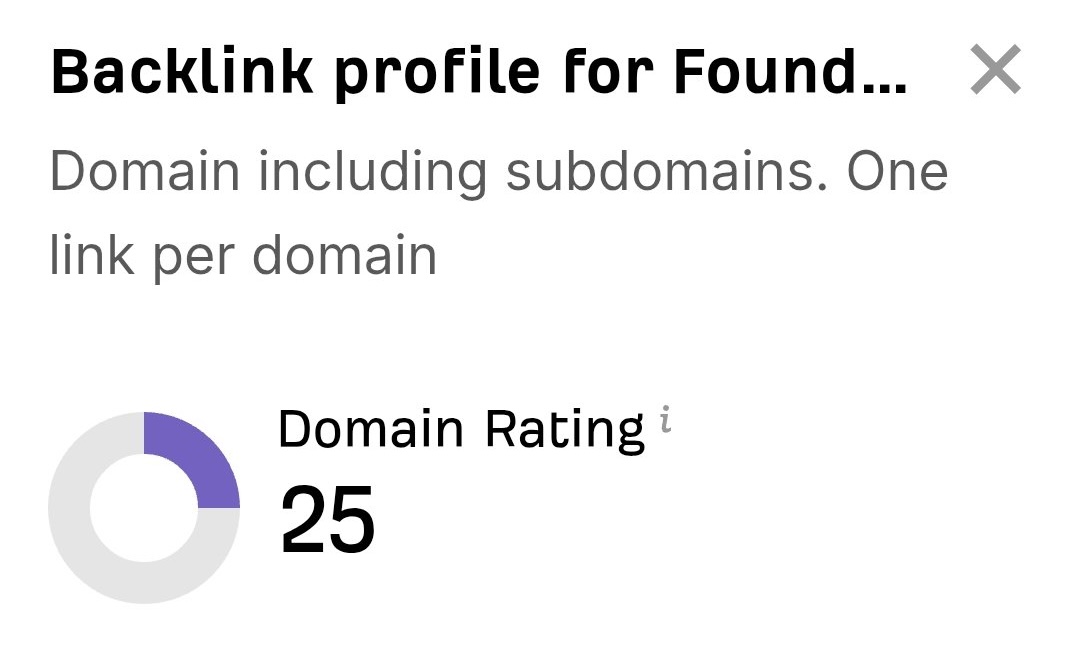 “I just let the Sorank software do its thing, and now my DR is 25 and my page is ranking higher.”
 Lucas FlandrePodcast Host“I specialized in GEO thanks to Sorank. The GEO Leaderboard allows me to show my clients their position vs competitors on ChatGPT. It’s a real commercial differentiator.”
 MélanieSEO Freelance“Great service, works well for our website and helps us understand how to improve it to rank better on Google and elsewhere. Congrats, keep going, I recommend it.”
 Hugo T.E-commerce merchant