
Preferences
Privacy is important to us, so you have the option of disabling certain types of storage that may not be necessary for the basic functioning of the website. Blocking categories may impact your experience on the website. More information
Privacy is important to us, so you have the option of disabling certain types of storage that may not be necessary for the basic functioning of the website. Blocking categories may impact your experience on the website. More information

Co-citation is when two sites are mentioned together on a third site. Learn what it means, what Google has said and how to earn co-citations safely.








Founder Sorank, 7+ years in SEO.
Summary
Co-citation is when two websites appear together on a third website, with or without a link between them. The more often a third party mentions both sites together, the more similar their subjects seem. Google has not confirmed co-citation as a ranking factor, so treat it as a hint about relevance, not a ranking lever.
Want to go further? Ask
Co-citation is a useful idea for SEO, but it is not a tactic on its own. It describes a pattern: two sites keep showing up in the same places. Unlike a backlink, it needs no link at all. This guide explains where the term comes from, what Google has said about it, and what you can do with it.
The term comes from library science. In 1973, Henry Small described co-citation as a way to measure how closely two scientific papers are related. If later papers cite both of them, the two probably deal with the same subject. Irina Marshakova developed the same measure on her own that year.
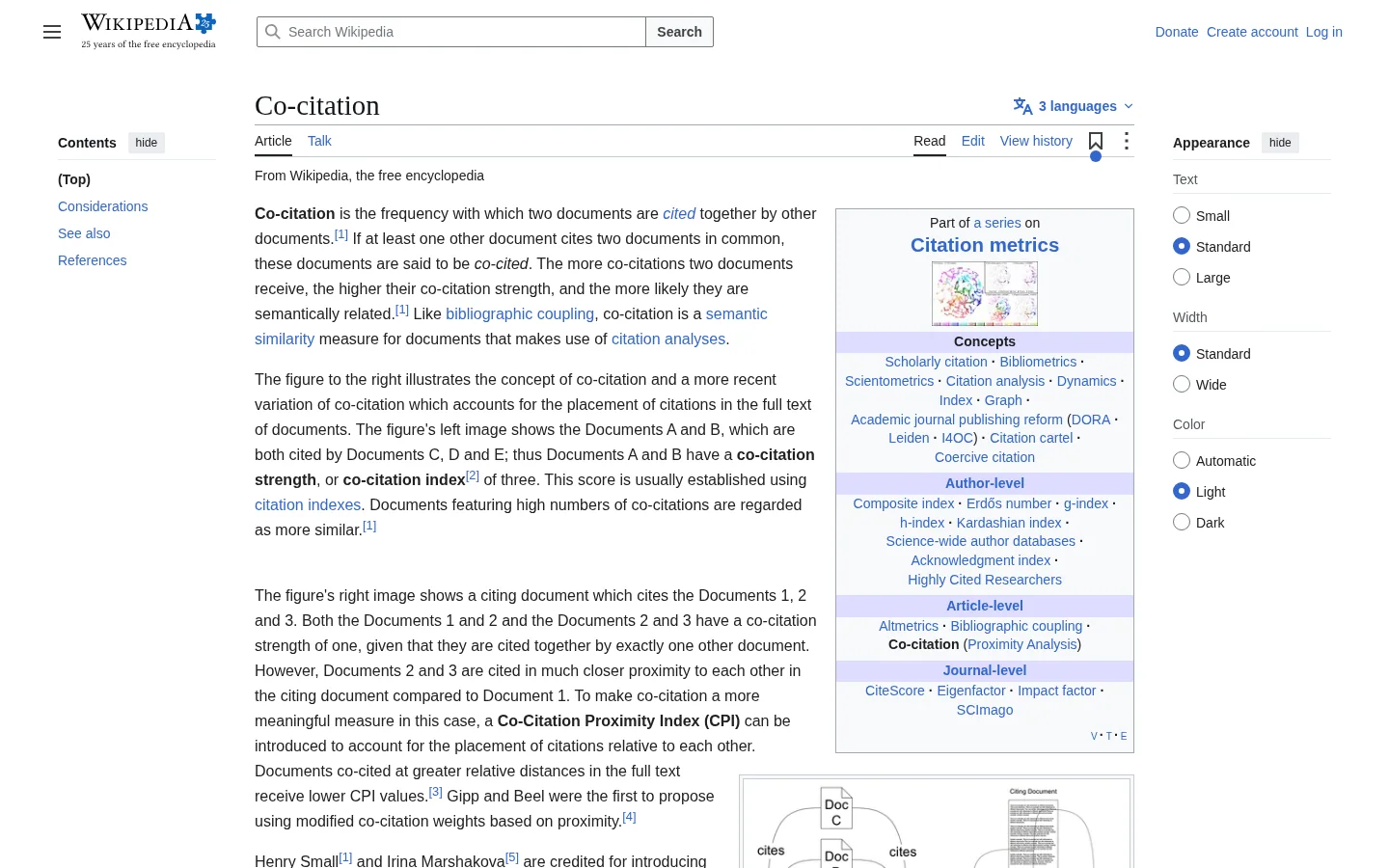
Search marketers borrowed the idea for the web. In SEO, co-citation means that two sites are mentioned together on a third page, such as a news article, a directory or a review, even when neither site links to the other.
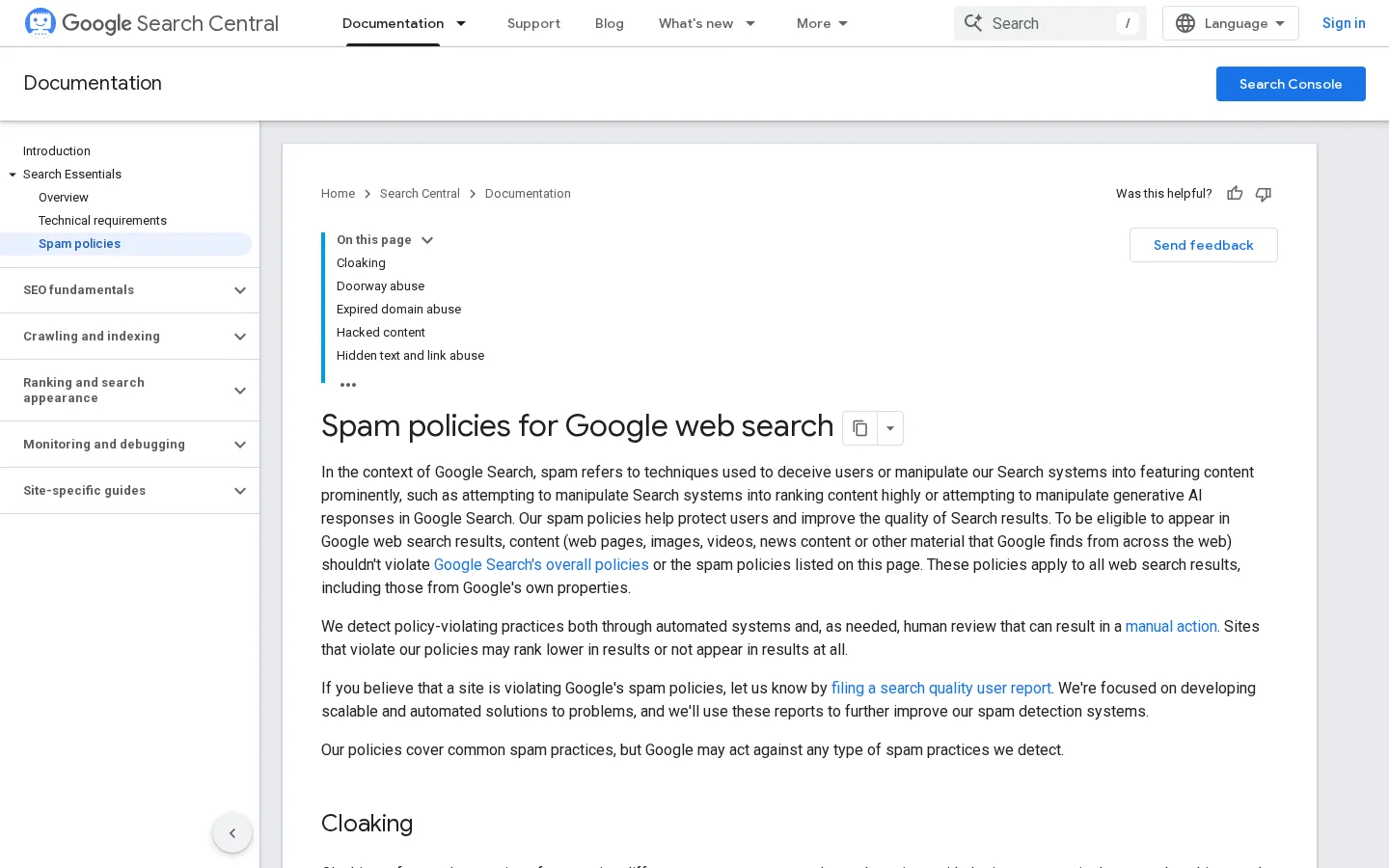
Google has not confirmed it. Its spam policies cover links, not co-citation. They define link spam as "creating links to or from a site primarily for the purpose of manipulating search rankings."
John Mueller has also addressed the closest case, unlinked mentions. In a 2020 tweet, which Search Engine Roundtable reported, he answered that unlinked citations usually do not help rankings. The article reads this as meaning they may still help Google discover pages.
Google's link spam update of July 2021 targeted manipulative links. In the same post, Google asked sites in affiliate programs to qualify their affiliate links with rel="sponsored".
Some SEO sites say that Google's Penguin filter might use co-citation to check the links between a linking site and the site it links to. That is speculation. Google has not said it, and no public test proves it.
So treat co-citation as a model. It helps you think about which sites belong together in your field. It is not a lever you can pull to move your rankings.
A backlink is a hyperlink from one page to another. Co-citation has no link. Two sites only need to appear together on a third page. Because there is no link, co-citation has no anchor text, and it does not pass the link value described in PageRank.
| Point | Backlink | Co-citation |
|---|---|---|
| What it is | A link from one site to another | Two sites named together on a third site |
| Link needed? | Yes | No |
| Covered by Google's rules? | Yes, under link spam rules | Not confirmed as a signal |
| How you earn it | Ask, earn or publish content others link to | Get named alongside peers in neutral places |
Start with your competitors, then look at who names them. A site that mentions several of your competitors covers your field, and it may also name you one day.
You earn co-citations by being useful to the same people who write about your field. Paying for mentions that exist only to sell placements is a poor use of money, and it can break Google's rules.
If you want the link and not only the mention, Sorank's natural backlink acquisition gets one-way links from quality sites in your niche, never reciprocal swaps.
Tip
Check every month which sites name your brand next to competitor names. If the same sites keep naming you together, they are your best co-citation sources, and your best link prospects.
What it is: You try to get your name next to big brands because you think it will lift your rankings alone.
How to spot it: Your plan has no real audience, no link and no reason for a reader to care about the page where you appear.
How to fix it: Aim for mentions that bring readers and, where possible, links. Judge each one by the traffic and trust it brings, not by the brand names next to yours.
What it is: A group of sites that link to each other, based on the idea "link to me and I'll link to you." Google lists excessive link exchanges as a link scheme in its spam policies. Read more about backlink exchanges before you join one.
How to spot it: Your link profile grows fast, the linking sites have no real readers, and the same sites link to each other in a loop.
How to fix it: Stop the exchanges, keep only the links that a real editor chose, and ask for removal of the worst ones.
What it is: Directories that accept any site, with no editing and no real category.
How to spot it: The directory lists unrelated businesses in the same category, and nobody uses it to find anything.
How to fix it: Keep only the directories that a real customer or editor would use to find a business like yours.
What it is: Reporting a plain-text mention as if it were a backlink, so the link count looks better than it is.
How to spot it: Your report counts a long list of mentions with no link next to them.
How to fix it: Track links and mentions in separate columns. Ask for a link where a mention already exists, and report mentions as brand visibility, not as link growth.
For SEO, co-citation is a clue about how the web sees your field. Being named with the right peers helps show search engines what your site is about, which fits the wider idea of topical authority.
For GEO, AI answers often draw from several sources at once. A brand named next to the right peers across many pages may be easier for AI models to place in its category. No public study proves that AI models score co-citation directly, so test it. Track whether you appear in AI answers after new mentions appear, as explained in AI citations vs mentions.
Co-citation is two sites named together on a third site. Google has not confirmed it as a ranking factor, so do not build your plan around it. Build useful content, earn links and get named in trusted places. The co-citations usually follow. Start by finding the sites that already name your competitors, and ask whether they would name you too.
Sources
Google has not confirmed co-citation as a ranking factor. Its spam policies cover links, and John Mueller has said unlinked citations usually do not help rankings. Treat co-citation as a hint about relevance, not a lever you can pull.
A backlink is a hyperlink from one site to another. Co-citation needs no link: two sites only have to appear together on a third site, such as a news article, a directory or a review.
Get named alongside your peers in trusted, neutral places such as industry directories, trade association pages and expert roundups. Ask for a link where you are already mentioned, and never pay for mentions that exist only to sell placements.
 “I tested Sorank on a real client site and it's insane. It does everything an agency would bill you $1500 a month for. It's going into production on that client now.”

 Guillaume Guersanguersanguillaume.com“We are an Ads agency and we wanted to get our SEO back on track once and for all. Sorank gave us a clear view of our site, helped us prioritize optimizations, and properly structure our content. The tool is easy to use, well designed for a team, and very practical for centralizing tracking without having to juggle multiple platforms. A very solid foundation to start fresh with our SEO.”
 Gaspard MadouiAds Agency
 “I just let the Sorank software do its thing, and now my DR is 25 and my page is ranking higher.”
 Lucas Flandrefoundertrace.fr“I specialized in GEO thanks to Sorank. The GEO Leaderboard allows me to show my clients their position vs competitors on ChatGPT. It’s a real commercial differentiator.”
 MélanieSEO Freelance“Great service, works well for our website and helps us understand how to improve it to rank better on Google and elsewhere. Congrats, keep going, I recommend it.”
 Hugo T.E-commerce merchant



















