
Preferences
Privacy is important to us, so you have the option of disabling certain types of storage that may not be necessary for the basic functioning of the website. Blocking categories may impact your experience on the website. More information
Privacy is important to us, so you have the option of disabling certain types of storage that may not be necessary for the basic functioning of the website. Blocking categories may impact your experience on the website. More information

SEO stop words are common words like the, of or to. Learn if Google ignores them and when to remove them from URLs, titles and content.








Founder Sorank, 7+ years in SEO.
Summary
SEO stop words are short, very common words such as "the", "a", "of", "to", "and" or "in" that carry grammar more than topic. Google reads them and uses them to understand intent, so they do not hurt rankings. You can trim them from URL slugs, but keep them in titles and body text.
Want to go further? Ask
SEO stop words are the function words of a language: articles, prepositions, conjunctions, pronouns and common verbs like "is" or "are". The term comes from information retrieval, where a system drops these words before it indexes or matches text. Many SEO guides still tell you to remove them everywhere. That advice is outdated. This page explains what Google actually does with stop words, where removing them helps, and where it only makes your page harder to read.
Stop words are the words that appear in almost every sentence and say little about the subject on their own. If you strip "the best restaurants in Brooklyn" down to its topic, you keep "best restaurants Brooklyn"; "the" and "in" are the stop words.
There is no single official list. Each search system or tool keeps its own. Elasticsearch, a widely used search engine for site search, is a good reference: its stop token filter removes 33 English words by default when you do not customize it:
a, an, and, are, as, at, be, but, by, for, if, in, into, is, it, no, not, of, on, or, such, that, the, their, then, there, these, they, this, to, was, will, with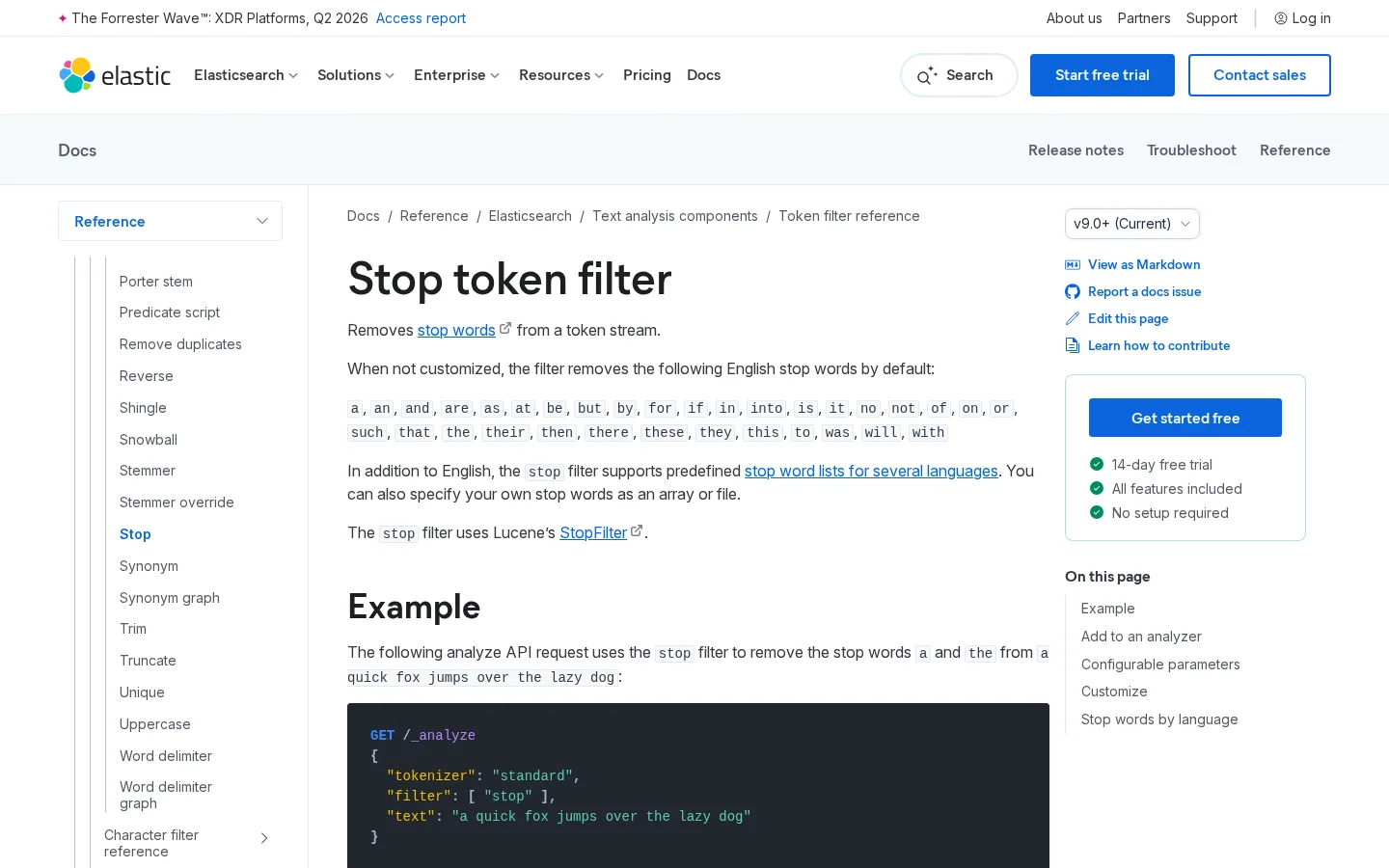
Longer lists used by SEO plugins and text tools add pronouns ("you", "your", "we"), auxiliaries ("has", "have", "do"), and words like "very", "just" or "about". Every language has its own set: "le", "de", "et" in French, "der", "und", "mit" in German.
Early search systems dropped stop words to save space and speed. These words appear in nearly every document, so indexing them made the index bigger and matching slower without helping to rank one page above another.
That is why old SEO advice said "Google ignores stop words, so remove them". The reasoning made sense when engines matched keywords word by word. It stopped making sense once engines started to read whole queries in context, which is the job of natural language processing in search.
No, Google reads stop words and often relies on them to understand what you mean. The clearest proof comes from Google itself. When it launched BERT in Search, Google explained that the model helps it understand one in 10 searches in the U.S. in English, especially "searches where prepositions like 'for' and 'to' matter a lot to the meaning" (Pandu Nayak, Google, October 25, 2019).
Example
Google's own example is the query "2019 brazil traveler to usa need a visa". Without "to", you cannot tell whether a Brazilian is going to the USA or an American is going to Brazil. Google writes that the very common word "to" "actually matters a lot here".
Stop words change meaning in many everyday queries:
The BERT update and the systems that followed read every word in relation to the words around it. Small words are part of the search intent behind a query, so Google keeps them.
No, stop words do not hurt rankings, and removing them does not lift a page. Google matches meaning, not a string of keywords. "Restaurants Brooklyn" and "restaurants in Brooklyn" lead to very similar results because the meaning is the same.
What can hurt you is the opposite reflex: writing broken phrases to fit an exact keyword. "Best pizza Brooklyn open late" in a sentence reads like spam. That pattern is close to stuffing keywords into your text, which Google's spam policies target. Write the natural form ("the best pizza in Brooklyn that is open late") and you still rank for the short query.
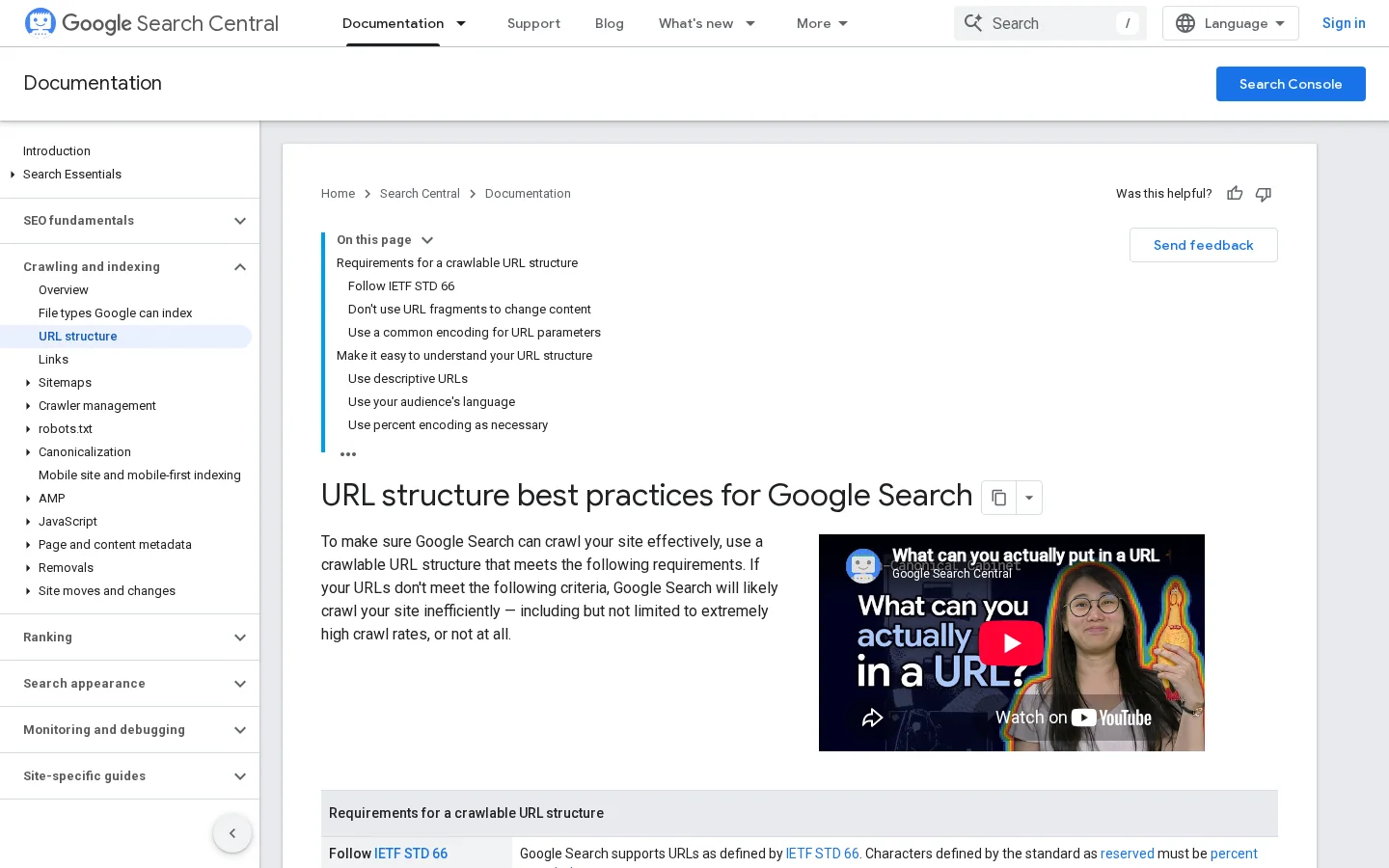
Yes, in URL slugs you can remove stop words when the meaning stays clear. A slug has no grammar to respect, and a shorter URL is easier to read, share and remember. Google's URL structure guidelines ask you to "use readable words rather than long ID numbers" and to separate words with hyphens rather than underscores. They say nothing about stop words, so trimming them is a readability choice, not a ranking rule.
Most CMSs build the slug from the full title. Shorten it before you publish:
Before: /what-are-the-best-ways-to-write-a-newsletter-for-a-restaurant
After:  /restaurant-newsletter-tips
Keep a stop word when it changes the meaning or the name. "/flights-to-london" and "/flights-from-london" must stay distinct. "/the-who-tour" needs "the". Our guide to URL slug best practices covers length, hyphens and case in more detail.
Warning
Do not rewrite the slugs of pages that already rank just to remove stop words. Changing a URL means a 301 redirect and a period of reprocessing, for no ranking gain. Apply the rule to new pages.
No, keep stop words in your title tags. The title is the clickable link people read in Google, and a title without small words reads like a list of keywords. Google's title link documentation asks for "descriptive and concise" titles and warns that repeating the same words brings nothing.
Compare the two versions:
The second one is clearer and more likely to earn the click. If your title is too long, cut a whole idea, not the grammar. The title tag definition explains how to write one that fits the results page.
No, never remove stop words from body text. Sentences without them are hard to read, and readers leave. Search engines and AI assistants also need them to extract a clear answer from your page.
The same goes for keywords. Keyword tools often show grammatically broken phrases, such as "pizza delivery brooklyn". These are the words people type, not the words you should write. Use the natural phrase in your H1, headings and text. This matters even more for long-tail queries, where words like "for", "with" or "without" often carry the intent.
Stop words matter in one place inside your workflow: analysis. When you count which words a text repeats, "the" and "of" fill the top of the list. Sorank's free keyword extractor has a "Skip stop words" option so that a phrase cannot start or end with "the", "of" or "and", and the keyword density checker leaves stop words out of its word ranking. That filtering is for measurement, not for your published text.
Keep a stop word when it changes meaning, names something or makes the text readable. Drop it only in places with no grammar, like a slug or a tag.
| Place | Remove stop words? | Rule |
|---|---|---|
| URL slug | Usually yes | Keep 3 to 5 meaningful words; keep "to", "from", "for", "not" if they change the meaning |
| Title tag | No | Write a natural, descriptive sentence |
| H1 and headings | No | Use full questions, like real searches |
| Body text | No | Write for the reader |
| Meta description | No | It is a short pitch; grammar helps the click |
| Image file names | Optional | Short, descriptive, words separated by hyphens |
| Text analysis (TF-IDF, density) | Yes | Filter them out before you count |
The last row is where stop lists still do their original job. A TF-IDF calculation or a density count is meaningless if "the" comes out as your top term.
Stop words matter because they carry the relations between ideas, and both Google and AI assistants read those relations. In SEO, they help Google match your page to the precise intent of a query, as the BERT examples show. Your job is simply to keep them where they serve the reader and trim them where no one reads grammar, like a slug.
In GEO, the stakes are higher. ChatGPT, Gemini and Claude answer in full sentences and look for passages they can quote. A sentence like "SEO stop words do not hurt rankings" is easy to extract and cite; a keyword string is not. Clear, complete sentences are what writing for NLP and AI readers is about.
SEO stop words are common words like "the", "of" and "to". Google stopped ignoring them long ago and uses them to understand meaning. Remove them from URL slugs when the meaning stays clear, keep them in titles, headings and body text, and filter them only when you analyze a text. If you want articles written in natural, complete sentences for Google and AI search, Sorank's AI blog article generator writes and publishes them on autopilot.
Sources
No. Google reads stop words and uses them to understand a query, especially prepositions like "to" and "for" that change the meaning. Since BERT, Google interprets every word in the context of the words around it.
You can remove them from new URL slugs when the meaning stays clear, to keep the URL short and readable. Keep a stop word if it changes the meaning, like "to" in /flights-to-london. Do not rewrite URLs that already rank just to remove stop words.
They count in the total number of words of a page, but most tools leave them out of the list of top terms. Otherwise "the" and "and" would always come first. Keyword density is a writing check, not a Google ranking factor.
 “I tested Sorank on a real client site and it's insane. It does everything an agency would bill you $1500 a month for. It's going into production on that client now.”

 Guillaume Guersanguersanguillaume.com“We are an Ads agency and we wanted to get our SEO back on track once and for all. Sorank gave us a clear view of our site, helped us prioritize optimizations, and properly structure our content. The tool is easy to use, well designed for a team, and very practical for centralizing tracking without having to juggle multiple platforms. A very solid foundation to start fresh with our SEO.”
 Gaspard MadouiAds Agency
 “I just let the Sorank software do its thing, and now my DR is 25 and my page is ranking higher.”
 Lucas Flandrefoundertrace.fr“I specialized in GEO thanks to Sorank. The GEO Leaderboard allows me to show my clients their position vs competitors on ChatGPT. It’s a real commercial differentiator.”
 MélanieSEO Freelance“Great service, works well for our website and helps us understand how to improve it to rank better on Google and elsewhere. Congrats, keep going, I recommend it.”
 Hugo T.E-commerce merchant



















