Preferences
Privacy is important to us, so you have the option of disabling certain types of storage that may not be necessary for the basic functioning of the website. Blocking categories may impact your experience on the website. More information

Privacy is important to us, so you have the option of disabling certain types of storage that may not be necessary for the basic functioning of the website. Blocking categories may impact your experience on the website. More information

Learn to write title tags that rank and drive clicks. Best practices, length, keyword placement, and real examples.







Tools


Summary
A title tag is the clickable headline shown in search results and browser tabs. It's your first impression and strongly influences whether users click your result or a competitor's.
Want to go further? Ask
The title tag is the most visible on-page SEO element. It appears in three places: in the browser tab, in search results as the clickable headline, and in the browser history. Google uses title tags to understand page topic. Users use them to decide whether to click. A compelling title tag can increase your click-through rate (CTR) by 30-40% compared to a generic one. A weak title tag loses clicks to competitors even when your content is superior.
In 2026, title tags remain critical. Unlike other HTML tags that have become less important, title tags have actually become more important for CTR as search results become more crowded. You need to stand out. Your title tag is your pitch. It must clearly convey what the searcher will find, include relevant keywords for both ranking and CTR, and compel the click. This guide teaches you how to write title tags that rank and convert.
Google's documentation explains that the title tag is the primary signal Google uses to understand what a page is about. It's factored into the ranking algorithm. Users see the title tag in search results and use it to decide which result to click. A strong correlation exists between title relevance, CTR, and rankings. When your title matches search intent perfectly, you get clicks, and Google rewards those clicks with better rankings.
Title tags also appear in browser tabs, bookmarks, and browser history. Users see your brand name and topic every time they visit your page, which builds brand recognition. Social media platforms sometimes use title tags as default share text, so a well-written title helps your content spread.
Google displays approximately 50-60 characters on desktop and 40-50 characters on mobile. Anything beyond 60 characters gets cut off with ellipsis ("..."). Write for 50-60 characters to be safe. However, length matters less than clarity and CTR. A 45-character compelling title beats a 60-character generic one.
Google's guidance recommends writing descriptive titles specific to each page. Test your title in Google's search result preview tool to see exactly how it displays. Put your most important information first so even if it's truncated, the key message survives. Save your brand name for the end when possible.
Include your target keyword in the title tag, ideally near the beginning. "Title Tags: How to Write SEO Titles" is better than "How to Write Titles." The keyword at the start signals relevance. Google bolds matching keywords in search results, which draws attention. Users see their search term bolded and are more likely to click.
Use keyword variations naturally. Don't repeat the exact keyword multiple times. "Title tag title tag optimization guide for title tags" is spam and will hurt your CTR. "Title Tag Optimization: Write Titles That Rank" includes the keyword and variation naturally. Semantic variations of your keyword (synonyms, related phrases) also help. For "title tag," variations include "page title," "meta title," "SEO title."
The most effective format is "Target Keyword + Benefit/Hook | Brand Name." Examples: "Title Tags: SEO Best Practices | Sorank," "On-Page SEO Checklist: Rank #1 | Sorank," "How to Write Meta Descriptions: Boost CTR | Sorank." The benefit or hook (the part after the keyword) is what makes searchers want to click.
Alternatives formats: "Keyword - Benefit," "Keyword: Complete Guide," or "Keyword vs. Alternative (Comparison)." Test different formats and monitor CTR. Some audiences respond to "How-to" formats. Others prefer list formats ("7 Title Tag Tips"). Commercial audiences prefer benefit-driven formats ("Boost CTR by 30%"). Informational audiences prefer educational formats ("The Complete Guide").
Your title competes directly against 9 other results on the first SERP. Each has a title tag trying to capture clicks. To stand out, your title must be distinctly different while still being relevant. If you use generic terms like "Guide," "Tips," or "Best Practices," you blend in with competitors. Add specificity: instead of "SEO Guide," try "SEO Guide 2026" or "Complete SEO Guide for Beginners." Specificity stands out and attracts the right audience while repelling poor-fit searchers.
Also consider what the top-ranking pages' titles say. If all top results use "Complete Guide," use something different: "The Definitive Guide," "2026 Beginner's Guide," or "Step-by-Step Guide." Standing out matters because searchers scan titles quickly. A title that pops visually (using numbers, specific benefits, or unique angles) gets more clicks than a similar title that reads like all the others.
Great title tags answer the implicit question: "Why should I click this instead of the other results?" Use numbers ("7 Proven Title Tag Tactics," "2026 Guide"). Numbers increase CTR by 20-30%. Use power words ("ultimate," "essential," "proven," "complete," "the best," "expert," "definitive"). Create curiosity or controversy when appropriate, but honestly.
Weak: "Title Tags." Strong: "Title Tags: The Complete Guide." Stronger: "Title Tags: The Complete Guide to Ranking and Clicks." Best: "Title Tags: Write Titles That Rank (With 2026 Examples)." Each version adds clarity, specificity, and benefit. For commercial queries, include the benefit prominently. "Buy Project Management Software" is generic. "Project Management Software: Compare 10 Tools, Pricing, and Features" is specific and benefit-driven.
Informational queries ("how to," "what is," "why") require educational title formats: "How to [Topic]: [Benefit or Insight]." Example: "How to Write Title Tags: A Complete 2026 Guide." These searchers want education, so emphasize comprehensiveness and expertise. Commercial queries ("best [product]," "review") require comparison and decision-making formats: "Best [Category]: [Comparison Element]." Example: "Best Project Management Tools: Features, Pricing, Compared." Transactional queries (brand name, product name) require clarity and benefit: "[Product]: [Primary Benefit]." Example: "Sorank: The All-in-One SEO and GEO Platform."
Matching title format to search intent boosts CTR because searchers immediately see they're in the right place. A title misaligned with intent will be skipped, even if your content is excellent. The title is your signal to the searcher that you understand what they're looking for. HTML title element specifications define how search engines interpret title tags across the web.
Don't use misleading titles that don't match page content. If you promise something your page doesn't deliver, users bounce, and Google demotes the page. Don't stuff keywords. "Title tag optimization title tags SEO title tags" is spam. Don't use all caps (except for acronyms). "TITLE TAG OPTIMIZATION GUIDE" looks like shouting and hurts CTR. Don't duplicate title tags across pages. Each page needs a unique pitch.
Don't over-optimize for search engines at the expense of user appeal. A title written for Google might rank, but a title written for users will convert. The best titles optimize for both. Don't use special characters that don't render properly. Don't leave title tags blank or use generic defaults from your CMS. The title tag is too valuable real estate to waste on automation or defaults. Invest the time to write unique, compelling titles for your most important pages.
For blog posts: "Topic: Benefit | Brand." Example: "On-Page SEO: How to Rank #1 | Sorank." For product pages: "Product Name: Key Benefit." Example: "Sorank: GEO and SEO Automation Platform." For category pages: "Category: Number of Options." Example: "Project Management Tools: The 15 Best Reviewed." For comparison pages: "A vs. B: Detailed Comparison." Example: "Sorank vs. Competitors: Complete Feature Comparison."
For FAQ pages: "FAQ: Common Questions About Topic." Example: "On-Page SEO FAQ: 5 Common Questions Answered." Adjust the format to match search intent. Web.dev's SEO checklist emphasizes ensuring title tags match page content and search intent.
Google Search Console shows your average CTR for each page and query. Use this data to identify titles that underperform. If a page's CTR is 2% when it should be 5%, the title tag might be weak. Test improvements and monitor CTR changes. A/B test title variations by changing one element at a time and tracking CTR impact.
Monitor your rankings alongside CTR. If a page's rankings improve but CTR drops, improve your title. If rankings drop but CTR improves, the title is working; the issue is content quality or topical authority. Track both metrics over 4-week periods to account for natural ranking fluctuations and get accurate CTR trend data. Consistent monitoring and iteration compounds your improvements over time.
Title tags are your first impression in search results. A compelling title tag clearly communicates what the page offers, includes your target keyword, includes a benefit or hook, and compels clicks. Write for 50-60 characters. Include your keyword near the start. Add a benefit statement. Test formats and monitor CTR in Google Search Console. Update underperforming titles to improve CTR, which indirectly boosts rankings.
Start by auditing your current title tags. Replace generic, duplicate, or weak titles with specific, unique, benefit-driven ones. Monitor CTR changes for 2-4 weeks. Optimize based on data. For a comprehensive SEO audit that includes title tag analysis and recommendations, try Sorank's free SEO audit.
Sources

Write for 50-60 characters to display fully on desktop. On mobile, Google shows only 40-50 characters. However, focus on clarity over length. A compelling 45-character title beats a vague 60-character one. Put your most important keyword and value proposition in the first 50 characters so it displays on all devices. Use the full 60-character limit only if additional words strengthen the message.
Put your brand name at the end of title tags if space allows. 'Keyword - Brand Name' or 'Keyword | Brand Name' is the typical format. For brand searches, put the brand name first. For informational content, keyword first makes sense. Test both formats and monitor CTR. Including the brand builds recognition and trust, but keyword placement is more important for ranking.
Title tags are a weak direct ranking factor compared to backlinks and content quality. However, they impact CTR, which is a ranking signal. A compelling title increases CTR, which signals to Google that your page is relevant, which can improve rankings. Additionally, title tags help Google understand what your page is about, which aids in keyword matching. So while not a top-3 factor, title tags indirectly impact rankings.
THEY TRIED SORANK BEFORE YOU
 “I tested Sorank on a real client site and it's insane. It does everything an agency would bill you $1500 a month for. It's going into production on that client now.”
 Guillaume Guersanguersanguillaume.com“We are an Ads agency and we wanted to get our SEO back on track once and for all. Sorank gave us a clear view of our site, helped us prioritize optimizations, and properly structure our content. The tool is easy to use, well designed for a team, and very practical for centralizing tracking without having to juggle multiple platforms. A very solid foundation to start fresh with our SEO.”
 Gaspard MadouiAds Agency
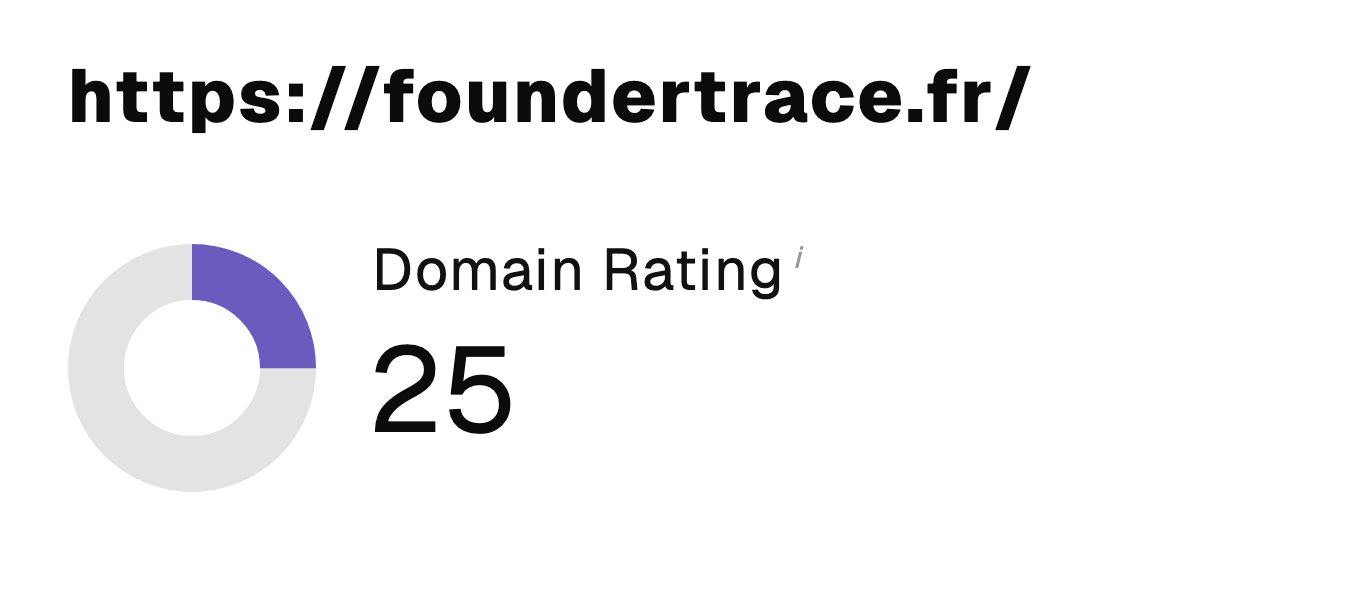 “I just let the Sorank software do its thing, and now my DR is 25 and my page is ranking higher.”
 Lucas Flandrefoundertrace.fr“I specialized in GEO thanks to Sorank. The GEO Leaderboard allows me to show my clients their position vs competitors on ChatGPT. It’s a real commercial differentiator.”
 MélanieSEO Freelance“Great service, works well for our website and helps us understand how to improve it to rank better on Google and elsewhere. Congrats, keep going, I recommend it.”
 Hugo T.E-commerce merchant