
Preferences
Privacy is important to us, so you have the option of disabling certain types of storage that may not be necessary for the basic functioning of the website. Blocking categories may impact your experience on the website. More information
Privacy is important to us, so you have the option of disabling certain types of storage that may not be necessary for the basic functioning of the website. Blocking categories may impact your experience on the website. More information

Query deserves diversity is the idea that an ambiguous search should show several meanings. Learn which queries qualify and how to write for each intent.







Founder Sorank, 7+ years in SEO.
Summary
Query deserves diversity is the idea that some search queries have several clear meanings, so a search engine shows a mix of results instead of one interpretation. The term comes from SEO writing, not from a named Google system. It helps you know when one page can serve one intent, and when you need to cover several.
Want to go further? Ask
Query deserves diversity describes what happens when one search term can mean different things to different people. Someone who types "jaguar" might want a photo of the animal, a car review, or the latest sports news. A results page that shows only one meaning would fail most of them.
This page explains which queries deserve a mix of results, how search engines appear to choose that mix, and how you can write one page that answers more than one intent. It also covers a different kind of diversity that people often confuse with this one.
One note first. The label comes from SEO writing. As far as public sources show, it is not a named Google system, so this page only uses public statements from Google and published research.
It means a query has several strong meanings, so a results page that shows only one of them leaves many people unhappy. Search engines respond by mixing the types of pages and sources they show.
Think of the results page as a short menu. A single dish serves one diner. A query with several meanings needs a small selection, so that each likely reader finds something they want.
Queries with several strong meanings deserve diverse results. The clearest cases are short queries with no context, like the ones in this table.
| Query | Meanings people have in mind |
|---|---|
| jaguar | The animal, the car brand, a sports team |
| python | The snake, the programming language |
| apple | The fruit, the technology company |
Long queries can deserve diversity too. A query like "best CRM" can come from a freelancer who wants a free tool, a small team that wants simple software, or a company that wants a large system. A page written for only one of these readers misses the other two.
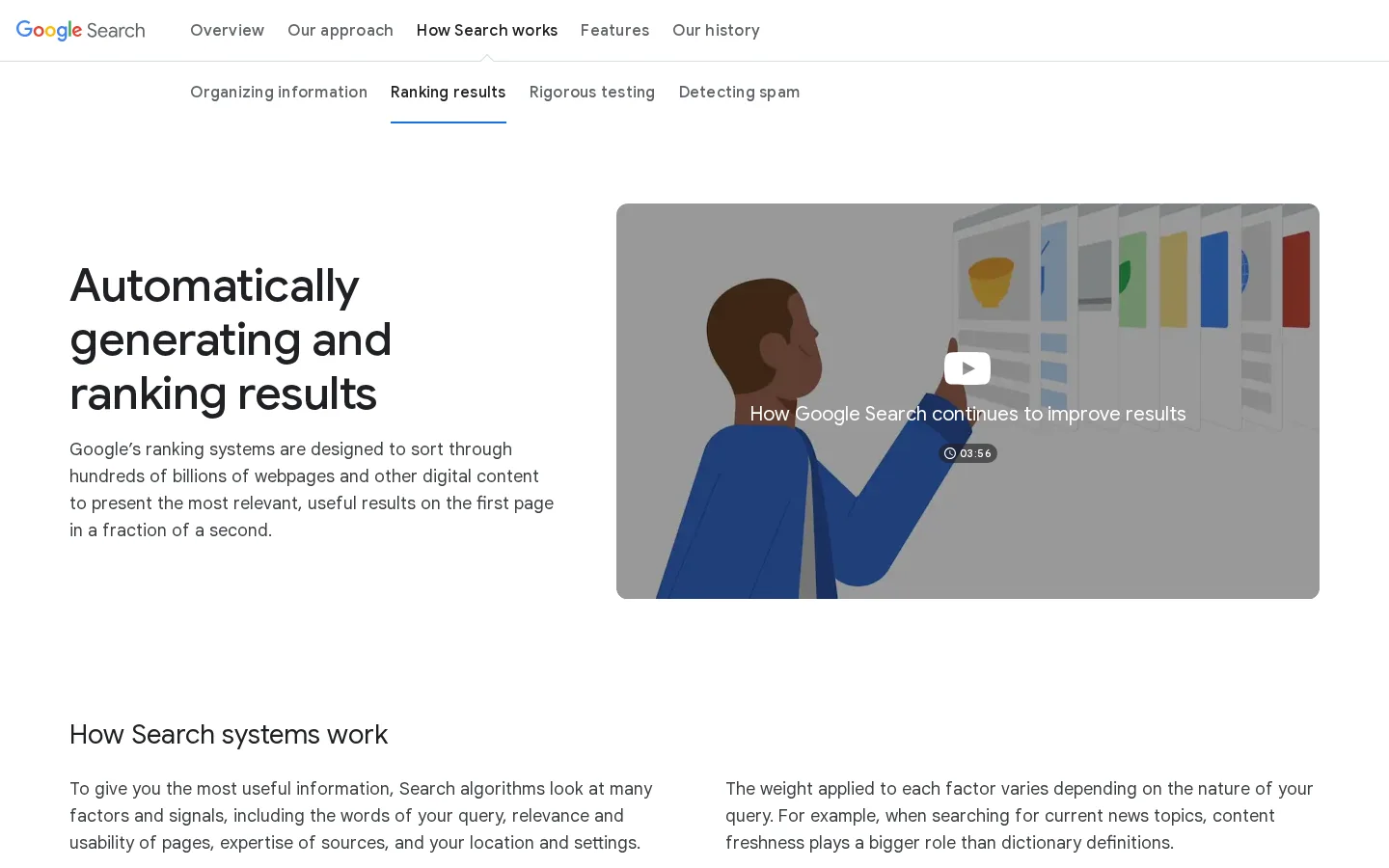
Context often decides the meaning. Google explains that someone searching "football" in Chicago will likely see results about American football and the Chicago Bears, while in London the same search might turn up soccer and the Premier League. The engine reads the location and shows a different mix. Google's How Search Works page gives this example.
The problem is older than today's search engines. In a 2009 paper on ambiguous web queries, Rakesh Agrawal and his co-authors aimed to "minimize the risk of dissatisfaction of the average user." Their goal was to lower the chance that a typical searcher leaves with nothing useful. The Microsoft Research page for the paper shows the abstract.
Search engines first read the query and its context, such as location, language, and past behavior. Then they pull results for the main meanings into the same page, within a limited number of slots. The full method is not public, so treat this as a simplified view.
The page of results you see is called the SERP. Its mix shows you what the engine thinks people want from that query, and that mix can change over time.
Check the results. The meaning that fills most of the first page is the dominant one. Meanings that appear in one or two results are minor ones. You can do this check in a few minutes.
For a deeper method, read how to read Google's results before you write. The idea of intent itself is covered in the search intent entry, and the goal a query hides is explained in latent intent.
Give each main meaning its own section, and answer it in the first sentence of that section. A reader who wants one meaning should find it at once.
Do not hide the minor meanings either. A short section is enough. The goal is that each reader lands on the right part of the page, not that every meaning gets the same depth.
Tip
Search your term in two countries. If the top results change, location is changing the meaning, and your page may need a local section.
Query diversity is about meanings. Site diversity is about how many results from one website appear on the page. The two are often mixed up, but they solve different problems.
In June 2019, Google's Search Liaison said: "This site diversity change means that you usually won't see more than two listings from the same site in our top results." Engadget reported the change and noted that Google still sometimes returns more listings from one domain than intended. That change limits repetition from one site. It does not decide which meanings a query needs.
A related idea is citation diversity, which looks at how AI answers draw on many sources. That is a question about sources. Query deserves diversity is a question about meanings.
This mistake is a page that answers only one reading of an ambiguous term. You can spot it when the top results show several kinds of pages and yours is only one kind. Fix it by adding a section for each main meaning, or by linking to the page that covers the other meaning.
This mistake happens when a page touches every meaning but never clearly answers one. You can spot it when a reader cannot tell which part answers their question. Fix it with one heading and one direct answer for each meaning.
This mistake puts a rare reading at the top of the page. You can spot it when the first screen talks about a meaning that few results show. Fix it by moving the dominant meaning to the top and keeping the minor one lower down.
For SEO, it decides whether your page can win clicks at all. A page that answers only a minor meaning of a query may struggle, because the engine is trying to show the dominant one. A page that answers the dominant meaning first and covers the next one clearly has more room on the results page.
For GEO, AI tools face the same problem. Many of them split one question into several searches before they answer, a process described in query fanout. Pages that answer each likely meaning clearly give those searches something to find.
Sorank's Query Fan-Out Tracker records the hidden searches that AI models run before they answer, so you can see which meanings they look for.
Query deserves diversity describes queries with several strong meanings. Check the results for your term, find the dominant meaning, and answer it first. Then give each other main meaning a short, clear section, so that every reader finds what they came for.
Sources
No. The term comes from SEO writing, and public sources do not show it as a named Google system. Google does publish how results change for ambiguous queries, such as its football example for Chicago and London.
Search the term and look at the first page. If it shows several kinds of pages with different meanings, the query has more than one strong intent. If one kind of result dominates, one meaning is the main one.
No. Site diversity limits how many listings from one website appear in the top results. Query diversity is about the different meanings a search can have.
 “I tested Sorank on a real client site and it's insane. It does everything an agency would bill you $1500 a month for. It's going into production on that client now.”

 Guillaume Guersanguersanguillaume.com“We are an Ads agency and we wanted to get our SEO back on track once and for all. Sorank gave us a clear view of our site, helped us prioritize optimizations, and properly structure our content. The tool is easy to use, well designed for a team, and very practical for centralizing tracking without having to juggle multiple platforms. A very solid foundation to start fresh with our SEO.”
 Gaspard MadouiAds Agency
 “I just let the Sorank software do its thing, and now my DR is 25 and my page is ranking higher.”
 Lucas Flandrefoundertrace.fr“I specialized in GEO thanks to Sorank. The GEO Leaderboard allows me to show my clients their position vs competitors on ChatGPT. It’s a real commercial differentiator.”
 MélanieSEO Freelance“Great service, works well for our website and helps us understand how to improve it to rank better on Google and elsewhere. Congrats, keep going, I recommend it.”
 Hugo T.E-commerce merchant



















