Preferences
Privacy is important to us, so you have the option of disabling certain types of storage that may not be necessary for the basic functioning of the website. Blocking categories may impact your experience on the website. More information

Privacy is important to us, so you have the option of disabling certain types of storage that may not be necessary for the basic functioning of the website. Blocking categories may impact your experience on the website. More information
What is a SERP? Learn how search results pages work, why ranking matters, and how to optimize your visibility on Google.







Tools


Founder of Sorank, 7+ years of experience in SEO, GEO enthusiast.
Summary
A SERP (search engine results page) is Google's ranked list of web pages, ads, and featured content for a user query, combining organic results, paid ads, and special features such as snippets and knowledge panels.
Want to go further? Ask
When you type a query into Google, you aren't searching the entire internet. You're querying a single page: the search engine results page (SERP). That page is the storefront of digital search. Every organic ranking, paid ad, featured snippet, and knowledge panel represents a fight for the user's attention. Understanding the anatomy of a SERP is the foundation of modern SEO and GEO. You can't optimize what you don't understand.
Over the past decade, the SERP has evolved dramatically. Google has folded in AI-generated summaries, local business panels, image carousels, and answer boxes. The traditional "10 blue links" disappeared years ago. Today, a SERP is a complex, multi-feature layout that mixes paid search, organic results, and AI content. That evolution has forced SEO professionals to rethink ranking strategies, because being in position #1 no longer guarantees clicks.
A SERP is the page Google returns after you enter a search query. It contains organic (unpaid) search results ranked by Google's algorithm, paid ads, and SERP features such as featured snippets, knowledge panels, local business listings, and video carousels. According to Google's Search documentation, the ranking system evaluates relevance, quality, and user-experience signals.
The SERP is the main entry point for organic web traffic. More than 90% of online experiences start on a search engine. If your content doesn't appear on the SERP for relevant queries, you're effectively invisible. Ranking matters because visibility equals traffic. Traffic equals potential customers, subscribers, or readers. That's why SERP optimization sits at the core of digital marketing.
Google controls the SERP layout, and it changes regularly. Every layout iteration affects which results get clicked and which get ignored. Understanding SERP anatomy helps you anticipate where your content will land and how much traffic it will receive.
The modern SERP isn't just organic results. It's a layered ecosystem. At the top of most SERPs sit paid ads, usually labeled "Sponsored" or "Ad." These are Google Ads listings. Below the ads come the organic results, typically numbered 1-10. But sprinkled throughout, you'll see featured snippets (often called "position zero"), local pack results, knowledge panels, image galleries, news results, and AI overviews.
Every SERP component serves a different user intent. A user searching "how to make sourdough bread" might see a featured snippet with a quick answer at the top, followed by blog posts and recipe sites. A user searching "sourdough bread near me" sees a local pack with bakery listings and Google Maps integration. A user searching "best sourdough" might see a knowledge panel with definitional content. The SERP layout adapts to intent.
According to Google Search Central documentation, SERP features are designed to match user intent and provide quick answers without requiring a click. That has reshaped how SEO professionals approach content. Featured snippets now compete directly with first-page rankings.
A featured snippet is a special SERP result that appears above the organic rankings in a box. It typically includes a bolded title, a short text excerpt (usually 40-60 words), and a link to the source page. Featured snippets are sometimes called "position zero" because they occupy prime real estate before the first organic result. Winning a featured snippet can lift traffic by 20-30% for informational queries, even when you don't rank in the top three.
Featured snippets typically appear for queries that ask "how," "what," "why," and "which." Google extracts the snippet from top-ranked pages and formats it as an answer. To win a featured snippet, your content must already rank on the first page for that keyword. You can't jump from page 5 to position zero without first improving your baseline ranking.
Featured snippet types vary. Paragraph snippets contain short text answers. List snippets show bullet points or numbered steps. Table snippets show data in rows and columns. Video snippets embed YouTube results. Video snippets are increasingly common and often drive more clicks than text-only features.
A knowledge panel is a right-aligned box that appears for branded, named-entity, or informational queries. It pulls data from Wikidata, Wikipedia, and Google's Knowledge Graph. A search for "Elon Musk" returns a knowledge panel with his photo, biography, social profiles, and recent news. A search for "Tesla stock price" returns a live stock-ticker panel.
Knowledge panels are built from many sources, and schema.org structured data helps Google understand the entities on your site. If you mark up your website with the right schema (Organization, Person, LocalBusiness), you increase the likelihood that Google will surface accurate data about you in knowledge panels. Schema markup is not a direct ranking factor, but it helps Google understand your content and can make your pages eligible for rich results.
Entity-based search is reshaping SERP strategy. Google no longer thinks purely in keywords; it thinks in entities (people, places, things) and their relationships. That shift has implications for SEO: keyword stuffing is dead, but entity relevance is critical.
Many SERPs include a local pack, a map widget showing 3-5 nearby businesses relevant to the query. A search for "coffee shop near me" returns a map with local cafes, each with a star rating, address, and business link. The local pack appears above many organic results, which means local SEO can drive more clicks than organic ranking for geo-intent queries.
Local pack visibility depends on Google Business Profile optimization, local backlinks, reviews, and local relevance signals. Unlike organic ranking, which is based on content and backlinks, local ranking weighs proximity and business-information accuracy heavily. Optimizing your Google Business Profile is often faster and higher-ROI than building backlinks.
Local SERPs vary by geography. A search for "plumber" in New York City returns different results than a search for "plumber" in rural Vermont. SERP features and layout also change based on device type (desktop vs. mobile). Mobile SERPs typically show the local pack and ads higher on the page, pushing organic results further down.
A zero-click search is a query in which the user finds an answer on the SERP without clicking any result. The user gets the answer and leaves. Featured snippets, knowledge panels, local packs, and answer boxes all enable zero-click behavior. Research from zero-click search studies shows that roughly 60% of all searches end without a click.
This trend has major implications for SEO strategy. You can rank #1 for a keyword and receive no traffic because the featured snippet or knowledge panel answered the user's question on the SERP itself. That's not an SEO failure, it's a shift in how value flows through search. Appearing in a featured snippet, knowledge panel, or local pack still drives visibility and brand awareness, even without a click.
Google increasingly uses AI to generate SERP summaries. Google's AI Overview feature uses generative AI to write a summary of search results above the organic listings. These AI-generated overviews compete directly with organic results for attention. SEO professionals must now optimize not only for rankings, but also for inclusion in AI-generated summaries.
Mobile SERPs are narrower, shorter, and more feature-dense than desktop SERPs. Mobile users have less screen space, so Google prioritizes featured snippets, local packs, and ads above the organic results. A keyword ranking position 3 on desktop may not appear above the mobile fold. That's why mobile-first indexing has become mandatory for SEO success.
Google now indexes the mobile version of your site as the primary version, regardless of whether you also have a desktop site. If your mobile site is slow, poorly formatted, or missing content, your rankings suffer across all devices. Mobile responsiveness is no longer a nice-to-have; it's a ranking factor.
Optimizing for mobile also means optimizing for Core Web Vitals, which measure user experience on mobile devices. Core Web Vitals include Largest Contentful Paint (LCP), Interaction to Next Paint (INP), and Cumulative Layout Shift (CLS). Slow mobile load times hurt rankings and user experience.
SERP position correlates directly with click-through rate (CTR). The first organic result usually receives 27-40% of clicks. Position 2 receives 10-20%. Position 3 receives 5-10%. Traffic drops sharply after position 3. That distribution assumes no SERP features. When featured snippets, ads, or local packs are present, they redistribute clicks away from organic results.
CTR also varies by query type and industry. Branded queries (searching your company name) have high CTR because users know what they want. Informational queries have lower CTR if the featured snippet answers the question without a click. Commercial queries (searching to buy something) can have higher CTR if the user intends to purchase.
Ranking in position 10 essentially doesn't exist for most users. SERPs typically show 10 results per page, but mobile SERPs often display only 3-5 before requiring a second scroll. Most users never click past the first SERP page. That's why first-page ranking is the primary goal of SEO.
Google updates its algorithm constantly. Broad core updates happen a few times per year. Each update reshuffles SERP rankings, sometimes dramatically. Google Search Central publishes core updates in its official documentation. Tracking these updates helps you understand SERP fluctuations and adjust your strategy.
SERP features also change. Google adds new features, removes old ones, and adjusts the layout based on user behavior. The rise of AI overviews is the latest major change. As AI becomes more important in search, the SERP will continue to evolve. Staying informed about SERP changes is essential to maintaining visibility.
The SERP is the battleground of modern digital marketing. Understanding its anatomy, features, and evolution is essential for anyone pursuing organic traffic. Position #1 no longer guarantees clicks. Featured snippets, knowledge panels, ads, and AI overviews now compete for the user's attention on the same real estate. Successful SEO requires optimizing for both traditional rankings and SERP features.
At Sorank, we help teams track SERP positions, monitor feature changes, and optimize content for visibility across every SERP element. Our GEO SEO audit tools reveal where you rank, which features appear, and how much traffic you're losing to competitors. Start with a free SERP analysis to see where your content stands.
Sources

Modern SERPs show paid ads at the top, local business listings, featured snippets, knowledge panels, related searches, and sometimes AI-generated overviews. Every element competes for attention. Paid ads typically take 2-4 positions before the organic results.
Google usually shows 10 organic results per page, although that varies with SERP features and device type. Mobile SERPs often show fewer results per scroll. Zero-click features such as snippets can reduce clicks to listings.
Yes. Position #1 gets roughly 27-40% of clicks, but SERP features (ads, snippets, local pack) redistribute traffic. Sites ranking #1 for keywords with featured snippets can receive fewer clicks than sites ranking #3 without snippets.
THEY TRIED SORANK BEFORE YOU
 “I tested Sorank on a real client site and it's insane. It does everything an agency would bill you $1500 a month for. It's going into production on that client now.”
 Guillaume Guersanguersanguillaume.com“We are an Ads agency and we wanted to get our SEO back on track once and for all. Sorank gave us a clear view of our site, helped us prioritize optimizations, and properly structure our content. The tool is easy to use, well designed for a team, and very practical for centralizing tracking without having to juggle multiple platforms. A very solid foundation to start fresh with our SEO.”
 Gaspard MadouiAds Agency
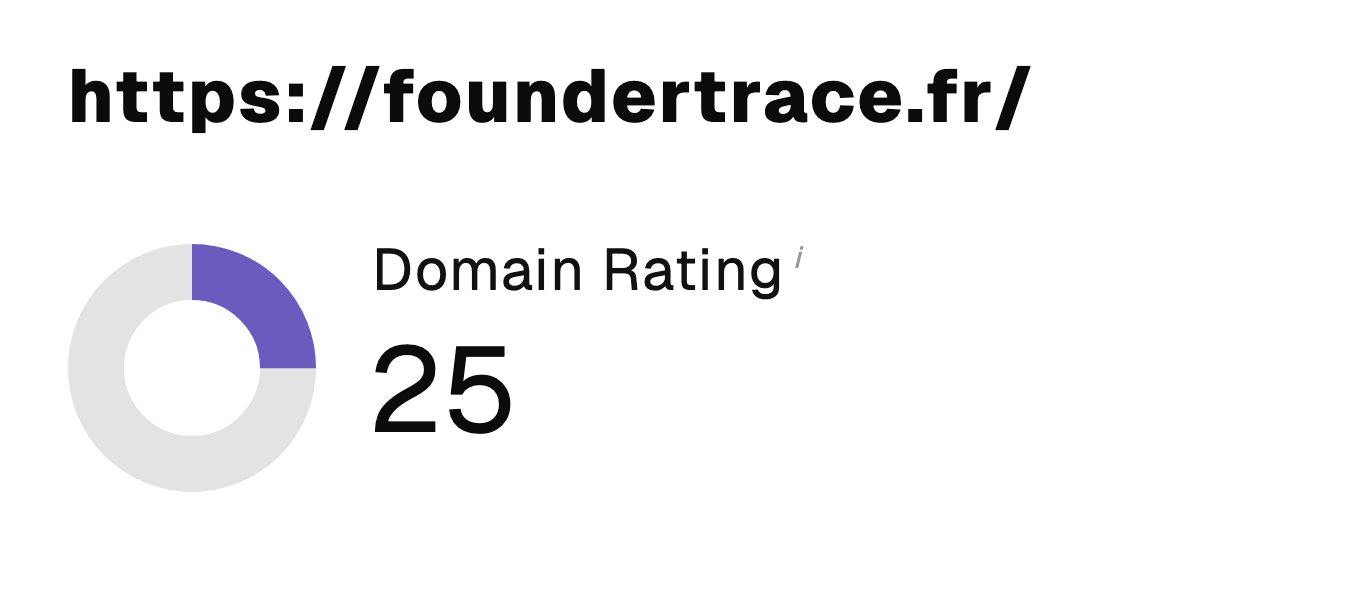 “I just let the Sorank software do its thing, and now my DR is 25 and my page is ranking higher.”
 Lucas Flandrefoundertrace.fr“I specialized in GEO thanks to Sorank. The GEO Leaderboard allows me to show my clients their position vs competitors on ChatGPT. It’s a real commercial differentiator.”
 MélanieSEO Freelance“Great service, works well for our website and helps us understand how to improve it to rank better on Google and elsewhere. Congrats, keep going, I recommend it.”
 Hugo T.E-commerce merchant