Preferences
Privacy is important to us, so you have the option of disabling certain types of storage that may not be necessary for the basic functioning of the website. Blocking categories may impact your experience on the website. More information

Privacy is important to us, so you have the option of disabling certain types of storage that may not be necessary for the basic functioning of the website. Blocking categories may impact your experience on the website. More information
60% of Google searches get no click. Learn why featured snippets, knowledge panels, and AI overviews are eliminating clicks, and how to adapt your SEO strategy.






Tools


Founder of Sorank, 7+ years of experience in SEO, GEO enthusiast.
Summary
Zero-click search refers to search queries where users find their answer on the Google search engine results page (SERP) without clicking on any organic result, typically through featured snippets, knowledge panels, or AI overviews.
Want to go further? Ask
More than 60% of all Google searches now end with no click to an organic website. The user gets the answer right on the SERP, they see a featured snippet, scan a knowledge panel, check the local pack, or read an AI-generated summary. Then they leave Google. They never click any website. For SEO professionals, this represents a fundamental shift in how search value flows.
Zero-click search isn't an SEO strategy failure. It's an evolution in how Google delivers information. Users get faster answers, Google increases time on its platform, and publishers have to adjust their visibility goals. Winning a featured snippet or knowledge panel is now as valuable as ranking #1, even when it doesn't directly drive clicks. Visibility is currency, and zero-click search has redistributed that visibility across the SERP.
Zero-click searches happen because Google has optimized the SERP to answer questions directly. Featured snippets give text answers. Knowledge panels deliver entity information. Local packs surface map results. Calculator SERP features handle math. Unit converters convert units. Weather results show forecasts. News carousels surface headlines. All of these SERP features exist to remove the need for users to click anywhere.
From Google's perspective, this strategy makes sense. Users want fast answers, not links to click. Google benefits from keeping users on its platform longer. Advertisers benefit from lower cost per click because some searches are now satisfied without clicks, reducing bidding pressure. Publishers, however, have lost significant traffic.
Featured snippets are the primary driver of zero-click searches. When a featured snippet answers the user's question, the user has no reason to click. Studies suggest featured snippets push the zero-click rate up by 35-45% for affected keywords. Knowledge panels are similarly effective at capturing search intent without clicks.
Featured snippets are the most important zero-click feature. They appear above organic results with a direct answer to common questions. A user searching for "how long to cook pasta" sees a featured snippet with the answer (8-10 minutes depending on the type) without clicking any link. The featured snippet eliminates the user's need to visit a recipe site.
Knowledge panels are right-aligned boxes that display entity information. A search for "Albert Einstein" returns a knowledge panel with his biography, birth/death dates, famous theories, and related links. The user gets the information directly from the knowledge panel without clicking any external link.
Local packs show map results for geo-intent searches. A search for "restaurants near me" surfaces a local pack with nearby restaurants, ratings, and links to make a reservation. The local pack satisfies the user's intent without clicks to external websites. The user might click a Google Maps link, but that's still a zero-click for the restaurant's actual website.
Calculator features handle unit conversion and math. A search for "100 km in miles" returns a calculator result with the answer (62.1 miles). The user gets the answer without clicking anywhere.
AI Overviews are the newest zero-click feature. Google AI Overview generates a summary answer at the top of the SERP using artificial intelligence. This AI-generated summary sits above traditional ranking results and featured snippets. AI Overviews push zero-click rates even higher by providing answers before traditional ranking results.
Industry research suggests that 60-64% of all Google searches now result in no click to any external website. This statistic varies by industry and query type. Informational searches have higher zero-click rates (70%+) because they're easier to answer directly. Commercial searches have lower zero-click rates (40-50%) because users want to compare options and read reviews. Navigational searches have near-zero zero-click rates because users want to reach a specific site.
Zero-click rates have grown 5-10 percentage points per year over the last five years. The trend correlates directly with the expansion of SERP features. As Google adds more featured snippets, knowledge panels, and AI features, zero-click rates rise. The rate is not plateauing; it keeps climbing.
Featured snippets account for roughly 25-30% of zero-click searches. Knowledge panels account for 15-20%. Local pack results account for 10-15%. AI Overviews are growing fast and now represent 5-10% of searches in Google's test regions. The remaining zero-click searches come from calculator features, weather results, and other SERP features.
Zero-click searches have directly reduced traffic to websites. A site that ranked #1 for a keyword five years ago may have received 100 monthly clicks from that keyword. Today, the same ranking might deliver only 40-50 clicks because 60% of searches now end without a click. This isn't a ranking failure, it's a feature of how modern search works.
This shift has forced SEO professionals to broaden their visibility goals beyond click-based metrics. Appearing in a featured snippet or knowledge panel is now considered a success even when it doesn't drive clicks. The value lies in brand awareness, authority signals, and inclusion in AI overviews. Users see your brand show up as an authoritative source on the SERP.
SEO strategy has shifted from pure click optimization to visibility optimization. Instead of asking "How many clicks will this ranking generate?" professionals now ask "How will this content show up across every SERP element?" That requires optimizing content not just for traditional rankings, but for featured snippets, knowledge panels, schema markup, and AI citation eligibility.
Winning a featured snippet typically increases total traffic to that page by 20-40%, even when the snippet itself produces zero clicks. That's because the featured snippet boosts visibility and brand authority. Users who see your snippet repeatedly become more likely to click your organic result or visit your site directly later. The snippet creates a halo effect that extends beyond the immediate zero-click SERP appearance.
What's more, featured snippets often position your page at the top of the page. Even if users don't click the featured snippet itself, they now see your organic result directly below it. That proximity and authority signal lift clicks to your organic result compared with competitors ranking lower.
The net effect is positive for most publishers. A site that wins featured snippets for 10 keywords will see total traffic grow despite higher zero-click rates on those keywords. The visibility boost from the featured snippet outweighs the zero-click loss.
Google's AI Overview feature represents the next frontier of zero-click search. AI Overviews use generative AI to summarize search results at the top of the SERP before any organic result. That AI-generated summary answers the user's question, reducing the need to click any result.
Google's blog announced the rollout of AI Overview to all US Search users. The feature is designed to deliver faster answers, especially for complex questions. However, it pushes zero-click rates even higher.
AI Overviews cite their sources. Small text at the bottom of the AI summary shows which websites were used to generate the answer. Users can click those citations to visit the source sites. However, citation clicks are lower than direct organic clicks, so AI Overviews still reduce overall site traffic.
For publishers, getting cited in AI Overviews is the new priority. If your content is included in the AI summary, you gain visibility and potential citation clicks. Optimizing for LLM inclusion and making sure your content is AI-friendly is now critical.
Optimize for featured snippets. This is the most effective zero-click adaptation. Winning featured snippets boosts page visibility and drives more click traffic than competitors without snippets. Focus on keywords with existing featured snippets.
Build brand authority. Visibility without clicks still drives brand awareness. When users repeatedly see your content show up in featured snippets and knowledge panels, they remember your brand. That leads to direct traffic, branded searches, and repeat visits over time.
Diversify traffic sources. Reduce dependence on organic click traffic alone. Build email subscribers, social media audiences, and direct traffic channels. That reduces your vulnerability to zero-click search algorithm changes.
Optimize for AI inclusion. Make sure your content is structured, well-formatted, and authoritative. Make your content eligible for AI Overview citations and LLM training data. Schema markup, clear formatting, and expert content increase the likelihood of AI citation.
Target commercial keywords. Commercial searches (purchase intent) have lower zero-click rates. Users searching "buy X" or "best X product" are more likely to click results. Shifting traffic toward commercial keywords reduces the zero-click impact.
Track featured snippet impressions in Google Search Console. A featured snippet that gets 10,000 monthly impressions reaches users with authority and visibility, even when clicks are low. Watch whether impressions grow after you win a featured snippet.
Measure brand lift through branded search volume. If you win featured snippets for your industry, your branded search volume should grow over time. Users remember your brand when they see your content appear in prominent positions on SERPs.
Monitor AI mention tracking. Tools that track mentions of your brand inside AI systems (ChatGPT, Claude, Gemini, Perplexity) show whether zero-click visibility translates into AI inclusion. Being mentioned in AI systems drives indirect but valuable traffic.
Featured snippets come in four types: paragraph snippets, list snippets, table snippets, and video snippets. Google's featured snippet documentation explains how to optimize for each type. Paragraph snippets answer questions with 40-60 words of text. List snippets provide steps or bulleted lists. Table snippets show data in rows and columns. Video snippets embed YouTube videos.
To win a featured snippet, you must: (1) rank on the first page for the target keyword, (2) provide a direct answer to the query, (3) format the answer clearly (lists use `
Knowledge panels disproportionately affect branded searches and entity-specific queries. A search for "Tesla" or "Elon Musk" returns a knowledge panel that delivers biographical information, related links, and images without requiring clicks. However, knowledge panels usually include external links at the bottom, which can drive traffic if optimized for. Google's Knowledge Graph blog post explains how entities make it into panels.
Local pack zero-clicks affect location-based searches. Restaurants, plumbers, dentists, and other local businesses suffer from local pack zero-clicks because users can see addresses, ratings, and phone numbers directly on the SERP. Still, local pack appearance remains valuable for local visibility.
News carousel zero-clicks affect trending topic searches. Breaking news searches surface multiple news articles in a carousel without users needing to click any link initially. The Web.dev guide on news carousel optimization helps publishers appear in these high-value SERP elements.
Zero-click search isn't an SEO failure, it's an evolution in how search works. 60% of searches end with no click because Google now answers questions directly on the SERP. Featured snippets, knowledge panels, and AI Overviews have redistributed traffic away from organic clicks and toward SERP feature visibility. But that doesn't mean organic SEO is dead. Winning featured snippets, being cited in knowledge panels, and appearing in AI Overviews drive visibility that converts to traffic across multiple channels.
Adapt your strategy by optimizing for on-page SEO and SERP features, not just rankings. Build brand authority to convert visibility into direct traffic. Monitor AI mention tracking to make sure your content reaches LLM systems. Use our AI mention tracking tool to see how often your content appears across ChatGPT, Claude, Gemini, and other AI assistants.
Sources

Zero-click searches still create value through brand visibility, authority signals, and indirect traffic. Appearing in a featured snippet or knowledge panel raises brand awareness even without clicks. You can measure this through increases in branded search volume, direct traffic, and referrals.
Zero-click search has shifted SEO priorities, but it has not killed organic search. Instead of optimizing purely for clicks, modern SEO requires optimizing for snippets, panels, and AI citations. Content that wins featured snippets still gets 20-40% more traffic than non-featured competitors.
AI Overviews (such as Google AI Overview) push zero-click rates even higher because users get an AI-generated summary above the organic results. This shifts clicks further down the page. However, AI Overviews usually cite their sources at the bottom, so the cited pages still receive some traffic through those citations.
THEY TRIED SORANK BEFORE YOU
 “I tested Sorank on a real client site and it's insane. It does everything an agency would bill you $1500 a month for. It's going into production on that client now.”
 Guillaume Guersanguersanguillaume.com“We are an Ads agency and we wanted to get our SEO back on track once and for all. Sorank gave us a clear view of our site, helped us prioritize optimizations, and properly structure our content. The tool is easy to use, well designed for a team, and very practical for centralizing tracking without having to juggle multiple platforms. A very solid foundation to start fresh with our SEO.”
 Gaspard MadouiAds Agency
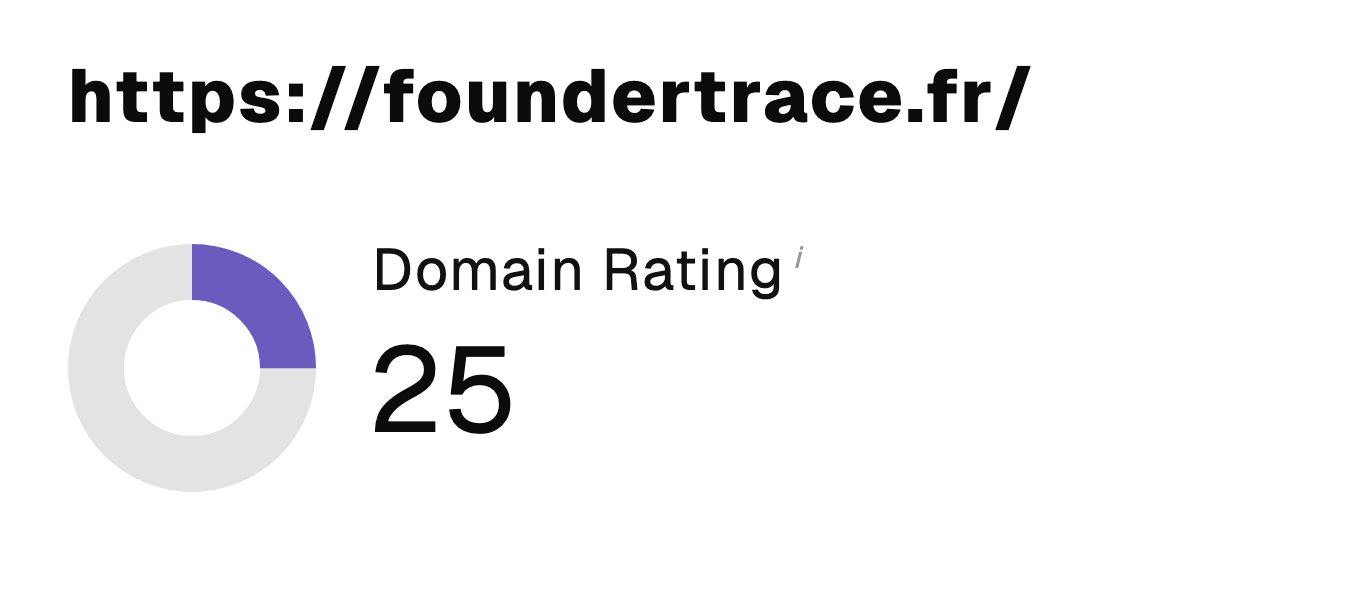 “I just let the Sorank software do its thing, and now my DR is 25 and my page is ranking higher.”
 Lucas Flandrefoundertrace.fr“I specialized in GEO thanks to Sorank. The GEO Leaderboard allows me to show my clients their position vs competitors on ChatGPT. It’s a real commercial differentiator.”
 MélanieSEO Freelance“Great service, works well for our website and helps us understand how to improve it to rank better on Google and elsewhere. Congrats, keep going, I recommend it.”
 Hugo T.E-commerce merchant