
Preferences
Privacy is important to us, so you have the option of disabling certain types of storage that may not be necessary for the basic functioning of the website. Blocking categories may impact your experience on the website. More information
Privacy is important to us, so you have the option of disabling certain types of storage that may not be necessary for the basic functioning of the website. Blocking categories may impact your experience on the website. More information

Pogo sticking is when searchers bounce between results and your page. Learn what causes it, how to measure it and how to fix it.








Founder Sorank, 7+ years in SEO.
Summary
Pogo sticking is a search behavior where a user clicks a result, leaves it within seconds, and returns to the results page to click another one. It often means the page missed what the searcher wanted. Google's John Mueller has said Google tries not to use signals like this for ranking, so focus on the causes.
Want to go further? Ask
Pogo sticking happens when a searcher bounces between results. They open a page from Google, find that it does not answer the question, and go back to try the next result. Each trip back is a sign that something on the first page did not match the query, and a visit that ends in seconds gives you no chance to convince the reader.
The loop is simple. A person types a query and clicks the first result. They scan the page for a few seconds, then press the back button. The results page loads again, and they click the third result, then the fourth, until one page gives them the answer or they give up.
Pogo sticking is a behavior, not a number in a report. The visitor leaves your site and goes back to the results page, and analytics tools only record what happens on your site. You can see the effects, but you cannot watch the loop directly.
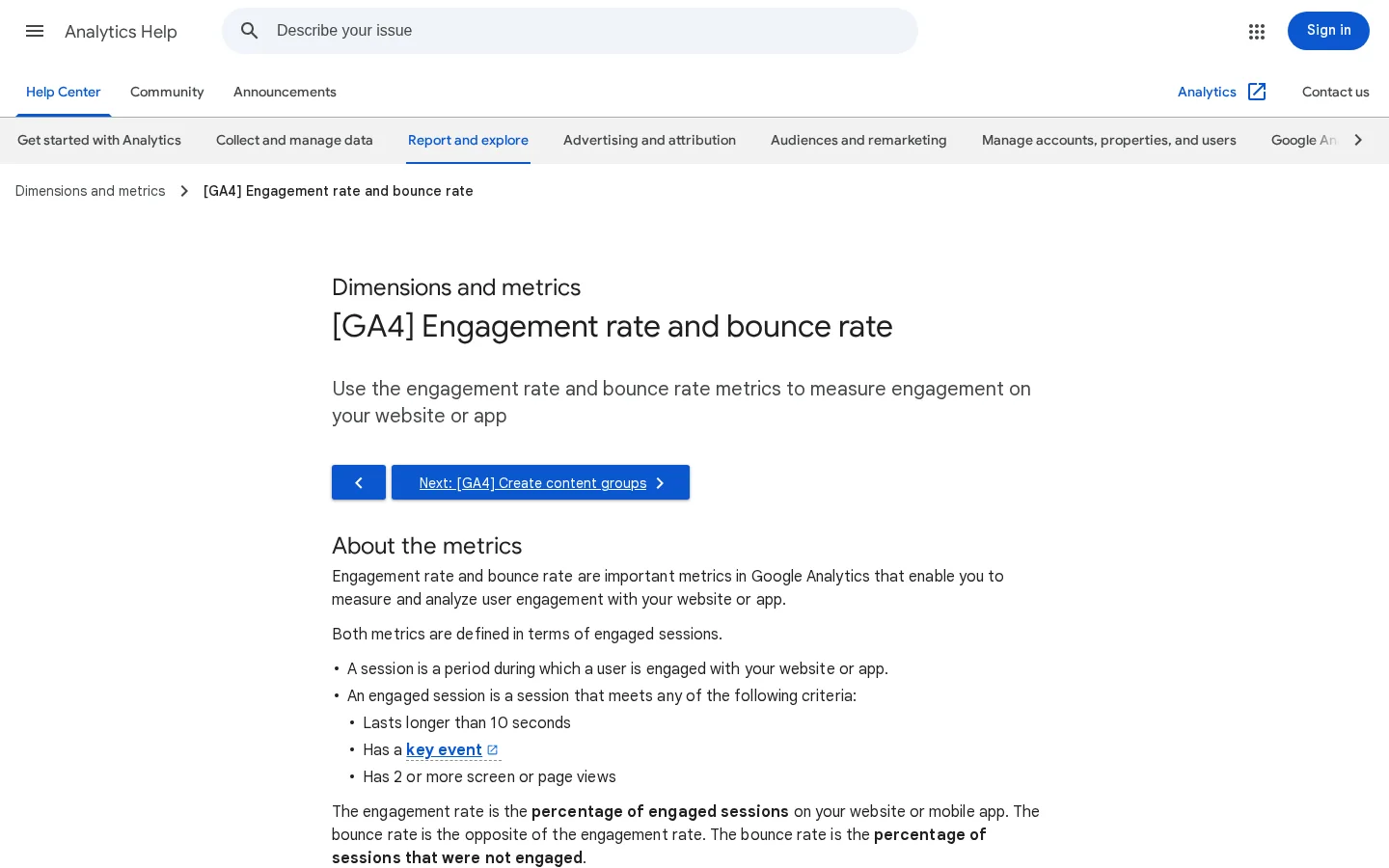
Pogo sticking is a path through the results, while bounce rate is a metric. In Google Analytics 4, a session counts as engaged if it lasts longer than 10 seconds, has 2 or more page or screen views, or has a key event. Bounce rate is the percentage of sessions that were not engaged. A visitor who pogo sticks but stays longer than 10 seconds on the first page still counts as engaged, so bounce rate misses part of the pattern.
Dwell time is the time a visitor spends on your page before leaving. A very short dwell followed by a return to the results is the core of pogo sticking, but dwell time alone cannot tell you where the visitor went next.
Google has not confirmed pogo sticking as a ranking factor, and its staff have said they avoid signals like it. In a Google Webmaster hangout, John Mueller said, "We try not to use signals like that when it comes to search," and added that turning this kind of signal into a ranking factor is "really hard to refine". Search Engine Journal reported his comments.
Google's guidance for content asks the same question from the reader's side: "Will someone reading your content leave feeling like they've had a satisfying experience?" That question is the core of Google's people-first approach.
In practice, do not chase pogo sticking as a signal. Fix the page it describes.
Pogo sticking almost always starts on the page itself. Four causes come back again and again.
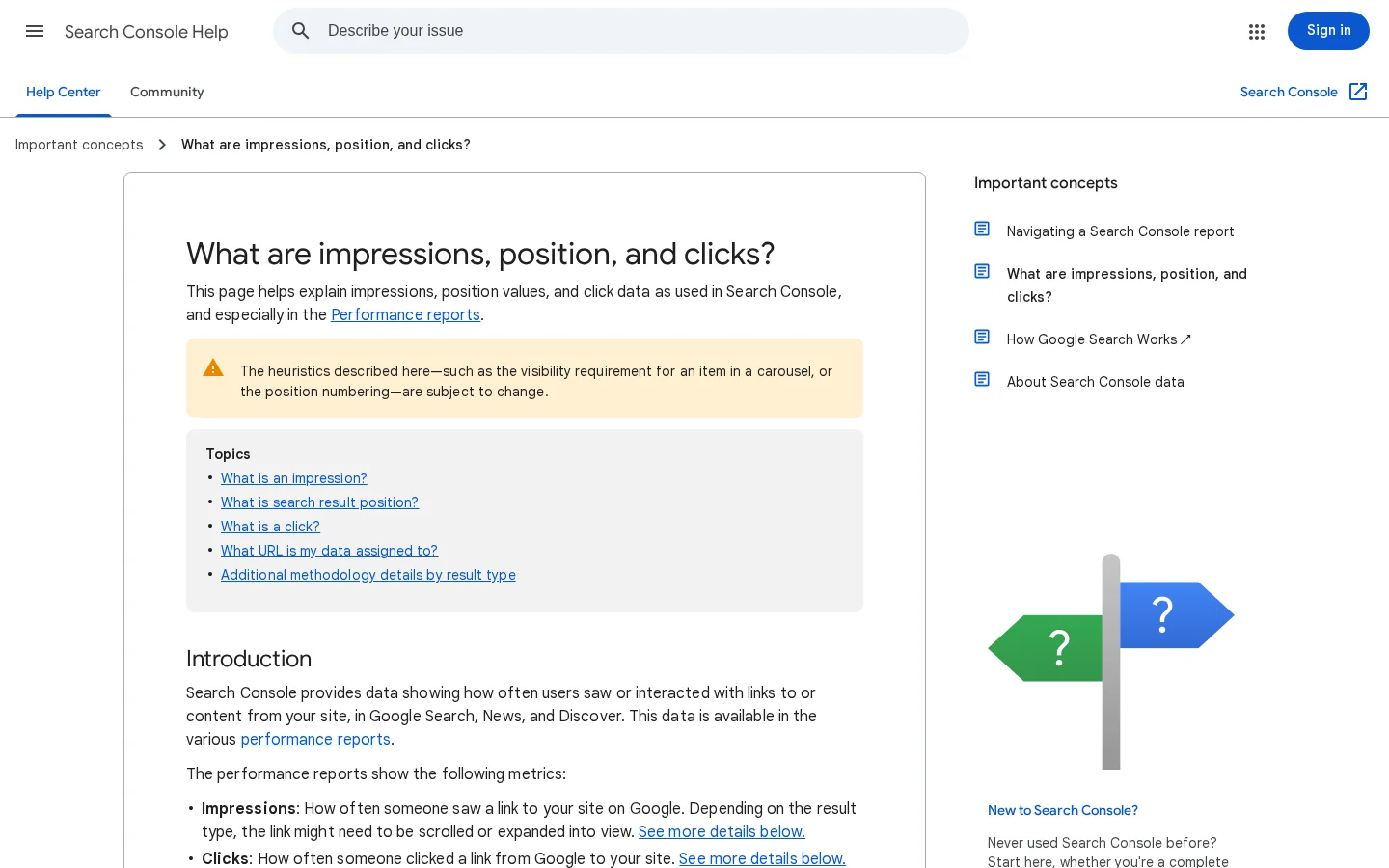
You cannot count pogo sticking directly, so measure its symptoms. In Google Search Console, the Performance report shows clicks and click-through rate for each query. Google defines click-through rate as clicks divided by impressions.
CTR = clicks / impressionsA page with many impressions and a low click-through rate usually has a title or snippet problem. A page that gets clicks but loses readers usually has a content problem, which you check with the engagement rate of your organic landing pages in Google Analytics 4.
| Signal | Where you see it | What it misses |
|---|---|---|
| Engagement rate | Google Analytics 4, per landing page | A visit longer than 10 seconds counts as engaged, even when the reader skims and leaves. |
| Click-through rate | Search Console Performance report, per query | It stops at the click, so it says nothing about what the visitor does next. |
| Return to the results | Not reported by default | It happens outside your site, so you need a manual test: search your query, click, and note how often you go back. |
Tip
Before you rewrite anything, read the first paragraph of the best result for your query. Your page should answer the same question at least as directly, then add what that result leaves out.
If many old articles on your blog show this pattern, Sorank's content optimization checks them and fixes or rewrites the ones that hold them back on Google.
What it is: adding tricks such as filler text, scripts that block the back button, or ads placed to stop the return to the results. How to spot it: visitors stay, but support emails and reviews complain that they could not leave or could not find the answer. How to fix it: remove the tricks and move the answer higher on the page.
What it is: deciding that a page is bad because its bounce rate is high. How to spot it: the page answers a short question, so the visitor gets what they came for and leaves. How to fix it: compare the metric with the page's job, and use bounce rate only to find pages worth a closer look.
What it is: a new headline that promises more than the body delivers. How to spot it: click-through rate rises in Search Console while the engagement rate of the same page falls in Google Analytics 4. How to fix it: align the title with the body, or add the missing section to the body.
What it is: writing a page without reading what Google shows for the query. How to spot it: the top results use a comparison table or a step list, and yours is a long essay. How to fix it: read the results first with a SERP analysis guide, then match the format where it helps the reader.
For SEO, pogo sticking is a warning sign. It shows that a page attracts the query but misses the goal behind it, which wastes the impressions you already earned. Google's own standard asks whether readers leave satisfied, so the causes matter even if the behavior is not a direct signal.
For GEO, the lesson is close. A page that states the answer early, in plain words, is easier for an AI system to quote than one that buries it. The work is the same as reading the search results page before you write: know what the reader wants, then answer it first.
Pogo sticking is what happens after a poor match: the searcher tries the next result. Google says it tries not to use this as a ranking signal, but the causes are real page problems you can fix. Mismatched intent, misleading titles, and slow, cluttered pages are the places to start. Begin with the pages that get clicks but lose readers, and put the answer on the first screen.
Sources
Google has not confirmed it as one. John Mueller said Google tries not to use signals like this for search. The causes of pogo sticking, such as mismatched intent or misleading titles, are still page problems worth fixing for your readers.
Pogo sticking is a path, where a visitor returns to the results and clicks another page. Bounce rate is an analytics metric that counts sessions that were not engaged. A visitor who pogo sticks after a long read can still count as engaged, so the two overlap without matching.
Compare the click-through rate of the page in Search Console with its engagement rate in Google Analytics 4. A page that gets clicks but loses readers is the clearest sign. Then search the query yourself and read the top results to see what the reader expects.
 “I tested Sorank on a real client site and it's insane. It does everything an agency would bill you $1500 a month for. It's going into production on that client now.”

 Guillaume Guersanguersanguillaume.com“We are an Ads agency and we wanted to get our SEO back on track once and for all. Sorank gave us a clear view of our site, helped us prioritize optimizations, and properly structure our content. The tool is easy to use, well designed for a team, and very practical for centralizing tracking without having to juggle multiple platforms. A very solid foundation to start fresh with our SEO.”
 Gaspard MadouiAds Agency
 “I just let the Sorank software do its thing, and now my DR is 25 and my page is ranking higher.”
 Lucas Flandrefoundertrace.fr“I specialized in GEO thanks to Sorank. The GEO Leaderboard allows me to show my clients their position vs competitors on ChatGPT. It’s a real commercial differentiator.”
 MélanieSEO Freelance“Great service, works well for our website and helps us understand how to improve it to rank better on Google and elsewhere. Congrats, keep going, I recommend it.”
 Hugo T.E-commerce merchant



















