
Preferences
Privacy is important to us, so you have the option of disabling certain types of storage that may not be necessary for the basic functioning of the website. Blocking categories may impact your experience on the website. More information
Privacy is important to us, so you have the option of disabling certain types of storage that may not be necessary for the basic functioning of the website. Blocking categories may impact your experience on the website. More information

Gray hat SEO sits between white hat and black hat SEO. Learn what it is, what Google's spam policies say, the penalty risks and safer alternatives.







Founder Sorank, 7+ years in SEO.
Summary
Gray hat SEO is a set of tactics that sit between white hat SEO, which follows Google's rules, and black hat SEO, which breaks them. Gray hat tactics bend the rules without clearly crossing them. They are risky: Google can demote or remove a site that crosses into link spam.
Want to go further? Ask
Gray hat SEO describes search optimization that stays in a gray zone. The tactics are not clearly banned, or Google has not acted on them yet, but they go against what Google asks site owners to do. Many people use the term for a habit rather than for one tactic. It is also not an official Google category. Google's spam policies never use the words "gray hat." So the line comes from the rules themselves, and from how far you are willing to push them.
White hat SEO follows search engine guidelines and helps real visitors. Black hat SEO tries to rank with tactics that search engines disapprove of or that deceive them. Gray hat SEO sits in the middle, so the risk depends on how far you push. For a deeper comparison, read white hat vs black hat SEO. The table shows the three side by side.
| Approach | Follows Google's rules? | Risk |
|---|---|---|
| White hat SEO | Yes | Low. Results take longer but are safer. |
| Gray hat SEO | Partly. Some tactics sit in a gray zone. | Medium. Depends on how far you push. |
| Black hat SEO | No. Tactics are deceptive or forbidden. | High. A penalty can remove the site from results. |
These are common examples. Each one depends on how it is done, and on whether the link or page would still make sense without search engines.
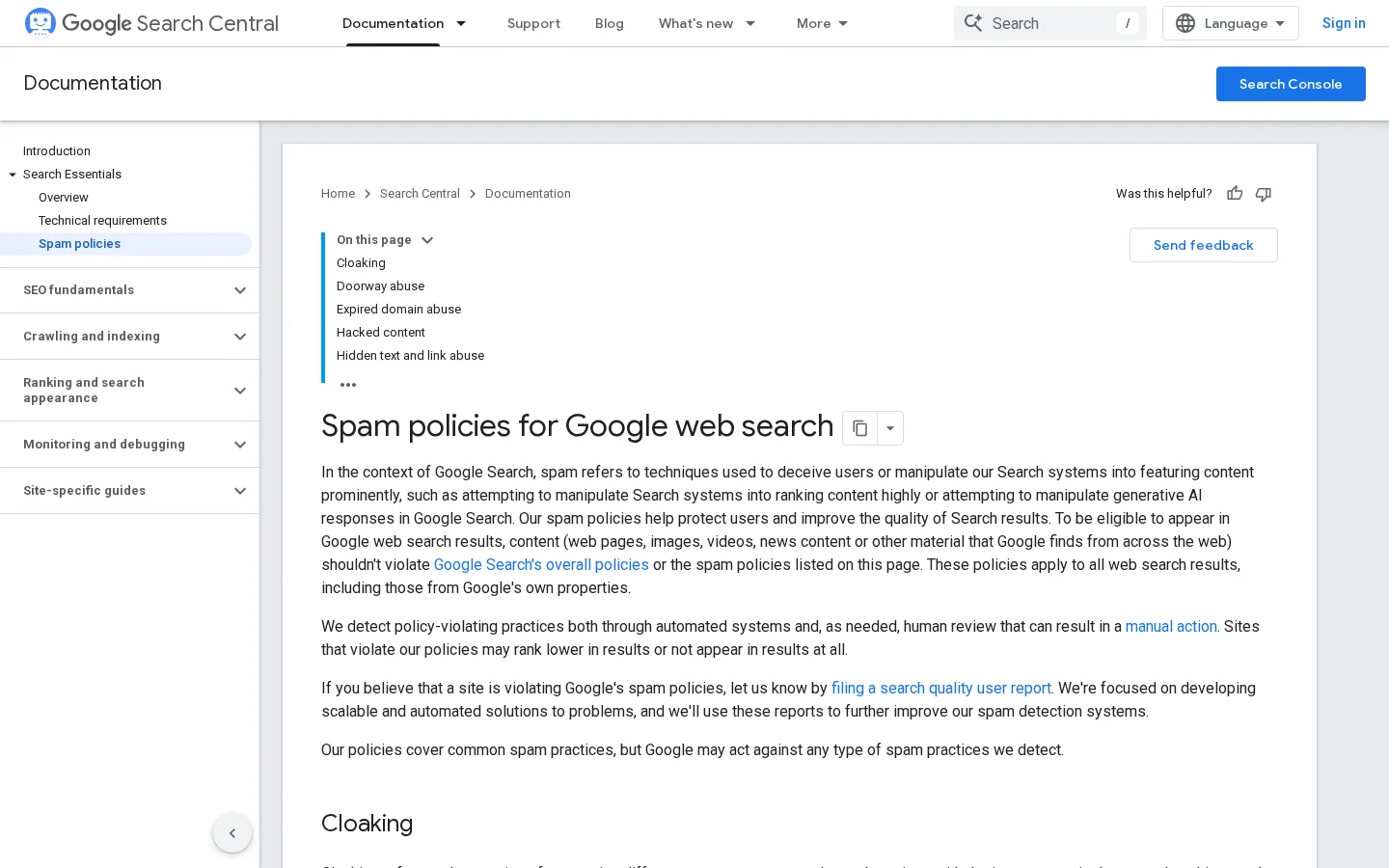
Yes. Google does not publish a list of gray hat tactics. It publishes its spam policies, which say that sites that break them may rank lower or not appear in results at all. Those policies name buying or selling links for ranking purposes as link spam. For more on paid links, read should you buy backlinks.
A penalty does not always come with a clear warning. If you break a rule on purpose, you carry the risk yourself. The cost is your traffic, your leads and the time you spent building pages that now rank lower or not at all.
There is no safe distance that Google publishes. Use a simple test instead. Ask whether a reader would benefit from the link or the page if search engines did not exist. If the answer is no, you are probably in the gray zone. Check your own links with a free backlink checker, so you know what you already have before you add more.
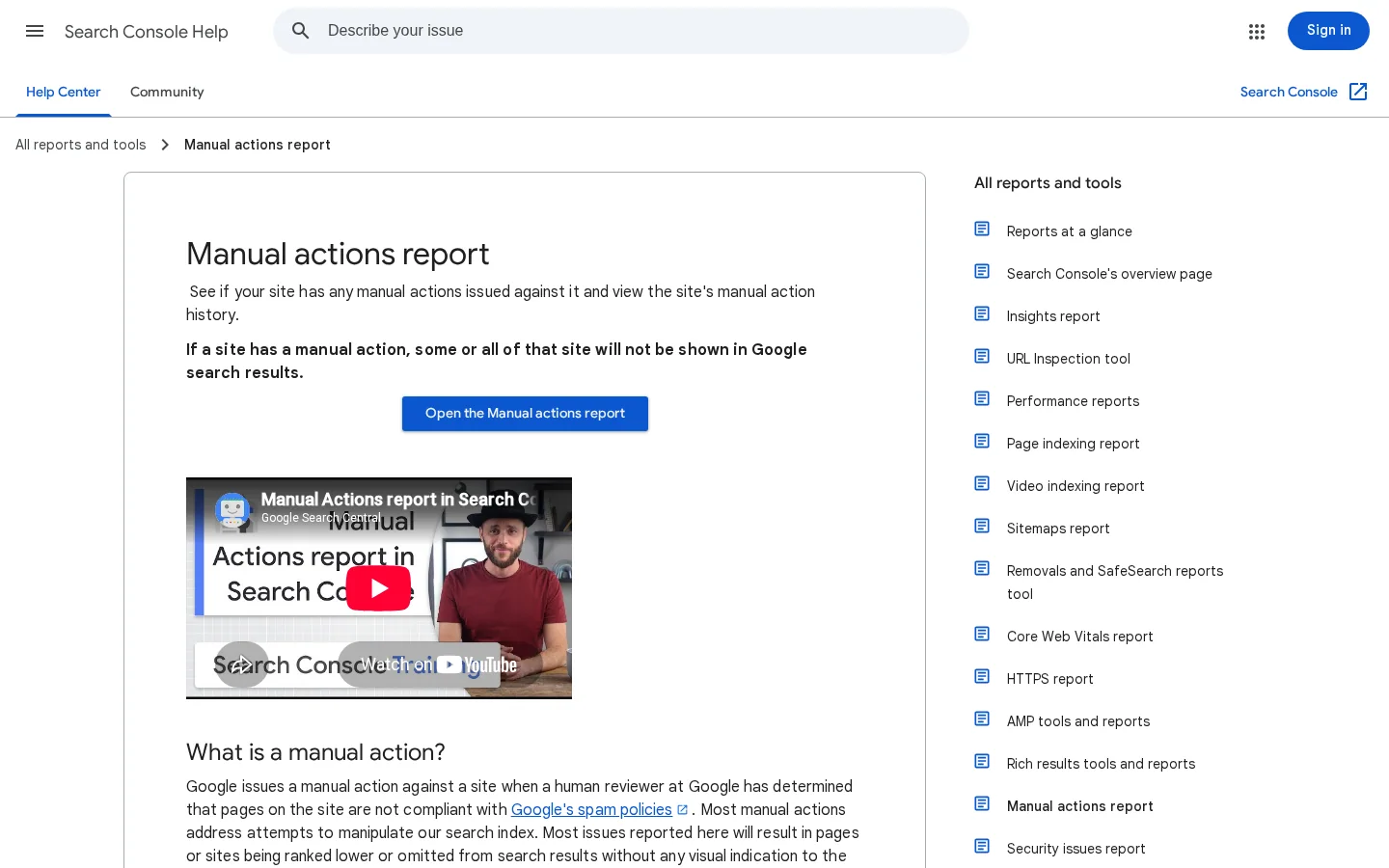
Google's help page on manual actions explains the two kinds of drop you can face. A manual action is decided by a human reviewer at Google who finds that your pages break its spam policies. If a site has one, some or all of it may not show in Google results. Google says it will notify you in the Manual actions report in Search Console. An algorithmic drop is different: your rankings fall during a ranking update, and no one tells you why. For the full steps, read how to tell a manual action from an algorithmic drop.
Once you have a manual action, the path back is clear. Fix every issue listed in the report, on every affected page, then select Request Review. Describe your fixes in the request. Do not send another request while the first one is still pending.
For SEO, a penalty can cut the traffic from pages you worked hard on. For GEO, AI answers rely on sources that people and search engines trust. A site with a penalty or a weak link profile has less of that trust to offer. The safer path protects your rankings and your chance to be named in answers. Read more on AI citations.
Gray hat SEO is not a safe shortcut. Know the rules, use only the link types Google allows, and build links that a real reader would click. When you are in doubt, choose the tactic you would still use if search engines did not exist.
Sources
No. Black hat SEO uses tactics that search engines forbid or that deceive them. Gray hat SEO sits in a gray zone where the rules are less clear. The risk is lower, but it is not zero.
Yes, if your tactics break Google's spam policies. A human reviewer can issue a manual action, which can hide some or all of a site from results. Ranking updates can also cause drops with no notice.
Earn links that people choose to give, such as links to a study, a free tool or a useful guide. Keep your anchor text varied and your pages useful to readers.
 “I tested Sorank on a real client site and it's insane. It does everything an agency would bill you $1500 a month for. It's going into production on that client now.”

 Guillaume Guersanguersanguillaume.com“We are an Ads agency and we wanted to get our SEO back on track once and for all. Sorank gave us a clear view of our site, helped us prioritize optimizations, and properly structure our content. The tool is easy to use, well designed for a team, and very practical for centralizing tracking without having to juggle multiple platforms. A very solid foundation to start fresh with our SEO.”
 Gaspard MadouiAds Agency
 “I just let the Sorank software do its thing, and now my DR is 25 and my page is ranking higher.”
 Lucas Flandrefoundertrace.fr“I specialized in GEO thanks to Sorank. The GEO Leaderboard allows me to show my clients their position vs competitors on ChatGPT. It’s a real commercial differentiator.”
 MélanieSEO Freelance“Great service, works well for our website and helps us understand how to improve it to rank better on Google and elsewhere. Congrats, keep going, I recommend it.”
 Hugo T.E-commerce merchant



















