
Preferences
Privacy is important to us, so you have the option of disabling certain types of storage that may not be necessary for the basic functioning of the website. Blocking categories may impact your experience on the website. More information
Privacy is important to us, so you have the option of disabling certain types of storage that may not be necessary for the basic functioning of the website. Blocking categories may impact your experience on the website. More information

White hat SEO improves rankings within search engine guidelines, through quality content and earned links. Learn the methods and why they last.








Founder Sorank, 7+ years in SEO.
Summary
White hat SEO is the practice of improving search rankings with methods that follow search engine guidelines, such as useful content, fast pages, and links earned through genuine value. It serves the user instead of manipulating the algorithm, so its results last and carry over to AI search.
Want to go further? Ask
White hat SEO describes search optimization that respects the rules of search engines and the interests of visitors. Instead of trying to trick a ranking system, a white hat practitioner builds pages that answer real questions, load quickly, and earn references from other sites. The approach takes longer to show results, but the gains do not disappear when an algorithm update arrives.
The idea is simple: optimize for people first, and let rankings follow from that. Search engines reward this approach because it matches what they try to show, and AI assistants face the same problem when they choose which sources to quote.
White hat SEO means improving a site's visibility within the terms that search engines publish. The core test is simple: would the tactic still make sense if search engines did not exist? If it helps a reader find an answer, it passes. If it only exists to influence a crawler or a ranking formula, it is a warning sign.
This stands in direct contrast to black hat SEO, which tries to manipulate rankings at the user's expense. Where black hat optimizes for the algorithm, white hat optimizes for the visitor and lets rankings follow. That difference in intent drives every other distinction between the two.
Four principles guide most white hat work. Each one translates into concrete checks on a site.
These principles match the quality framework summarized as E-E-A-T, which stands for experience, expertise, authoritativeness, and trustworthiness. Aligning with it means your strategy improves as search improves, rather than fighting each update. For the baseline that search engines expect from a site, read a guide to what Google's Search Essentials require.
The techniques are rarely glamorous. Most of them come down to disciplined work on the basics:
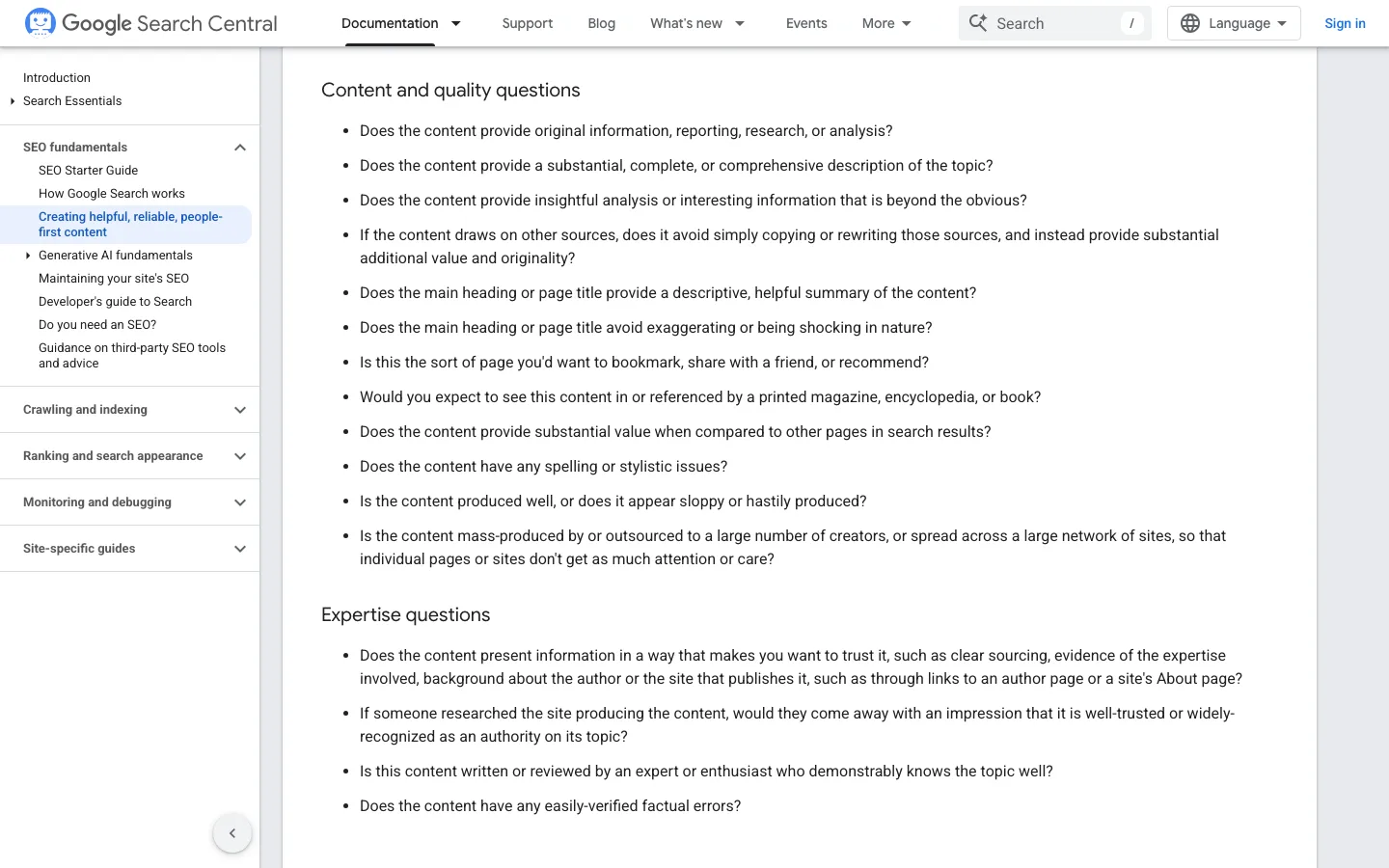
Content is the center of this work. Google's guidance on creating helpful, reliable, people-first content asks whether a page offers original information, a substantial description of the topic, and insight beyond the obvious. Pages that pass that test are the ones worth publishing, and they form the base of any helpful content strategy.
Google's spam policies name the practices it considers manipulative. Four of them sit at the center of the black hat side of the comparison: cloaking, keyword stuffing, hidden text, and link spam. Cloaking means showing different content to users and search engines with the intent to manipulate rankings. Keyword stuffing means filling a page with keywords or numbers in lists or groups that feel unnatural or out of context.
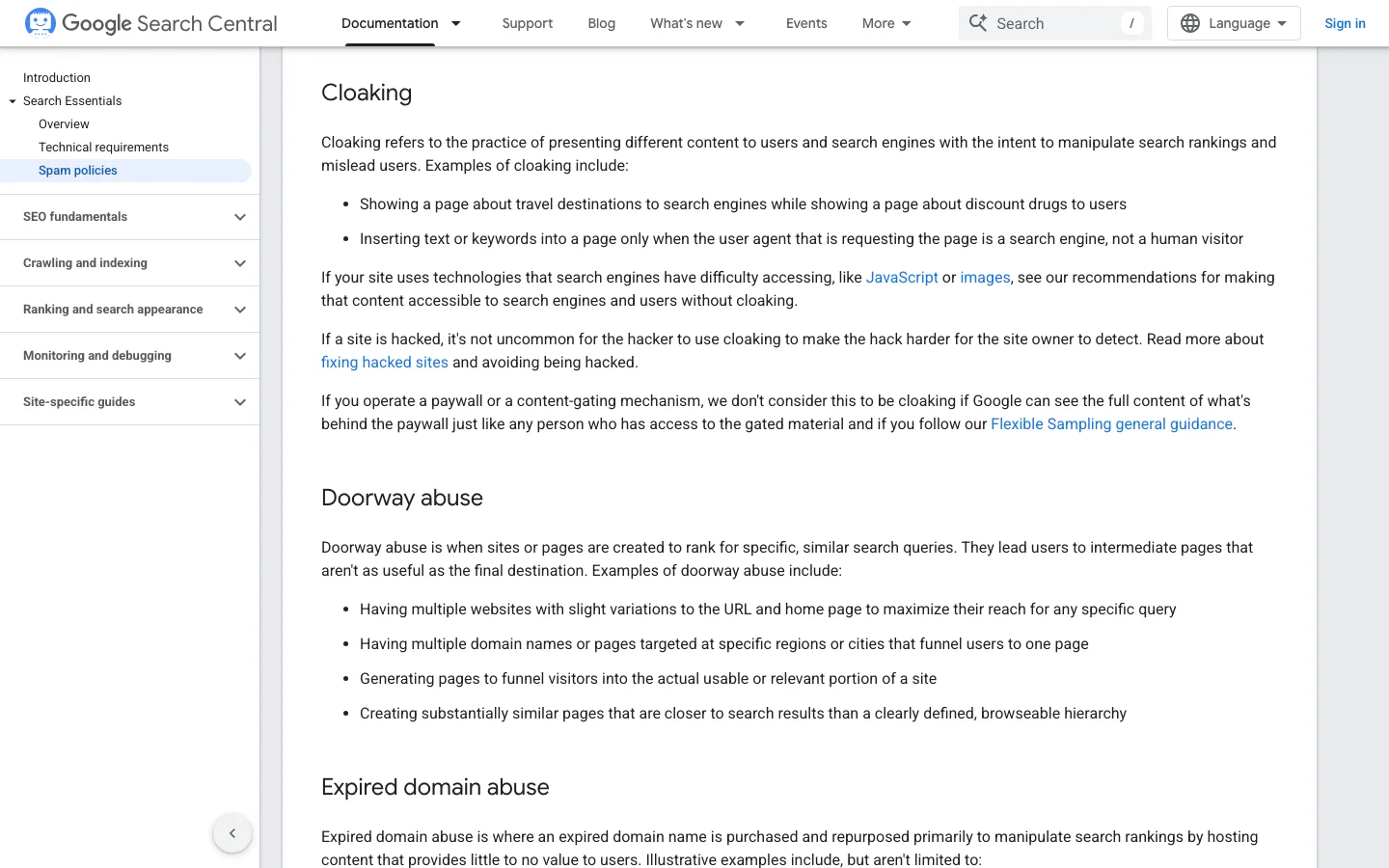
Hidden text is content placed only for search engines, for example white text on a white background or text moved off-screen with CSS. Link spam covers links created mainly to manipulate rankings, including buying or selling links for ranking purposes. Each of these tactics breaks the guidelines, which is why a white hat plan avoids them entirely rather than testing how far they can go.
A white hat backlink is a link that another site adds because your page helps its readers, with no payment or trade behind it. You earn these links by publishing something worth citing, then making sure the right people find it. Google's spam policies describe link spam as links created “primarily for the purpose of manipulating search rankings,” and that includes buying and selling links for ranking.
An earned link is an editorial choice. A writer links to you because your data, tool, or guide helps their own reader. The most common sources are original research that others cite, free tools or templates that people add to their resource lists, and mentions in industry reports or university resource pages. Outreach can help the right writer find your page, but the page has to earn the link on its own merits.
Three methods tend to earn links without breaking the rules. Broken link building offers a working replacement for a dead link on someone's page. Link reclamation recovers brand mentions that already exist without a link. Guest posting can work too, but only when the article serves the host's readers and your link is one natural reference, not a keyword-rich anchor in an article written to carry links. For a full list of options, see how to get backlinks.
Google's spam policies allow paid links for advertising or sponsorship, as long as they are qualified with rel='sponsored' or rel='nofollow'. A paid link that passes ranking credit without those attributes is a link scheme. Swaps follow the same logic: Google names excessive link exchanges and partner pages that exist only to cross-link as spam. For the risks of trading links, read backlink exchange.
<a href='https://example.com/study' rel='sponsored'>Sponsor</a>| Link type | How it happens | Status |
|---|---|---|
| Editorial | A writer links to your study | Earned, the goal |
| Sponsored | You pay for a placement | Fine with rel="sponsored" |
| Exchange | “You link to me, I link to you” | Risky when repeated |
| Keyword guest post | An article written to carry an anchor | Spam |
| Unmarked paid link | A bought link that passes credit | Link scheme |
Tip
Before you pitch a link, ask whether the page would still be worth linking to if search engines did not exist. If yes, the outreach is simple. If the link only comes with a trade, it is probably not worth having.
The clearest way to understand white hat is by contrast. The table below compares the two approaches on the points that matter most for a business.
| Point | White hat SEO | Black hat SEO |
|---|---|---|
| Main target | The reader | The ranking algorithm |
| Speed of results | Slower, but lasting | Faster, but fragile |
| Risk | Low | High, with possible penalties or removal from search |
| Links | Earned through value | Bought, exchanged, or spammed |
| After an algorithm update | Gains tend to hold | Rankings can drop sharply |
The comparison is less about labels than about which side of the line a tactic falls on. Google's policies are the reference for that line, and a useful test is whether you would still defend the tactic in front of the search engine's own documentation. For a deeper comparison, read white hat and black hat SEO compared.
A simple review covers four questions. Run through them on your most important pages every quarter.
A full technical SEO audit covers the infrastructure side of the same review, from crawling and indexing to page speed and mobile layout. Running both gives you a clear list of what to fix first.
Most mistakes come from good intentions applied too aggressively. Watch for these four:
The fix is usually the same: rewrite for the reader, remove what exists only for rankings, and keep the links that a reader would click anyway.
White hat SEO matters because the tactics that help a page rank also help an AI assistant decide whether to cite it. Clear answers, real expertise, accurate facts, and a credible author are the signals readers use to judge a source, and they are the same signals that search engines reward. The ethical route is therefore also the most dependable one for visibility in AI-driven answers.
The durability argument is practical as well. LV3D, a 3D printing website, multiplied its organic traffic by 4 in 5 months, with Sorank publishing dozens of articles a month for it, as shown in our LV3D case study. Regular, useful publishing is a white hat method: each article answers a real question and earns its place in search.
To plan this kind of content, start from real demand. Sorank's keyword research feature helps you find queries you can win without competing against your own pages, so each page has a clear reader before the writing starts.
White hat SEO improves rankings through quality content, clean structure, fast pages, and earned authority, all within search engine guidelines. It trades early speed for results that survive algorithm updates, and it prepares a site for AI search, where trust counts as much as rank. The honest approach and the effective approach are, in practice, the same plan.
Sources
White hat SEO improves rankings within search engine guidelines, focusing on quality content, good user experience, and legitimately earned links. Black hat SEO uses deceptive tactics like cloaking, keyword stuffing, hidden text, and bought links to manipulate rankings, which breaks the guidelines. The core difference is intent: white hat serves the user and accepts slower results, while black hat targets the algorithm and risks penalties.
Yes, because the results last. White hat tactics invest in content and authority that can keep generating traffic for years without the risk of penalties. Black hat shortcuts may rank faster but can trigger sharp drops or removal from search when an algorithm update arrives. For a business that plans to last, the durability of white hat outweighs the early speed of risky tactics.
Yes. AI assistants like ChatGPT, Perplexity, and Gemini favor sources they judge trustworthy, and the signals that earn that trust, clear answers, real expertise, accurate facts, and a credible author, are the same white hat signals that search engines reward. Manipulative content is a poor base for citations, so ethical optimization is also the most dependable route to visibility in AI-driven answers.
 “I tested Sorank on a real client site and it's insane. It does everything an agency would bill you $1500 a month for. It's going into production on that client now.”

 Guillaume Guersanguersanguillaume.com“We are an Ads agency and we wanted to get our SEO back on track once and for all. Sorank gave us a clear view of our site, helped us prioritize optimizations, and properly structure our content. The tool is easy to use, well designed for a team, and very practical for centralizing tracking without having to juggle multiple platforms. A very solid foundation to start fresh with our SEO.”
 Gaspard MadouiAds Agency
 “I just let the Sorank software do its thing, and now my DR is 25 and my page is ranking higher.”
 Lucas Flandrefoundertrace.fr“I specialized in GEO thanks to Sorank. The GEO Leaderboard allows me to show my clients their position vs competitors on ChatGPT. It’s a real commercial differentiator.”
 MélanieSEO Freelance“Great service, works well for our website and helps us understand how to improve it to rank better on Google and elsewhere. Congrats, keep going, I recommend it.”
 Hugo T.E-commerce merchant



















