
Preferences
Privacy is important to us, so you have the option of disabling certain types of storage that may not be necessary for the basic functioning of the website. Blocking categories may impact your experience on the website. More information
Privacy is important to us, so you have the option of disabling certain types of storage that may not be necessary for the basic functioning of the website. Blocking categories may impact your experience on the website. More information

Link bait is content that earns backlinks on its own. Learn what makes a page worth linking to, the mistakes to avoid and how to measure results.







Founder Sorank, 7+ years in SEO.
Summary
Link bait is content built to attract backlinks. It is a page, tool, guide, or study that is useful, original, or interesting enough that other websites link to it on their own, without you asking. Unlike bought links, these come from value, not payment.
Want to go further? Ask
Link bait works like a magnet for links. You publish something worth referencing, and writers, bloggers, and journalists link to it when they need a source. The content is the bait, and the links are the catch. Each earned link can also send referral visitors to your site.
Link bait is content that other people want to cite. The useful part is the content itself: a study nobody else has run, a calculator, a complete guide, or a visual that explains a hard topic. When that content is good enough, links arrive without outreach, and they keep arriving for months if the page stays accurate.
Link bait earns links because people choose to link. Buying links pays for placement, and Google treats that as link spam when the goal is to manipulate rankings. Google's spam policies list "Buying or selling links for ranking purposes" and "Excessive link exchanges" as examples of link spam.
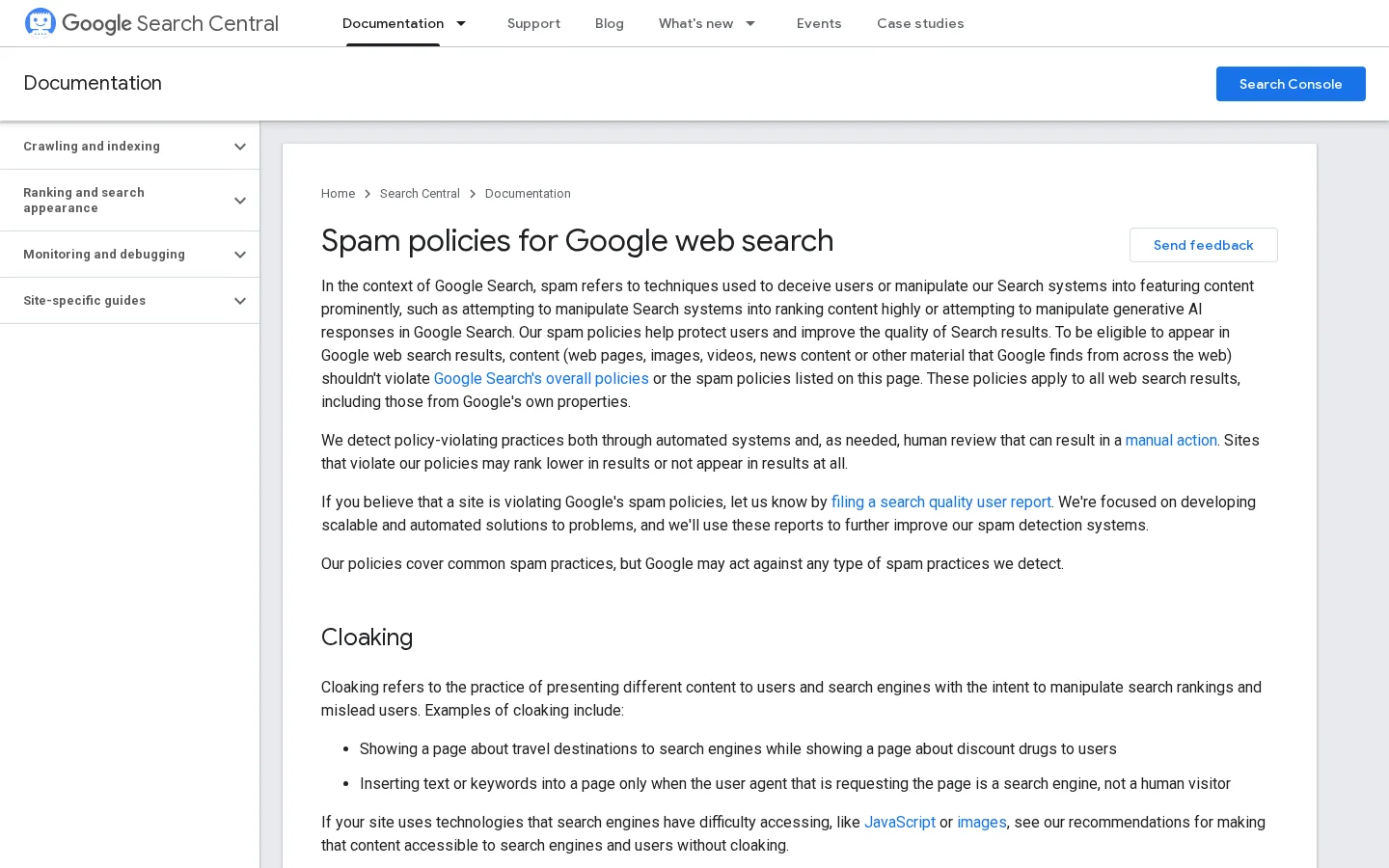
The line is simple. Nobody is paid to link to link bait, and you do not trade links with sites that do not care about your topic. If a link is paid, it has to be marked as paid, and that is a different job from link bait. See the section on mistakes below.
Writers link to a page when it gives them something they cannot write themselves. Google's guidance on helpful content asks the same kind of question. Two of its checks are "Does the content provide original information, reporting, research, or analysis?" and "Is this the sort of page you'd want to bookmark, share with a friend, or recommend?" Use both checks before you publish anything.
In practice, link bait usually takes one of these forms:
Our guide to linkable assets covers these formats in depth. This section focuses on the tests you run before you build one.
Start with a question that people already search for and that other sites answer badly. Confirm the demand with keyword research, then build the best answer on the topic.
Tip
Write one plain sentence with your key finding, such as "Most pages in this group use the same three headings." Writers quote short, citable sentences, and they link to the page that holds the source.
Check the links to the page, not only the page views. Our free Backlink Checker reports the total backlinks, referring domains, dofollow and nofollow split, and anchor text for any domain, so you can see which sites link to you and how.
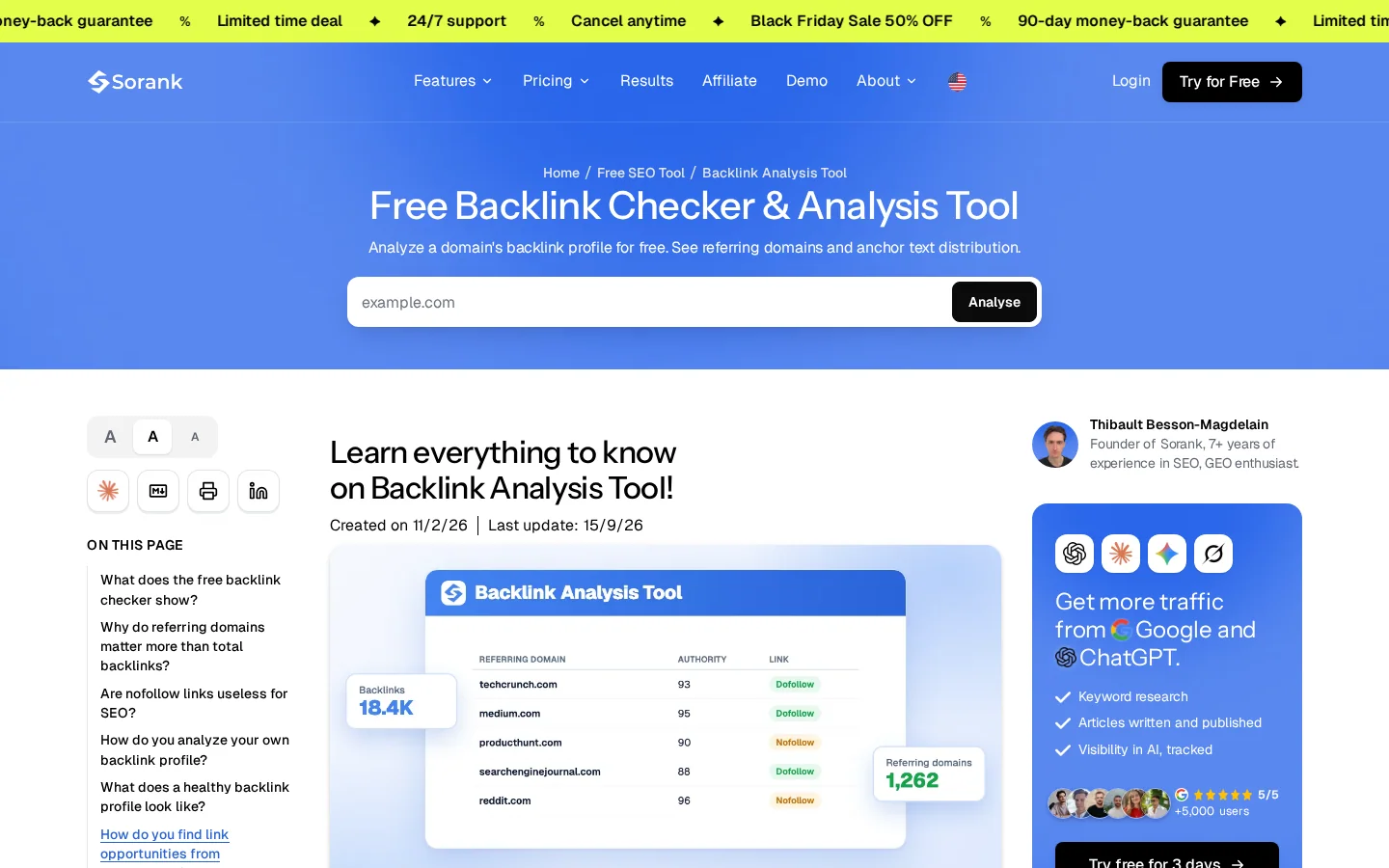
Watch the number of different referring domains over time. Many new links from one site matter less than one link each from several unrelated sites. Look at the anchor text too, and use the Domain Rating of each linking site as a rough quality guide. Domain Rating is an Ahrefs score, not a Google metric, so treat it as a comparison tool only.
What it is: paying a site to publish your link, or placing the link in a sponsored post with no disclosure. How to spot it: a sudden jump in links from pages that look like ads or from sites with no real audience. How to fix it: stop the purchase, and mark any paid link you cannot remove. Google asks site owners to mark paid links with rel="sponsored", and it still accepts nofollow links for the same job.
<a href="https://example.com/partner" rel="sponsored">Partner</a>What it is: asking people to sign up before they can read the data or use the tool. How to spot it: the page gets visits but almost no citations, because writers cannot quote a page they cannot open. How to fix it: keep the summary, the key figures, and the method public, and gate only the extras.
What it is: a roundup that repeats what the top results already say. How to spot it: no original data, and no sentence that a reader could not find elsewhere. How to fix it: add a test, a count, a comparison, or a clear opinion backed by evidence.
What it is: "link to me and I'll link to you" deals, often arranged in pairs or groups. How to spot it: links that come back to you in a loop, from sites unrelated to your topic. How to fix it: stop the trades, and focus on the links that a page earns without a deal.
For SEO, earned links help a page get found, trusted, and visited. A page that many sites reference has more paths leading to it, which helps both crawlers and the sources that AI tools read. Our guide to backlinks for AI search explains which link types still matter for AI answers.
If you want a steady flow of supporting articles around your best assets, Sorank's AI blog article generator writes and publishes them on autopilot, so the content around your link bait keeps growing.
Link bait is content that earns links without a deal. Build something useful, original, or hard to find elsewhere, make it easy to cite, and check the links that come in. Avoid paid placements and link trades, mark any paid link correctly, and update the page when the data changes. The links follow the value of the page.
Sources
Not quite. Link building covers every way you earn or place links, including outreach and partnerships. Link bait is one approach within it, where the content does the work and people link to it without being asked.
It can if the links are bought or traded for ranking purposes, because Google treats those as link spam. Earned links to useful content are the safe kind. Mark any paid link with rel="sponsored" so the difference is clear.
It depends on how often people search for the topic and how useful the page is. Monitor the referring domains for a few months before you judge the result, and update the page when the links slow down.
 “I tested Sorank on a real client site and it's insane. It does everything an agency would bill you $1500 a month for. It's going into production on that client now.”

 Guillaume Guersanguersanguillaume.com“We are an Ads agency and we wanted to get our SEO back on track once and for all. Sorank gave us a clear view of our site, helped us prioritize optimizations, and properly structure our content. The tool is easy to use, well designed for a team, and very practical for centralizing tracking without having to juggle multiple platforms. A very solid foundation to start fresh with our SEO.”
 Gaspard MadouiAds Agency
 “I just let the Sorank software do its thing, and now my DR is 25 and my page is ranking higher.”
 Lucas Flandrefoundertrace.fr“I specialized in GEO thanks to Sorank. The GEO Leaderboard allows me to show my clients their position vs competitors on ChatGPT. It’s a real commercial differentiator.”
 MélanieSEO Freelance“Great service, works well for our website and helps us understand how to improve it to rank better on Google and elsewhere. Congrats, keep going, I recommend it.”
 Hugo T.E-commerce merchant



















