
Preferences
Privacy is important to us, so you have the option of disabling certain types of storage that may not be necessary for the basic functioning of the website. Blocking categories may impact your experience on the website. More information
Privacy is important to us, so you have the option of disabling certain types of storage that may not be necessary for the basic functioning of the website. Blocking categories may impact your experience on the website. More information

Answer economy is when AI gives a direct answer or a recommendation instead of a list of links. Learn what it changes for brands and how to prepare.







Founder Sorank, 7+ years in SEO.
Summary
Answer economy is the shift in which AI gives people a direct answer or a recommendation instead of a list of links. The user often picks a brand from that answer without visiting any website. For businesses, the goal changes from earning a click to being chosen and cited by the AI.
Want to go further? Ask
Answer economy describes how people find products and services when an AI tool does the searching for them. A classic search gave a list of links, and the person chose which one to open. Now an AI tool often gives one answer and names a few brands. The person may act on that answer without opening a single website.
Note
Answer economy is an industry term. No standard body publishes it as a measure, so you will find different definitions in different articles. This page uses the meaning above.
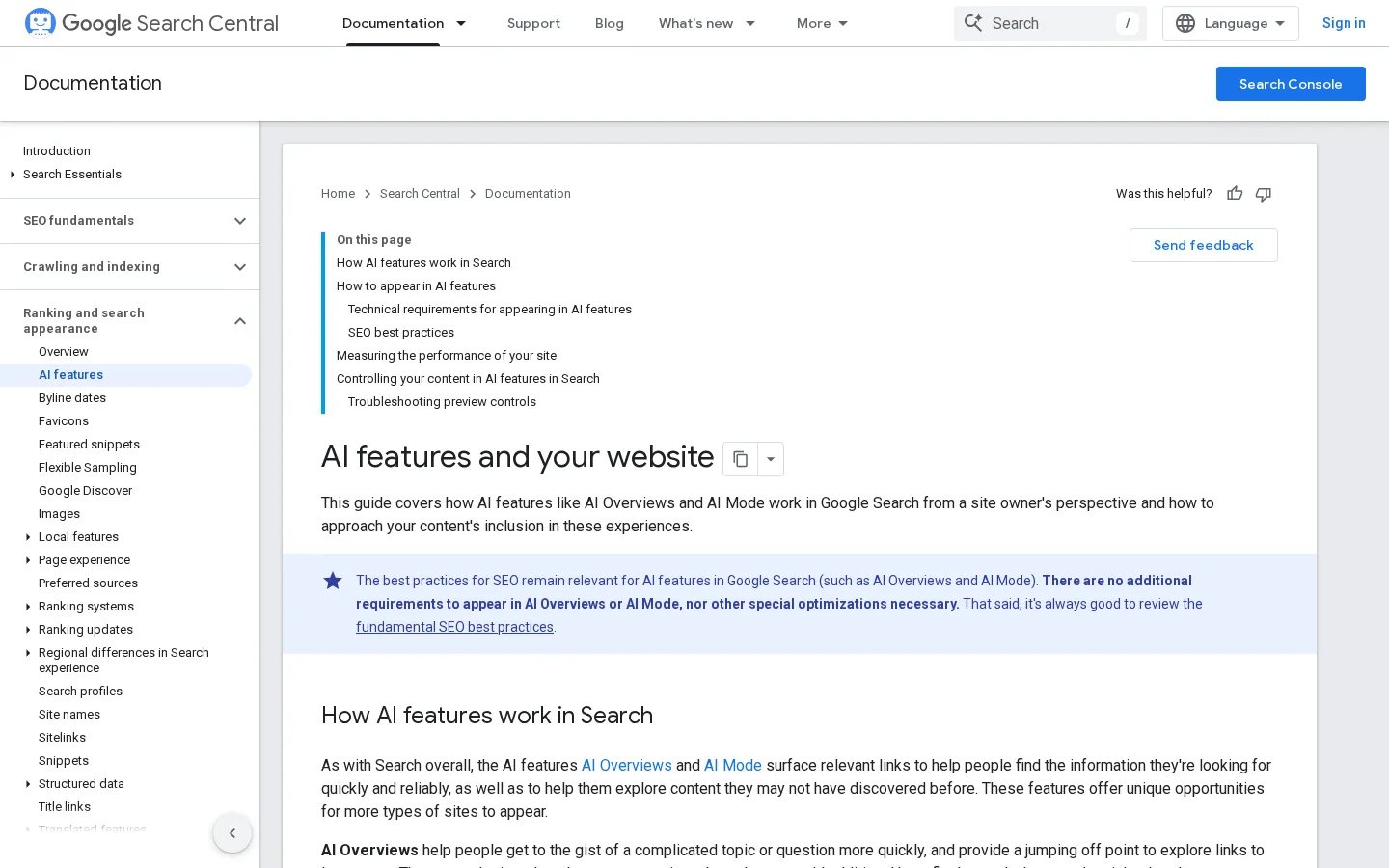
In the answer economy, the result is a finished answer. An AI Overview in Google, a reply in ChatGPT or an answer in Gemini names sources and brands in one block of text. The reader often stops there. Google says a page can support one of these answers only when it is "indexed and eligible to be shown in Google Search with a snippet" (Google Search Central, AI features and your website).
In the click economy, the goal was the visit. A page ranked, the reader clicked, and the site counted the visit. In the answer economy, the goal is inclusion. Your brand has to appear in the answer, be described correctly, and be trusted enough to be recommended. Traffic still matters, but it no longer shows the whole picture. A brand can lose visits and still win mentions. The optimization side of this shift is covered in our entry on answer engine optimization. This page covers the market change behind it.
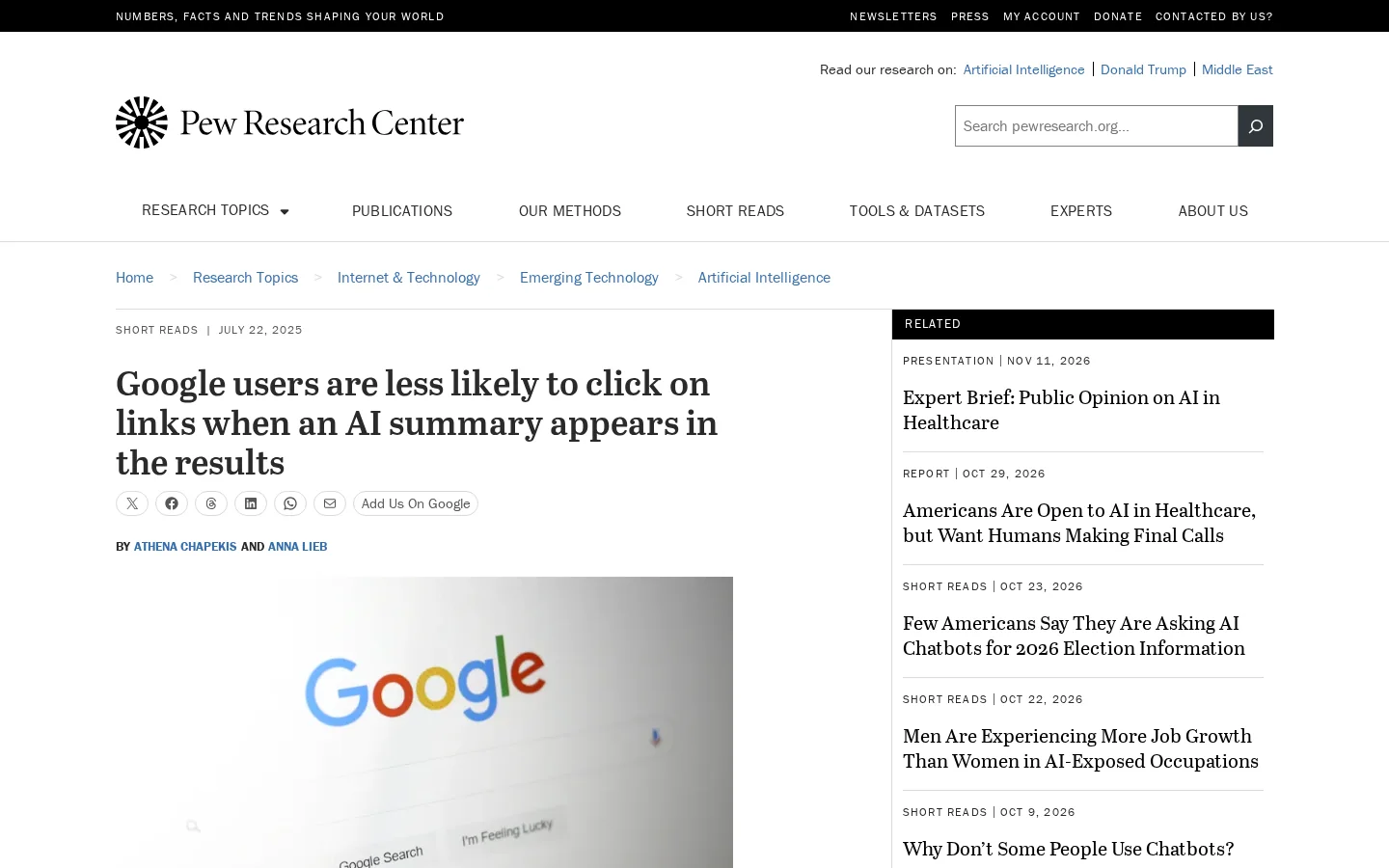
A Pew Research Center study from July 2025 gives a clear figure. It used browsing data from 900 U.S. adults in March 2025. Users clicked a regular search result in 8% of visits to pages with an AI summary. Without an AI summary, they clicked in 15% of visits. Only about 1% of visits clicked a link inside the AI summary itself.
This is the pattern behind zero-click searches, where the person gets what they need without opening a site. The numbers come from one study of Google searches in the United States. Your own market may differ, so measure it yourself.
Three things change for most brands.
The effect is strongest for buyers who are close to a decision. A shop owner who asks which tool fits a small team wants a short list with a reason, not ten links to read. If your brand is not on that list, the buyer never reaches your site.
The answer economy hits questions that ask for a choice. Examples: "What is the best tool for a small shop?", "Which agency fits a franchise?" or "Which software is safe for my team?" The AI replies with a short list and a reason. Informational questions, such as "What does a backlink do?", still bring visits, but the AI often answers them fully. That means your pages need a clear answer at the top to stay useful.
Start with the basics, then measure. Google says that "all existing SEO fundamentals continue to be worthwhile" and that there are no extra requirements for AI Overviews or AI Mode. Then follow these steps:
Track one number for each tool and each week:
AI mention rate = questions where the AI names your brand / questions testedSorank tracks how often ChatGPT, Gemini and Claude name a brand, and it can write and publish the content that gives the AI something to cite. See the GEO optimization feature for details.
What it is: You judge the whole channel by visits from search.
How to spot it: Traffic falls, and nobody checks what AI tools say about your brand.
How to fix it: Add a weekly check of AI answers next to your traffic report.
What it is: Pages that repeat a phrase many times but never answer the question.
How to spot it: The first lines of a section give background, not an answer.
How to fix it: Open each section with the answer, then explain it with facts and examples.
What it is: A brand that publishes only on its own site.
How to spot it: AI tools name your competitors, citing their reviews or press articles, and never mention you.
How to fix it: Earn mentions on the sites those answers cite, and keep your reviews and product facts current.
SEO decides whether your page can be used as a source. GEO decides whether an AI names your brand after it reads those sources. Answer economy is the market reason to do both. If buyers build their shortlist with an AI, a brand missing from that shortlist loses the sale before anyone visits its site. Small shops and local businesses feel this first, because they compete for the same short list as bigger brands with more content. For a plan that starts small, read why AI search matters for your business.
Answer economy is the move from clicks to answers. Start with the questions your buyers ask, check the AI answers every week, and fix the pages behind them.
Sources
Not quite. AI search is the tool people use, and answer economy is the result: people get a finished answer and act on it without a list of links. AI search is one cause of the shift, not the whole shift.
Yes. Google says that all existing SEO fundamentals continue to be worthwhile, and that a page counts as a supporting link when it is indexed and eligible to show a snippet in Google Search.
Ask the AI tools the questions your buyers ask, and write down which brands they name and which sources they link. Repeat the test every week, because answers change from one day to the next.
 “I tested Sorank on a real client site and it's insane. It does everything an agency would bill you $1500 a month for. It's going into production on that client now.”

 Guillaume Guersanguersanguillaume.com“We are an Ads agency and we wanted to get our SEO back on track once and for all. Sorank gave us a clear view of our site, helped us prioritize optimizations, and properly structure our content. The tool is easy to use, well designed for a team, and very practical for centralizing tracking without having to juggle multiple platforms. A very solid foundation to start fresh with our SEO.”
 Gaspard MadouiAds Agency
 “I just let the Sorank software do its thing, and now my DR is 25 and my page is ranking higher.”
 Lucas Flandrefoundertrace.fr“I specialized in GEO thanks to Sorank. The GEO Leaderboard allows me to show my clients their position vs competitors on ChatGPT. It’s a real commercial differentiator.”
 MélanieSEO Freelance“Great service, works well for our website and helps us understand how to improve it to rank better on Google and elsewhere. Congrats, keep going, I recommend it.”
 Hugo T.E-commerce merchant



















