
Preferences
Privacy is important to us, so you have the option of disabling certain types of storage that may not be necessary for the basic functioning of the website. Blocking categories may impact your experience on the website. More information
Privacy is important to us, so you have the option of disabling certain types of storage that may not be necessary for the basic functioning of the website. Blocking categories may impact your experience on the website. More information

A prompt cluster is a group of related AI prompts on one topic, job or buyer stage. Learn how to group them and track your brand in each cluster.








Founder Sorank, 7+ years in SEO.
Summary
A prompt cluster is a group of related prompts, the questions people ask AI models, that share one topic, one job to be done or one stage of the buying journey. You track the cluster as one unit to see how often your brand appears in the answers.
Want to go further? Ask
A prompt cluster is a set of prompts that belong together. Each prompt is a full question typed into an AI model such as ChatGPT, Claude or Gemini. The term is not a formal standard, and tool vendors use it in slightly different ways. The core idea stays the same: group the questions by what the buyer wants, then measure your brand on the whole group.
A prompt cluster is a bundle of prompts built around one of three things: one topic, one job the buyer wants done, or one stage of the buying journey. The grouping is the point. A single prompt tells you about one answer. A cluster tells you whether your brand shows up across the whole subject.
Take an online coffee shop that sells subscriptions. Its buyers ask an AI model how to choose fresh beans, how delivery works, and which gift suits a coffee lover. Each of these is a different cluster, with its own prompts and its own buyer.
You need clusters because AI models answer a question with a short list of brands. If your brand is missing from the answers to the prompts in one cluster, the buyer of that cluster never sees you, even if you rank well on Google for other terms.
Start from the questions your buyers really ask, not from the words you would type into Google. Write each question in full, the way a person would say it to an AI model. Then sort the questions with three tests:
The intent behind each prompt tells you where it belongs. A question about how something works sits early in the journey. A question asking which option to pick is a comparison, and it sits close to the purchase. Read the basics of search intent if the labels are new to you.
Sorank's AI Prompt Research writes a list of prompts from your site brief and labels each one as understanding, benefits, comparison or quality. The method in this article works the same way when you build the list by hand.
Tip
Name each cluster after the buyer's job, such as "compare running shoes for flat feet". Your team then reads the list the same way and knows what to write.
Take an online shop that sells running shoes. The table below shows three clusters. Each one has one topic and one job, and its prompts all serve that job.
| Cluster | Buyer stage | Example prompts |
|---|---|---|
| Running shoe fit | Understanding | How should running shoes fit my feet? Why do my heels slip in running shoes? |
| Running shoe choice | Comparison | Which running shoe suits flat feet best? Which brand is better for long training runs? |
| Buying from a shop | Quality | How do I know an online running shop is reliable? What should I check before buying running shoes online? |
Each row is one cluster. Keep the prompts together so you can see whether your brand appears for the whole group or for one question only.
A keyword cluster groups short search terms that people type into a search engine. A prompt cluster groups full questions asked to an AI model. The AI model does not always answer your question as written. Search Engine Journal reported in July 2025 that Google's AI Mode works this way: a large language model interprets the query, then "fans out" several related searches before it writes one answer. Read the Search Engine Journal report.
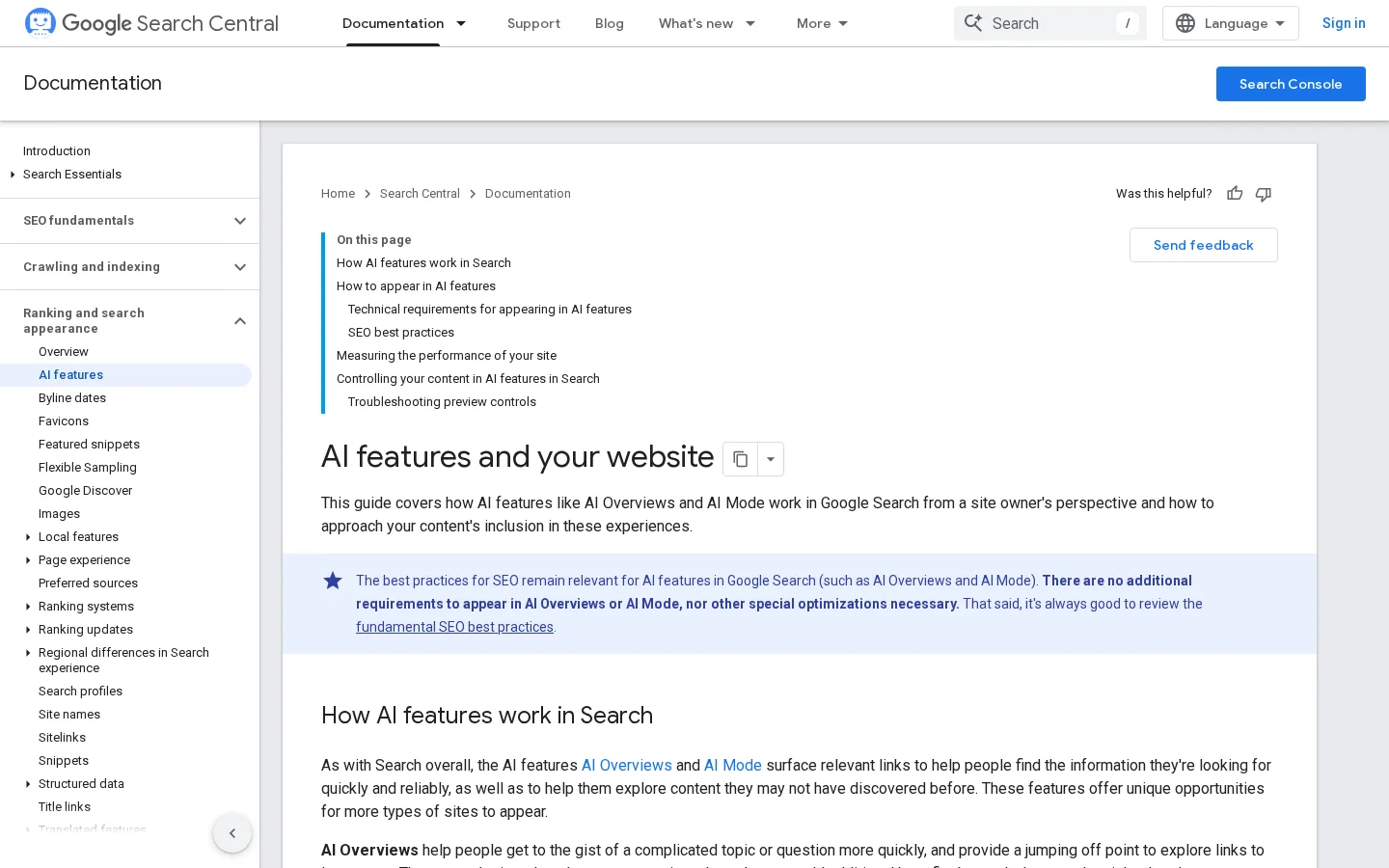
Google's own documentation says that AI Overviews and AI Mode can also run several related searches to build an answer. So the prompt is only the starting point. The sub-searches decide which pages the model can find. That is why a cluster should hold the questions buyers ask, not only the keywords you already rank for. For the keyword side, read our guide to keyword research for AI search, and see how the topical cluster generator groups keywords into silos.
Run the prompts of a cluster on the same AI models every month. Count how many answers name your brand, and note which competitors appear in the same answers. Score the whole cluster, not one prompt at a time, because a single answer can change from one run to the next. This kind of tracking is called prompt monitoring. AI Mention Tracking from Sorank does this on each prompt you track.
Read the results cluster by cluster:
Most mistakes come from building the cluster around your products instead of around the buyer. Watch for these three.
This is a cluster that holds a beginner question next to a question about price. You spot it when the answers name very different kinds of brands, or when the score moves a lot after you change one prompt. Fix it by splitting the cluster by stage, so each one has one job.
This is a list copied from your keyword report, where every prompt contains your product name. You spot it when no prompt asks an open question that a buyer would ask before knowing your brand. Fix it by adding those open questions. Prompt volume explains how often a topic is asked to AI models, which helps you decide which new prompts to track first.
This is the same question placed in two clusters, so two of your pages try to answer it. You spot it when two of your pages show up for one prompt or compete for the same answer. Fix it by keeping the prompt in one cluster and sharpening the pages, as explained in keyword cannibalization.
A cluster shows the whole subject at once. For SEO, it shows which pages you need so that a topic is covered in depth. For GEO, it shows where AI models already name your brand and where they name someone else. Google says there are no additional requirements to appear in AI Overviews or AI Mode, and it recommends standard SEO practices. So the work stays the same: clear pages that answer real questions, grouped so that each page has one job.
Sorank's topic cluster generator works on the same logic. It groups your keywords into themed silos and flags overlaps before you publish, so two of your pages do not target the same query.
A prompt cluster is a group of prompts that share a topic, a job or a buyer stage. Build it from the questions buyers really ask, keep each cluster to one job, and measure the whole group every month. Then write the pages that answer the prompts where your brand is missing.
Sources
No. A keyword cluster groups short search terms typed into a search engine. A prompt cluster groups full questions asked to an AI model, and it is built around the buyer's job and stage.
Enough to cover the job, and few enough that you can read each prompt. Review the list by hand once a month, and split a cluster when it mixes two buyer stages.
Not really. Google says there are no additional requirements to appear in AI Overviews or AI Mode, and it recommends standard SEO practices. The difference lies in how you group the questions and how you measure the results.
 “I tested Sorank on a real client site and it's insane. It does everything an agency would bill you $1500 a month for. It's going into production on that client now.”

 Guillaume Guersanguersanguillaume.com“We are an Ads agency and we wanted to get our SEO back on track once and for all. Sorank gave us a clear view of our site, helped us prioritize optimizations, and properly structure our content. The tool is easy to use, well designed for a team, and very practical for centralizing tracking without having to juggle multiple platforms. A very solid foundation to start fresh with our SEO.”
 Gaspard MadouiAds Agency
 “I just let the Sorank software do its thing, and now my DR is 25 and my page is ranking higher.”
 Lucas Flandrefoundertrace.fr“I specialized in GEO thanks to Sorank. The GEO Leaderboard allows me to show my clients their position vs competitors on ChatGPT. It’s a real commercial differentiator.”
 MélanieSEO Freelance“Great service, works well for our website and helps us understand how to improve it to rank better on Google and elsewhere. Congrats, keep going, I recommend it.”
 Hugo T.E-commerce merchant



















