Preferences
Privacy is important to us, so you have the option of disabling certain types of storage that may not be necessary for the basic functioning of the website. Blocking categories may impact your experience on the website. More information

Privacy is important to us, so you have the option of disabling certain types of storage that may not be necessary for the basic functioning of the website. Blocking categories may impact your experience on the website. More information
Knowledge graphs store entities and relationships so AI can reason and cite facts. Learn how they work, power GraphRAG, and shape GEO visibility.






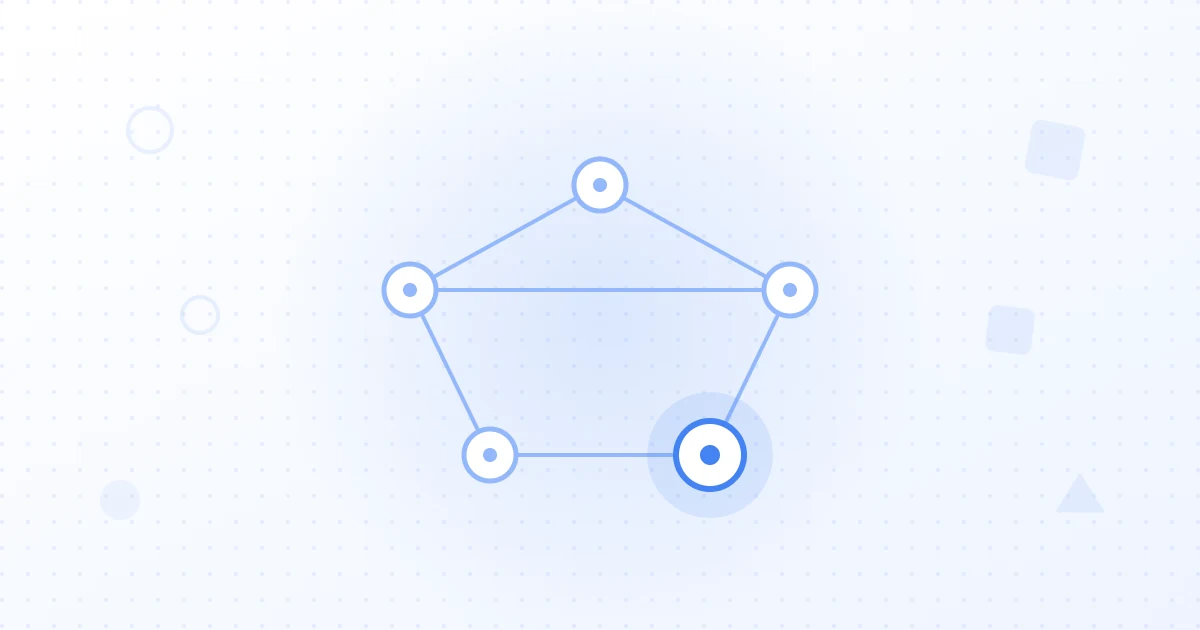

Knowledge graphs are a graph-structured data model that represents entities and the relationships between them. Instead of storing information in rows and columns, or as isolated documents, a knowledge graph organizes it as a network of interconnected nodes and typed edges that capture how facts relate.
That connected structure is why knowledge graphs are increasingly paired with large language models. They give an AI system a web of related facts to reason over, which improves accuracy and explainability. Understanding them clarifies how modern engines build grounded answers and why structured, machine-readable content matters for visibility.
A knowledge graph is a networked representation of real-world knowledge where each node is an entity and each edge is a relationship between entities. Entities can be people, organizations, products, or concepts, and the edges describe how they connect, such as founded, located in, or part of.
This differs from a flat database or a folder of documents because the relationships are first-class data, not something a reader has to infer. Google's own Knowledge Graph is the most famous example, but the concept is general and underpins a wide range of machine learning and data systems.
The fundamental unit of a knowledge graph is the triple: a subject, a relationship, and an object, such as Company X has CEO Y. Many triples chained together form the graph. Nodes hold entities, edges hold typed relationships, and properties attach descriptive attributes to both.
An ontology acts as the blueprint. It defines which entity types exist, which relationships are allowed, and what logical constraints apply, for example that every order must contain at least one product. This schema keeps the graph consistent, which is what lets software reason over it reliably rather than guess.
Knowledge graphs usually live in specialized graph databases or triplestores, such as Neo4j, Amazon Neptune, or RDF stores like GraphDB and Stardog. These systems are optimized for traversing relationships, finding neighbors, and running graph queries that would be slow in a traditional relational database.
A key strength is multi-hop traversal. The database can move from a node to its neighbors, then to neighbors of neighbors, and so on, naturally answering questions that require connecting several facts. This ability to follow chains of relationships is what makes graphs powerful for complex reasoning and a natural fit for vector search hybrids.
Standard retrieval augmented generation treats retrieved documents as separate, unstructured blobs. It uses semantic similarity to find relevant passages, then leaves the model to piece them together. This works for simple questions but struggles when an answer requires connecting facts spread across many sources.
Knowledge graphs add the missing structure. Where vanilla retrieval finds text that looks similar, a graph encodes how facts actually relate, so the system can retrieve a connected web of information rather than isolated snippets. The two approaches are complementary, and many modern pipelines combine them.
GraphRAG integrates graph-based retrieval alongside text retrieval. When answering a question, the system queries the knowledge graph for related entities and their connections, then feeds that structured context to the model. The result grounds responses in explicit facts and supports multi-hop reasoning across the graph.
This delivers several benefits. Consistency improves, because a graph that knows a product has Part A and Part B can list exactly those parts rather than hallucinate. Explainability improves too, since the system can trace the nodes and edges used to derive an answer. Knowledge graphs also disambiguate terms, distinguishing Jaguar the car maker from Jaguar the animal through their relationships.
One of the biggest draws is fewer false answers. By grounding generation in structured, verified relationships, a graph constrains what the model can claim, which directly reduces AI hallucination. The model is no longer guessing how scattered passages fit together, because the graph already encodes the connections.
The same structure adds a clear chain of reasoning. Because every answer can be traced back to specific nodes and edges, teams can audit why the system said what it said, which builds trust. This explainability is hard to achieve with text-only retrieval, where the path from sources to answer is opaque and difficult to verify.
Knowledge graphs reward content that machines can parse into entities and relationships. When your pages use structured data and consistent facts, they are easier to fold into graphs that engines and AI systems rely on, which improves your odds of being surfaced and cited. This is a core idea behind entity SEO.
Practically, that means marking up entities, keeping facts consistent across pages, and building genuine topical depth so your content maps cleanly onto a graph. Pairing that with strong structured content and focused keyword research and content planning helps both classic search engines and the AIs understand and trust your brand.
Beyond search, knowledge graphs power agentic AI assistants, fraud detection, security graphs, financial compliance mapping, and recommendation systems. In each case the value comes from connecting data that would otherwise sit in silos, then querying those connections to surface insight.
For language model applications specifically, graphs shine on precision-critical tasks where a wrong connection is costly. Question answering over complex domains, enterprise search across many systems, and chatbots that must give consistent, auditable answers all benefit from a graph layer behind the model.
Knowledge graphs turn scattered facts into a connected, queryable structure that machines can reason over, which is why they increasingly sit behind reliable AI answers. By encoding entities and relationships explicitly, they reduce hallucination, support multi-hop reasoning, and make results explainable.
To go further, connect this with retrieval augmented generation and entity SEO to understand how structured facts drive both grounded AI and search visibility. Reference sources: IBM and GoodData.

A regular database stores data in rows and columns and treats relationships as something you join at query time. A knowledge graph stores relationships as first-class data, as labeled edges between entity nodes. This makes it far easier to traverse connections, answer multi-hop questions, and reason over how facts relate across a domain.
Normal retrieval augmented generation finds text passages by semantic similarity and lets the model assemble them. GraphRAG adds a knowledge graph, so the system retrieves a connected web of related entities and relationships instead of isolated snippets. This grounds answers in structured facts, supports multi-hop reasoning, and reduces hallucination on complex questions.
Indirectly, yes. Content with clear entities, structured data, and consistent facts is easier for engines and AI systems to map onto the graphs they use to ground answers. When your information is machine-readable and reliable, it is more likely to be surfaced and cited, which is a central goal of entity-based and generative engine optimization.
THEY TRIED SORANK BEFORE YOU
 “I tested Sorank on a real client site and it's insane. It does everything an agency would bill you $1500 a month for. It's going into production on that client now.”
 Guillaume Guersanguersanguillaume.com“We are an Ads agency and we wanted to get our SEO back on track once and for all. Sorank gave us a clear view of our site, helped us prioritize optimizations, and properly structure our content. The tool is easy to use, well designed for a team, and very practical for centralizing tracking without having to juggle multiple platforms. A very solid foundation to start fresh with our SEO.”
 Gaspard MadouiAds Agency
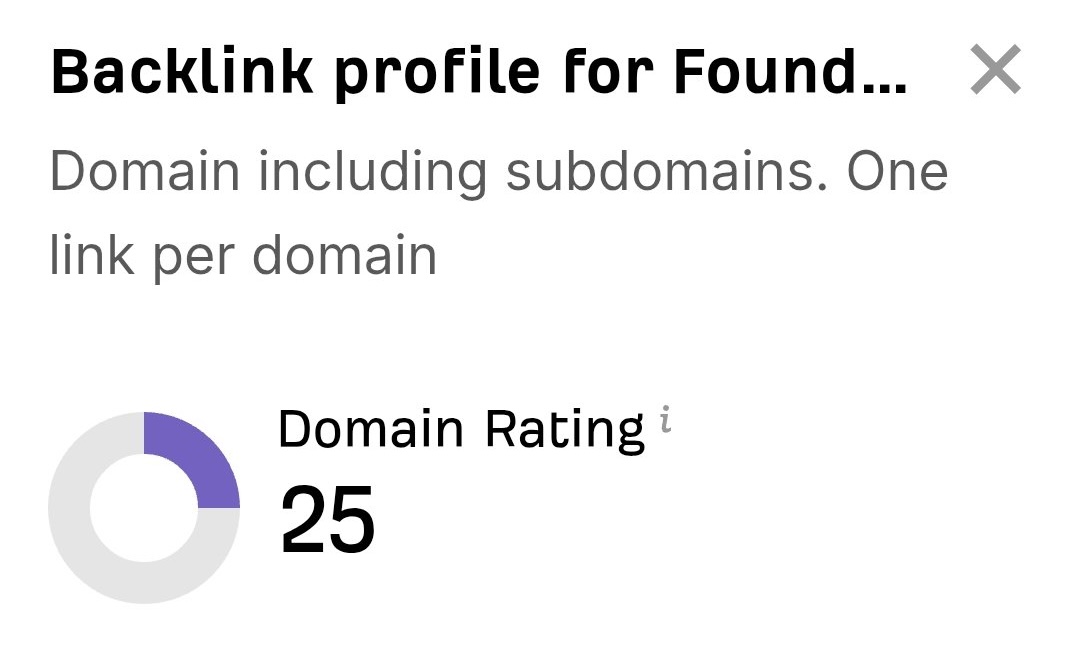 “I just let the Sorank software do its thing, and now my DR is 25 and my page is ranking higher.”
 Lucas FlandrePodcast Host“I specialized in GEO thanks to Sorank. The GEO Leaderboard allows me to show my clients their position vs competitors on ChatGPT. It’s a real commercial differentiator.”
 MélanieSEO Freelance“Great service, works well for our website and helps us understand how to improve it to rank better on Google and elsewhere. Congrats, keep going, I recommend it.”
 Hugo T.E-commerce merchant