
Preferences
Privacy is important to us, so you have the option of disabling certain types of storage that may not be necessary for the basic functioning of the website. Blocking categories may impact your experience on the website. More information
Privacy is important to us, so you have the option of disabling certain types of storage that may not be necessary for the basic functioning of the website. Blocking categories may impact your experience on the website. More information

Google Project Mariner was an AI agent that browsed the web for you. Google shut it down in early May. Here is what replaced it and why it matters for SEO.







Founder Sorank, 7+ years in SEO.
Summary
Google Project Mariner is a discontinued AI agent from Google DeepMind. It browsed the web for you, clicking, typing and filling in forms in your browser. Google announced it in December 2024 and shut it down on May 4, 2026, moving its technology to other Google products such as Gemini Agent.
Want to go further? Ask
Google Project Mariner was a research prototype built by Google DeepMind. You gave it a goal, such as finding a product and filling in a checkout form. It interpreted the goal, planned the steps and carried them out on the websites. It ran as a Chrome extension, and you could watch each step and take control at any time.
If you searched for this term, you probably want to know three things: what it was, whether you can still use it, and where its technology went. The short answers are: an agent that worked in your browser, no, and other Google products. The rest of this guide explains each point, with the sources so you can check them yourself.
Project Mariner was an experiment in how people and AI agents share work inside a web browser. Google DeepMind announced it in December 2024. The idea was simple: hand routine web chores to an AI agent so you can spend your time on something else. Typical chores were online shopping, looking up information and filling in forms.
The agent read what was on the screen and acted on the page. That is the difference between Mariner and a chatbot. A chatbot tells you what to click. Mariner clicked it for you, then looked at the result and went on to the next step.
Google first gave access to trusted testers. Later, the agent became available through Google AI Ultra, the paid Google plan.
Yes. Google ended the service on May 4, 2026, local time. The project's landing page said: "Project Mariner service ended on May 4, 2026, and its technology has been taken over by other Google products." It added: "For complex tasks, please try Gemini Agent." Gigazine reported the change, and noted that Google announced it quietly on the project's official website.
Warning
Many articles still describe Project Mariner as a live tool that you can join. Check the publication date before you follow any setup steps. If the article is older than May 2026, the steps will not work.
The workflow was the same for most tasks. It helps to know it, because the same pattern now shows up in Gemini Agent and in other browser agents. The main steps were:
The last step matters most for trust. An agent that acts on your accounts, your cart or your forms needs a clear way for you to step in. Mariner was built around that idea, which is why it kept you informed at every step.
Google says the technology went to "other Google products". The landing page names Gemini Agent for complex tasks. Gigazine, citing The Verge, reports that Google also added Mariner's agent functions to AI Mode, the AI-powered search feature. Press reports also link the work to the Gemini API.
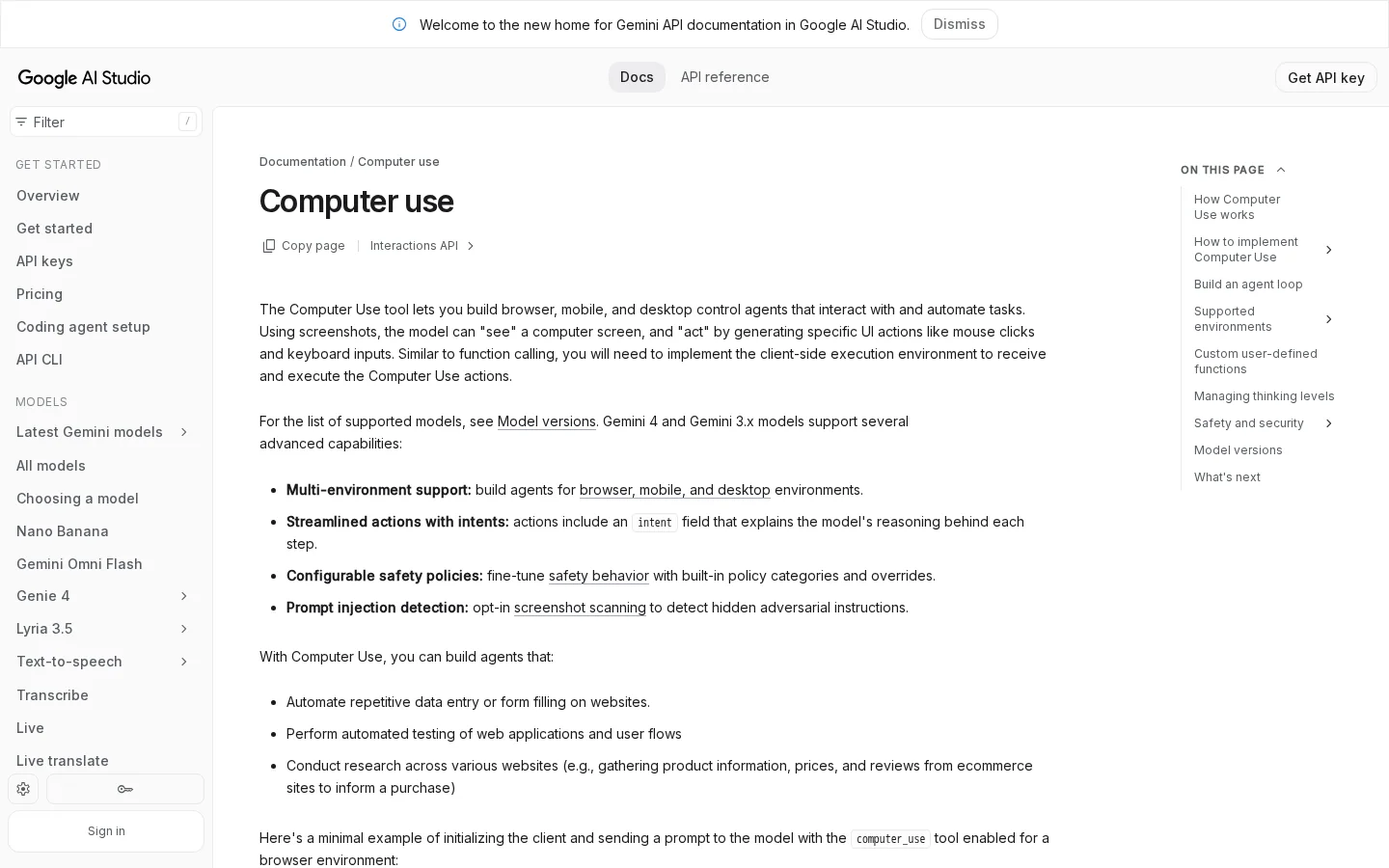
For developers, the closest match today is the Computer Use tool in the Gemini API. Google's documentation says the tool "lets you build browser, mobile, and desktop control agents". Using screenshots, the model "can see" the screen, and it acts by generating interface actions such as mouse clicks and keyboard inputs. The documentation lists several Gemini models that support it. Only one entry, Gemini 3 Flash Preview, is labeled as a preview.
This is a different product from Mariner. It does not come with a browser extension or a finished consumer app. You need to write the code that runs the agent and decide what it may do. That makes it a tool for builders, not a replacement for the Mariner experience.
No. The service has ended. You have three practical options that cover parts of what Mariner did:
Pick the option that matches your goal. If you only need an agent to finish one task for you, use Gemini Agent. If you run a product that needs to automate a flow, use the API and plan the safety checks yourself.
Less than the headlines suggest. Google's Search documentation says the same thing for its AI search features. It states: "There are no additional requirements to appear in AI Overviews or AI Mode, nor other special optimizations necessary." It also says that "all existing SEO fundamentals continue to be worthwhile".
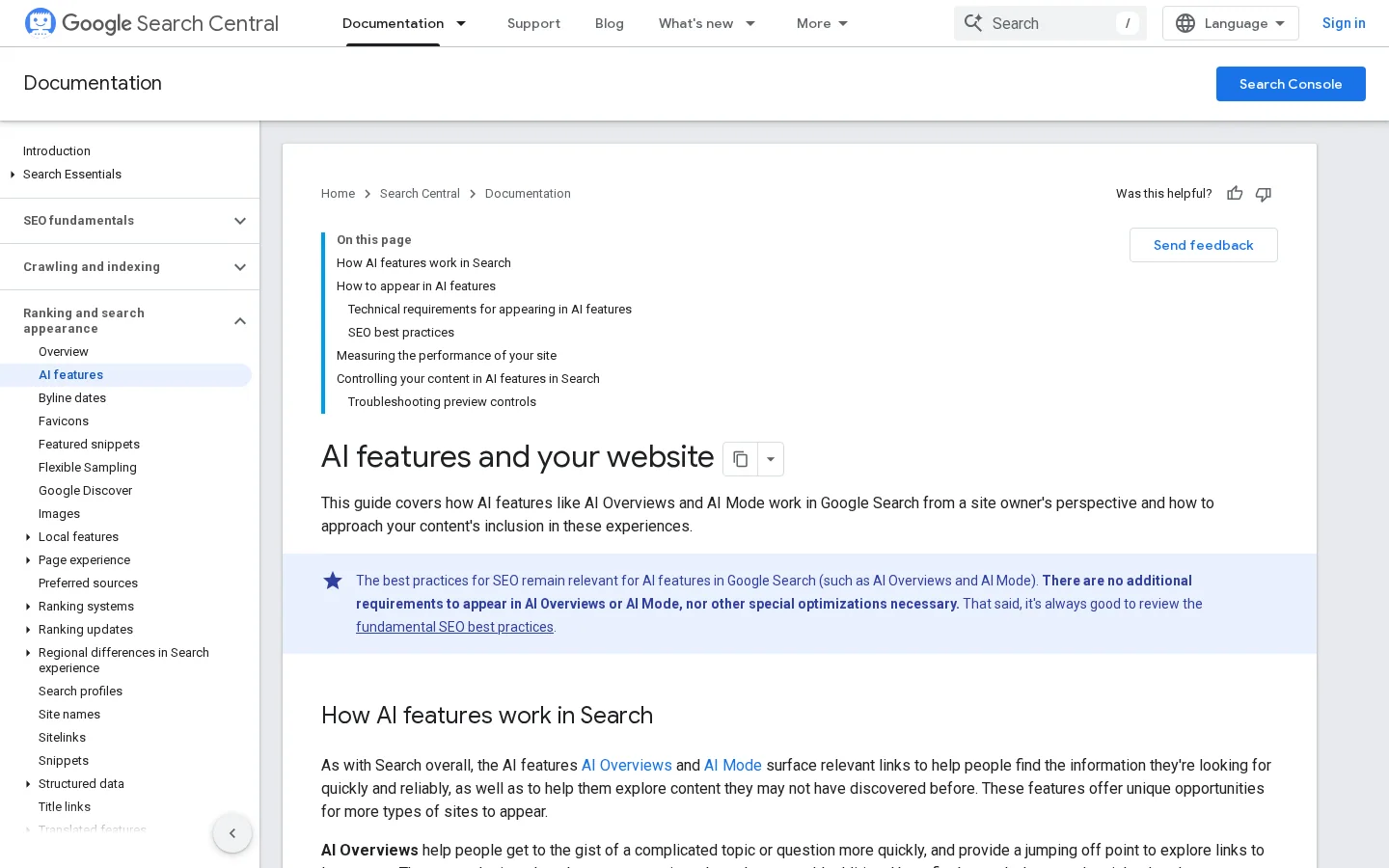
The same page explains what makes a link eligible. A page must be indexed and eligible to be shown in Google Search with a snippet before it can appear as a supporting link in AI Overviews or AI Mode. So the basics still decide the outcome: crawlable pages, clear titles, and content that answers the query. For a deeper look at this search feature, read the guide on how to get your pages cited in AI Mode. For what AI Mode is and how it differs from AI Overviews, see the AI Mode glossary entry.
Also check whether your pages still show the main content to a visitor who does not log in. Agents and search tools both need to read the page. If the answer sits behind a popup or a script that never runs, neither can use it.
Mariner showed where AI tools are heading. An agent opens a page, reads it and acts on it. A user, a search feature and an agent all depend on the same thing: the page must be reachable and readable. If an agent cannot read your page, it cannot use your product, your price or your contact form.
That is why the concept matters for GEO too. Generative engine optimization is about being named and cited by AI answers. The agents are the next step after those answers. They do not only mention a brand, they can visit the brand's site and act. Read more about the wider idea in the agentic search entry and the AI agents entry.
To see how a model currently talks about your brand, Sorank has a free Gemini Ranking Tool. It checks whether Google Gemini mentions your brand, so you can compare your position before you change your pages.
Google Project Mariner was an AI agent that browsed the web for you. Google shut it down on May 4, 2026, and moved its technology into other products, mainly Gemini Agent, AI Mode and the Gemini API. If you need the same kind of help, start with Gemini Agent. If you need the same kind of control in your own product, build with the Computer Use tool. Either way, check the publication date of any guide you read, and keep your pages easy for both people and agents to read.
Sources
No. Google ended the service on May 4, 2026. Google says its technology moved to other Google products, and it points users to Gemini Agent for complex tasks.
Google names Gemini Agent as the replacement for complex tasks. For developers, the Computer Use tool in the Gemini API covers similar browser control.
Not in a special way. Google says there are no additional requirements to appear in AI Overviews or AI Mode, so standard SEO work still applies.
 “I tested Sorank on a real client site and it's insane. It does everything an agency would bill you $1500 a month for. It's going into production on that client now.”

 Guillaume Guersanguersanguillaume.com“We are an Ads agency and we wanted to get our SEO back on track once and for all. Sorank gave us a clear view of our site, helped us prioritize optimizations, and properly structure our content. The tool is easy to use, well designed for a team, and very practical for centralizing tracking without having to juggle multiple platforms. A very solid foundation to start fresh with our SEO.”
 Gaspard MadouiAds Agency
 “I just let the Sorank software do its thing, and now my DR is 25 and my page is ranking higher.”
 Lucas Flandrefoundertrace.fr“I specialized in GEO thanks to Sorank. The GEO Leaderboard allows me to show my clients their position vs competitors on ChatGPT. It’s a real commercial differentiator.”
 MélanieSEO Freelance“Great service, works well for our website and helps us understand how to improve it to rank better on Google and elsewhere. Congrats, keep going, I recommend it.”
 Hugo T.E-commerce merchant



















