
Preferences
Privacy is important to us, so you have the option of disabling certain types of storage that may not be necessary for the basic functioning of the website. Blocking categories may impact your experience on the website. More information
Privacy is important to us, so you have the option of disabling certain types of storage that may not be necessary for the basic functioning of the website. Blocking categories may impact your experience on the website. More information

Earned media is unpaid publicity from press, reviews, shares and mentions. Learn what it is, how it differs from paid and owned media and how to earn it.








Founder Sorank, 7+ years in SEO.
Summary
Earned media is unpaid publicity that a brand gets from third parties, such as press coverage, reviews, social shares, word-of-mouth and mentions in AI answers. You cannot buy it directly. You earn it by publishing something worth talking about and making it easy for others to share.
Want to go further? Ask
Earned media is the attention your brand receives from people and sites outside your company, without paying them for a placement. The message is written by someone else, in their own words. That is what separates it from the two other types of media: paid media (ads and sponsored posts you buy) and owned media (your website, blog and newsletter). You decide what goes into owned and paid media. A journalist, a customer or an AI assistant decides what goes into earned media.
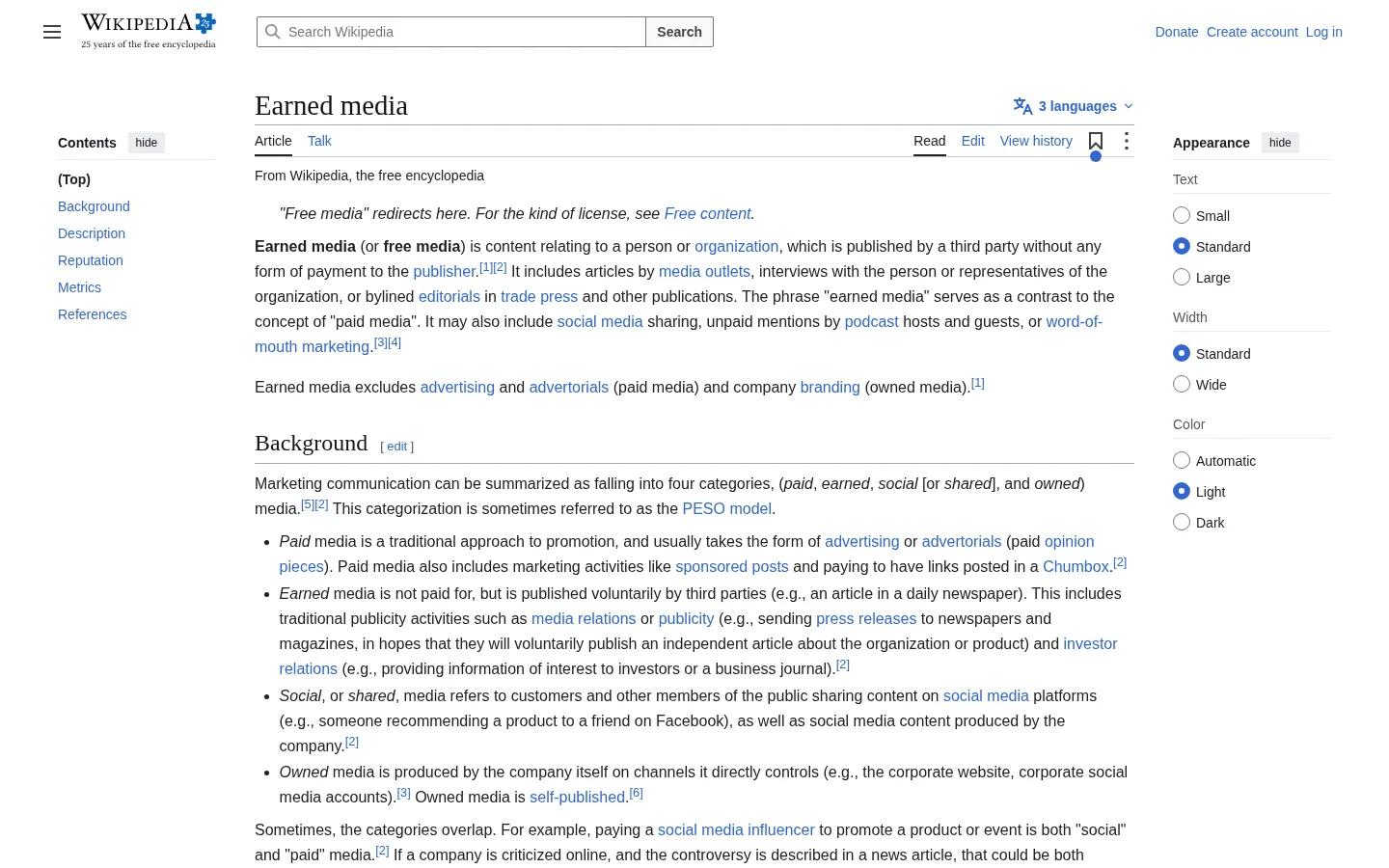
The three types differ by who controls the message and whether you pay for the placement. Use this table to decide which bucket a result belongs in.
| Type | Who controls the message | Do you pay for the placement? | Typical examples |
|---|---|---|---|
| Paid media | You, within the publisher's format | Yes | Ads, sponsored articles, paid influencer posts |
| Owned media | You | Not for each placement | Your website, blog, newsletter, social accounts |
| Earned media | A third party | No | Press coverage, reviews, shares, mentions, word-of-mouth |
Earned media is any mention of your brand that you did not pay for and did not publish yourself. The most common forms are:
A reader knows an ad is written to sell. A review or a news article looks like someone else's judgment, so it often carries more weight. That advantage has a cost: you do not control the message. A journalist can frame your product in a way you did not want, an editor can decline to publish, and a review can be negative. Plan for that, and answer criticism in public rather than hiding from it.
You cannot order a news article, but you can make it likely that someone writes one. Work through these steps:
For the full playbook on pitching journalists and bloggers, read the digital PR guide on earning links and coverage. For the links side of the same work, see link building.
Count the mentions you earned, not the ones you paid for. This simple share shows how much of your visibility comes from third parties:
Earned share = earned mentions / (earned + paid + owned mentions) x 100Track four things each month: the number of earned mentions, the sites that mention you, the tone of each mention, and your share of voice against competitors. Set up brand monitoring alerts so a negative article does not sit for weeks before you see it.
Tip
Keep a simple log with the date, the site, the type of mention, whether it links to you, and whether the tone is positive, neutral or negative. After three months, the log shows which sources bring you the most mentions.
AI assistants answer from pages they can find and read on the web, so an article about your brand can become a source they use. Google's guidance says there are no special requirements or optimizations needed to appear in AI Overviews or AI Mode, and it does not name brand mentions as a factor. Treat earned coverage as a way to be found and named, not as a switch for rankings. Coverage on sites that AI models already cite is the most useful place to start, and source citation explains how those references work. Sorank's AI mention tracking lists the reference sources AI models rely on when they mention your brand, with their share of citations, so you can see which sites are worth earning coverage on.
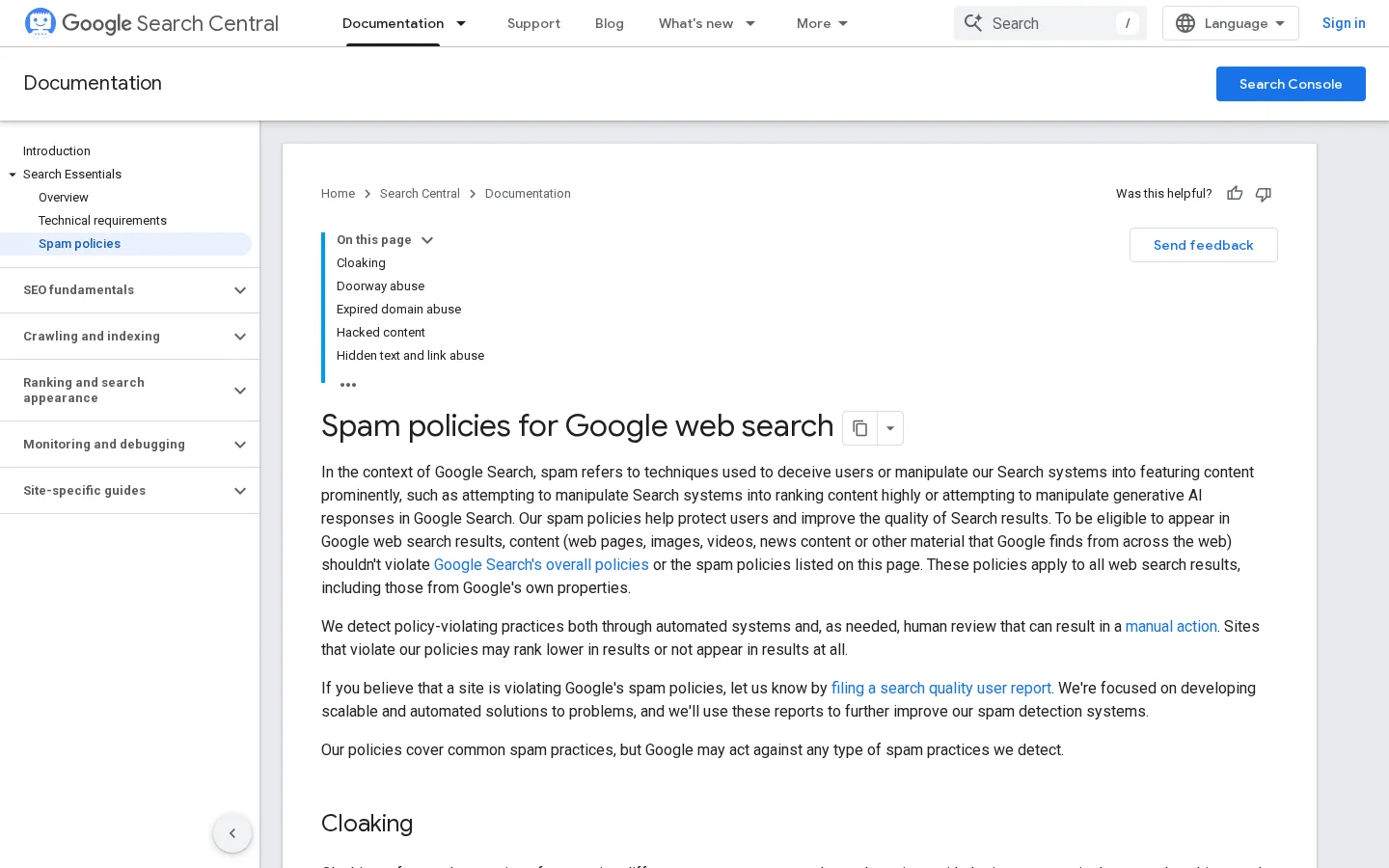
A sponsored article or a paid "review" is paid media, even when it reads like independent coverage. To spot it, look for a sponsored label or a contract behind the placement. To fix it, label the content as sponsored, count it as paid media, and mark any paid link with a qualifying attribute. Google's spam policies say paid links are acceptable when they are qualified with rel="sponsored" or rel="nofollow".
Many teams track only the links that point to their site, and ignore press mentions, reviews and AI answers that have no link. To spot it, compare your link report with your mention log and see what is missing. To fix it, track mentions and links separately, and treat the backlink count as one signal among several.
A "you link to me and I link to you" deal is a link exchange. Google's spam policies list excessive link exchanges among link schemes, next to buying or selling links for ranking purposes. To spot one, check whether a partner asks for a reciprocal link before it publishes anything. To fix it, offer content the partner would want to link to on its own, and drop any arrangement tied to a link swap. For the wider risk, read why a backlink exchange can count as a link scheme.
A mention is not always good news. A critical review or an article that repeats a complaint can stay in search results for years. To spot it, read every mention, not just the count, and check the tone in your log. To fix it, reply in public with facts, fix the problem the article describes, and ask the author for an update if the facts have changed.
Third-party sites are where search engines and AI assistants look to check what others say about a brand. Coverage on those sites can bring you referral visits from readers, a link when the site links to you, and a name in AI answers when an assistant cites the page. Compare these mentions with your AI citations and mentions to see which ones carry your brand into answers.
Earned media is attention you did not buy: press, reviews, shares, mentions and AI answers. Treat it as the result of useful work. Publish something worth covering, pitch it to the people who write about your topic, track every mention, and fix the problems that negative coverage points out. Do not buy it disguised as independent praise.
Sources
A backlink is a link from another site to yours, and it is one form of earned media. Earned media is wider: it also covers press mentions, reviews, social shares and word-of-mouth, even when there is no link. Track links and mentions separately so you can see which one is growing.
You do not pay the publisher for the placement, but earned media is not free to produce. You spend time on research, content, pitching and follow-up, and sometimes on a PR tool or an agency. Coverage also cannot be guaranteed, so plan for results rather than a fixed price.
Not directly. Once you pay for a placement, it becomes paid media, such as a sponsored article or an ad. If you pay for a link, Google's spam policies say it is acceptable when it is qualified with rel="sponsored" or rel="nofollow".
 “I tested Sorank on a real client site and it's insane. It does everything an agency would bill you $1500 a month for. It's going into production on that client now.”

 Guillaume Guersanguersanguillaume.com“We are an Ads agency and we wanted to get our SEO back on track once and for all. Sorank gave us a clear view of our site, helped us prioritize optimizations, and properly structure our content. The tool is easy to use, well designed for a team, and very practical for centralizing tracking without having to juggle multiple platforms. A very solid foundation to start fresh with our SEO.”
 Gaspard MadouiAds Agency
 “I just let the Sorank software do its thing, and now my DR is 25 and my page is ranking higher.”
 Lucas Flandrefoundertrace.fr“I specialized in GEO thanks to Sorank. The GEO Leaderboard allows me to show my clients their position vs competitors on ChatGPT. It’s a real commercial differentiator.”
 MélanieSEO Freelance“Great service, works well for our website and helps us understand how to improve it to rank better on Google and elsewhere. Congrats, keep going, I recommend it.”
 Hugo T.E-commerce merchant



















