Preferences
Privacy is important to us, so you have the option of disabling certain types of storage that may not be necessary for the basic functioning of the website. Blocking categories may impact your experience on the website. More information
Privacy is important to us, so you have the option of disabling certain types of storage that may not be necessary for the basic functioning of the website. Blocking categories may impact your experience on the website. More information

A data aggregator collects data from many sources and combines it into one place. Learn what it means in finance, local listings and cloud, with examples.








Founder Sorank, 7+ years in SEO.
Summary
A data aggregator is a company or service that collects information from many sources, combines it, and passes it on or shows it in one place. Banking apps and local listing services both rely on one, but the word means different things in each field.
Want to go further? Ask
A data aggregator is a tool or a company that gathers records from several places and turns them into one usable set. The job is the same in every field: connect to the sources, collect the records, match them, and deliver the result. What changes is the data. In a budgeting app it is your account balances. For a local business it is the name, address, phone number and opening hours that appear across the web. In a company's reporting it is sales and marketing records.
A data aggregator works in three steps. First, it connects to the sources, such as bank accounts, business directories, websites or internal databases. Second, it collects the records, either through an official feed or an API, or by reading public web pages. Third, it combines the records into one dataset and sends that dataset to the apps or sites that need it.
Reading public pages is one method. Some aggregators use bots for this, which is the same technique described in our guide to web scraping. Official feeds are usually more stable and easier to check, because the source sends the same fields every time.
In finance, a data aggregator links a user's bank and card accounts to an app, so that balances and transactions show up in one place. A budgeting app is the typical case. You approve the connection, and the aggregator brings in the data, even when your accounts are held at different banks. The app then shows you one total and one list of spending.
In the United States, the rules for this are written into law. The Consumer Financial Protection Bureau (CFPB) defines a data aggregator in its rule on personal financial data rights as "a person that is retained by and provides services to the authorized third party to enable access to covered data" (12 CFR 1033.131). The definition is short, but it tells you the key point: an aggregator works for a third party, such as an app, and does not own the account.
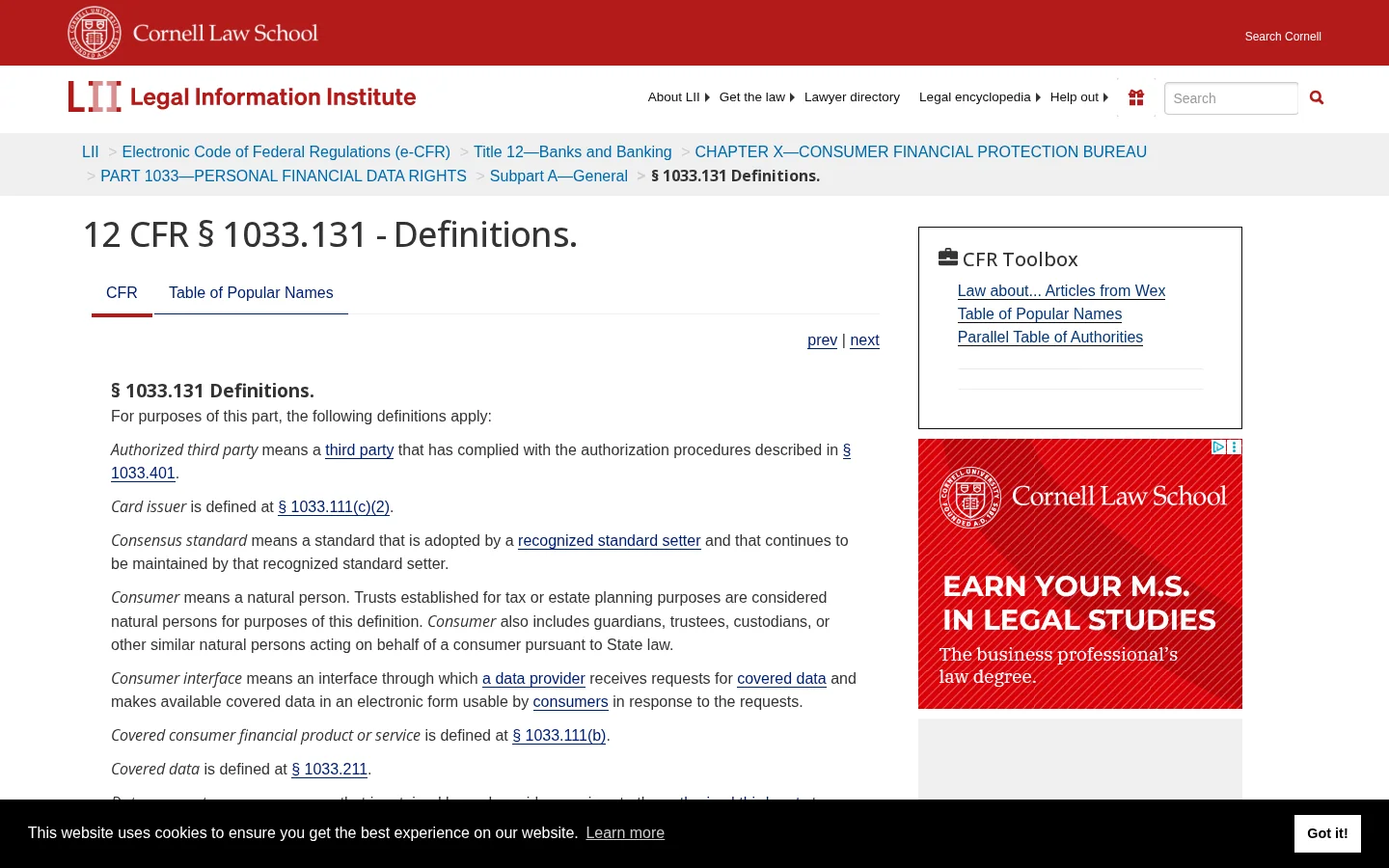
The rule is not fully in force yet. According to the CFPB, a court stayed its compliance dates on October 29, 2025. Check the CFPB's compliance page on personal financial data rights for the current status before you rely on any date.
For local businesses, a data aggregator collects business details from across the web and passes them to directories, maps and apps. The details are usually the business name, address, phone number and opening hours. The aggregator gathers what already exists online, merges it, and sends the result to other platforms that use it.
Here is a concrete case. A café changes its opening hours for the winter. If it updates the details in a source the aggregator reads, the new hours can reach many directories and maps over time. If an old phone number stays in one source, that number can spread to the same sites. This is why one wrong record at an aggregator can cause problems on many sites at once. To keep details matching, check name, address and phone consistency and the local citations that point to your business.
In cloud computing and big data work, the term means something else. A company may keep sales data in a shop system, customer data in a website tool and ad data in a marketing platform. A data aggregator in this sense pulls these sources into one cloud store and combines the records into totals, such as sales per product per week. Analysts then read those totals in a dashboard or a report.
Here the aggregator is usually a pipeline or a step inside one, not a company that sells data. Its value is that every report uses the same totals, built from the same records.
The three meanings share one idea, but they answer different questions. Use this table to find the one you need.
| Field | What the aggregator collects | What you get | What to check |
|---|---|---|---|
| Finance | Bank and card records, with the user's permission | One view of balances and spending in an app | Which apps have access, and whether you still use them |
| Local listings | Name, address, phone and hours from across the web | Matching details on directories and maps | Whether each detail is the same in every source |
| Cloud and big data | Sales, web and ad records from internal systems | Totals and reports in one data store | Whether the totals match the original systems |
| Sales and marketing | Company and contact details from many databases | A lead list with added company facts | The source and the update date of each record |
The last row is the same idea used for sales lists. If you want to compare tools for that job, see the best B2B data enrichment tools.
These mistakes affect every meaning of the term. Each one is shown with how to spot it and how to fix it.
For SEO, a data aggregator matters because a business detail that is wrong at the source is often wrong on many sites. Search engines compare the details they find about a business across the web. If the name, address and phone number match everywhere, the business is easier to trust and easier to find on maps.
For GEO, the same logic applies to AI answers. AI models read many sources and compare them before they name a business. When your facts agree across sources, the model has fewer conflicts to resolve. When they do not agree, the answer can carry an old detail for months.
Sorank works on your content, your backlinks and your presence in AI answers. Its AI mention tracking shows when ChatGPT names your brand, so you can see when an old or wrong detail appears in an answer. To learn how AI chooses the sources it names, read why AI cites third-party sources.
A data aggregator collects information from many sources and combines it into one place. In finance, it links accounts with the user's permission. For local businesses, it spreads business details to directories and maps. In cloud work, it joins records into totals that reports can use. Start by checking which meaning applies to you, then check the source and the update date of every record.
Sources
A data aggregator is a service that gathers information from several sources and puts it in one place. The sources can be bank accounts, business listings or sales records. The goal is to see everything together.
A local data aggregator collects business details such as name, address, phone number and hours from across the web. It sends that data to directories, maps and apps. One error in a source can spread to many sites.
Yes. In cloud and big data work, an aggregator pulls records from several internal systems into one cloud store and combines them into totals. Those totals then feed reports and dashboards.
 “I tested Sorank on a real client site and it's insane. It does everything an agency would bill you $1500 a month for. It's going into production on that client now.”

 Guillaume Guersanguersanguillaume.com“We are an Ads agency and we wanted to get our SEO back on track once and for all. Sorank gave us a clear view of our site, helped us prioritize optimizations, and properly structure our content. The tool is easy to use, well designed for a team, and very practical for centralizing tracking without having to juggle multiple platforms. A very solid foundation to start fresh with our SEO.”
 Gaspard MadouiAds Agency
 “I just let the Sorank software do its thing, and now my DR is 25 and my page is ranking higher.”
 Lucas Flandrefoundertrace.fr“I specialized in GEO thanks to Sorank. The GEO Leaderboard allows me to show my clients their position vs competitors on ChatGPT. It’s a real commercial differentiator.”
 MélanieSEO Freelance“Great service, works well for our website and helps us understand how to improve it to rank better on Google and elsewhere. Congrats, keep going, I recommend it.”
 Hugo T.E-commerce merchant