
Preferences
Privacy is important to us, so you have the option of disabling certain types of storage that may not be necessary for the basic functioning of the website. Blocking categories may impact your experience on the website. More information
Privacy is important to us, so you have the option of disabling certain types of storage that may not be necessary for the basic functioning of the website. Blocking categories may impact your experience on the website. More information

Content velocity is how fast you move content from idea to published page. Learn how to measure it, speed up your workflow and keep quality high.








Founder Sorank, 7+ years in SEO.
Summary
Content velocity is the speed at which your team moves content from idea to published page over a set period. It measures how many pages you publish and how long each one takes to go live. Speed only helps when quality holds, so measure it next to the results each page earns.
Want to go further? Ask
Content velocity has no single definition. Marketing teams use it in different ways. Some count only the pages published each month. Others also count the days a page waits in the workflow, from brief to live URL. The version that helps most combines both: how much you publish, and how fast each piece moves through your process.
Content velocity measures three things: the volume you publish, the speed of your workflow, and the time a new page takes to earn its first search impression. Each one points to a different part of your process.
Log the approval date and the publication date for every article in a simple sheet. Then calculate the average days between the two each month. Look at the trend rather than one month's total, because a single slow month often comes from one difficult topic or a busy week.
Google Search Console shows impressions for each URL, so you can track time to first impression without another tool. A page that gets no impressions long after it went live may have an indexing problem, a weak topic, or both.
Monthly velocity check
Publishing frequency counts how often you publish, such as once a week. Content velocity also counts the time each piece spends in your process. Two teams can publish the same number of posts, yet one of them may take much longer to ship. For the right number of posts for your situation, read our guide on how often you should blog. This page covers what sits behind that number.
A content calendar decides what goes out and when. Velocity tells you whether that calendar is realistic. If your calendar has a slot every day but each article takes a week to write and review, the calendar is the problem, not the team.
Publishing faster helps only when every page adds something a reader needs. Google's spam policies describe scaled content abuse as many pages generated mainly to manipulate rankings, with little value for users. The speed itself is not the problem. The problem is the pages that come out of it.
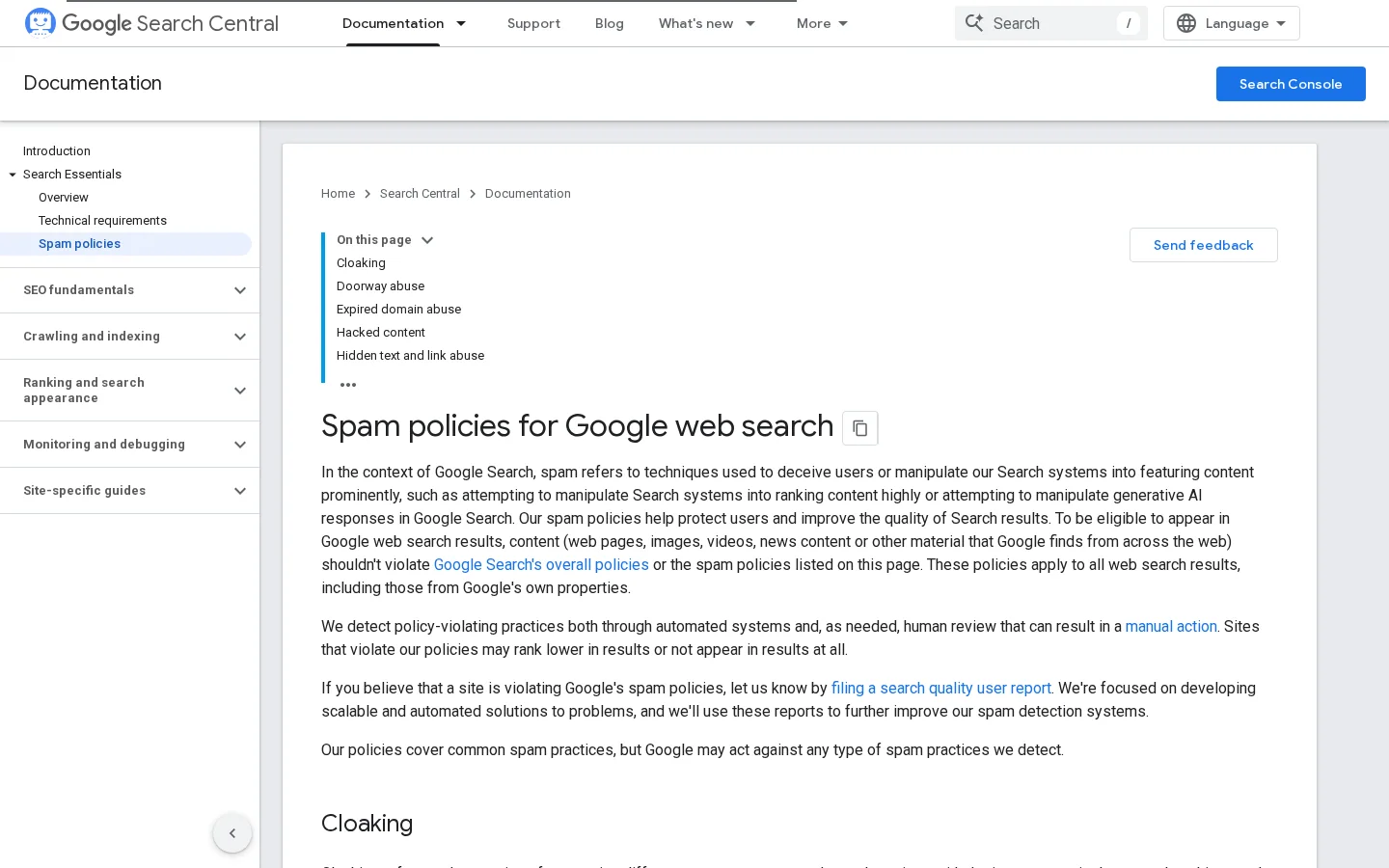
Google also says that AI-generated content is acceptable when it meets its quality standards. Generating many pages without adding value can break its spam rules, according to its guidance on generative AI content. That is the line to watch when you raise your pace.
The gain is real when the base is solid. In the LV3D case study, a French 3D printing specialist already had strong traffic. After Sorank published dozens of articles a month on its site, daily Google clicks rose from about 240 to over 1000, and organic traffic was multiplied by 4 in 5 months. The results came from a site that already had expertise, not from volume alone.
Fix the slowest stage first, then add volume. Adding writers to a broken workflow only creates a backlog. Start with these steps.
To check whether a faster pace pays off, use the cost per article calculator to see what each published page really costs you. Then compare that cost with the traffic the page earns.
Tip
Put cycle time on the same dashboard as traffic. A faster pipeline is only a gain when the pages it produces get found and read.
Most teams make the same few errors when they push for speed. Check each one before you add more volume.
This happens when a draft, an outline or an unpublished file counts as a finished page. You can spot it when your monthly count rises but Google Search Console shows no new URLs. Count only pages that are live and can be indexed, and report drafts on a separate line.
Two or more pages target the same search, so they compete with each other. You can spot it in Search Console when one query lists several of your URLs. Give each page one target query, then merge or redirect the weaker copies. The entry on keyword cannibalization explains how to find them.
Speed tempts teams to publish without review, so errors and invented details go live. You can spot it by reading a sample of last month's articles and checking each claim for a source. Google's guidance says AI-generated content must be fact-checked and reviewed for accuracy before it is published. Add a check step before each page goes live, even a short one.
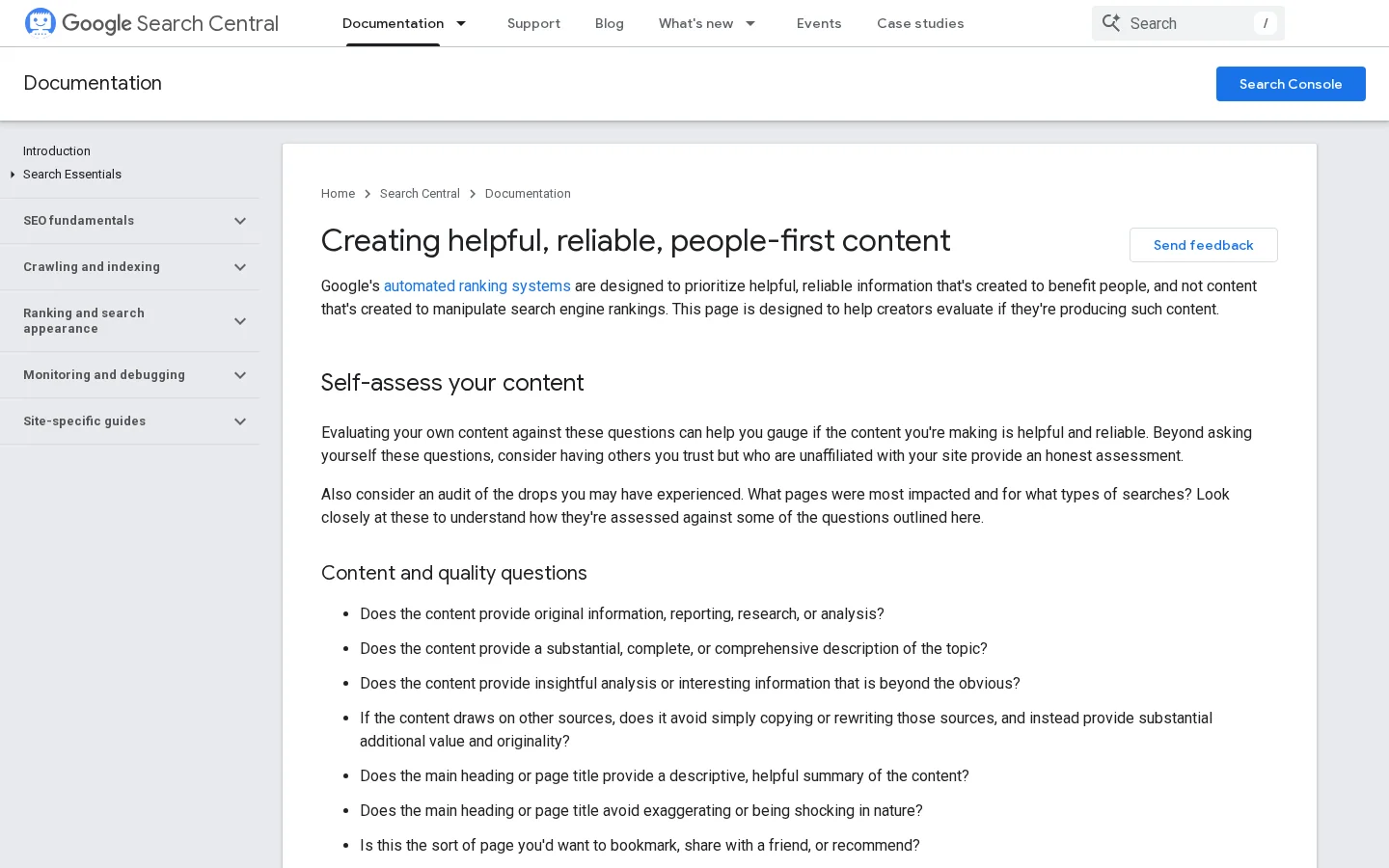
The team ships faster, but traffic stays flat for months. You can spot it when cycle time improves and the impressions on new pages do not follow. Pair every speed metric with a result metric, such as clicks or AI mentions, and review both together. Google's helpful content guidance is a useful test. It asks whether a page provides original information, reporting, research or analysis, and whether a reader would want to bookmark or share it.
Content velocity matters because search engines and AI assistants both look for sites that cover a topic in depth and keep it current. A steady flow of pages, grouped into content clusters, shows what your site knows. Regular updates also support content freshness, which matters most when a topic changes often.
For GEO, the question is whether an AI assistant can find a clear answer on your site when a buyer asks. Build each page around one clear question, so the answer can be lifted without the surrounding text. Read about AI content generation before you scale output, so speed serves clarity rather than replacing it.
Content velocity tells you how fast your team turns an idea into a live page. Measure volume, cycle time and time to first impression together, and fix the slowest stage before you add more pages. Speed is worth it only when each page answers a real question and earns its place in search.
Sources
There is no universal number. The right pace depends on your team size, your keyword plan and how many older pages need updates. Watch your own trend and aim for steady growth rather than a fixed target.
It can, when speed comes from skipping quality. Google's spam policies target large numbers of pages built to manipulate rankings, with little value for users. Faster publishing is fine when each page answers a real question.
No. Publishing frequency counts how often you publish. Content velocity also measures how long each piece takes from brief to live page, which shows where your workflow slows down.
 “I tested Sorank on a real client site and it's insane. It does everything an agency would bill you $1500 a month for. It's going into production on that client now.”

 Guillaume Guersanguersanguillaume.com“We are an Ads agency and we wanted to get our SEO back on track once and for all. Sorank gave us a clear view of our site, helped us prioritize optimizations, and properly structure our content. The tool is easy to use, well designed for a team, and very practical for centralizing tracking without having to juggle multiple platforms. A very solid foundation to start fresh with our SEO.”
 Gaspard MadouiAds Agency
 “I just let the Sorank software do its thing, and now my DR is 25 and my page is ranking higher.”
 Lucas Flandrefoundertrace.fr“I specialized in GEO thanks to Sorank. The GEO Leaderboard allows me to show my clients their position vs competitors on ChatGPT. It’s a real commercial differentiator.”
 MélanieSEO Freelance“Great service, works well for our website and helps us understand how to improve it to rank better on Google and elsewhere. Congrats, keep going, I recommend it.”
 Hugo T.E-commerce merchant



















