
Preferences
Privacy is important to us, so you have the option of disabling certain types of storage that may not be necessary for the basic functioning of the website. Blocking categories may impact your experience on the website. More information
Privacy is important to us, so you have the option of disabling certain types of storage that may not be necessary for the basic functioning of the website. Blocking categories may impact your experience on the website. More information

An AI first content strategy plans and structures content so AI assistants can extract and cite it. How it works, how it differs from SEO and how to start.







Founder Sorank, 7+ years in SEO.
Summary
AI first content strategy is an approach that plans, structures and publishes content so AI assistants can extract, trust and cite it. The AI systems become the first reader of each page, while classic search optimization stays as the foundation rather than the whole plan.
Want to go further? Ask
An AI first content strategy starts from the question an AI assistant has to answer, not from the keyword a person types into a search box. Each page is written so that a model can lift one clean answer from it and attribute that answer to your brand. Writing for people still matters, but the structure of the page is designed for machine extraction first, then the human reading experience is layered on top.
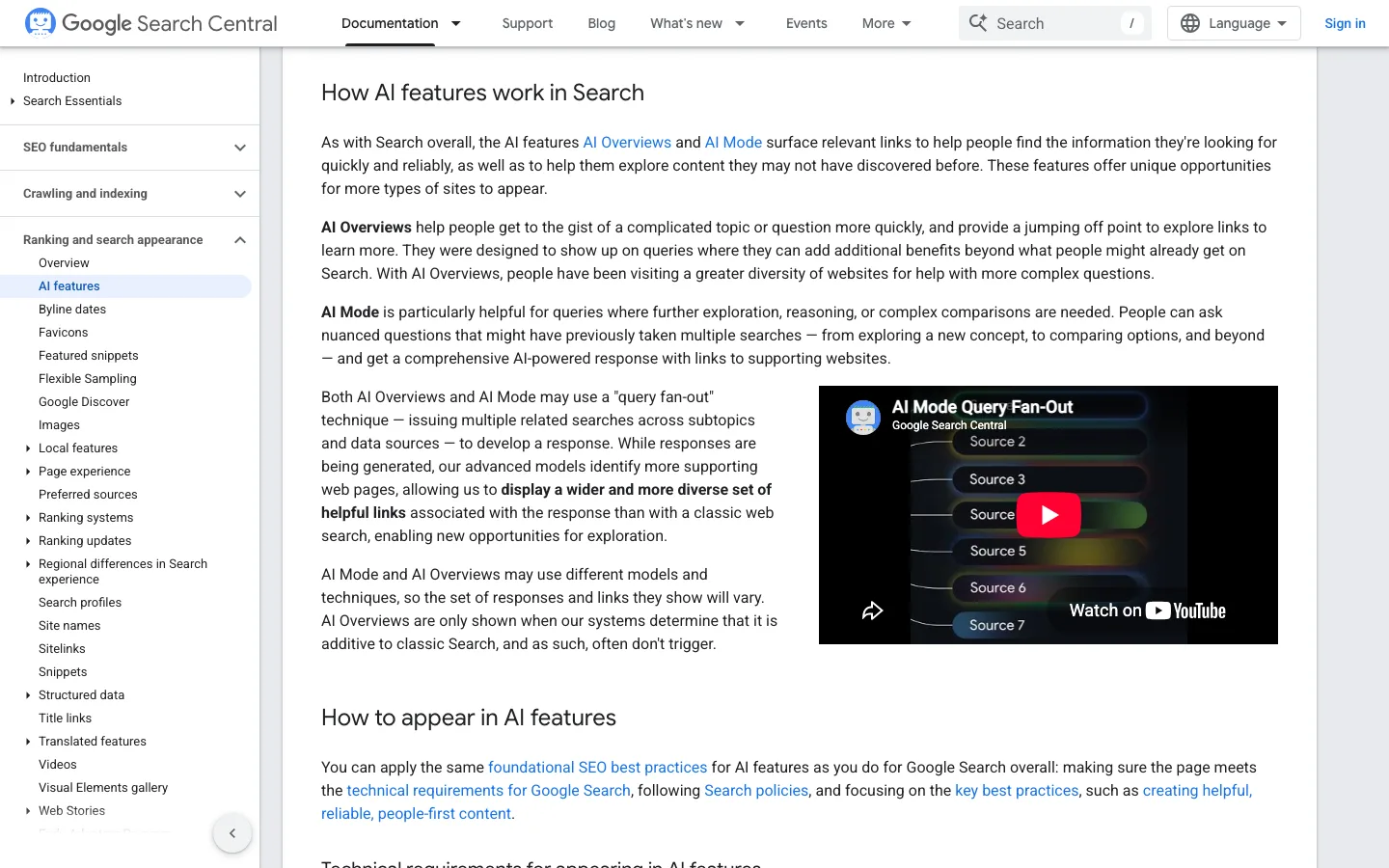
The shift is real and it is measurable. Google says that AI Overviews and AI Mode may use a "query fan-out" technique, which runs several related searches and then identifies more supporting web pages for one answer. A page that is hard to extract is less likely to be quoted in that answer, even when it ranks well.
An AI first content strategy is a method for planning and publishing content that AI systems can retrieve, understand and quote. A traditional plan asks what people search for and how to rank for it. An AI first plan asks which questions an assistant will be asked about your offer, and what the shortest accurate answer to each one looks like. The output is a set of pages built around those answers.
It sits alongside a broader AI content strategy, but it puts more weight on extraction. A general plan balances rankings and citations, while an AI first plan treats the answer engine as the main reader of every structural decision, from the first heading to the last FAQ.
Many teams confuse the two. Using AI to write content faster is a strategy about AI: it speeds up drafting and ideation. An AI first content strategy is a strategy for AI systems: it organizes content around questions, direct answers and structured signals so that machines can parse and reuse it. You can use AI tools for drafting and still have a page that is not AI first, if the page has no clear questions and no answer that stands on its own.
The reverse mistake is also common. A page can rank well on Google and still be ignored by assistants. Ranking and citation depend on partly different signals, which is why an AI first approach adds to classic SEO rather than replacing it. The extraction layer is the core of answer engine optimization, and it is where most of the extra work sits.
The unit of an AI first page is the answerable chunk. Turn each H2 and H3 into a question people actually ask, then open the section with a direct answer of about 40 to 60 words that makes sense without the rest of the article. This answer ready content pattern puts the response first and adds detail after it, so a model that reads only the opening sentence still gets a correct answer.
Keep paragraphs short and use lists, numbered steps and small tables where they fit the subject. Put verifiable facts before your interpretation of them. Use the same full name for a concept on every page, so that models do not treat two spellings as two different entities. Writing in modular blocks, which is the practice of content chunking, is what makes a page reliably quotable.
Not automatically. Google states that the best practices for SEO remain relevant for AI features, and that there are no additional requirements to appear in AI Overviews or AI Mode. The page must be indexed, eligible for a snippet, and built around helpful, reliable, people-first content. What Google does not promise is that a top ranking page will be the one an assistant quotes, because the assistant picks the passages that answer the question best.
This is why an AI first strategy measures more than positions. It tracks how often your pages are cited, which passages get quoted and which competitors appear instead. The metric that matters most here is inclusion in the answer, and the LV3D case study on Sorank shows one example: the site recorded 188 sessions from AI assistants between May 21 and November 7, 2026, next to a fourfold rise in organic traffic over 5 months, according to the case study.
Not for Google. Google says you do not need to create new machine readable files, AI text files or markup to appear in AI features, and that no special schema.org structured data is required. Other assistants read the web differently, though, and some teams publish an llms-full.txt file as a convenience. Treat it as an extra, not a replacement for clear text on the page.
The real requirement is that important content is available as text, and that any structured data matches the visible text on the page. Images and videos support the text, they do not replace it. A chart with no written summary is invisible to a model that cannot read the chart.
Track brand mentions and citations across the assistants your buyers use, and log the questions that produced them. Compare the answers over several weeks, because the same question can return different sources on different days. Keep the list of questions short and tied to revenue, then review which pages were quoted and which ones were skipped.
The tracking then feeds the next round of writing. A question that gets an answer from a competitor is a brief for a better answer block. A page that is cited but has a weak opening is a candidate for a tighter first paragraph. Read more about AI search visibility before choosing the metrics.
Search is moving toward direct answers, and a growing share of people ask an assistant before they click a link. Pages that are built for extraction have a better chance of being part of that answer, which is the goal of generative search optimization. An AI first plan is the method that aims at that result on purpose rather than by chance.
It also helps classic SEO. Clear questions, short answers, consistent names and clean text make a page easier for Google's ranking systems and for human readers too. The work overlaps, so teams can add the AI first layer without rebuilding everything from scratch.
To choose the questions, start with keyword research in Sorank, which helps map the searches behind each answer. Then compare your page structure with a guide on AI SEO and traditional SEO to see which parts of your current process still hold.
An AI first content strategy plans, structures and publishes content so AI assistants can extract and cite it. It differs from simply using AI to write faster, and it is needed because strong rankings do not guarantee a place in the answer. Start with the questions, write a direct answer for each one, keep the text clear and track the citations that come back.
Sources
Using AI to write content is a strategy about AI, since it speeds up drafting and ideation. An AI first content strategy is a strategy for AI systems, since it organizes content around questions, direct answers and structured signals so that machines can reuse it.
Not automatically. Google says the best practices for SEO remain relevant for AI features and that there are no additional requirements to appear in AI Overviews or AI Mode. A top ranking page can still be skipped by an assistant that picks the passages answering the question best.
Google says you do not need new machine readable files, AI text files or special schema.org markup to appear in its AI features. What matters most is that the important content is available as text on the page, and that structured data matches the visible text.
 “I tested Sorank on a real client site and it's insane. It does everything an agency would bill you $1500 a month for. It's going into production on that client now.”

 Guillaume Guersanguersanguillaume.com“We are an Ads agency and we wanted to get our SEO back on track once and for all. Sorank gave us a clear view of our site, helped us prioritize optimizations, and properly structure our content. The tool is easy to use, well designed for a team, and very practical for centralizing tracking without having to juggle multiple platforms. A very solid foundation to start fresh with our SEO.”
 Gaspard MadouiAds Agency
 “I just let the Sorank software do its thing, and now my DR is 25 and my page is ranking higher.”
 Lucas Flandrefoundertrace.fr“I specialized in GEO thanks to Sorank. The GEO Leaderboard allows me to show my clients their position vs competitors on ChatGPT. It’s a real commercial differentiator.”
 MélanieSEO Freelance“Great service, works well for our website and helps us understand how to improve it to rank better on Google and elsewhere. Congrats, keep going, I recommend it.”
 Hugo T.E-commerce merchant



















