
Preferences
Privacy is important to us, so you have the option of disabling certain types of storage that may not be necessary for the basic functioning of the website. Blocking categories may impact your experience on the website. More information
Privacy is important to us, so you have the option of disabling certain types of storage that may not be necessary for the basic functioning of the website. Blocking categories may impact your experience on the website. More information

10x content is content far better than what already ranks. Learn what it means, how to find the pages to beat and the steps to build one.








Founder Sorank, 7+ years in SEO.
Summary
10x content is content that is far better than the pages already ranking for the same keyword or topic. The idea is to study the top results, find what they miss, and publish a page that is clearer, more useful and more trustworthy than all of them.
Want to go further? Ask
10x content means you do not just match the top results. You beat them. A reader should finish your page and feel they got a better answer than from any other page in the results. The term comes from the SEO industry, where Rand Fishkin of Moz popularised it in a Whiteboard Friday video.
The idea is simple to state. If you want to rank for a topic, your page should be about ten times as good as the page that ranks first. Nobody measures "ten times" with a formula. It is a way to push your team past a good enough article. The goal is not to copy the leader but to give the reader a reason to choose you instead.
Start with the results for your keyword. Open the top five pages and note what each one covers, how it is built and what it leaves out. Then check the search intent behind the query. Is the searcher trying to learn, compare or buy? A page that answers the wrong intent cannot win, even if it is long and well written.
Use this table to score your draft against the best page in the results. Each row is a test you can run yourself in a few minutes.
| Test | Average page | 10x page |
|---|---|---|
| Answer | Comes after a long introduction | Answers the question in the first two sentences |
| Sources | Makes claims with no source | Links each claim to a named, dated source |
| Proof | Gives opinions only | Shows screenshots, tests or first-hand results |
| Structure | One long block of text | Uses question headings, lists and tables |
| Angle | Repeats the top results | Adds what the top results miss |
If your page wins on most of these tests, you have a real case for a 10x page. If it loses on two or more, fix those rows before you publish.
A page that only repeats the top results cannot be 10 times better. Add something they do not have. Test a claim, run a small study, interview an expert or show a real example from your own work. This kind of new value is the core of information gain, the idea that a page teaches the reader something the others do not.
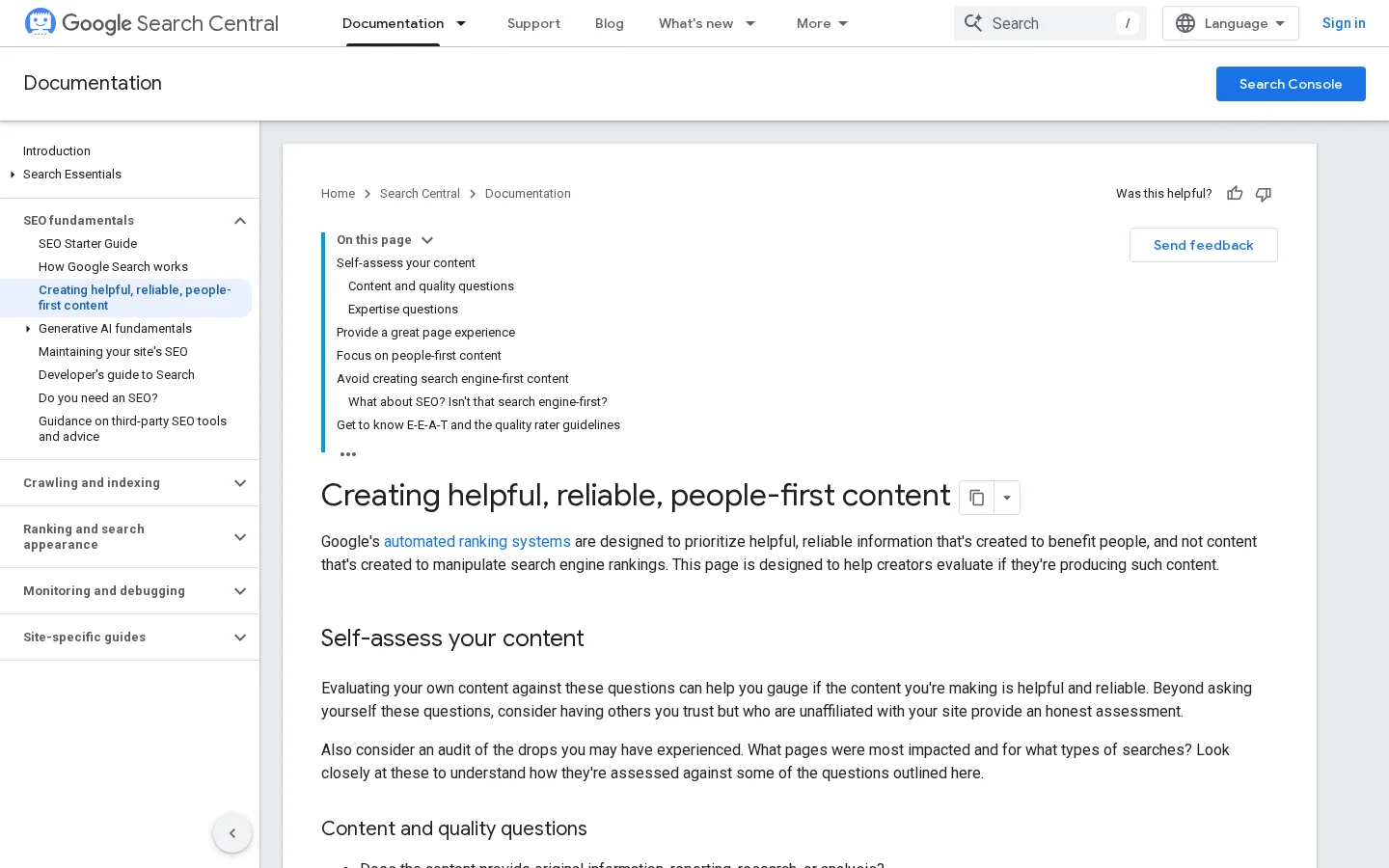
Google asks you to check this in its guidance on helpful content. One of its self-check questions is: "Does the content provide original information, reporting, research, or analysis?" If your draft fails this question, you do not have a 10x page yet.
Readers and search engines both look for proof that the author knows the subject. Show who wrote the page, what experience they have and where each claim comes from. The E-E-A-T quality framework explains the same idea in more depth.
Name your sources. Link to the original study, the official documentation or the data you used. Do not add a number you cannot trace back to a source. A reader who checks one claim and finds it correct will trust the rest of the page.
No. Publishing more pages does not make a page better. A site that ships many weak pages has the same problem as one weak page, only spread across more URLs. Read about thin content pages before you scale anything. Speed matters less than quality, as explained in why publishing speed alone does not rank.
A repeatable process with quality checks at each stage helps you keep the bar high. See the content creation workflow and its quality gates for a model you can adapt.
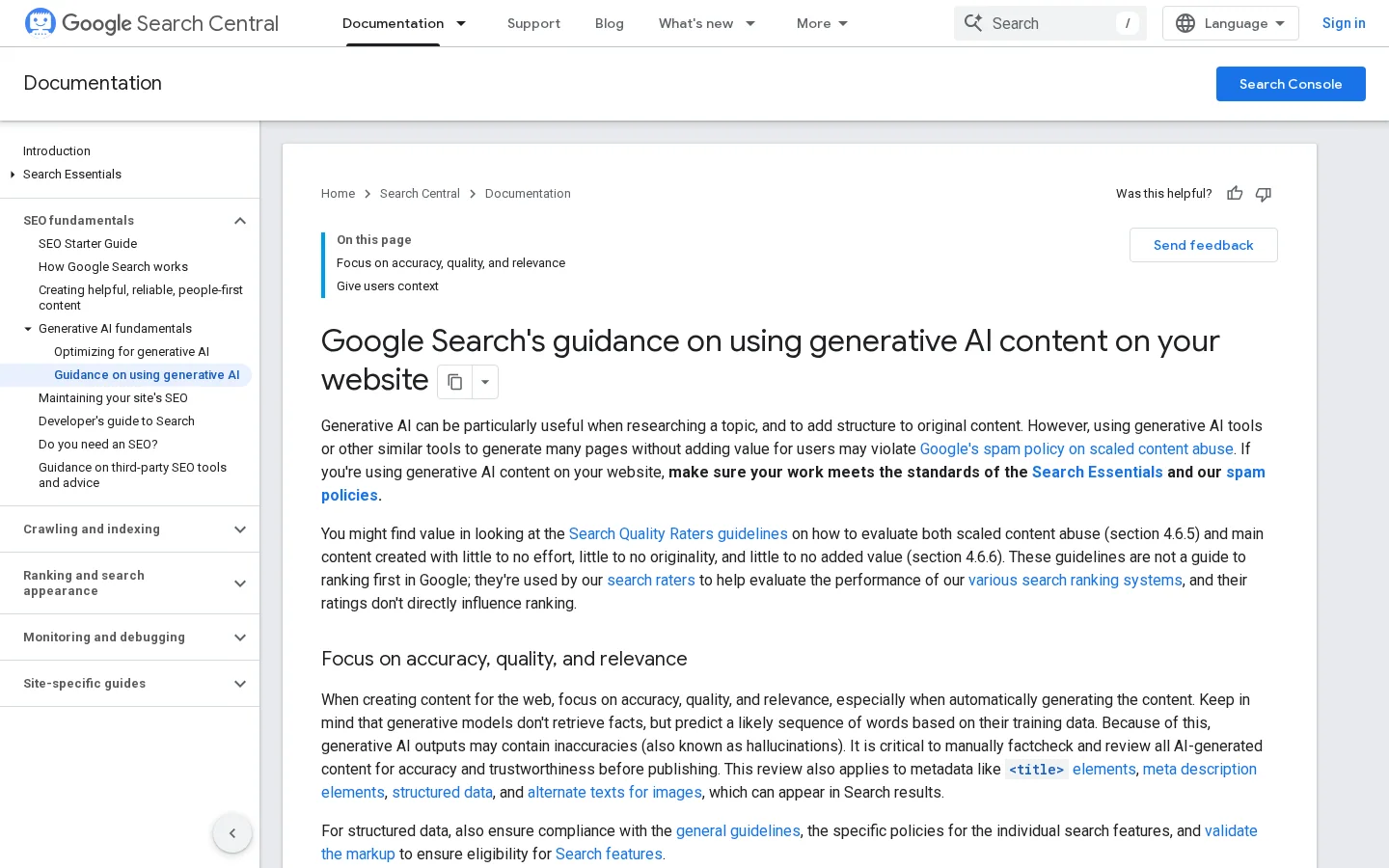
AI can help with research, outlines and first drafts. It cannot give you first-hand experience or original data on its own. Google's guidance on using generative AI content does not ban AI content outright. It warns that using AI to generate many pages without adding value may break its spam policy on scaled content abuse. It also asks you to manually fact-check all AI-generated content before you publish it.
Use the free AI content brief generator to plan the structure of your page. Then add your own facts, examples and review before you publish.
Sorank helps most where you already have pages that rank below the top results. Its content optimization feature can fix and rewrite old pages, so they match what the reader needs today. You still need to add your own proof before you publish.
What it is: you rewrite the top page with new words, but the same structure and the same points. How to spot it: your outline matches the competitor's headings one by one. How to fix it: keep the subtopics they cover, but add the question they ignore and answer it with your own proof.
What it is: you add paragraphs to look thorough. How to spot it: several sections repeat the same point in other words. How to fix it: cut any paragraph that does not answer a question a reader would really ask.
What it is: you write a long guide when the searcher wants a tool or a quick definition. How to spot it: most of the top results are tools or short pages, not long guides. How to fix it: match the format the results already show, then go deeper than they do.
What it is: you state a figure with no link. How to spot it: a reader asks where it comes from and you cannot answer. How to fix it: link to the original source, or remove the claim.
What it is: you update the date but leave the content as it was. How to spot it: no section has changed since the last version. How to fix it: update the facts and examples for real, or leave the date alone. Google's helpful content guidance asks whether you are changing the date of pages to make them seem fresh when the content has not substantially changed.
Search engines and AI models both look for the page that answers best. A page that is clearly better than the rest gives them a reason to show it and to quote it. The signals used to judge pages follow the same logic: depth, clarity and trust. If your page wins on those, it has a real chance in both search results and AI answers.
10x content is a clear goal: beat the top results by answering the question better than they do. Study the pages that rank, find the gap, add your own proof and check every claim. Publish one page that is truly better before you publish ten that are not.
Sources
10x content is an SEO idea, not a named Google ranking factor. Google asks a similar question in its guidance: does your page give more value than the other results?
No. Length alone does not make a page better. Add words only when the reader needs the detail, and cut any section that repeats a point you already made.
Not on its own. AI can help with research and structure, but a person must check the facts and add original information, such as tests, examples or first-hand experience.
 “I tested Sorank on a real client site and it's insane. It does everything an agency would bill you $1500 a month for. It's going into production on that client now.”

 Guillaume Guersanguersanguillaume.com“We are an Ads agency and we wanted to get our SEO back on track once and for all. Sorank gave us a clear view of our site, helped us prioritize optimizations, and properly structure our content. The tool is easy to use, well designed for a team, and very practical for centralizing tracking without having to juggle multiple platforms. A very solid foundation to start fresh with our SEO.”
 Gaspard MadouiAds Agency
 “I just let the Sorank software do its thing, and now my DR is 25 and my page is ranking higher.”
 Lucas Flandrefoundertrace.fr“I specialized in GEO thanks to Sorank. The GEO Leaderboard allows me to show my clients their position vs competitors on ChatGPT. It’s a real commercial differentiator.”
 MélanieSEO Freelance“Great service, works well for our website and helps us understand how to improve it to rank better on Google and elsewhere. Congrats, keep going, I recommend it.”
 Hugo T.E-commerce merchant



















