Preferences
Privacy is important to us, so you have the option of disabling certain types of storage that may not be necessary for the basic functioning of the website. Blocking categories may impact your experience on the website. More information
Privacy is important to us, so you have the option of disabling certain types of storage that may not be necessary for the basic functioning of the website. Blocking categories may impact your experience on the website. More information

SEO software for interior designers like Sorank helps a studio get found by the homeowner who types "interior designer near me", by the one who asks "how much does an interior designer cost", and by the client who looks for an "online interior designer" for a single room. It covers the website side: it finds those questions, publishes clear answers about your packages, your projects and your service areas, and checks every month whether ChatGPT, Claude and Gemini name your studio.
Each article is drafted from the facts you give: your projects, your fees, your credentials in each state. You read it, then it goes live or waits for your sign-off.















































31,127
Articles created
12,138,500
Visits from Google
22,199
Visits from AI
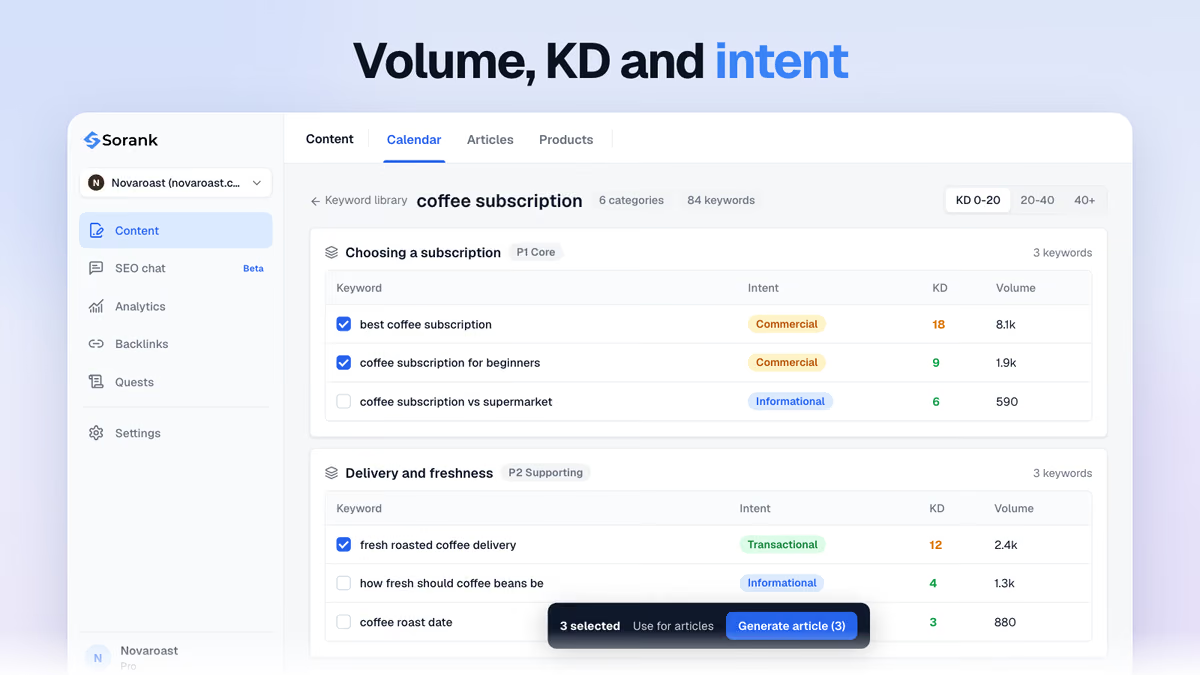
"Do I need an interior designer for one room?", "what does a full-service package include?", "how long does a kitchen refresh take?": clients ask these before they book a consultation, and many of them never type the word designer. Sorank groups the questions by service, such as residential, e-design or commercial work, shows their intent, difficulty and volume, and turns the closest ones into articles that explain your process, with your fee structure in plain numbers.
The questions come from automated keyword research on your site, on the studios you compete with and on the answers the AI assistants give.
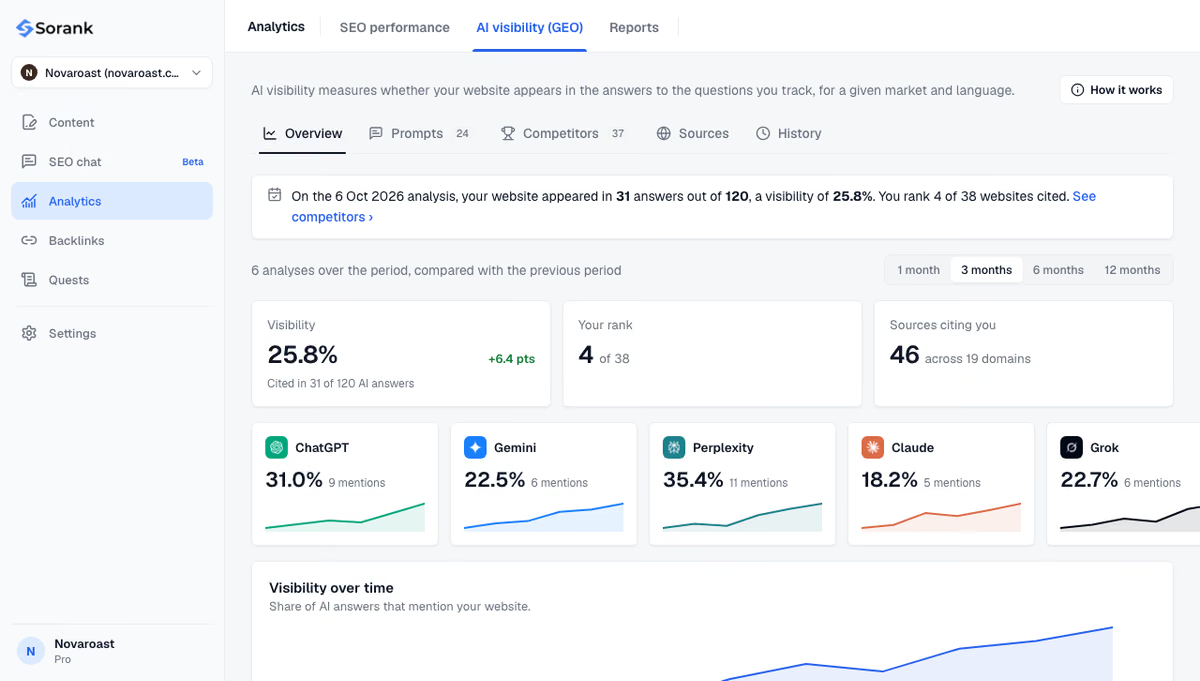
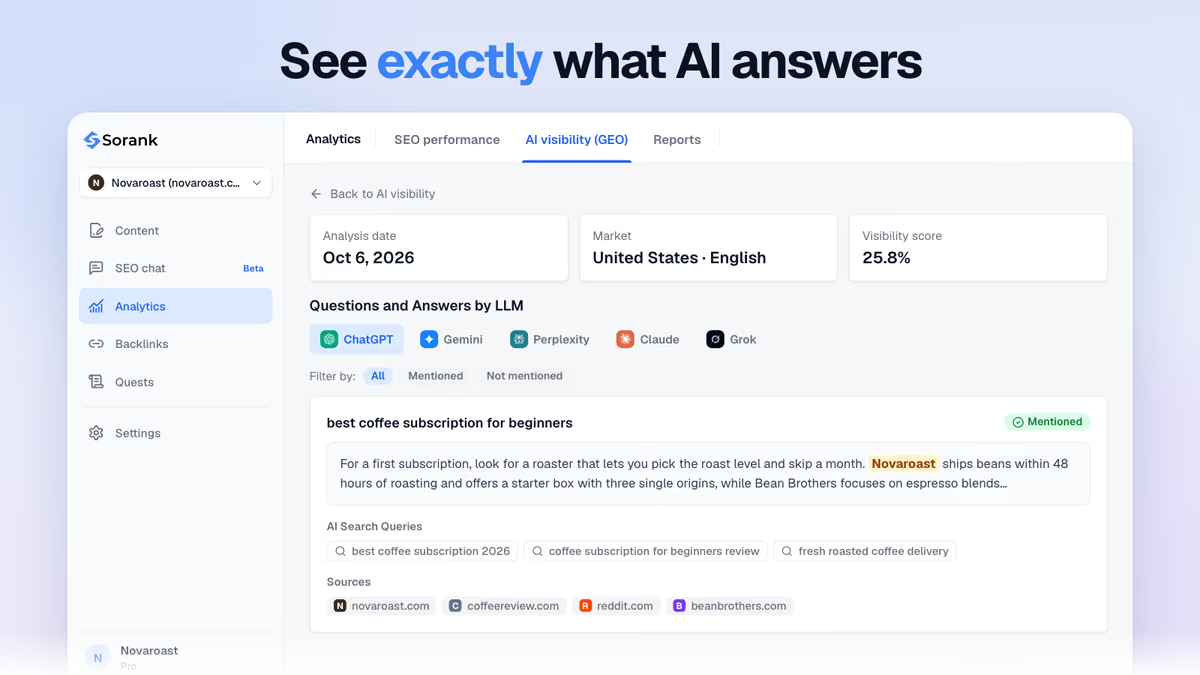
Ask ChatGPT for "an interior designer for a small apartment in Chicago" or "an online designer who works from photos" and it names a few studios, drawn from directories, review sites and project galleries. Sorank puts the prompts you choose to the assistants every month, shows whether your studio appears, and lists the sites they quoted and the searches they ran before answering.
Past answers stay on file in AI mention tracking, so you can see when a directory listing starts to replace your own pages.
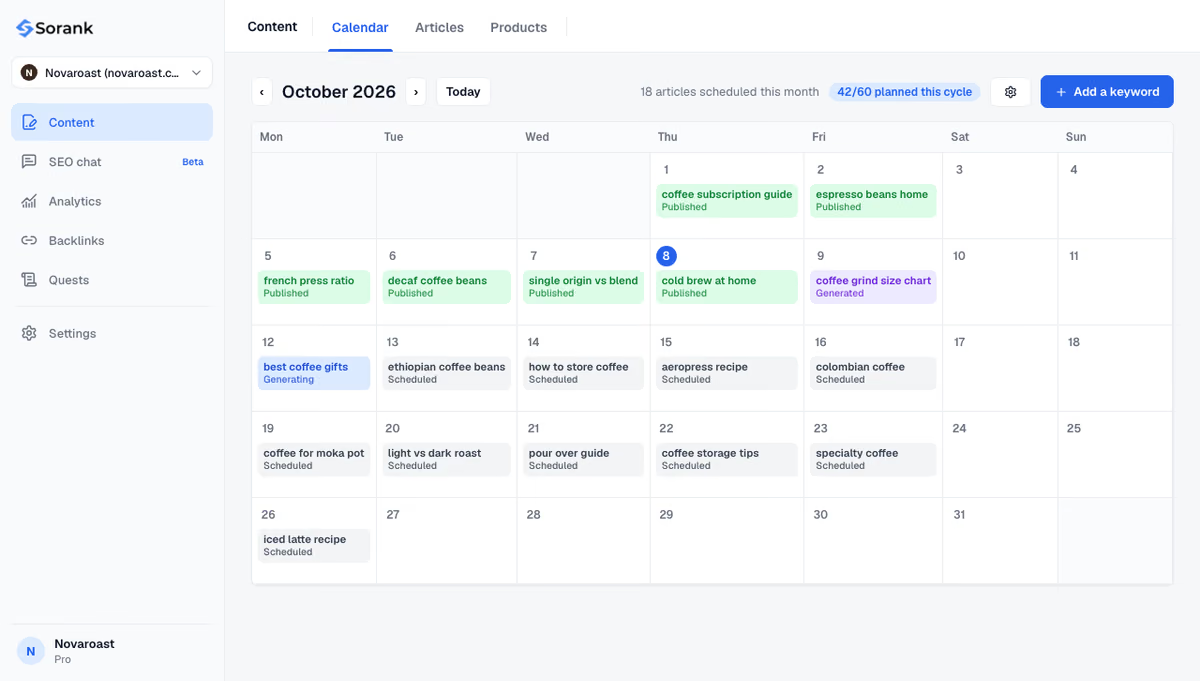
Clients often plan a project weeks before a contractor starts, and the questions about permits, furniture lead times and the order of work come up in that gap. Sorank plans articles for those weeks: keywords placed on the days you choose, written from your project notes, with internal links to the service page each question leads to. Publishing runs on your calendar, so a guide to ordering custom furniture can be live before the client starts searching.
Licensing rules also change by state, so the articles on credentials need a check against your state board before they go live. The schedule is built in the AI content calendar, and our note on seasonal SEO explains how far ahead to publish seasonal topics.

WordPress, Shopify, WooCommerce, Wix or Webflow connect directly. Squarespace and any other builder connect through a webhook. Sorank reads Search Console and Analytics to see which service and project pages already bring visitors.

Full-service and e-design packages, the room types you take on, the styles you are known for, and the cities or regions you serve. Sorank turns them into the questions homeowners and business clients ask, and makes sure two articles never chase the same search.

Articles reach your site as drafts for your review, or go live on the dates you set. Each one ends with a link to your consultation request or to the service page it answers.
“I tested Sorank on a real client site and it's insane. It does everything an agency would bill you $1500 a month for. It's going into production on that client now.”
 Guillaume Guersanguersanguillaume.com
 “I just let the Sorank software do its thing, and now my DR is 25 and my page is ranking higher.”
 Lucas Flandrefoundertrace.fr“Great service, works well for our website and helps us understand how to improve it to rank better on Google and elsewhere. Congrats, keep going, I recommend it.”
 Hugo T.E-commerce merchant“…In 4 months, I generate 15 organic leads per month without posting anything. It’s not 50/50 with LinkedIn yet, but I sleep better knowing I now have a second lead source growing on autopilot.”

 Valentin Thomyoffbound.fr
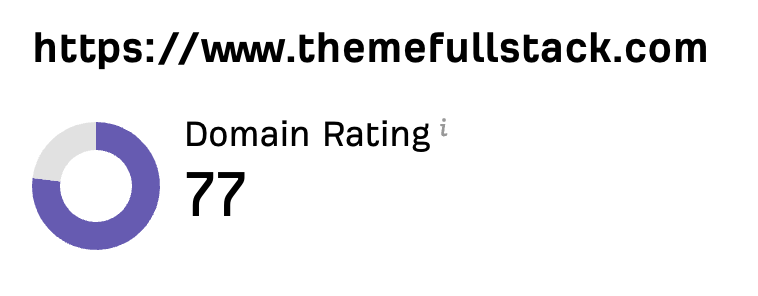 “…With Sorank I finally understood how to structure my SEO and write articles to rank. The audit showed my product page was too slow. In 2 months, my organic traffic doubled and I’m starting to appear in ChatGPT answers when people search for Shopify themes. All of that with about 2 hours per week.”
 Thème FullStackgo.themefullstack.com“Great solution to manage SEO without headaches. Audits are fast, the interface is clear, and you quickly see which actions to implement. It has become an essential tool to track and improve the SEO of my sites. I highly recommend it.”
 XavEntrepreneur“I used Sorank for a client who needed SEO and it clearly made my life easier. I can quickly audit a site, track my projects, and keep a clear overview without multiplying tools. The onboarding is fast and the interface is great.”
 Céline MaurinFreelance CM
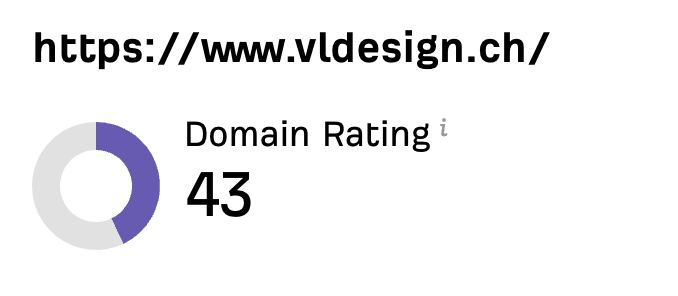 “Blown away by Sorank’s performance. After testing many solutions on the market, I was amazed by how quickly our articles started ranking in the SERP. The results are concrete and much faster than anything we’ve experienced so far. It has been an excellent surprise for our team. We are confidently renewing our trust and highly recommend Sorank to agencies that demand fast and measurable results.”
 Patrick PerretFreelance Webdesign SEO“We’re a development agency and we use Sorank to run on-page audits on our clients’ Shopify stores. It helps us quickly identify optimization opportunities, structure fixes, and collaborate more easily with clients on the SEO side. Very useful to complement our technical support 🔥”

 Younes Yahyaluvaika.com“Sorank has transformed the results we deliver to our clients. We now identify the keywords AI really uses, understand why certain competitors get cited, and spot opportunities we were completely missing before. Our clients see faster rankings, better visibility in AI answers, and clearer ROI on every action we take.”

 Benjamin Rouxovirank.com“We are an Ads agency and we wanted to get our SEO back on track once and for all. Sorank gave us a clear view of our site, helped us prioritize optimizations, and properly structure our content. The tool is easy to use, well designed for a team, and very practical for centralizing tracking without having to juggle multiple platforms. A very solid foundation to start fresh with our SEO.”
 Gaspard MadouiAds Agency“I specialized in GEO thanks to Sorank. The GEO Leaderboard allows me to show my clients their position vs competitors on ChatGPT. It’s a real commercial differentiator.”
 MélanieSEO Freelance“I manage our dealership’s website and it had dozens of issues: slow pages, 404 errors, missing tags. We were losing rankings every month without understanding why. The Sorank audit detected everything in 5 minutes. I sent the report to our web provider with the priority fixes. We regained our rankings and traffic picked back up. Perfect for someone non-technical like me!”
 Xavier BreullMarketing Manager“I’m a CMO for a SaaS and I manage acquisition in a very competitive market. We were investing heavily in our product but not working on our SEO. No visibility on our real competitors, no tracking of our presence in AI. Sorank showed us our positioning vs competitors, which keywords to target, and GEO opportunities we had completely ignored!”
 Louis RAPPCMO SaaS
 “Very good version 2, I recommend it.”

 Antoine Verhillethenewblack.ai“I was skeptical at first, but this is the best SEO tool I’ve ever used. The interface is clear, audits are fast, and the recommendations are easy to implement. I’ve saved hours and hours managing SEO and tracking performance. I recommend it to all my entrepreneur friends who run an agency or work independently.”
 NoahEntrepreneur“Sorank completely changed the way our SEO agency operates. We now spend far less time on each client because everything is centralized and automated. What used to take hours now takes minutes, which finally allows us to stop working in the business and start working on the business.”

 Océane Bondismaison-leverage.com
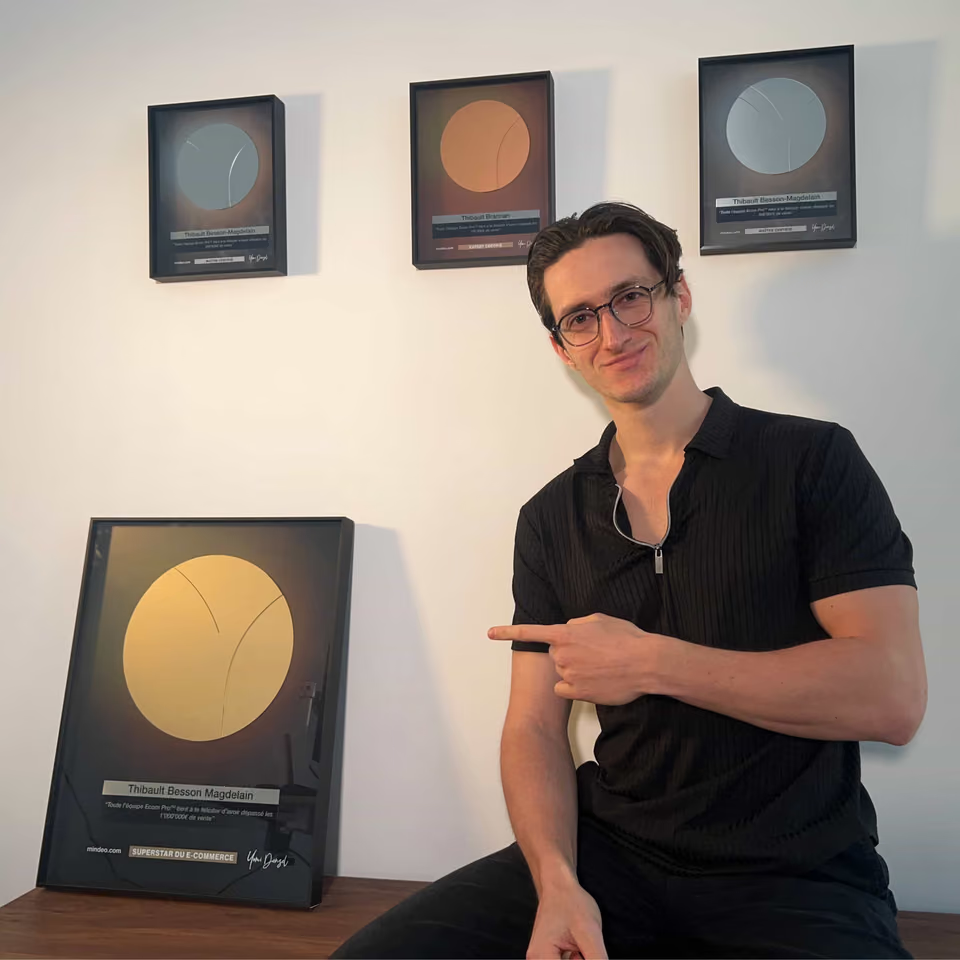
Founder’s Note.
I ran my own SEO agency for years. I built Sorank to deliver the same results to every business, at scale.
Everything I know about Google rankings and Generative Engine Optimization (GEO) is coded into this software, and it runs on autopilot for you.
Try for Free
SEO for interior designers is the work that makes a studio visible at the moment a person starts looking for help with a space. That moment comes in three forms: a Google search for a designer near them, a question typed into an AI assistant, and a comparison of two or three studio websites before the first call. Each one needs something different: a Google Business Profile when you meet clients at a location, a page per service and per project type on your site, and articles that answer the questions people ask before they book.
The trade is crowded. The Bureau of Labor Statistics counts 97100 interior designer jobs in 2025, a median pay of $67190 a year in May 2025, and a projected 2600 new jobs by 2035. Clients compare several studios before they choose one, so the studio whose site answers the fee and process questions first tends to get the call.
Neighbouring trades have their own pages: architects plan the structure and the drawings, and painters finish the walls. A designer works between the two on the look, the layout and the choice of furniture, and the search for that middle ground is different from either.
Only when the client can visit a location or when you go to them. Google's guidelines for representing your business allow a profile for a business that has a physical location customers can visit, or that travels to customers where they are. Three cases follow:
Many designers mix two of these. Keep the profile for the visits, and give the online service its own page on your site. Our Google Business Profile entry explains the setup.
Clients rarely start with a designer's name. They search a problem first: a dark kitchen, a nursery that has to work for years, a rental they cannot repaint. Then they compare the fee, the format and the process. A studio page that answers those three points turns a visit into a consultation request, and an article that explains your process turns a stranger into someone who already trusts you.
Platforms carry much of that comparison. In its 2026 renovation survey of 1034 US Houzz users, fielded from October 10 to 22, 2025, 93% of homeowners planned to work with professionals in 2026, and interior designers (20%) were the most common professionals hired for projects. Many of those hires begin with a search, and some begin with a question to an AI assistant.
AI assistants read those platforms too. In our home and furniture AI citation study, the design platform Houzz is the second most cited domain on houzz.fr, at 3.06 citations per 100 answers. A studio that appears only on platforms gives the assistants less of its own voice to quote, so your website needs the same facts as your listings.
It does. Renovation plans are usually made before the work starts, so articles about budgets, timelines and how to choose a designer are worth publishing before the project months begin, not during them. Moving seasons and holiday periods bring a different set of questions, about styling small spaces and refreshing a room without building work, so a second calendar of decor guides is worth planning.
Plan the calendar around the decision, not the date on the page. A client who reads your process article in the quiet months arrives at the consultation already informed, and the consultation is where the fee is accepted or refused.
Sort them by who is searching and what they need:
Searches that contain your studio name are the closest to a hire. Our page on branded keywords shows how to separate them from the rest and track them.
A direct answer in the first lines, then the steps a reader can follow, the decisions the client makes, and what you handle. Put your fee logic in the article itself, not behind a form. Show real projects only with the client's written consent, and never promise a finish date that depends on a contractor you do not control.
Show your credentials, and show where you hold them. The Bureau of Labor Statistics notes that licensure requirements vary by state, so an article that says licensed or registered must name the state where that credential applies. Our guide to E-E-A-T explains how search engines judge those signals.
Online-only work needs its own answers. A client who wants an e-design package from another state reads a different set of questions: how photos are sent, what measurements the plan needs, and how revisions are priced. Those answers belong on their own page, linked from the service page they relate to.
Sorank finds the questions, writes and publishes the articles with internal links to your services and projects, and sends them to WordPress, Shopify, WooCommerce, Wix or Webflow, or to any other site through a webhook. It also earns backlinks from the sites of other Sorank users, checks every month what ChatGPT, Claude and Gemini say about your studio, and gathers Search Console, Analytics and AI visits in the GEO / SEO dashboard.
The studio keeps its Google Business Profile, its Houzz profile, the reviews it asks for and answers, the project photos and the client consent to use them, its contracts, its fees, its state licensing and its consultation bookings. Sorank does not manage listings, reviews or bookings. If you also sell furniture or decor from a shop, our page for furniture stores covers that side.
The Essential plan costs $49 a month on yearly billing, or $99 billed monthly. It publishes 20 articles a month and tracks 10 prompts in ChatGPT, Claude and Gemini, for one website. Pro, at $129 a month on yearly billing or $249 billed monthly, moves to 60 articles and adds Grok. Business, at $249 on yearly billing or $499 billed monthly, publishes 120 articles. The first 3 days are free, and the pricing page lists every limit.
Nobody can give you a date, and Google publishes none. Profile updates and new reviews can show within weeks. Articles collect impressions in Search Console first, then clicks, over several months. Judge each theme after a quarter, and publish the fee and process articles before your busiest months, since a client who has read them arrives at the consultation already informed.
Several months. Articles collect impressions in Search Console before they collect clicks. Profile updates and new reviews can show within weeks, so judge each theme after three months of publishing.
Sorank's Essential plan costs $49 a month on yearly billing, or $99 billed monthly. It includes 20 articles a month and monthly tracking of ChatGPT, Claude and Gemini for one website, and the first 3 days are free.
No. Your Google Business Profile, your Houzz profile, your reviews and your consultation bookings stay with your studio. Sorank publishes articles on your website and reports what the AI assistants say about your studio.
Put the same facts everywhere: your services, your fee model, your project types and your service areas, on your site and on every directory where you are listed. Publish articles that answer the questions clients ask, then check each month which studios ChatGPT names and which sources it uses.
They can. The Bureau of Labor Statistics notes that licensure requirements vary by state, so a title or bio that says licensed or registered must match a credential you hold where the client lives. Check that wording with your state board before it goes live.
Yes, for WordPress, Shopify, WooCommerce, Wix and Webflow, which connect directly. Any other site, Squarespace included, connects through a webhook. Every article can wait as a draft until you approve it.
We don't. Sorank isn't trying to be another Semrush or Ahrefs. Those tools are built for data, Sorank is built to do the work. Instead of more dashboards to check, it turns SEO and GEO insights into actions: articles written and published, backlinks earned, technical fixes and AI visibility tracking. Less complexity, more results.
From $49/month per website on a yearly plan, with a 3-day free trial and a 90-day money-back guarantee (conditions apply). Every plan includes articles, AI visibility tracking and access to natural backlink acquisition; higher plans add more articles, more AI prompts tracked and more backlinks. No setup fees, no paying for seats you don't use.
You shouldn't need a full marketing team or expensive tools to grow. Sorank handles your entire SEO and AI visibility, so you save time and money.