
Preferences
Privacy is important to us, so you have the option of disabling certain types of storage that may not be necessary for the basic functioning of the website. Blocking categories may impact your experience on the website. More information
Privacy is important to us, so you have the option of disabling certain types of storage that may not be necessary for the basic functioning of the website. Blocking categories may impact your experience on the website. More information

Smart content is content that changes for each visitor or is structured for machines. Learn the two types, real examples and the first steps to set it up.








Founder Sorank, 7+ years in SEO.
Summary
Smart content is content that adapts to the reader, or content that is structured so machines can read and reuse it. The first kind shows each visitor a version chosen from their country, device, language or past visits. The second kind tags its parts so that Google and AI models understand the page.
Want to go further? Ask
Smart content covers two related ideas. In marketing, it means a page or block that changes for each visitor. In SEO and generative engine optimization (GEO), it often means content built from labeled parts that machines can read without guessing. Both ideas have one goal: show the right content to the right reader, human or machine, at the right moment. This guide explains both, with examples and the first steps to set them up.
Smart content is a web page, a block of text or an email that shows different versions depending on who is looking. It can also be content that is cut into labeled pieces, such as a question, a price or an author name. A visitor from Germany may see prices in euros. A customer who already bought from you may see a different offer. The web address stays the same for everyone, but what appears on the page changes.
There are two types. The first is for people. It changes what a visitor reads, based on rules you set. A rule can check the visitor's country, language, device, the page they came from, or the lists they belong to. The second is for machines. It breaks content into parts with clear labels, so that a search engine or an AI model can find the exact answer it needs. Most sites benefit from both types, but they are built in different ways.
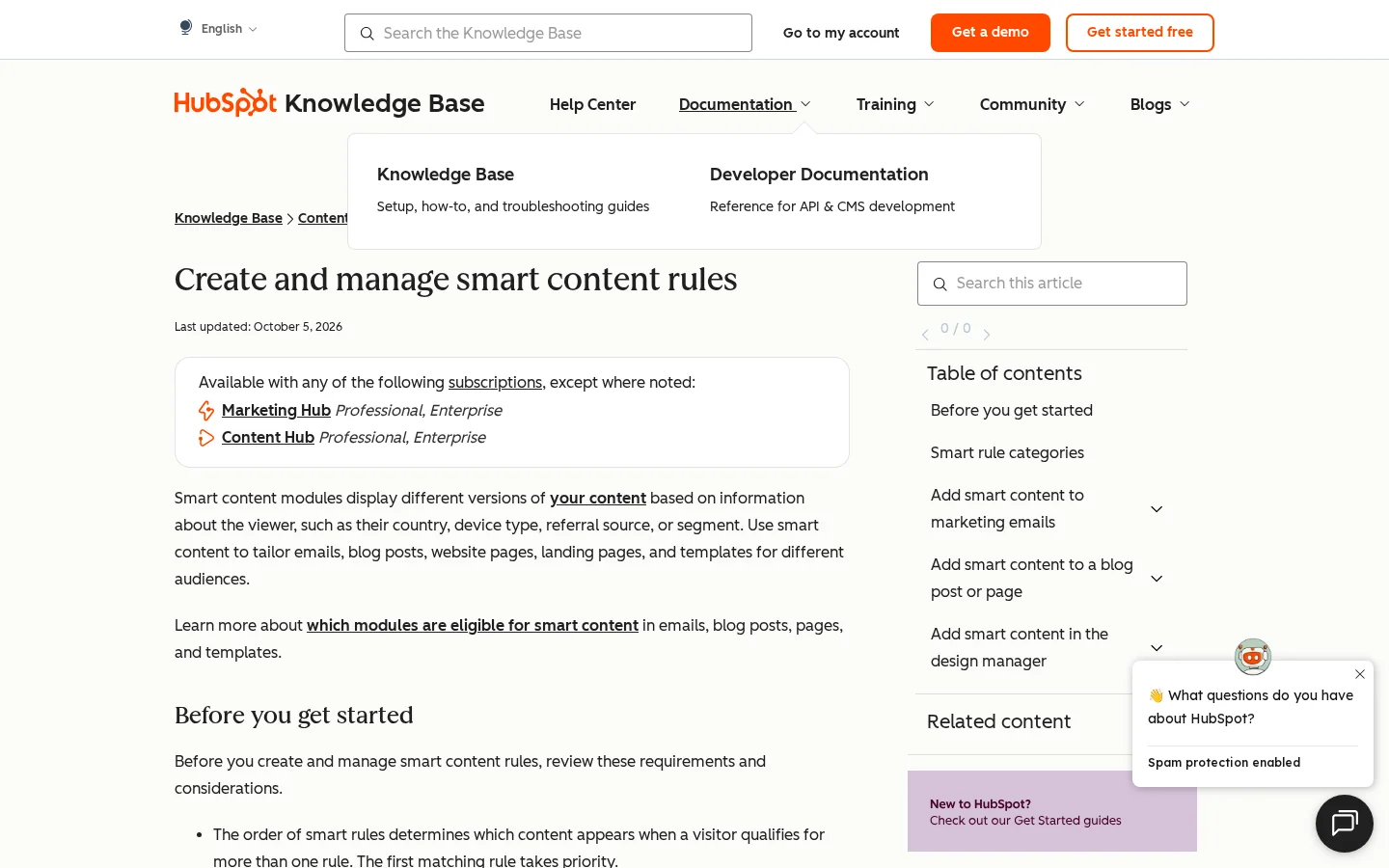
HubSpot's help center describes smart content as modules that "display different versions" of a page, email or ad, based on information about the viewer. Its rules can use the visitor's country, which the article says comes from the IP address, the browser language, the device type, and the visitor's list or lifecycle stage. The same article warns that device detection may not be fully accurate, so do not build a critical message on it alone. HubSpot's guide to smart content rules shows how these conditions work in practice.
This visitor-facing side is also called content personalization. A close cousin is dynamic content, which is assembled when the page loads. The two terms overlap, and many tools use them to mean the same thing.
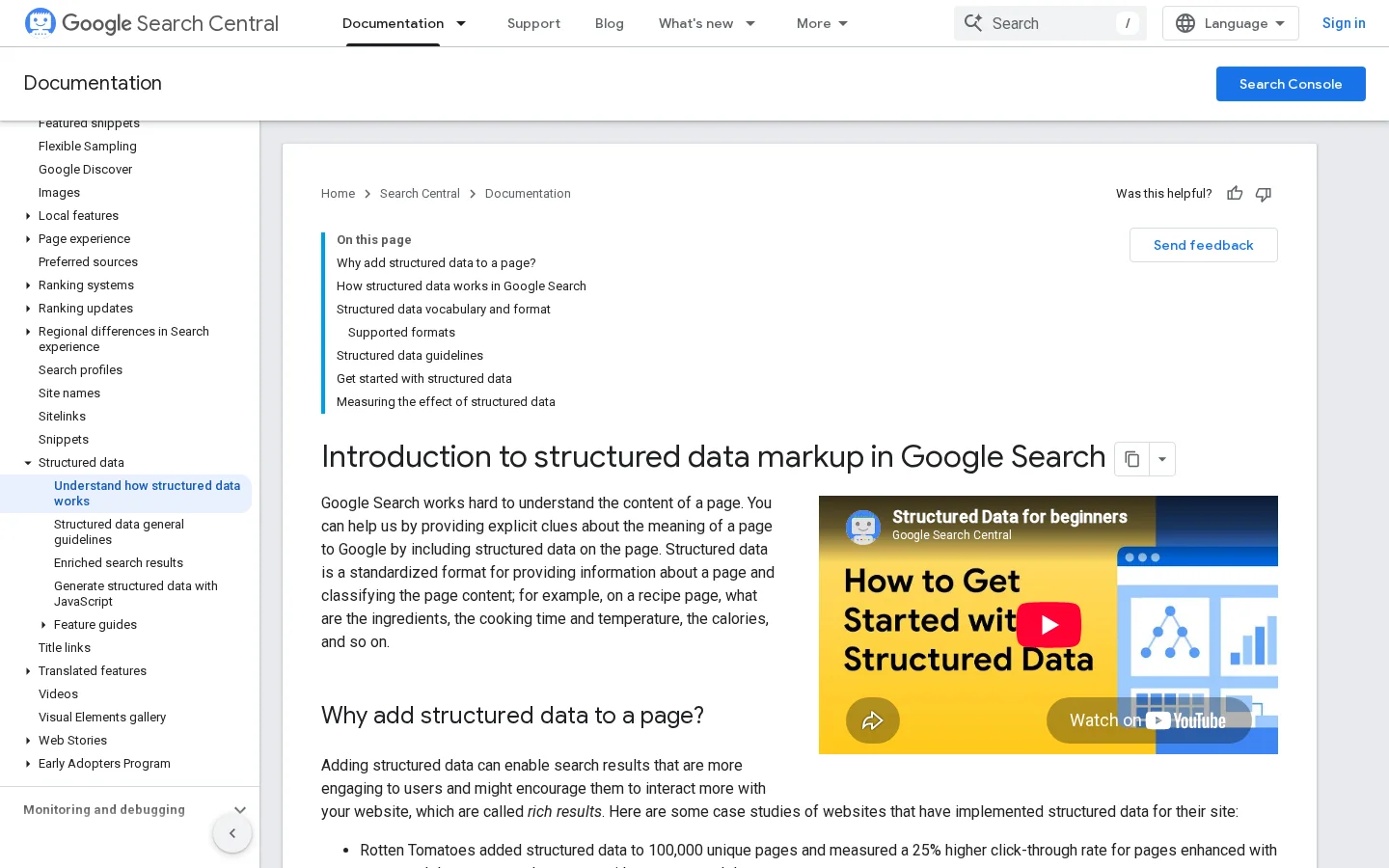
Google's structured data guide describes it as "a standardized format for providing information about a page and classifying the page content." It gives search engines "explicit clues about the meaning of a page," and it recommends JSON-LD as the format in most cases. Schema.org supplies the shared vocabulary this markup uses, so a page can label a block as a question, an article or a product. Its guide says that markup helps search engines "better understand your content."
Here is a short example. It tells search engines that a block is a question and its answer:
{"@context": "https://schema.org", "@type": "FAQPage", "mainEntity": [{"@type": "Question", "name": "What is smart content?", "acceptedAnswer": {"@type": "Answer", "text": "Smart content is content that adapts to the reader or is structured for machines."}}]}This is the same idea as structured content. The markup itself is covered in schema markup.
Here are five examples that work on a business site:
Start with one page that already gets visits. Do not rebuild the whole site at once. Follow these steps:
Sorank writes and publishes articles on autopilot. Its content optimization feature fixes and rewrites older pages the same way. For how AI search reads this markup, see our guide to structured data for AI search.
Three mistakes appear often. Each one is easy to spot once you know what to look for.
This is a page with a dozen rules and a dozen variants, most of which nobody has checked for months. You spot it by counting the rules and asking who last reviewed each variant. To fix it, cut the rules to the two or three that change a real decision, and review each variant on a fixed schedule.
Some sites write a strong variant for one country and leave the default page almost empty. Search engines and AI crawlers may only see the default version, so a thin default is what they read. You spot it by opening the page from a country with no rule and reading what remains. To fix it, write a complete default version with the main answer in plain text, not only inside a script.
Structured data that claims a rating, a price or a question that is not on the page makes the page harder to trust. You spot it by comparing the markup with the visible text. To fix it, mark up only what the reader can see, and remove any field that does not appear in the text.
It matters because search engines and AI models pick the source that answers a question most clearly. Labeled parts make your content easy to read for machines. Versions that fit each visitor make the page more useful to the people who read it. Smart content does not replace good writing, but it lets one page serve many readers without losing clarity.
Smart content means content that changes for each visitor, content that machines can read clearly, or both. Start with one page, one or two rules and a complete default version. Then add structured data to the parts that matter, and check the result as each visitor would see it.
Sources
Personalization is one way to make content smart, and it is the part visitors see. Smart content also covers content that is structured so machines can read and reuse it.
Not always. Many content management systems and marketing tools offer rules that show different blocks to different visitors. Structured data usually needs a short code snippet in JSON-LD, which a developer or a generator tool can write.
It can. Clear labels and complete answers make it easier for AI models to read a page and quote it. Markup alone does not earn a citation, so the text itself still has to be useful.
 “I tested Sorank on a real client site and it's insane. It does everything an agency would bill you $1500 a month for. It's going into production on that client now.”

 Guillaume Guersanguersanguillaume.com“We are an Ads agency and we wanted to get our SEO back on track once and for all. Sorank gave us a clear view of our site, helped us prioritize optimizations, and properly structure our content. The tool is easy to use, well designed for a team, and very practical for centralizing tracking without having to juggle multiple platforms. A very solid foundation to start fresh with our SEO.”
 Gaspard MadouiAds Agency
 “I just let the Sorank software do its thing, and now my DR is 25 and my page is ranking higher.”
 Lucas Flandrefoundertrace.fr“I specialized in GEO thanks to Sorank. The GEO Leaderboard allows me to show my clients their position vs competitors on ChatGPT. It’s a real commercial differentiator.”
 MélanieSEO Freelance“Great service, works well for our website and helps us understand how to improve it to rank better on Google and elsewhere. Congrats, keep going, I recommend it.”
 Hugo T.E-commerce merchant



















