
Preferences
Privacy is important to us, so you have the option of disabling certain types of storage that may not be necessary for the basic functioning of the website. Blocking categories may impact your experience on the website. More information
Privacy is important to us, so you have the option of disabling certain types of storage that may not be necessary for the basic functioning of the website. Blocking categories may impact your experience on the website. More information

A self-promotional listicle is a 'best of' article that ranks its own brand first. Learn if Google penalizes it and how to publish one without looking biased.







Founder Sorank, 7+ years in SEO.
Summary
A self-promotional listicle is a "best of" article, such as "10 best CRM tools", that puts the publisher's own product at number one. Google says it fights low-quality listicles, but it has not confirmed a penalty for self-promotional ones. The risk is mostly to trust: readers and AI answers can see the ranking as biased.
Want to go further? Ask
Self-promotional listicles are list posts that rank the brand publishing them first. The title promises an independent comparison, like "The 10 Best Project Management Tools". Then the top spot goes to the publisher's own product, often with no test, no stated criteria, and only a line or two for each rival.
The format is not the problem. Readers search "best" questions every day, and a well-built list helps them. If you want to build one that ranks, follow How to Write a Listicle That Ranks on Google and Gets Cited by AI. A list turns self-promotional when it is built to sell the publisher's product instead of helping the reader choose. Check four things:
Example
A CRM software company publishes "The 10 Best CRM Tools". Its own product is first. The page names no testing method, and each rival gets one sentence about a weakness. The page may rank for a while, but a reader can see the conflict in the first screen.
Google has not confirmed a penalty for this format. In February 2026, SERoundtable reported that Google had not officially confirmed any action on self-promotional listicles, and that the evidence came from SEO observers. Lily Ray wrote: "The most popular 'GEO' tactic might indeed be risky for SEO purposes after all." The SERoundtable report covers her post and the reactions from other SEOs.
In April 2026, a Google spokesperson told The Verge that Google "is aware of the low-quality listicle content and that it works to combat that kind of abuse", as SERoundtable quoted it. The statement covers low-quality listicles. It does not name self-promotional ones. The safe reading is that Google fights thin lists, and a list that ranks its own brand first with no proof may be judged as one.
This is the part with the most evidence, and it is still thin. Many brands adopted the format for GEO, because a "best" list can get cited in Google's AI Overviews. In June 2026, Lily Ray checked 100 "best B2B" queries in Google's AI Overviews. When a brand's own listicle was cited, the brand was left out of the recommendation about 69% of the time, according to her Substack analysis. The sample comes from one author, with no published method and no independent review, so treat the number as a signal, not a rule.
The lesson is that a citation is not a recommendation. An AI answer can link to a list without naming the brand that wrote it. So ask a different question: did the AI name your brand as an answer? Not only: did it cite your page?
You can include your own product if you make the conflict visible. Use this order:
Sorank's AI mention tracking shows when ChatGPT cites your brand, so you do not have to run the same checks by hand every week.
Warning
A list that ranks your product first, with no criteria and no disclosure, reads as an ad. Treat it like one: label it, and show the work behind the ranking.
This mistake is a "best of" page where the top spot is set before any comparison. To spot it, look for a test, a score, or a criterion. If you cannot name one, the page has none. To fix it, write the criteria before you write the list, then score every product against them, yours included.
This mistake is a list that looks like an independent review, with no sign that the publisher sells one of the products. To spot it, read the first screen. If you cannot tell who owns the page, a reader cannot either. To fix it, state the conflict of interest in the first paragraph, in plain words.
This mistake is dozens of near-identical "best X for Y" pages, each with the same brand on top. To spot it, check whether the same product is first on pages for different audiences while the text barely changes. Pages like this can look like AI spam to a reader. To fix it, keep one strong comparison, and build another page only when an audience needs a different answer.
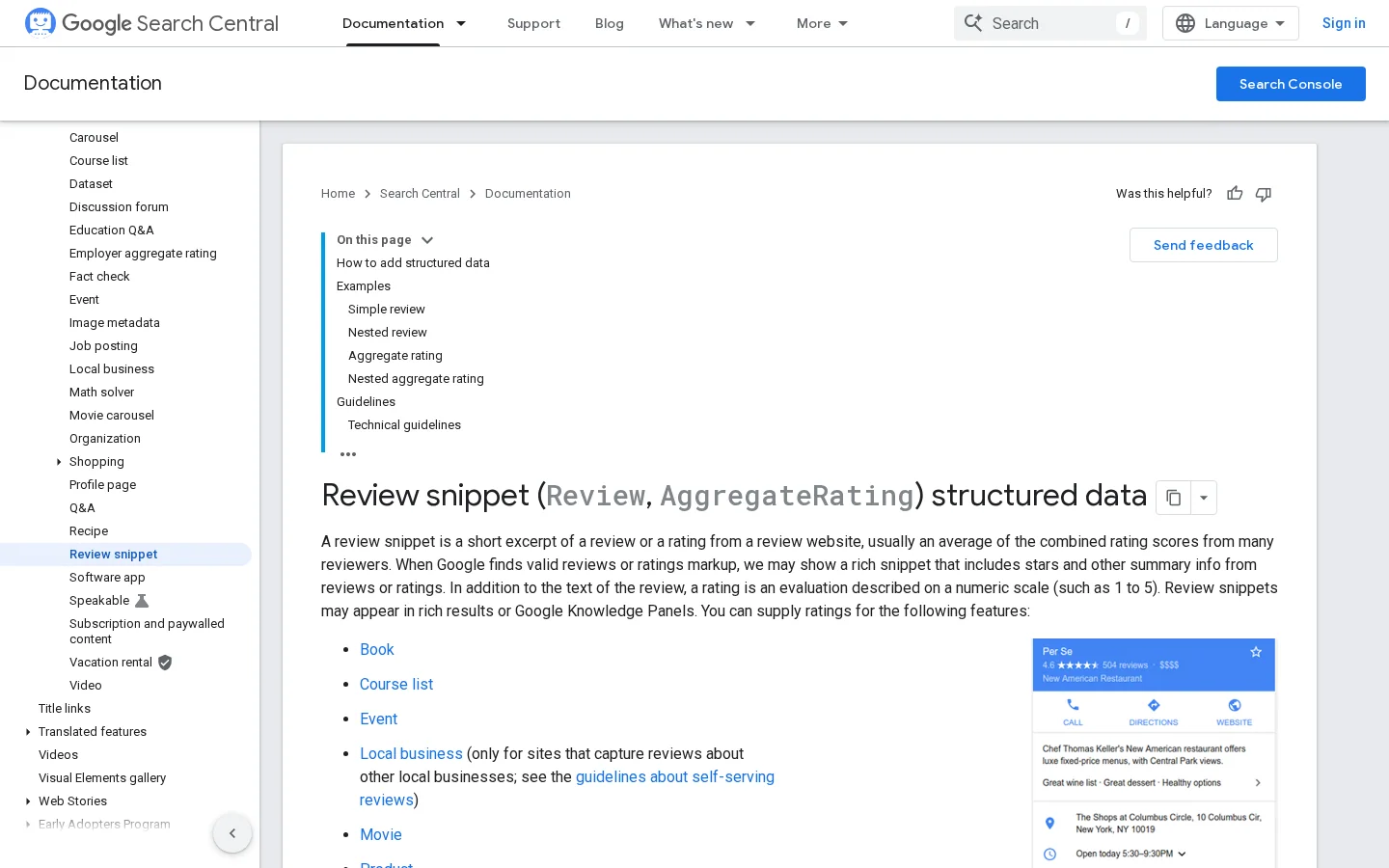
On Google, a listicle is a page like any other, so it has to meet the same quality bar. Google's review snippet guidelines give a close parallel. When the business controls the reviews about itself, its pages cannot show star ratings from that markup.
For GEO, the stakes are trust. In the same June 2026 analysis, the brands that were recommended tended to have more links and brand mentions from other websites. An AI model that picks a source needs a reason to believe it, and a page that grades its own product gives it little reason. This connects to black hat SEO and to E-E-A-T: trust comes from proof and from other people, not from the page saying it is the best.
A self-promotional listicle can bring visibility, but only when it reads as a fair comparison. Say who owns the page, show your criteria, name your rivals, and check whether AI names your brand. A list that exists only to put you first is unlikely to earn the trust it needs.
Sources
Google has not confirmed a penalty for this format. It says it fights low-quality listicles, so a list that ranks its own brand first with no proof carries real risk.
Yes, if you say it is yours. Show your criteria, test each product the same way, and name the rivals that beat you on some points. A hidden conflict of interest is what makes a list look like an ad.
Often not. One analysis of 100 B2B queries found the brand was left out of the recommendation about 69% of the time when its own listicle was cited. The sample is small, so check your own queries too.
 “I tested Sorank on a real client site and it's insane. It does everything an agency would bill you $1500 a month for. It's going into production on that client now.”

 Guillaume Guersanguersanguillaume.com“We are an Ads agency and we wanted to get our SEO back on track once and for all. Sorank gave us a clear view of our site, helped us prioritize optimizations, and properly structure our content. The tool is easy to use, well designed for a team, and very practical for centralizing tracking without having to juggle multiple platforms. A very solid foundation to start fresh with our SEO.”
 Gaspard MadouiAds Agency
 “I just let the Sorank software do its thing, and now my DR is 25 and my page is ranking higher.”
 Lucas Flandrefoundertrace.fr“I specialized in GEO thanks to Sorank. The GEO Leaderboard allows me to show my clients their position vs competitors on ChatGPT. It’s a real commercial differentiator.”
 MélanieSEO Freelance“Great service, works well for our website and helps us understand how to improve it to rank better on Google and elsewhere. Congrats, keep going, I recommend it.”
 Hugo T.E-commerce merchant



















