Preferences
Privacy is important to us, so you have the option of disabling certain types of storage that may not be necessary for the basic functioning of the website. Blocking categories may impact your experience on the website. More information
Privacy is important to us, so you have the option of disabling certain types of storage that may not be necessary for the basic functioning of the website. Blocking categories may impact your experience on the website. More information

A marketing engineer builds the data, tools and AI automations that run marketing work. Learn the tasks, skills, career path and salary by country.








Founder Sorank, 7+ years in SEO.
Summary
A marketing engineer is a member of a marketing team who builds the systems that run marketing work. They connect data, tools and workflows, and use code, APIs and AI agents to automate repetitive tasks. The role mixes marketing judgment with technical skills.
Want to go further? Ask
Marketing engineer is a job title for someone who works between marketing and software. A marketer decides what to say and to whom. A marketing engineer builds the machinery that makes it happen: data flows between tools, scripts that build reports, and AI agents that draft or check work. Job posts use the title in different ways, so read the tasks, not only the name.
If you run marketing for a small business, you may never hire one. You can still learn the habits of the role: find the work that repeats, automate one piece of it, and measure the result.
A marketing engineer does four main jobs. Each one saves the team time or makes a method possible that was too slow to run by hand. The role touches growth, content, SEO, paid media and product marketing, wherever repeated work can be automated.
Example
A marketing engineer sets up a weekly job. It pulls rankings, flags the pages that lost clicks and sends that list to the writers. The writers then refresh only those pages, instead of guessing which ones need work.
The role is close to, but different from, content engineering. Content engineering is about how each page is built for search and AI. A marketing engineer works on the systems around the content, such as the data, the workflows and the connections between tools.
If you already run SEO crawls or write reports with scripts, you already do part of this work. Many people in this role come from SEO, analytics or web development.
The job mixes three areas: technical skills, marketing judgment and clear communication. You do not need all of them on day one. Start with the skills that let you automate one task.
| Skill | What it means in practice |
|---|---|
| APIs | Moving data between platforms and triggering an action in one tool from another. See AI API for how apps connect to AI models. |
| Scripting | Writing short programs that run a crawl, clean a data file or build a report. |
| Data pipelines | Collecting data from several tools into one place, on a schedule. |
| MCP servers | Letting AI models read and act on your tools and data through one shared standard. |
| Prompt design | Writing clear instructions for AI models, the core of prompt engineering. |
| Marketing judgment | Knowing what to test, what to measure and whether a result means anything. |
| Communication | Explaining technical work to writers, designers and sales teams. |
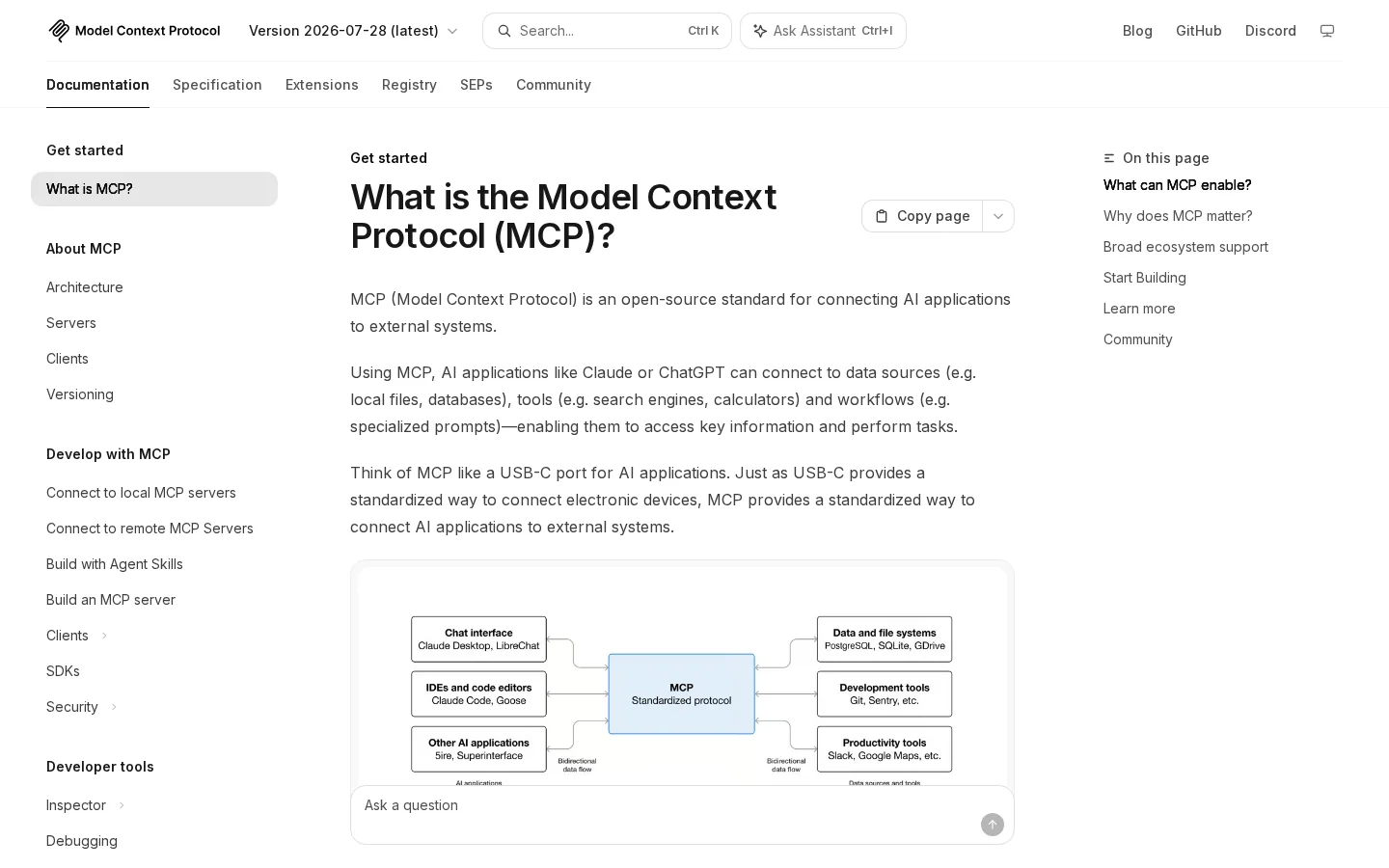
MCP is a newer skill that many marketing teams are only starting to meet. The official MCP documentation describes it as an open-source standard for connecting AI applications to external systems, and compares it to a USB-C port for AI. The documentation also says MCP reduces development time and complexity when you connect an AI application to other systems.
There is no single path. You do not need a computer science degree to start. You need curiosity, a willingness to build, and the habit of testing small things. Follow this order.
If you already work in SEO, the step from crawls to data pipelines is short. Read about technical SEO first, then add the automation on top of the crawl data you already collect.
Tip
Pick a task that someone on your team complains about. A task that causes pain is easier to justify, and it is easier to show that the automation worked.
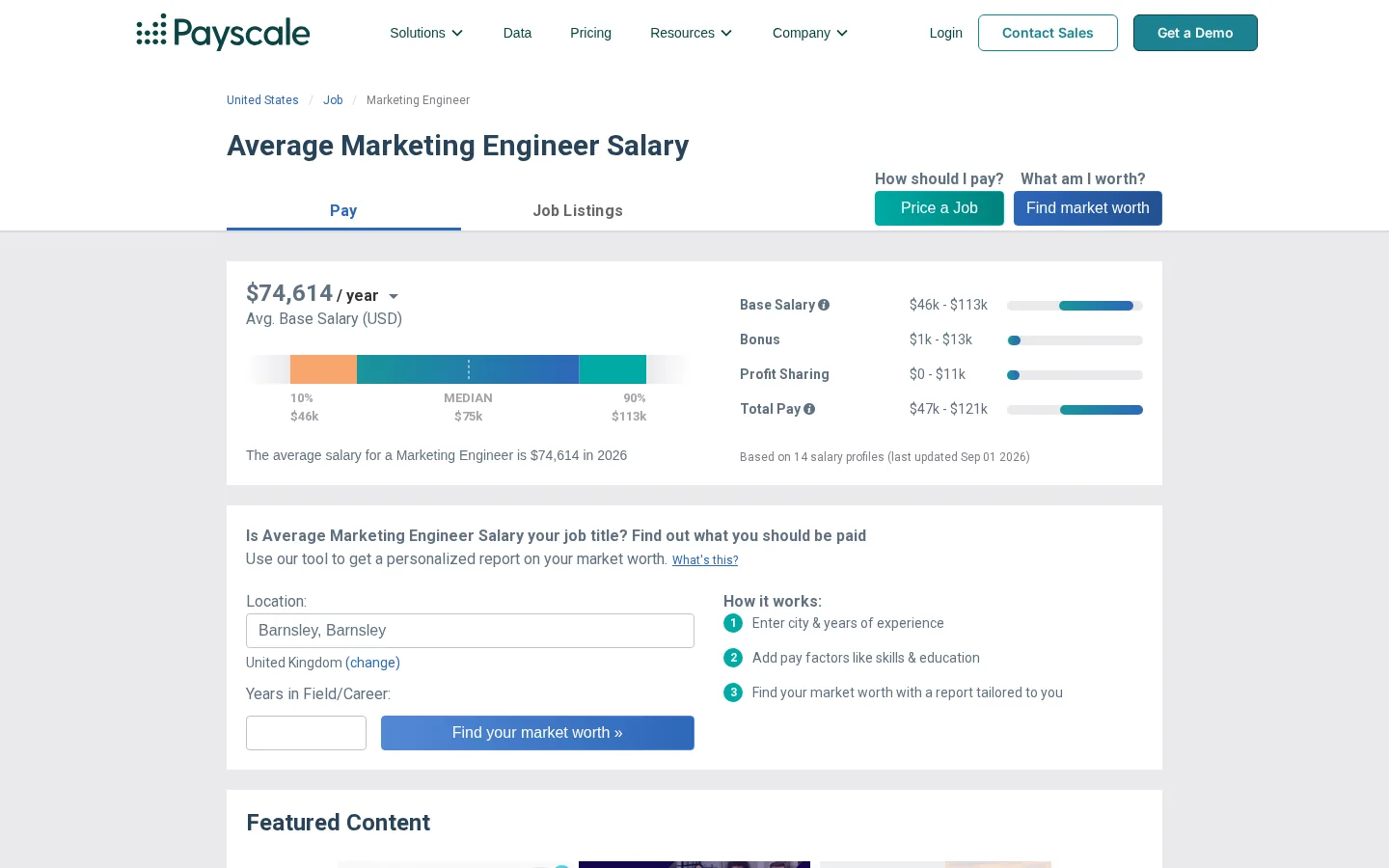
The closest public averages are $74614 a year in the United States, £38500 a year in the United Kingdom and €49195 a year in France. Public salary data for this exact title is thin, so these figures come from closely related titles and from Payscale, a salary research site.
| Country | Average base salary | Title and source |
|---|---|---|
| United States | $74614 a year | Marketing engineer, from Payscale. Based on 14 salary profiles. The median is $75000. |
| United Kingdom | £38500 a year | Technical marketing engineer, the closest title, from Payscale. The page does not say how many profiles it uses, and its dates are unclear. |
| France | €49195 a year | Marketing manager, the closest title we found, from Payscale. Early career marketing managers (1 to 4 years) average €43977 in total pay, based on 29 salaries. |
Use these figures as a starting point, not as a quote. Pay depends on experience, city and company size. Check current job posts in your own city before you negotiate a salary or set a budget for a hire.
Most mistakes come from building before the work is clear. Here are three, with how to spot each one and how to fix it.
This is when the script runs, but the team still does the work by hand or ignores the output. You spot it when a report arrives and nobody opens it. Fix it by writing down each manual step first, then automating the step that costs the most time.
This is when a new tool receives customer data that nobody approved. You spot it when no one can say where a data field came from or who is allowed to see it. Fix it by listing each data source, its owner and its permitted use before you connect anything. Check this first for Google Search Console and Google Analytics data.
This is when the team ships more pages, posts or emails, but sales and traffic stay flat. You spot it when the dashboard counts tasks done and not visits, leads or citations. Fix it by tying each automation to one result metric and checking that metric after a set period. For GEO work, you can measure how often AI answers name your brand with the AI share of voice calculator.
SEO and GEO both depend on data: crawl reports, rankings, backlinks and the answers AI models give about your brand. Someone has to collect that data, keep it clean and turn it into action. That is the work a marketing engineer does. Without it, teams check each metric by hand, and small problems stay hidden for longer.
The same systems support GEO, the work of getting your brand cited by AI. A team that tracks its AI visibility every week can react faster than a team that looks once in a while.
Sorank automates part of this work. It covers automated keyword research, natural backlink acquisition, AI mention tracking and an AI content calendar that plans and publishes your blog, so a small team can run the loop without building it from scratch. See Sorank for marketing teams.
A marketing engineer builds the systems that let a marketing team move faster. The job needs APIs, scripting, data work and marketing judgment. Start small: map one repeated task, automate it, and measure the result. Check salary figures in your own country before you apply or hire, since public data for this title is limited.
Sources
Not at the start. Most roles ask for basic scripting and a clear understanding of APIs, and you can learn both step by step. Deeper coding is needed for roles that build custom systems.
A marketing manager plans campaigns and owns the budget and the results. A marketing engineer builds the tools and automations that help the team run those campaigns faster. The two often work together.
Pay depends on the country, the city, the company and the experience. Public data is limited for this exact title. The table in this guide gives the closest averages by country, with their sources.
 “I tested Sorank on a real client site and it's insane. It does everything an agency would bill you $1500 a month for. It's going into production on that client now.”

 Guillaume Guersanguersanguillaume.com“We are an Ads agency and we wanted to get our SEO back on track once and for all. Sorank gave us a clear view of our site, helped us prioritize optimizations, and properly structure our content. The tool is easy to use, well designed for a team, and very practical for centralizing tracking without having to juggle multiple platforms. A very solid foundation to start fresh with our SEO.”
 Gaspard MadouiAds Agency
 “I just let the Sorank software do its thing, and now my DR is 25 and my page is ranking higher.”
 Lucas Flandrefoundertrace.fr“I specialized in GEO thanks to Sorank. The GEO Leaderboard allows me to show my clients their position vs competitors on ChatGPT. It’s a real commercial differentiator.”
 MélanieSEO Freelance“Great service, works well for our website and helps us understand how to improve it to rank better on Google and elsewhere. Congrats, keep going, I recommend it.”
 Hugo T.E-commerce merchant