
Preferences
Privacy is important to us, so you have the option of disabling certain types of storage that may not be necessary for the basic functioning of the website. Blocking categories may impact your experience on the website. More information
Privacy is important to us, so you have the option of disabling certain types of storage that may not be necessary for the basic functioning of the website. Blocking categories may impact your experience on the website. More information

Google PageRenderer is a user agent seen in server logs. Learn what it fetches, whether Google documents it and how to block it.








Founder Sorank, 7+ years in SEO.
Summary
Google PageRenderer is a user agent name that appears in server logs and is listed by third-party bot catalogs as a Google fetcher that loads a page to build a preview, such as a link title or image. Google's own crawler lists do not name it, so Google has not confirmed it.
Want to go further? Ask
Google PageRenderer is a bot identity, not a tool you can open or buy. You see it as a line in your server logs or in a bot directory. The bot directories say it belongs to Google, but none of the Google pages we checked mention it. That gap matters before you act on it.
Not in any Google document we could read. Google publishes a list of its common crawlers and user-triggered fetchers. That list names Googlebot, Google-InspectionTool, GoogleOther and others, but not Google-PageRenderer. The overview page says: "User-triggered fetchers are part of tools and product functions where the end user triggers a fetch."
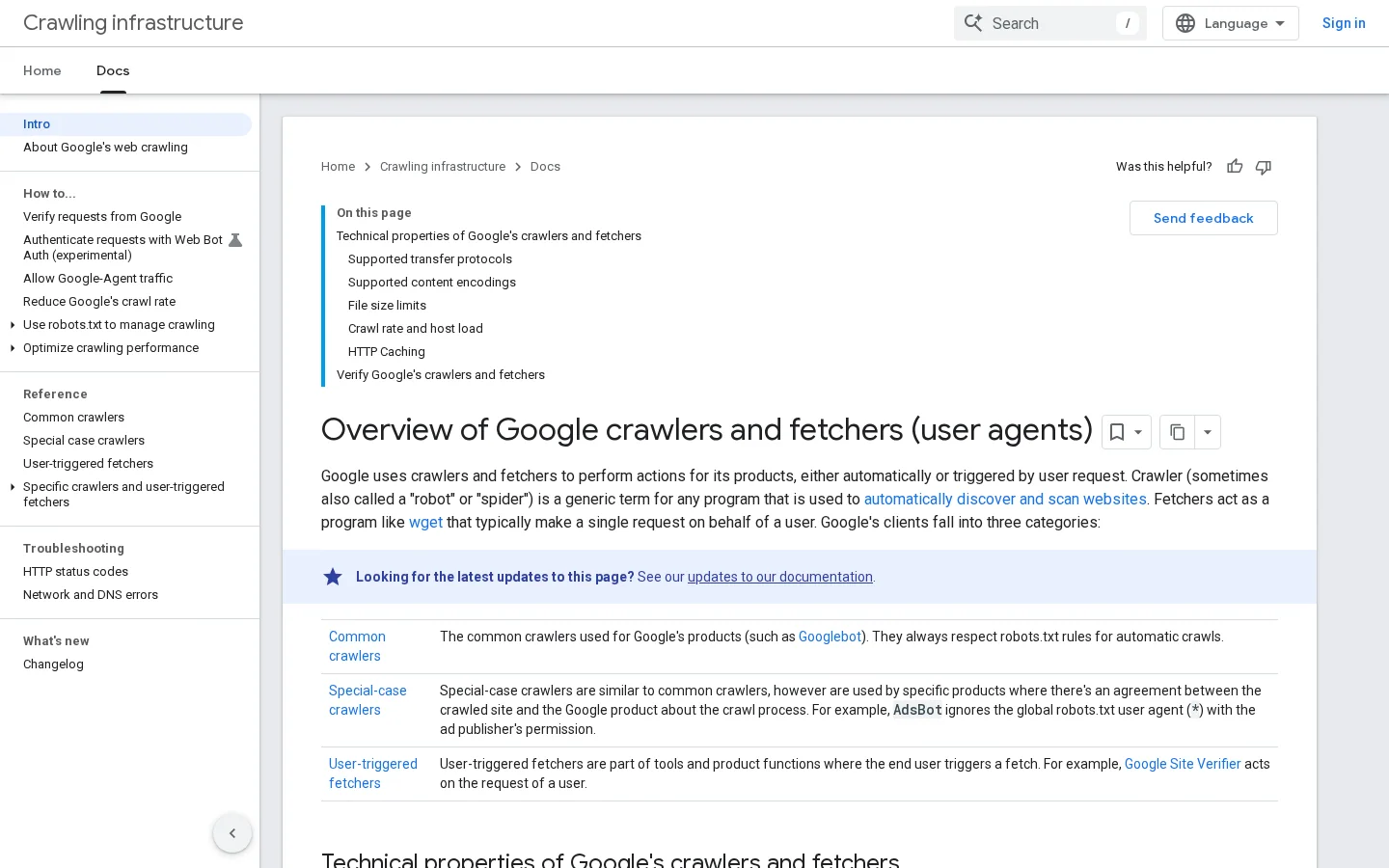
So the name is real in the sense that bots send it, but Google has not documented it. Treat the Google label as a claim from third parties until Google says otherwise.
The user agent string is a Chrome 56-era browser string. It ends with the token Google-PageRenderer and a link to Google's old Google+ snippet page. Some variants add a gzip tag. The string is plain text, so anyone can copy it. Treat it as a label, not as proof that Google sent the request.
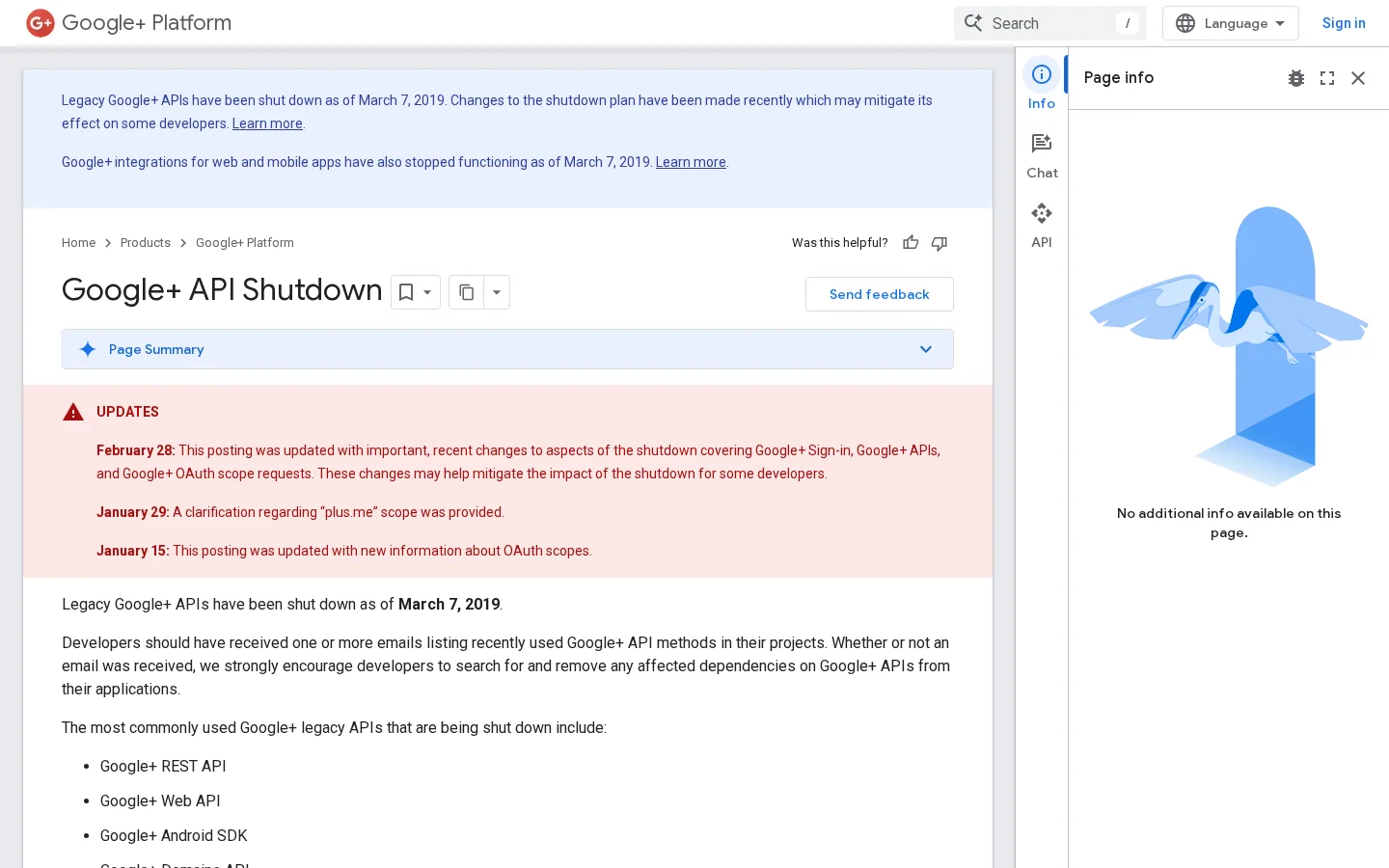
That link leads to a retired page. Google's Google+ APIs were shut down on March 7, 2019, so the snippet documentation in the string is old. This is one more sign that the string dates from an older Google feature.
Bot directories describe it as a fetcher that loads a page on demand to get its metadata, such as the title and a thumbnail. They give the purpose as link previews and feeds in apps. In that case it fetches one page when someone shares a link, instead of crawling your whole site the way a crawler bot does.
In practice, a link preview service asks for the page, reads the title and image, and shows them to the person who shared the link. The fetch happens on demand, not on a crawl schedule, which is how the sources describe this agent.
The name suggests page rendering, but do not mix it up with how Google renders JavaScript for search. Our JavaScript SEO guide covers that topic. None of the sources we read ties PageRenderer to search rendering.
An older idea sometimes gets confused with it. In a 2017 report by Search Engine Roundtable, John Mueller said Google was working on a tool that shows the rendered HTML of a page in Search Console, with no release date. The article does not use the name PageRenderer, so do not treat the two as the same tool.
The sources disagree on the rule, and none of them is Google. Google says its common crawlers always obey robots.txt for automatic crawls. The overview page does not say how robots.txt applies to user-triggered fetchers. KnownAgents, a bot directory, says this agent is not expected to follow robots.txt, so a disallow rule only states your preference. If the file is new to you, our robots.txt entry explains how its groups work.
| Bot | What triggers it | Robots.txt |
|---|---|---|
| Googlebot | Google's automatic crawling | Obeyed for automatic crawls, according to Google |
| Google-PageRenderer | A user action, according to bot directories | Not expected to be obeyed, according to KnownAgents |
If you want to ask this agent to stay away, add a group to your robots.txt file. Know that this is a request, not a lock.
User-agent: Google-PageRenderer
Disallow: /
Think before you block. KnownAgents advises against blocking in most cases, because a blocked site may show shared links without a title or image. If the requests are too many, it suggests rate limiting first. You can check your file's syntax with the free Sorank robots.txt checker before you publish it.
Note
A blocked fetcher may still send requests. Check your server logs a week after you change the file.
You cannot tell from the user agent alone. KnownAgents says the agent does not publish a verification method, so any client can claim the name. Centinel, another bot directory, says Google publishes nothing it can check the agent against. One source says Google publishes IP ranges for its fetchers in general, but we found no page that lists ranges for this agent.
Until a Google page lists a check, treat every match as a claim. Look at the IP addresses in your logs, and do not block or allow traffic based on the name alone. A simple routine works for most sites:
This is the belief that a bot named Google PageRenderer affects how you rank. To spot it, look at your plan. If you change content or links because of this bot, you made this mistake. To fix it, check crawling and indexing with Googlebot data in Google Search Console, as explained in our guide to crawling.
This is allowing or blocking traffic only because the string says Google-PageRenderer. To spot it, check whether the same name comes from many unrelated IP addresses. To fix it, group requests by IP and watch the volume. Then decide with that data, not with the name.
This is adding a disallow rule and assuming the requests stop. To spot it, look at your logs days later. If the agent still appears, the rule is being ignored or is only a preference. To fix it, rate limit the requests on your server, which works whether the agent obeys robots.txt or not.
For search rankings, it matters little, as far as the sources show. None of them ties it to indexing or ranking. It fetches pages to build link previews, so it shapes how your pages look when someone shares them. A clear title and a good image help that preview, and those are things you control on each page.
For GEO, the same point holds. The sources do not show that this agent feeds AI answers. If you want to know which bots read your site for AI, check the bot names in your logs and the rules in your robots.txt file, not the name of this fetcher alone. Bots from AI companies are a separate topic, and our guide on robots.txt for AI crawlers covers what to allow and what to block.
Google PageRenderer is a user agent name seen in server logs. Bot directories list it as a Google fetcher for link previews, but no Google page we read names it. Treat the Google label as unconfirmed, do not block it unless its traffic causes a real problem, and check any change against your own logs.
Sources
Google's public lists of crawlers and fetchers do not name it. Bot directories list it as a Google fetcher, but Google has not confirmed that on any page we checked.
Usually not. Bot directories warn that blocking can leave shared links without a title or image. If the requests are too many, rate limit them first.
None of the sources we read tie it to indexing or ranking. It fetches pages to build link previews, so it affects how your links look when shared.
 “I tested Sorank on a real client site and it's insane. It does everything an agency would bill you $1500 a month for. It's going into production on that client now.”

 Guillaume Guersanguersanguillaume.com“We are an Ads agency and we wanted to get our SEO back on track once and for all. Sorank gave us a clear view of our site, helped us prioritize optimizations, and properly structure our content. The tool is easy to use, well designed for a team, and very practical for centralizing tracking without having to juggle multiple platforms. A very solid foundation to start fresh with our SEO.”
 Gaspard MadouiAds Agency
 “I just let the Sorank software do its thing, and now my DR is 25 and my page is ranking higher.”
 Lucas Flandrefoundertrace.fr“I specialized in GEO thanks to Sorank. The GEO Leaderboard allows me to show my clients their position vs competitors on ChatGPT. It’s a real commercial differentiator.”
 MélanieSEO Freelance“Great service, works well for our website and helps us understand how to improve it to rank better on Google and elsewhere. Congrats, keep going, I recommend it.”
 Hugo T.E-commerce merchant



















