
Preferences
Privacy is important to us, so you have the option of disabling certain types of storage that may not be necessary for the basic functioning of the website. Blocking categories may impact your experience on the website. More information
Privacy is important to us, so you have the option of disabling certain types of storage that may not be necessary for the basic functioning of the website. Blocking categories may impact your experience on the website. More information

Direct traffic lift is the rise in untagged visits after a campaign. Learn how to measure it before and after, and why it is only a signal.







Founder Sorank, 7+ years in SEO.
Summary
Direct traffic lift is the rise in visits that arrive with no identifiable source, such as typed URLs, saved bookmarks or untagged links, during or after a campaign. It is measured by comparing direct traffic before and after the campaign, and against a control group. It is a secondary signal, not proof that the campaign caused the visits.
Want to go further? Ask
Direct traffic lift is the increase in direct visits that appears around a marketing campaign. Direct visits are visits that analytics tools cannot link to a source. Google says the Direct channel covers people who arrive through a saved link or by typing your URL. The lift is the extra direct traffic you see above your normal level.
Direct traffic lift is the rise in direct visits that a campaign may explain. A TV spot, a podcast ad or a press mention can make people remember your brand. Some of them later type your address or open a bookmark. Their visit then shows up as direct, with no source name.
It is different from referral traffic, which comes from a link on another site. Direct traffic has no link to point to. That is why it is hard to read and why it needs a comparison to mean anything.
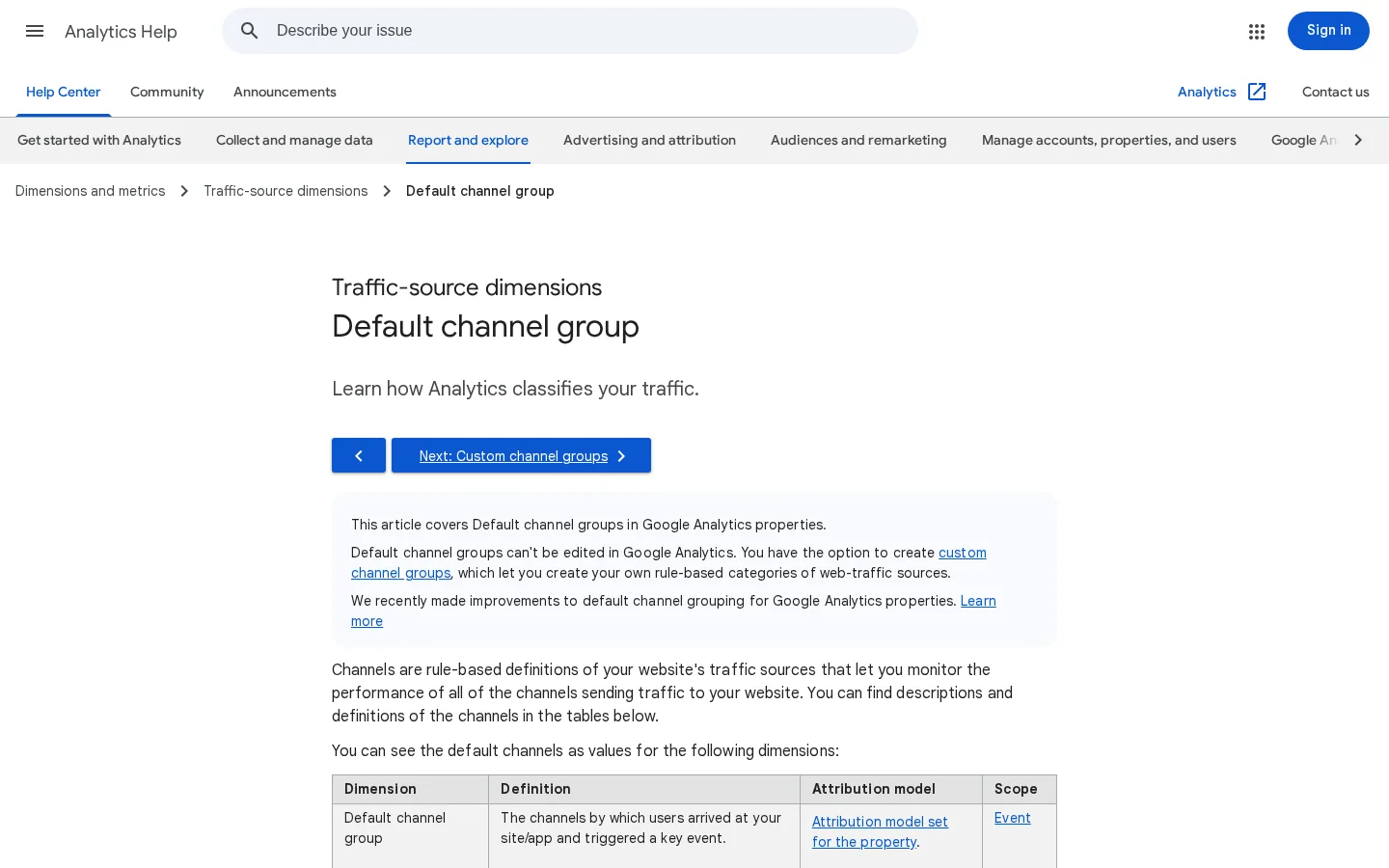
Direct traffic rises for three main reasons. The first is memory: people who saw your brand search for it or type it later. The second is lost tagging: a link without campaign tags, some apps and some private browsing send visits to Direct. Google's rule for the channel is a source of "(direct)" with a medium of "(none)" or "(not set)", so an untagged campaign link can inflate Direct even when nobody remembers your brand.
The third reason is AI answers. A person who reads your name in a ChatGPT or Gemini answer may open your site later with no referrer. This is the gap described in AI dark traffic. The visit looks direct, but the trigger was an AI answer that never sent a click.
You measure it by comparing direct visits in the campaign window with a baseline from the days before. Use the same metric each time. In Google Analytics 4 (GA4), that means sessions where the source is "(direct)" and the medium is "(none)" or "(not set)".
Tag every link before the campaign starts. The free UTM Link Builder adds campaign parameters to a URL, so Google Analytics can show which source and campaign sent the visit. Tagged visits leave Direct, which makes the lift easier to read.
A control group shows what would have happened without the campaign. Pick a region, a market or a set of pages that did not get the campaign, and compare their direct traffic with the region that did. If direct traffic rises only where the campaign ran, the result is stronger than a simple before and after view.
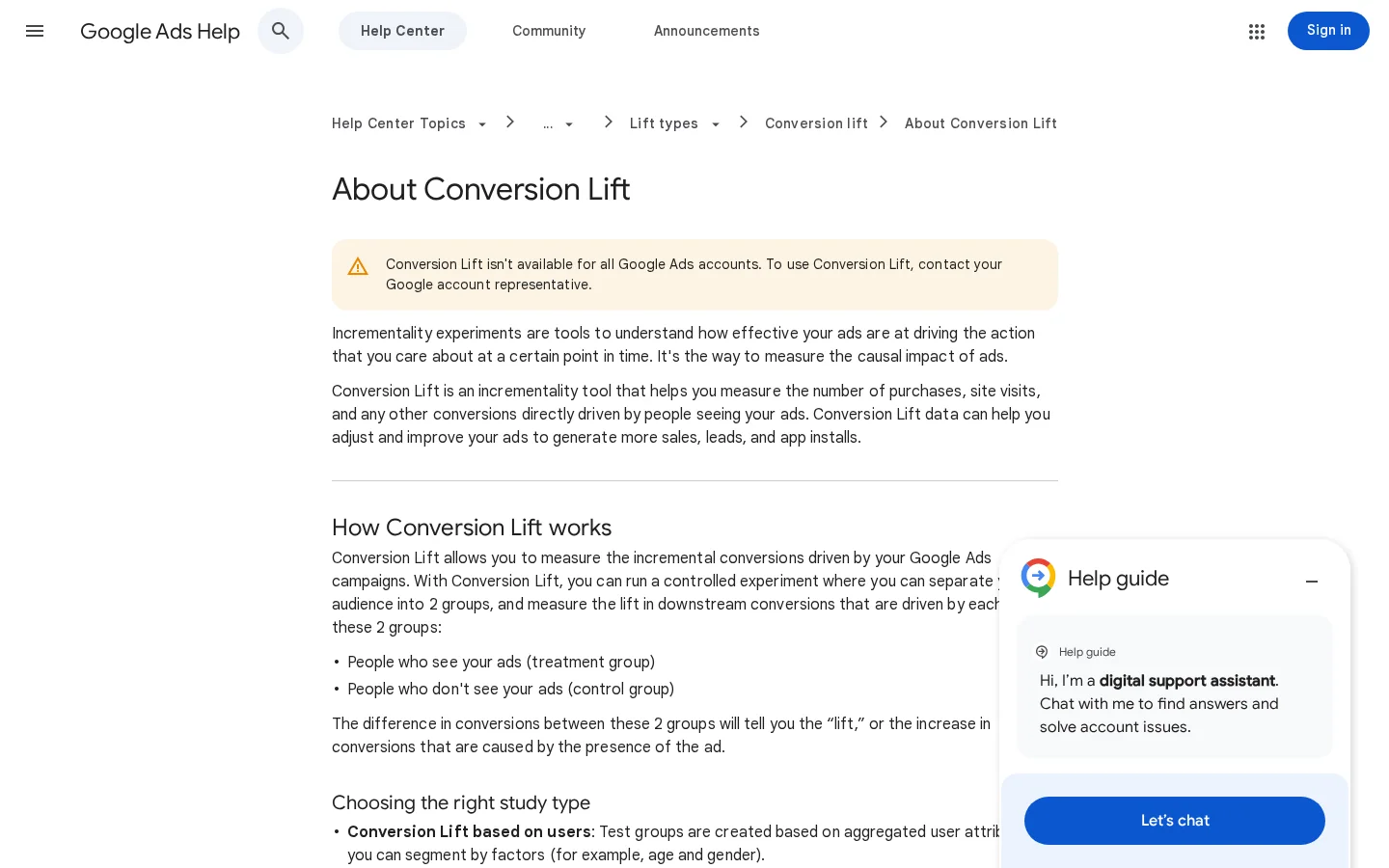
Paid campaigns can use the same idea. Google's Conversion Lift help page explains that the difference in conversions between people who see the ads and people who do not is the lift. The method is designed to measure conversions, not direct visits, but the logic is the same.
Academic work also supports a lagged effect. A 2021 study by Lukáš Veverka and Vladimír Holý, revised in 2024, models website visits after each TV ad and estimates a gradual increase in visits after each one. The study looks at website visits in general, not at direct visits alone, so it supports a delayed rise but does not give you the size of a direct lift for your own brand. Read the original paper on arXiv before you use its results.
Direct traffic lift is a secondary signal. It shows that direct visits changed, not that the campaign caused the change. These limits matter most when you report the result:
Most errors come from reading Direct as a clean campaign result. Check these five before you report a lift.
Direct traffic lift matters because AI answers often name a brand without a link. When people later type that brand into a browser, the visit shows as direct, so a rise in Direct can be an early sign that AI answers and offline campaigns are working. Lead with the change in the pattern, then confirm it with other data.
Sorank's GEO / SEO dashboard shows Google and AI traffic in one view, so you can see visits from AI assistants next to your search clicks. For the wider idea of influence without a click, read about zero-click attribution. For the reporting gap in GA4, see our guide to what direct traffic really contains.
Direct traffic lift is the rise in visits with no identifiable source after a campaign. Measure it against a baseline from the same days of the week, use a control group when you can, and tag your links so that Direct stays clean. Treat the result as a signal to investigate, not as proof of cause.
Sources
Direct traffic lift is the increase in visits with no identifiable source, usually after a campaign. These visits often come from people who remember your brand and type your URL later. It is a clue, not a confirmed result.
Compare direct traffic during the campaign with a baseline from the same days of the week before it started. Subtract the expected level to get the lift. Use a control region or group when you can, because other events can change direct traffic too.
No. It shows a change in visits, not the cause of that change. Check the result with conversions, campaign tags and a control group. Treat direct traffic as a secondary signal.
 “I tested Sorank on a real client site and it's insane. It does everything an agency would bill you $1500 a month for. It's going into production on that client now.”

 Guillaume Guersanguersanguillaume.com“We are an Ads agency and we wanted to get our SEO back on track once and for all. Sorank gave us a clear view of our site, helped us prioritize optimizations, and properly structure our content. The tool is easy to use, well designed for a team, and very practical for centralizing tracking without having to juggle multiple platforms. A very solid foundation to start fresh with our SEO.”
 Gaspard MadouiAds Agency
 “I just let the Sorank software do its thing, and now my DR is 25 and my page is ranking higher.”
 Lucas Flandrefoundertrace.fr“I specialized in GEO thanks to Sorank. The GEO Leaderboard allows me to show my clients their position vs competitors on ChatGPT. It’s a real commercial differentiator.”
 MélanieSEO Freelance“Great service, works well for our website and helps us understand how to improve it to rank better on Google and elsewhere. Congrats, keep going, I recommend it.”
 Hugo T.E-commerce merchant



















