Preferences
Privacy is important to us, so you have the option of disabling certain types of storage that may not be necessary for the basic functioning of the website. Blocking categories may impact your experience on the website. More information

Privacy is important to us, so you have the option of disabling certain types of storage that may not be necessary for the basic functioning of the website. Blocking categories may impact your experience on the website. More information

A complete guide to white-label SEO outsourcing: how to choose partners, maintain quality control, and use outsourcing to scale without fixed costs.







Tools


White-label SEO outsourcing means a partner does the SEO work while you deliver it to your client under your own brand. The client signs with you and pays you, and the partner stays in the background. Done well, it adds capacity or a new service without fixed payroll. Done badly, it leaves your clients' results and your reputation in the hands of someone you do not control.
Outsource when demand is ahead of your team, not to avoid learning the work. Typical triggers are production capacity at 85 percent or above for two consecutive months, or a service you sell but cannot yet staff. Calculating your production capacity shows which case you are in, and hiring a junior consultant is the better answer when demand is steady.
The best tasks to outsource are repeatable, clearly specified and easy to check: articles written from a brief, technical audits built on your template, link building, on-page implementation and report preparation. Keep strategy, prioritization, client communication and final review in house.
Start with referrals from other agency owners, then agency communities and specialist providers. Ask each candidate for anonymized samples of real deliverables, their process from brief to delivery, and how they build links, because a shortcut that exposes a client to Google penalties becomes your problem. Confirm that they work without their own branding, never contact your clients and sign a confidentiality agreement, and settle who owns the work if the relationship ends.
Then run a paid pilot of one to two months on a small account. Judge it on deliverables, deadlines and communication, not on rankings, which take months to move.
Price on the value of the result and the scope you commit to, never on your partner's cost. Your fee must cover the partner's invoice, your review time and account management, and the cost of replacing a partner mid-contract. If the margin survives only when nothing goes wrong, the price is too low. Ask partners for fixed monthly packages rather than hourly billing so costs stay predictable. The pricing models you already use apply unchanged: the client sees your retainer, not your supply chain.
Write a brief and acceptance criteria for every deliverable, and let nothing reach a client before your team has reviewed it, using the checklists and two-stage review from quality control for SEO delivery. Give specific feedback, track on-time delivery and revision requests for each partner, and audit a sample every quarter. Keep client accounts such as Search Console and the CMS in your clients' or your own name, so a partner can be replaced without losing anything.
You remain the single voice. Report in your own brand, following SEO reports clients understand, and route every client question through your account manager. Check that your client contracts allow subcontracting, and never deny using partners if a client asks directly.
The main risks are quality drift as the partner takes on more clients, a partner who disappears or raises prices, risky link tactics and leaks of client data. Reduce them in advance with a review step, documented procedures, a second qualified partner, approval of link sources and confidentiality terms with limited access. Your agency stays accountable for everything it delivers, so write your contracts accordingly.
Some production work, such as writing, link building, tracking and publishing, is repetitive enough for software to handle instead of a human partner. Sorank is software that automates SEO and GEO, not an agency, and it offers a white-label program for agencies. For each client site it produces 20 SEO and GEO articles a month, earns backlinks through its Backlink Network (one-way links, never reciprocal), tracks how often the AIs such as ChatGPT, Claude and Gemini name the client, and publishes on the client's own CMS. Each client site costs $99 per month, or $49 per month billed yearly. With the Direct plan, your clients receive the published content and a monthly PDF report in your brand, without any login; the White label plan adds a $2,000 yearly subscription, with a one-year commitment, that unlocks a dashboard on your own domain, with your logo, where Sorank never appears. Adding a client means adding a site rather than hiring, and results usually appear within 2 to 4 months.
White label SEO is a model in which a provider performs SEO work that an agency resells under its own brand, so the client only ever deals with the agency. It lets an agency sell a service before it can staff it, or absorb extra demand without hiring.
The chain has three links:
White label differs from two close models. In a referral partnership, the client signs directly with the provider and the agency earns a commission; our guide to agency partnerships covers that route. In co-branded delivery, both names appear on the deliverables. White label suits agencies that want to keep the client relationship and the margin, and it makes the agency accountable for every result, which is why partner selection and review matter so much.
For a first step, white-label a single service, often content or reporting, on a few accounts, then extend it once your review process holds up.
White label SEO software lets an agency deliver reports or tools to its clients under the agency's brand. Before buying, check exactly which parts carry your brand (the report, the dashboard, the domain, the emails), because offers vary widely from one vendor to another.
Suites such as Semrush and SE Ranking offer white-label reporting options on their agency plans, and Looker Studio lets you build branded dashboards on Search Console data for free. On Sorank's Pro and Business plans, a monthly PDF performance report with your own branding is included: connected to Search Console, Google Analytics and the Sorank account, it shows progress, the actions the software has taken and those planned for next month. Compare plans on the pricing page, and write the commentary that goes with the report using our guide to SEO reporting clients understand.
White-label outsourcing works when you outsource execution and keep judgment. Choose the partner with a paid pilot, price on the value you deliver rather than on their cost, and review everything before a client sees it. Whether a trusted partner or software does the work, the agency that owns the strategy and the client relationship keeps the margin and the trust.

The tasks that are repeatable, clearly specified and easy to check: articles written from a brief, technical audits built on your template, link building, on-page implementation and report preparation. Keep strategy, prioritization, client communication and final review in house. If you cannot describe a task well enough to write an acceptance checklist for it, it is not ready to be outsourced.
Treat partner work like your own. Write a brief and acceptance criteria for every deliverable, have your team review everything before it reaches a client, and give specific feedback when work misses the standard. Track on-time delivery and revision requests for each partner, audit a sample every quarter, and keep client accounts and documented procedures under your control so a partner can be replaced without disruption.
Start with referrals from other agency owners, then agency communities and specialist providers. Ask for anonymized samples, a description of their process, an explanation of how they build links and references from other agencies. Then run a paid pilot of one to two months on a small account before trusting them with a key client, judging deliverables and communication rather than rankings.
THEY TRIED SORANK BEFORE YOU
 “I tested Sorank on a real client site and it's insane. It does everything an agency would bill you $1500 a month for. It's going into production on that client now.”
 Guillaume Guersanguersanguillaume.com“We are an Ads agency and we wanted to get our SEO back on track once and for all. Sorank gave us a clear view of our site, helped us prioritize optimizations, and properly structure our content. The tool is easy to use, well designed for a team, and very practical for centralizing tracking without having to juggle multiple platforms. A very solid foundation to start fresh with our SEO.”
 Gaspard MadouiAds Agency
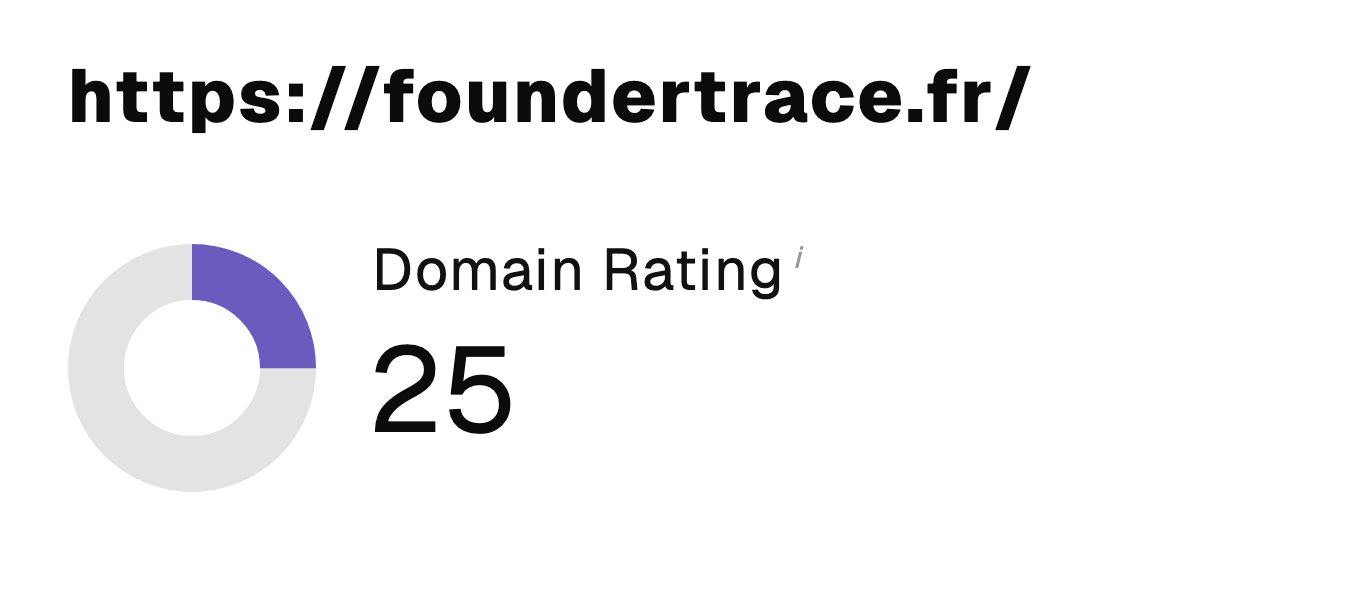 “I just let the Sorank software do its thing, and now my DR is 25 and my page is ranking higher.”
 Lucas Flandrefoundertrace.fr“I specialized in GEO thanks to Sorank. The GEO Leaderboard allows me to show my clients their position vs competitors on ChatGPT. It’s a real commercial differentiator.”
 MélanieSEO Freelance“Great service, works well for our website and helps us understand how to improve it to rank better on Google and elsewhere. Congrats, keep going, I recommend it.”
 Hugo T.E-commerce merchant